



ICR News
Click here for Science in the News articles Stirring the PotICR recently had the opportunity to place messages on billboards in the Dallas area. We prepared the artwork and crafted the wording to inform drivers about the ICR Discovery Center for Science &...
 The Babblings and Contradictions of False KnowledgeO Timothy! Guard what was committed to your trust, avoiding the profane and idle babblings and contradictions of what is falsely called knowledge—by professing it some have strayed concerning...
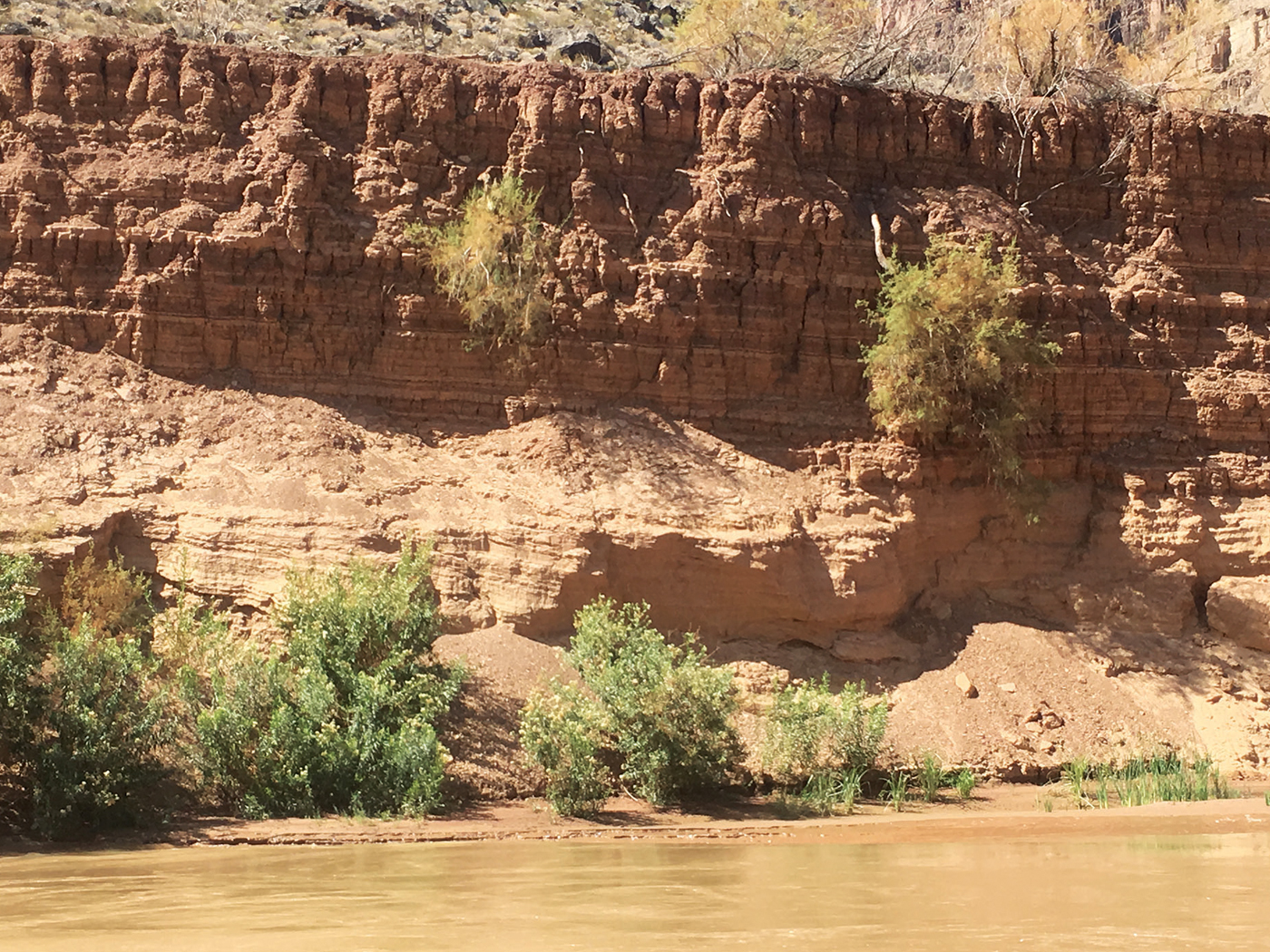 Observations Support Grand Canyon Flood OriginOld-earth geologists claim that observations contradict the Flood model origin for Grand Canyon.1 However, recently exposed sediments at Lake Mead refute their claims and instead fully support...
 Continuing Troubles for the Big Bang ModelCosmology is the study of the origin and structure of the universe, and the Big Bang is the dominant secular cosmological model. Some Christians say God used the Big Bang to create the universe, but...
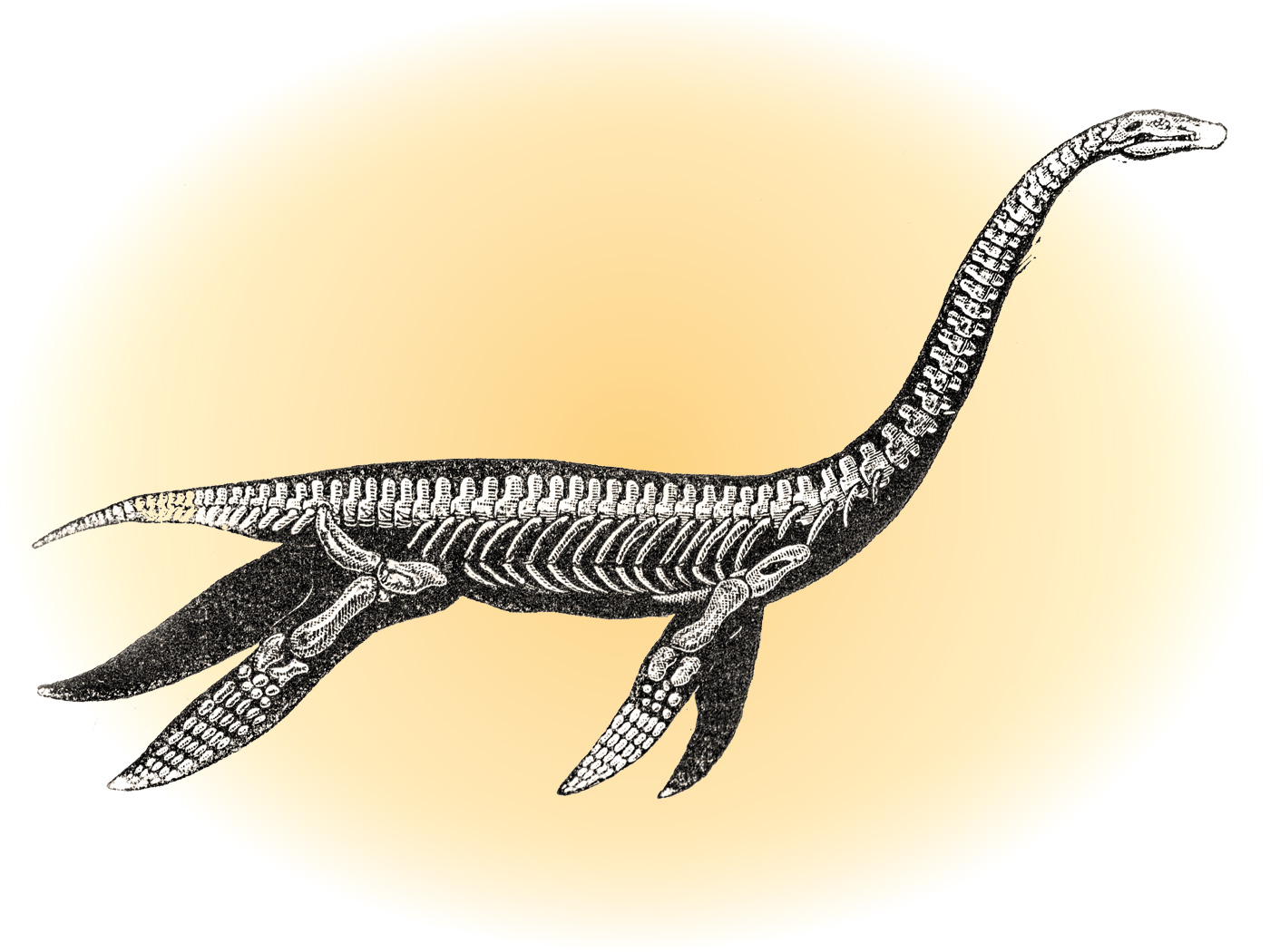
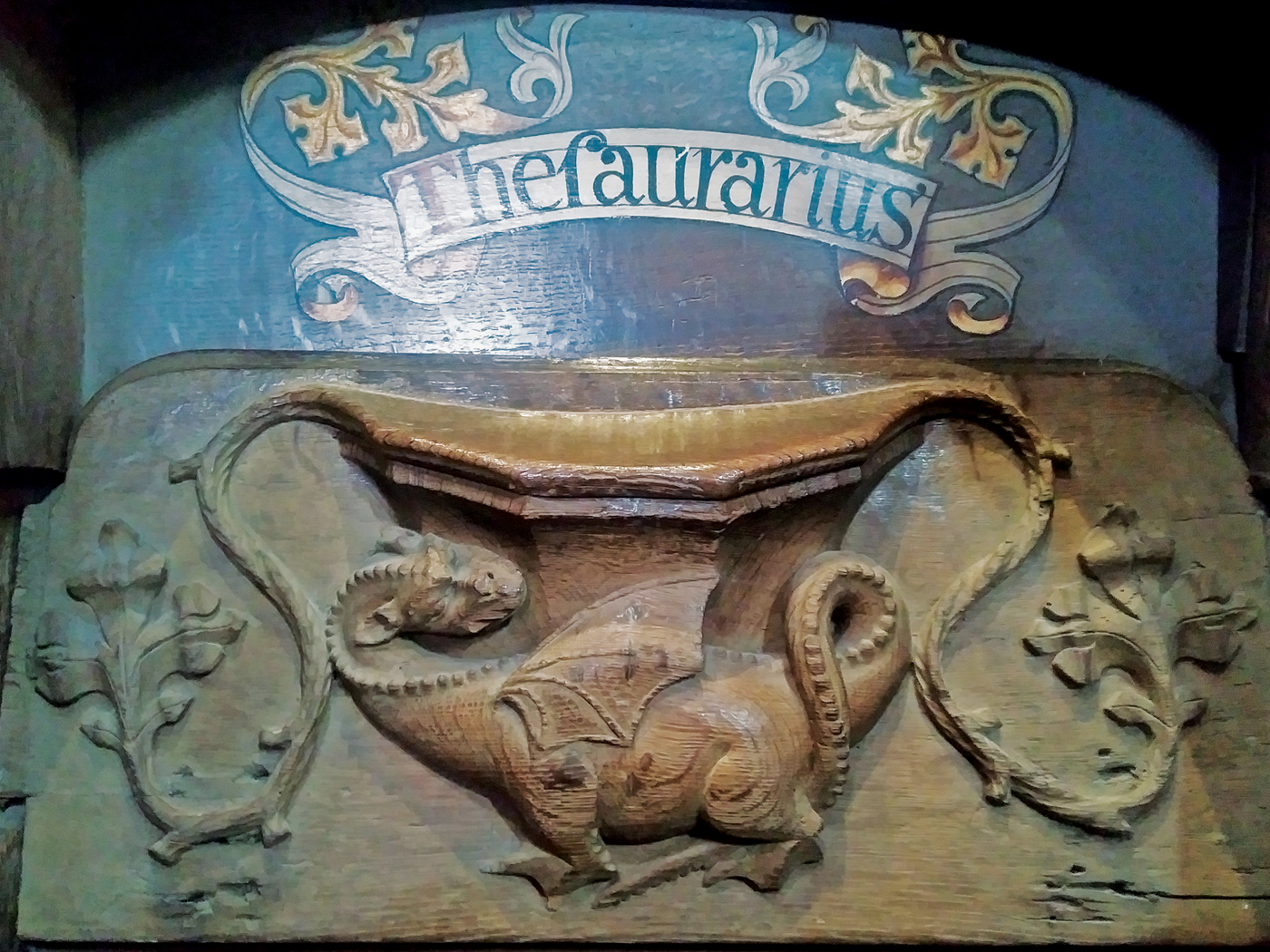 St. Davids Dragon…Fantasy or Reality?My early memories of dinosaur teachings reflected the doctrine of their extinction 65 million years ago and the evolution of mankind only several million years ago. If that really happened, then our...
 'I Liked That God Was There.'A recent young visitor to the ICR Discovery Center for Science & Earth History made this comment about her tour: “I liked that God was there.” Yes, the message is all about God. He was...
 Evolutionism Maligns Christian EdificationCan evolutionary theory be reconciled with the church’s basic functions of worship, evangelism, and the edification (building up) of believers? Last month we saw how evolutionism has a profoundly...
 What Is the Image of God?Genesis 1:26 says, “Then God said, ‘Let Us make man in Our image, according to Our likeness.’” What does it mean for humans to bear the lofty image of God? First, we look...
 God Crafted Creatures to CommunicateMaking sense of biological senses is a losing battle for evolutionary theories, and explaining complex creature communication is even worse. Why? Because evolutionists have no real explanation for why...
 Sowing with ICRThe Bible often uses examples from agriculture to highlight the work needed to bring people to Christ and disciple them to maturity. Farmers can’t expect a good crop unless the seed is first sown...
Full versions of current and previous Acts & Facts can be viewed online in PDF format using the free Adobe® Acrobat® Reader.
You can subscribe to receive a free subscription to Acts & Facts by clicking here.
[body_edit] =>How do recently exposed sediments at Lake Mead refute old-earth geology claims and fully support the Flood model? Did the St. Davids Dragon artist carve a mythological animal, or did he have knowledge of a real creature? What is the image of God? And why did a young visitor appreciate her recent experience at the ICR Discovery Center for Science & Earth History? Discover the answers to these questions and more in the November 2019 issue of Acts & Facts! [MACRO aaf_article, 11585] [MACRO aaf_article, 11586] [MACRO aaf_article, 11587] [MACRO aaf_article, 11588] [MACRO aaf_article, 11589] [MACRO aaf_article, 11590] [MACRO aaf_article, 11591] [MACRO aaf_article, 11592] [MACRO aaf_article, 11593] [MACRO aaf_article, 11594]
Full versions of current and previous Acts & Facts can be viewed online in PDF format using the free Adobe® Acrobat® Reader.
You can subscribe to receive a free subscription to Acts & Facts by clicking here.
[typeID] => 9 [visible] => t [pdf] => [publishURL] => inside-november-2019-acts-facts [publishDate] => 0000-00-00 [authorAsterisk] => f [domainID] => 1 [publication] => [volume] => [issue] => [page] => [author] => Staff Writer ) -->

 What’s the Point?What’s the point? Sometimes we ask this question when we’re bogged down in a tedious project—when we’re ready to be finished with the task at hand. Sometimes we ask it out of...
 The Absolute Salvation of GodWhen it comes to the question of creation versus evolution, many Christians seem to think, “What’s the point? What does it matter whether all this arrived here in six days or over billions...
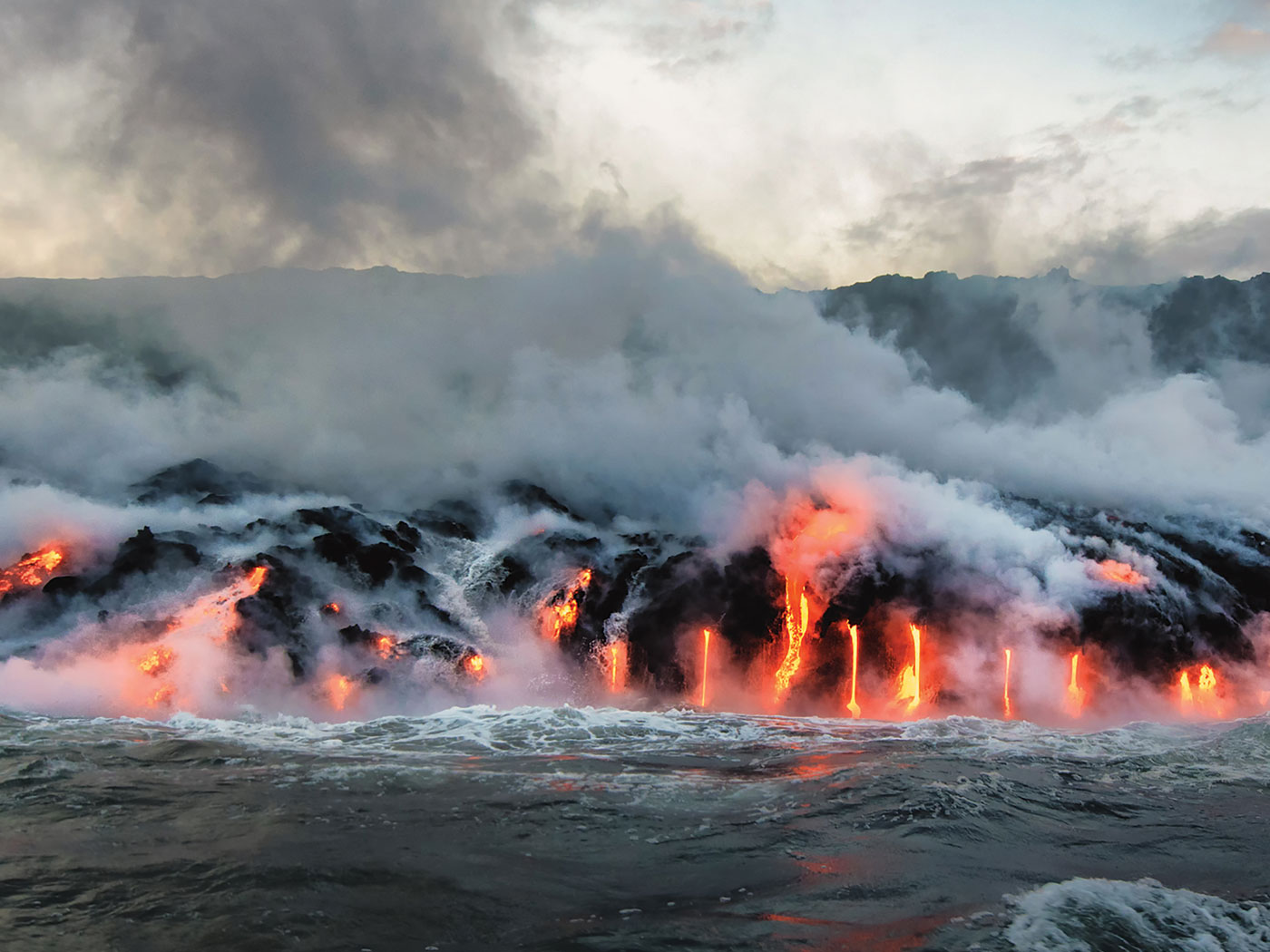 Strontium Ratio Variation in Marine CarbonatesIn 1948, geologist F. E. Wickman predicted that the decay of 87Rb (a rubidium isotope) in the earth’s crust and mantle would be reflected in a related increase in the 87Sr/86Sr...
 Homo erectus: The Ape Man That Wasn'tThe archaic human species Homo erectus has been portrayed as an important ape-to-man transitional link. However, these fossils don’t provide any real evidence of evolution. Many paleontologists...
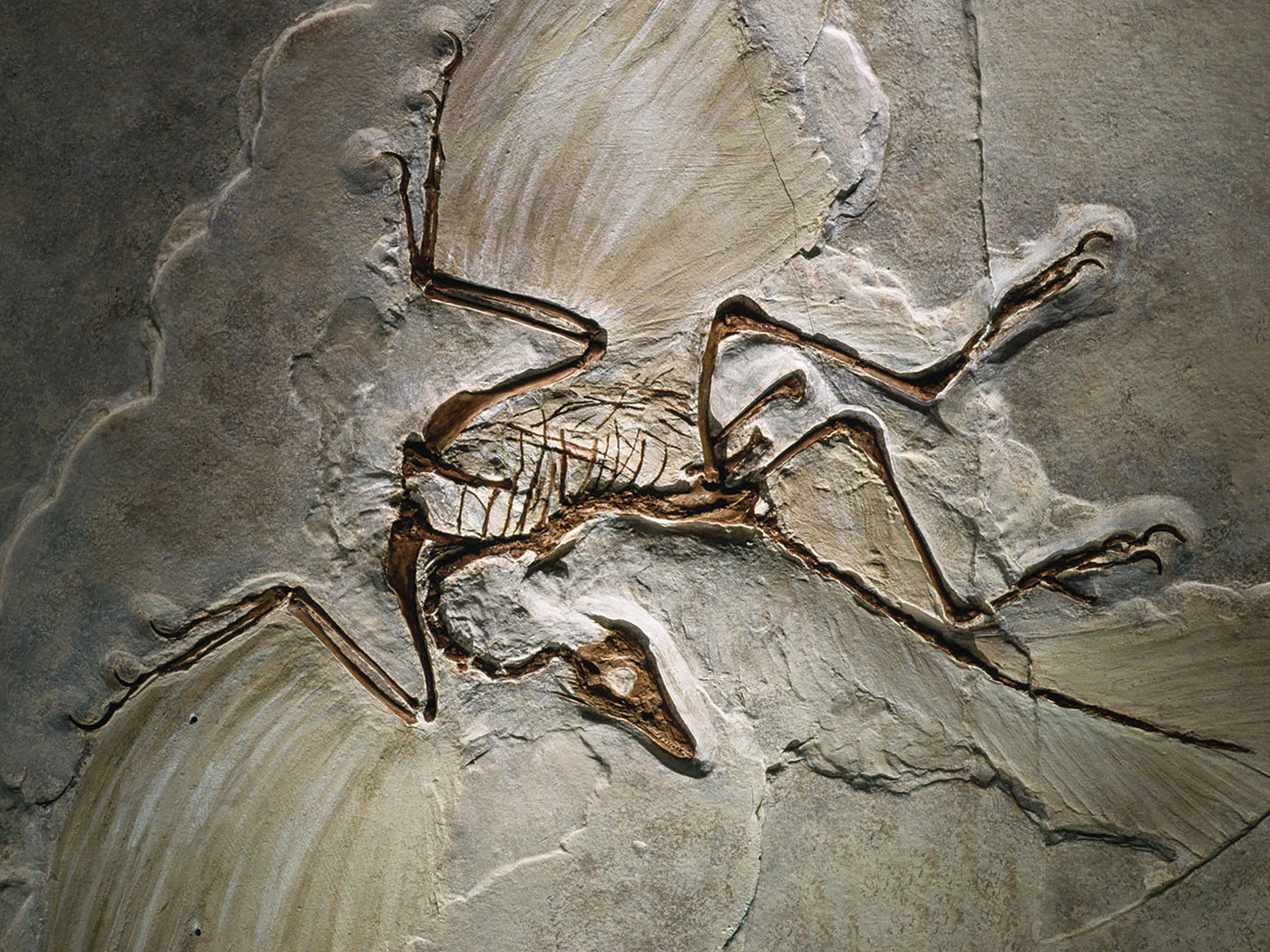 The World's Oldest Bird FossilAsk college freshman biology students to name the oldest bird fossil and they’ll probably say the evolutionary icon Archaeopteryx. In that case, you’d hear the wrong answer. The story of...
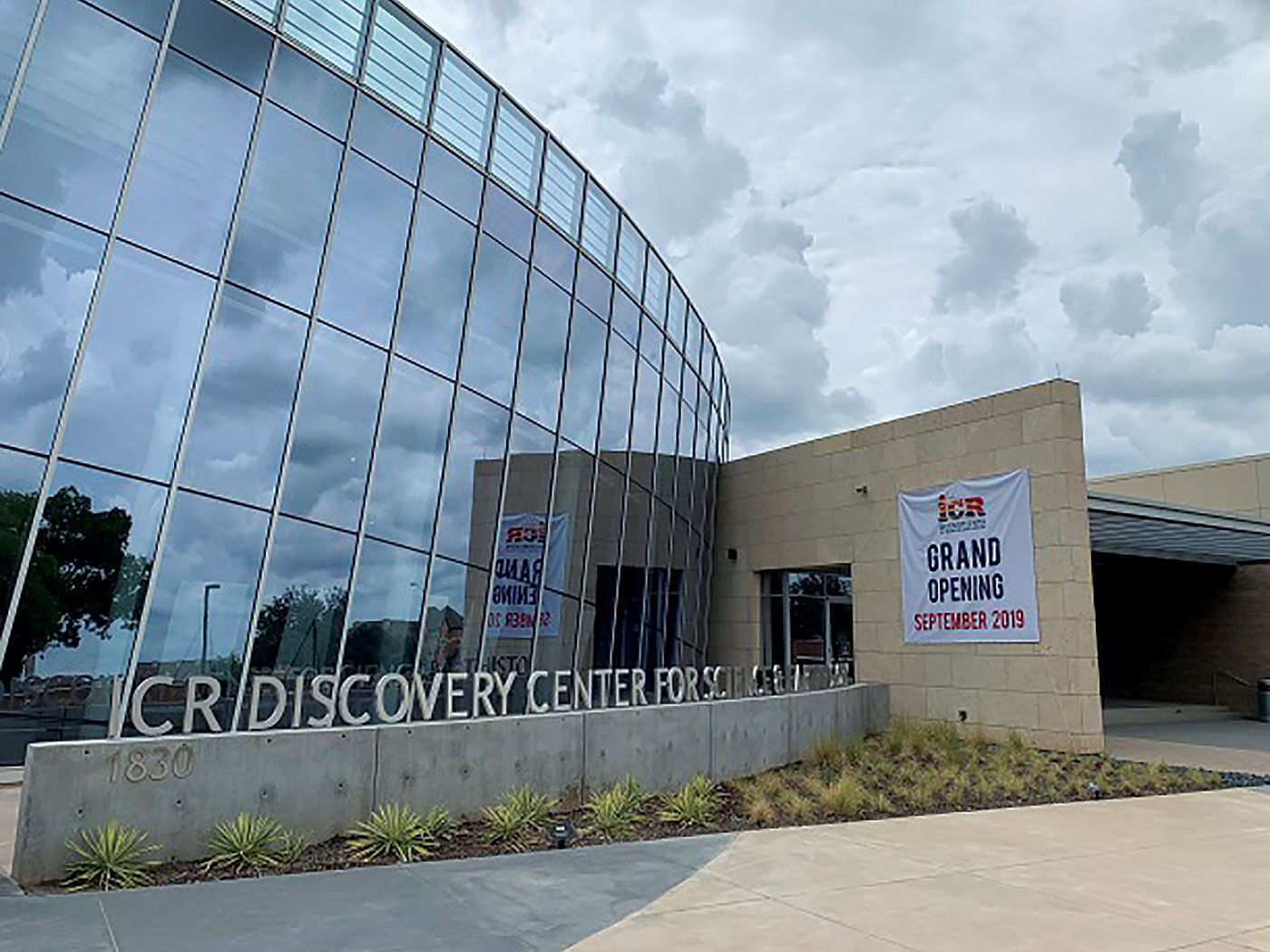 The ICR Discovery Center for Science & Earth History Is.,.September 2, 2019, marked the grand opening of the ICR Discovery Center for Science & Earth History. On that first day, over 1,600 visitors experienced a journey through Earth’s history in...
 Evolutionism Contradicts Christian EvangelismIs evolutionary theory compatible with the church’s basic functions of worship, evangelism, and the edification (building up) of believers? In last month’s article, we saw how evolutionism...
 Why Did God Make Mosquitos?My wife and I enjoy evening walks with our dog when the Texas weather lets us. Unfortunately, mosquitos seem to like good weather too. And they recognize my wife is much sweeter than I am. She often...
 Green Bean Bioengineering Shows Creator's CareYears ago in a college campus discussion, an unbeliever argued that the world’s waste displays God’s disorderliness. He called God a “prodigal” creator—an insult adopted...
 The Best-Kept Secret in TexasHave we told you lately how thankful we are for your prayers and financial support? ICR’s ministry happens because of the Lord’s blessing through your partnership. Because of you, we...
Full versions of current and previous Acts & Facts can be viewed online in PDF format using the free Adobe® Acrobat® Reader.
You can subscribe to receive a free subscription to Acts & Facts by clicking here.
[body_edit] =>September 2, 2019, marked the grand opening of the ICR Discovery Center for Science & Earth History. When will you plan your visit? Why did God make mosquitos? What is the significance of the world’s oldest bird fossil? And why does it matter whether God created in six days or over billions of years? Discover the answers to these questions and more in the October 2019 issue of Acts & Facts! [MACRO aaf_article, 11534] [MACRO aaf_article, 11535] [MACRO aaf_article, 11537] [MACRO aaf_article, 11538] [MACRO aaf_article, 11539] [MACRO aaf_article, 11540] [MACRO aaf_article, 11541] [MACRO aaf_article, 11542] [MACRO aaf_article, 11543] [MACRO aaf_article, 11544]
Full versions of current and previous Acts & Facts can be viewed online in PDF format using the free Adobe® Acrobat® Reader.
You can subscribe to receive a free subscription to Acts & Facts by clicking here.
[typeID] => 9 [visible] => t [pdf] => [publishURL] => inside-october-2019-acts-facts [publishDate] => 0000-00-00 [authorAsterisk] => f [domainID] => 1 [publication] => [volume] => [issue] => [page] => [author] => Staff Writer ) -->
 Be AmazedWhen was the last time you were amazed by God? Perhaps it’s time to stop and ponder—to pause and consider the works of God. Ponder the wonders of creation. Have you really looked at...
 Black Hills Sites Showcase Creation and the FloodIn June, Institute for Creation Research scientists Dr. Randy Guliuzza and Dr. Tim Clarey participated in the Black Hills Creation Conference in Rapid City, South Dakota. They also led three pre-conference...
 Research Presented at a Secular ConferenceThis past summer, a colleague and I went to a secular science conference seeking critique from our non-creationist colleagues over what amounts to creation research. Their reactions surprised us. Creation...
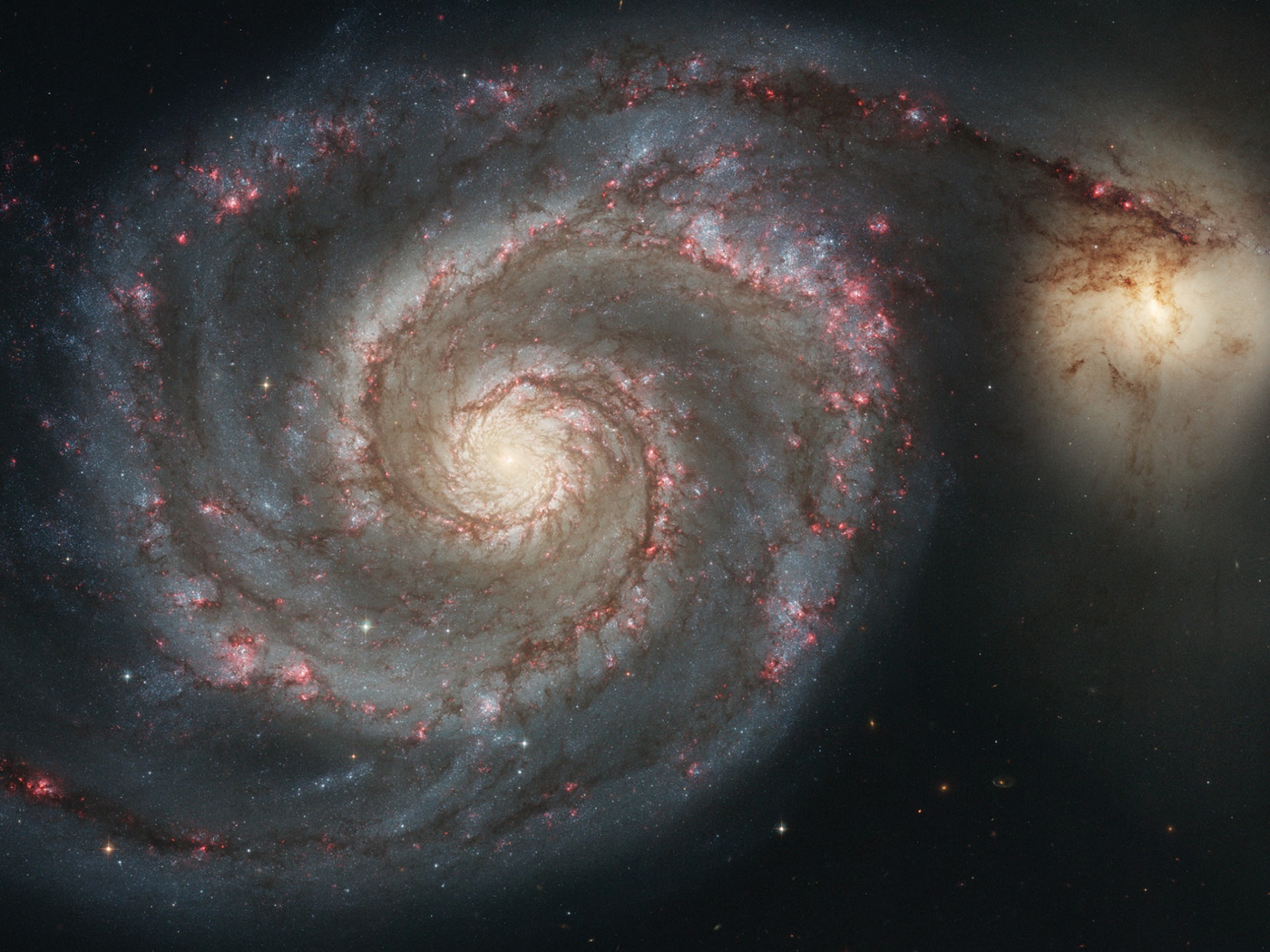 Deep-Space Objects Are YoungSecular astronomers claim our universe is unimaginably ancient—almost 14 billion years old. Yet the Bible clearly teaches that God created the universe in the relatively recent past, about 6,000...
 Are Blue Eyes in Humans a Mutation?When it comes to the history of basic human traits, an evolutionary myth about eye color often pops up. The secular story maintains that blue eyes are the result of a genetic mutation that occurred...
 Confronting a Clever Classroom ConMany Christian students in secular universities can relate to this scenario: An evolutionist college professor is doing his best to convince his class that biblical creation is absurd. To this end,...
 ICR Scientists Present Latest Research in WisconsinScientists from the Institute for Creation Research presented their current research at the Creation Research Society’s annual meeting in late July. About 150 people attended the two-day conference...
 The ICR Discovery Center Opens to the Public!The big opening day for the ICR Discovery Center for Science & Earth History is scheduled for September 2, 2019. We’ve been scrambling to finish the exhibits, get final clearance by the fire...
 Evolutionism Poisons Christian WorshipAt Moody Bible Institute, I was taught the church’s mission could be organized into three basic functions: worship, evangelism, and the edification (building up) of believers. If a church undertook...
 Does Palo Duro Canyon Show Deep Time?Some friends and I recently hiked into Texas’ Palo Duro Canyon, where sedimentary rock layers span the horizon. Eighteenth-century naturalists thought rock layers represented vast ages, a tradition...
 Deep Wonders of Slapping Sharks and Snapping ShrimpsThose who go down to the sea in ships, who do business on great waters, they see the works of the LORD, and His wonders in the deep. (Psalm 107:23-24) The super-fast and powerful movements of sharks...
 Small Gifts Add UpA Google search on charitable giving will produce countless websites. It’s astonishing how much information exists about organizations dedicated to worthy causes. It seems that most are devoted...
Full versions of current and previous Acts & Facts can be viewed online in PDF format using the free Adobe® Acrobat® Reader.
You can subscribe to receive a free subscription to Acts & Facts by clicking here.
[body_edit] =>The ICR Discovery Center is now open to the public! We’re excited for you and your family to discover how science confirms creation. What can you experience on an ICR field trip? Are blue eyes in humans a mutation? And how does belief in creation or evolution impact Christian worship? Discover the answers to these questions and more in the September 2019 issue of Acts & Facts! [MACRO aaf_article, 11480] [MACRO aaf_article, 11481] [MACRO aaf_article, 11482] [MACRO aaf_article, 11483] [MACRO aaf_article, 11484] [MACRO aaf_article, 11485] [MACRO aaf_article, 11486] [MACRO aaf_article, 11487] [MACRO aaf_article, 11488] [MACRO aaf_article, 11489] [MACRO aaf_article, 11490] [MACRO aaf_article, 11491]
Full versions of current and previous Acts & Facts can be viewed online in PDF format using the free Adobe® Acrobat® Reader.
You can subscribe to receive a free subscription to Acts & Facts by clicking here.
[typeID] => 9 [visible] => t [pdf] => [publishURL] => inside-september-2019-acts-facts [publishDate] => 2019-11-27 [authorAsterisk] => f [domainID] => 1 [publication] => [volume] => [issue] => [page] => [author] => Staff Writer ) -->
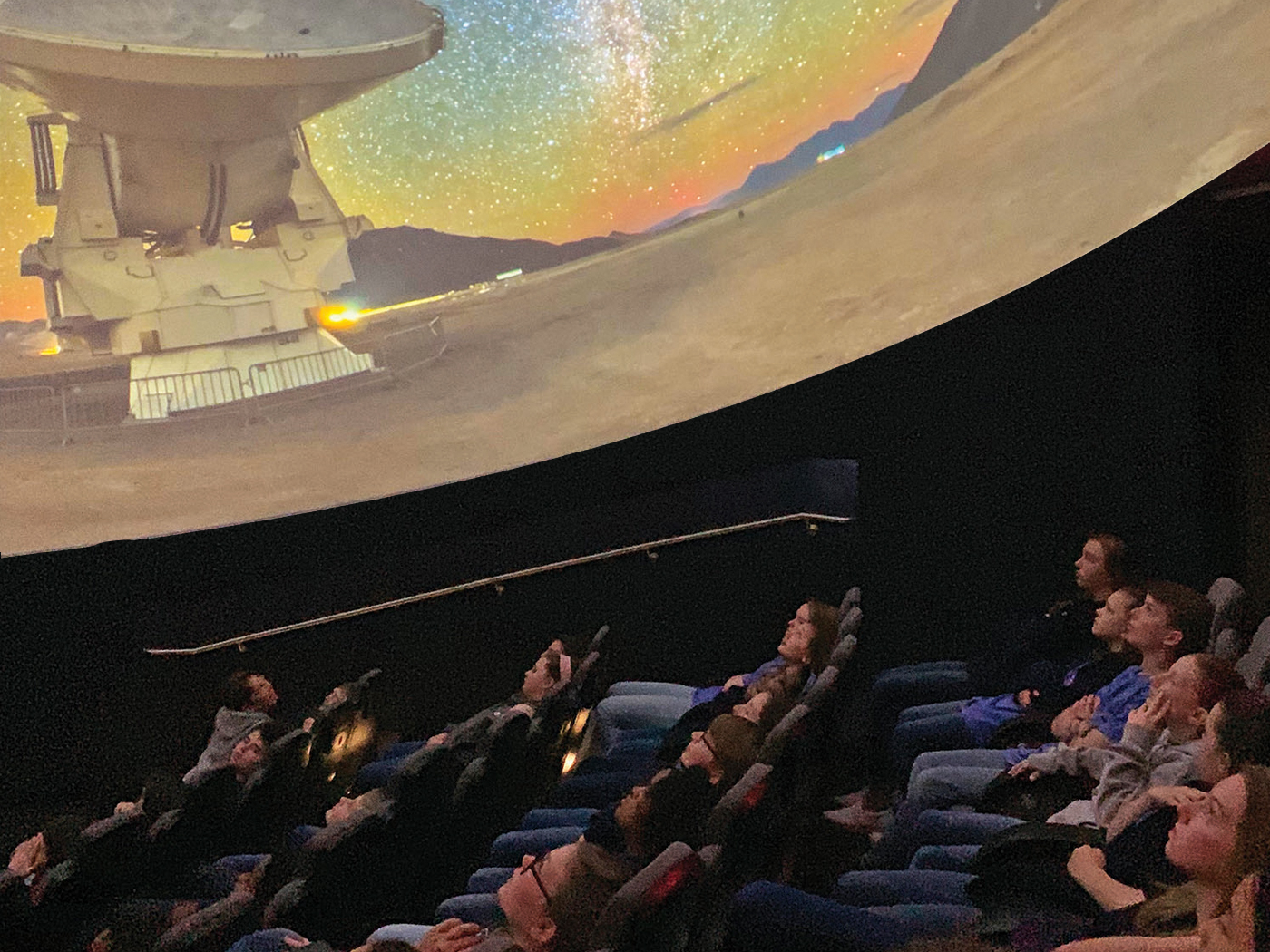 Welcome!As I write this, the ICR Discovery Center for Science & Earth History is buzzing with activity. Skilled technicians are installing finishing touches to exhibits, and ICR staff members are making...
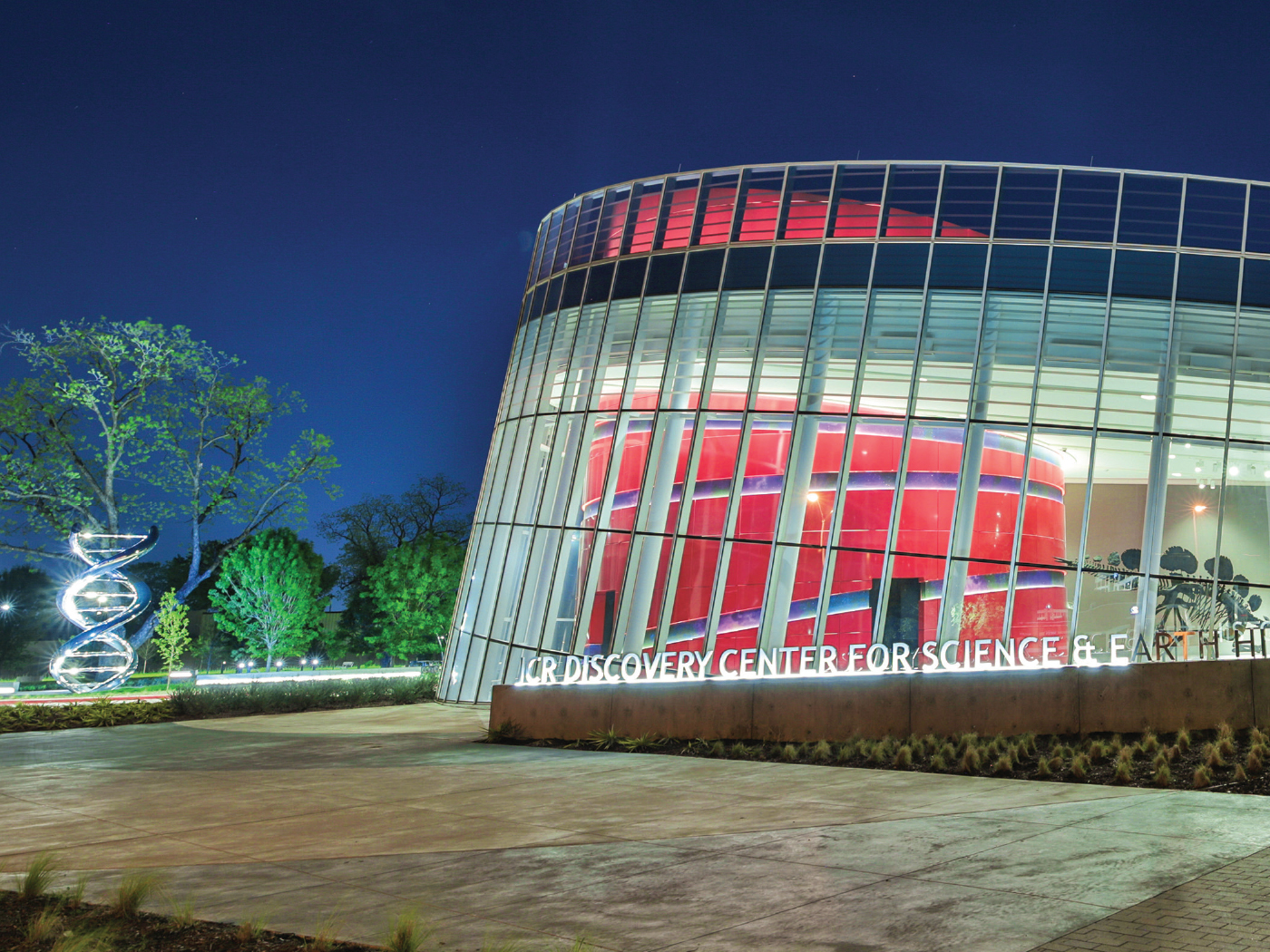 Taking God at His WordFor by Him all things were created that are in heaven and that are on earth, visible and invisible, whether thrones or dominions or principalities or powers. All things were created through Him and...
 Collagen Decays Too Fast for Evolutionary TimeCollagen is a tough, stringy protein that holds bone together like the steel belts in tires. Secular scientists struggle to explain why so many different techniques have found positive detections of...
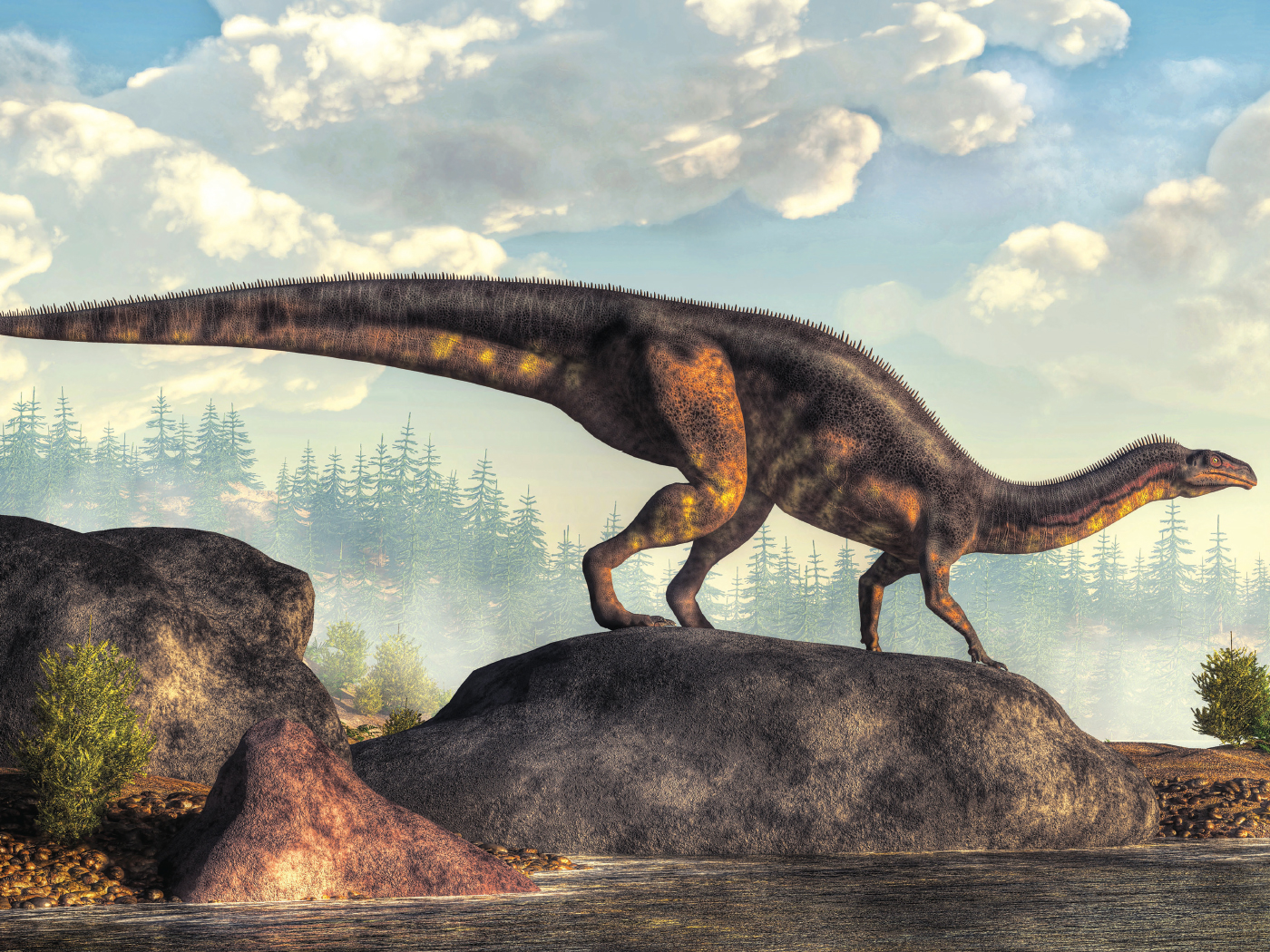 Deep-Sea Dinosaur Fossil Buries EvolutionTim Clarey, Ph.D., and James J. S. Johnson, J.D., Th.D. Oil and gas explorations have found sedimentary deposits so massive and so far offshore that secular science has no satisfactory explanation...
 Complex Creature Engineering Requires a CreatorHigh-Tech Bat Sonar Bats are a remarkable example of God’s handiwork. Especially, their sonar capabilities put anything human-engineered to shame.1,2 These creatures appear suddenly...
 The Syrinx SongThe rippling murmur of a mountain brook, the intertwining notes of a Chopin nocturne, and the melodious sounds of most birds are a tonic to soothe the soul. What makes the unique sounds of birds...
 ICR Discovery Center UpdateThis summer has required all hands on deck as we prepare for the grand opening of the ICR Discovery Center for Science & Earth History on Labor Day, September 2. The exhibit hall has constantly...
 Engineered Adaptability: Continuous Environmental Track.,.For the past two years, the Engineered Adaptability series of articles has explored ways in which scientific methodology and understanding benefit when engineering principles are applied to how living...
 Where Did Faces Come From?Animals don’t laugh, smirk, roll their eyes, or give subtle squints like humans do. Hundreds of different tiny facial expressions can convey our thoughts and feelings in an instant—all using...
 Genesis Is Not a Sanitized MythYears ago, while I was teaching a college class, a non-Christian student chided me for treating the book of Genesis as true history. With fake flattery, the student went on to say, “I’m...
 Commitment to a Timeless MessageThe book The Genesis Flood has rightly been credited as the catalyst of the modern revival of scientific biblical creationism. Published in 1961 and still in print, no other work has had such a profound...
Full versions of current and previous Acts & Facts can be viewed online in PDF format using the free Adobe® Acrobat® Reader.
You can subscribe to receive a free subscription to Acts & Facts by clicking here.
[body_edit] =>Why did we build the ICR Discovery Center for Science & Earth History? What solved mystery near Norway confirms Flood geology? How do bats, bees, and butterflies reveal the intricate design of God’s handiwork? And where did faces come from? Discover the answers to these questions and more in the August 2019 issue of Acts & Facts! [MACRO aaf_article, 11433] [MACRO aaf_article, 11434] [MACRO aaf_article, 11435] [MACRO aaf_article, 11436] [MACRO aaf_article, 11437] [MACRO aaf_article, 11438] [MACRO aaf_article, 11439] [MACRO aaf_article, 11440] [MACRO aaf_article, 11441] [MACRO aaf_article, 11442] [MACRO aaf_article, 11443]
Full versions of current and previous Acts & Facts can be viewed online in PDF format using the free Adobe® Acrobat® Reader.
You can subscribe to receive a free subscription to Acts & Facts by clicking here.
[typeID] => 9 [visible] => t [pdf] => [publishURL] => inside-august-2019-acts-facts [publishDate] => 0000-00-00 [authorAsterisk] => f [domainID] => 1 [publication] => [volume] => [issue] => [page] => [author] => Staff Writer ) -->
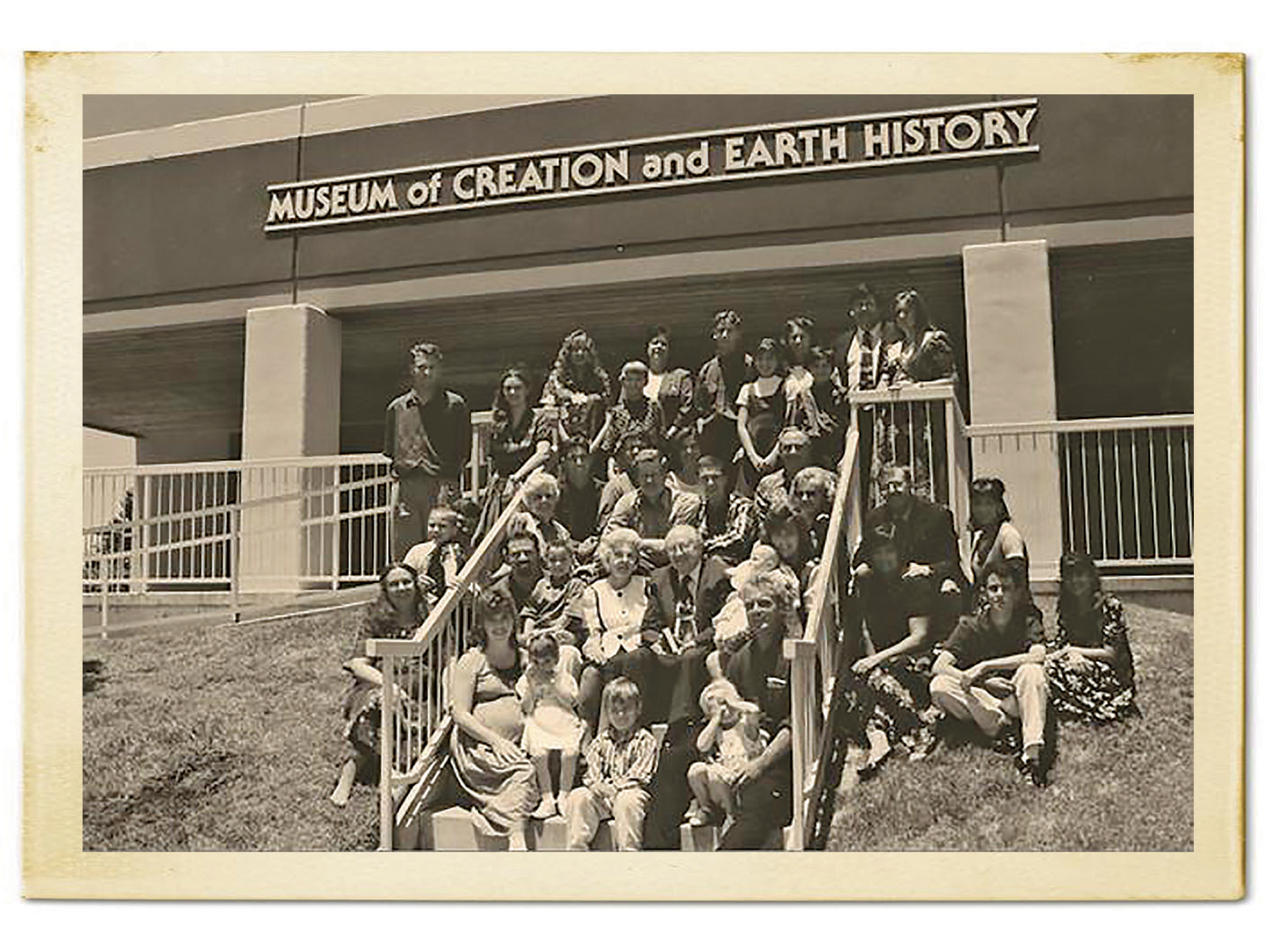 MilestonesIn this month’s feature article, “For Such a Time as This,” we see moments, snapshots in time, of the life of ICR founder Dr. Henry Morris: accepting Christ, going to Rice University,...
 For Such a Time as ThisThis article sets forth the background and mission of the Institute for Creation Research, as I have envisioned from the start. A key purpose of ICR is to bring the field of education—and then...
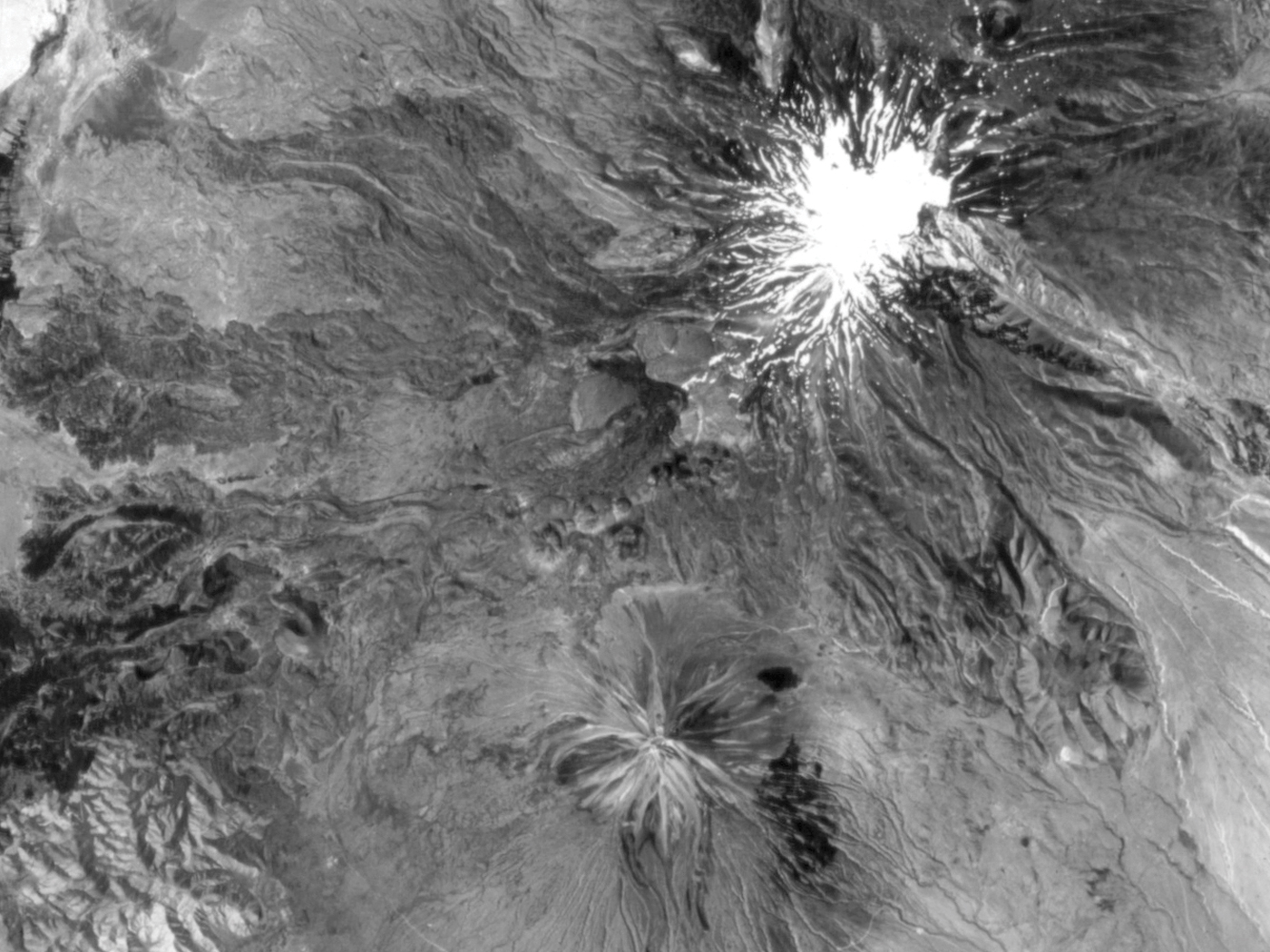 The Ark Landed West of Mt. AraratICR’s Column Project, which has been compiling stratigraphic data from across the globe, is currently examining Turkey’s geology, including the area around Mt. Ararat. One question of interest...
 Five Global Evidences for a Young EarthThe evolutionary story requires millions and billions of years, and most people assume that scientific dating has conclusively proved such ages. However, most dating methods yield age estimates that...
 Intricate Animal Designs Demand a CreatorEvidence of our Creator is all around us. Romans 1:19-20 states, “What may be known of God is manifest in [people], for God has shown it to them. For since the creation of the world His invisible...
 Surprise! Deep-Sea Fish See ColorsOnly sunlight’s most intense color (blue) penetrates beyond 180 meters (590 feet) through clear ocean waters. Everyone knows that fish below such depths see an essentially black-and-white world....
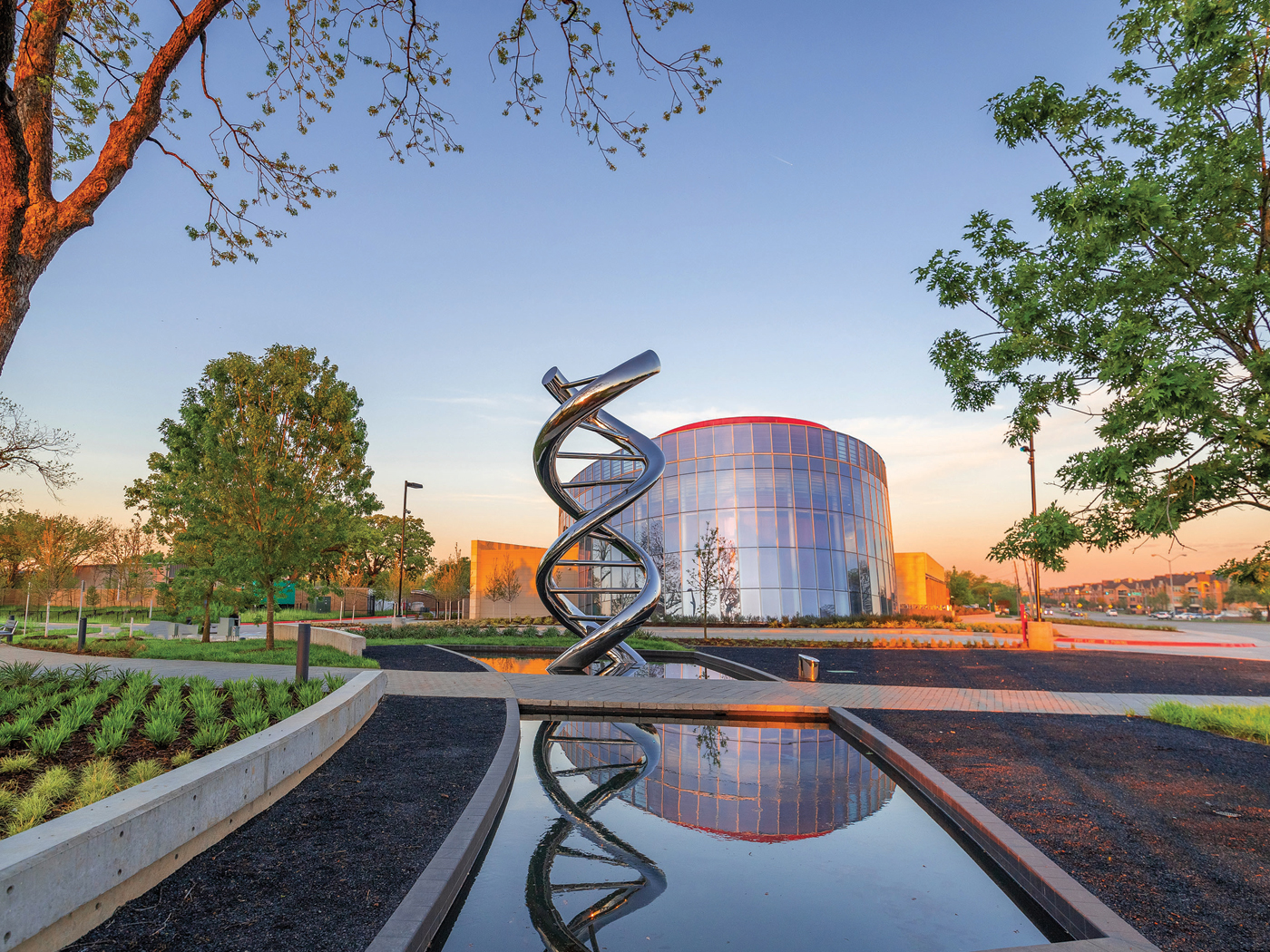 ICR Discovery Center UpdateThe public grand opening of the ICR Discovery Center for Science and Earth History is scheduled for September 2, 2019! In his article “Go For It!” in the September 2015 Acts & Facts,...
 Engineered Adaptability: Engineered Features Determine .,.Last month’s Engineered Adaptability article considered two examples of human-designed structures that were exposed to identical conditions but did not respond in the same way.1 For...
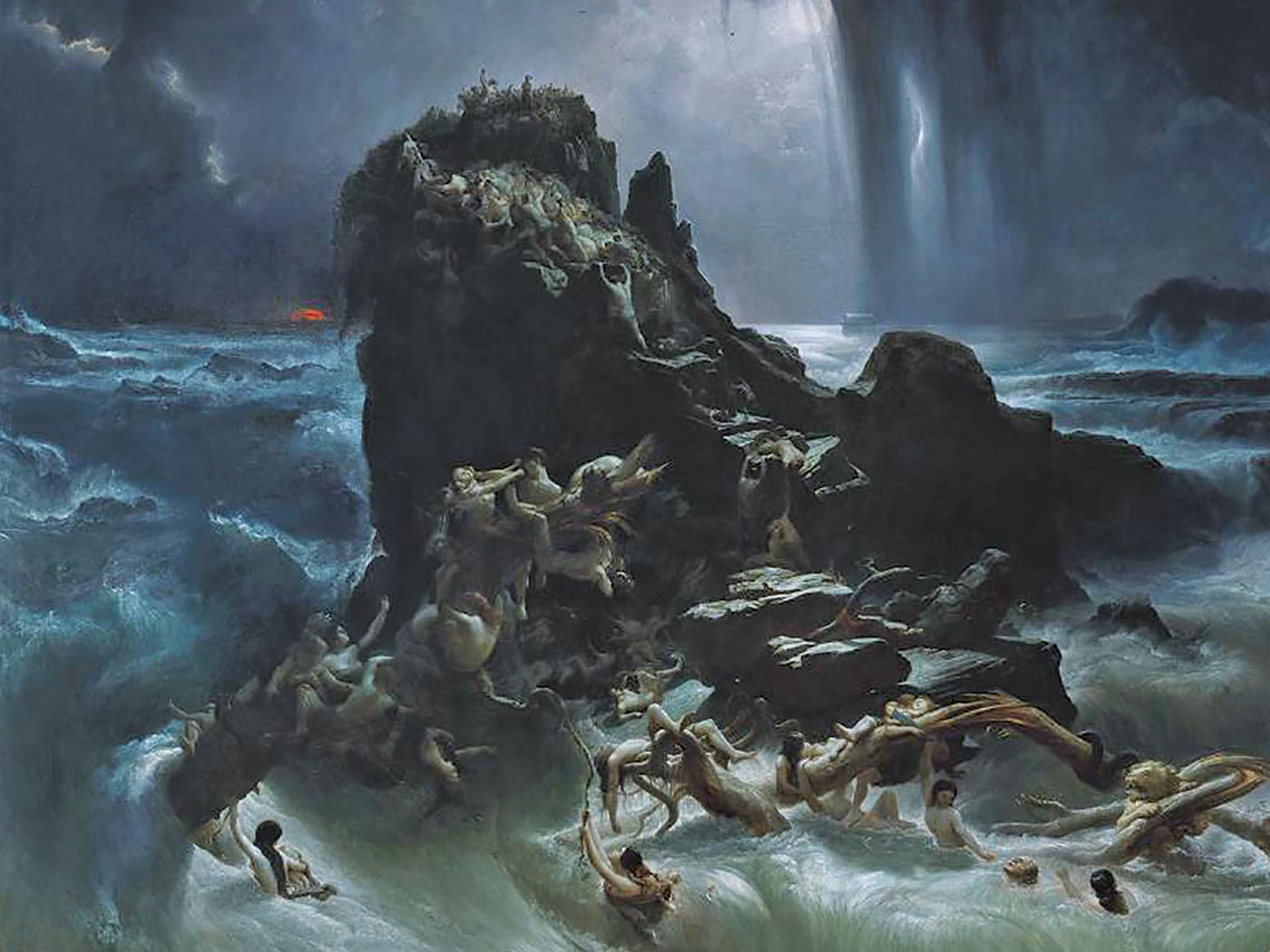 Was the Global Flood Too Extreme?Bible critics have long claimed the God of the Old Testament was unjust and mean. Some cite Noah’s Flood as an example: If God is really good, then why would He drown all those humans? The best...
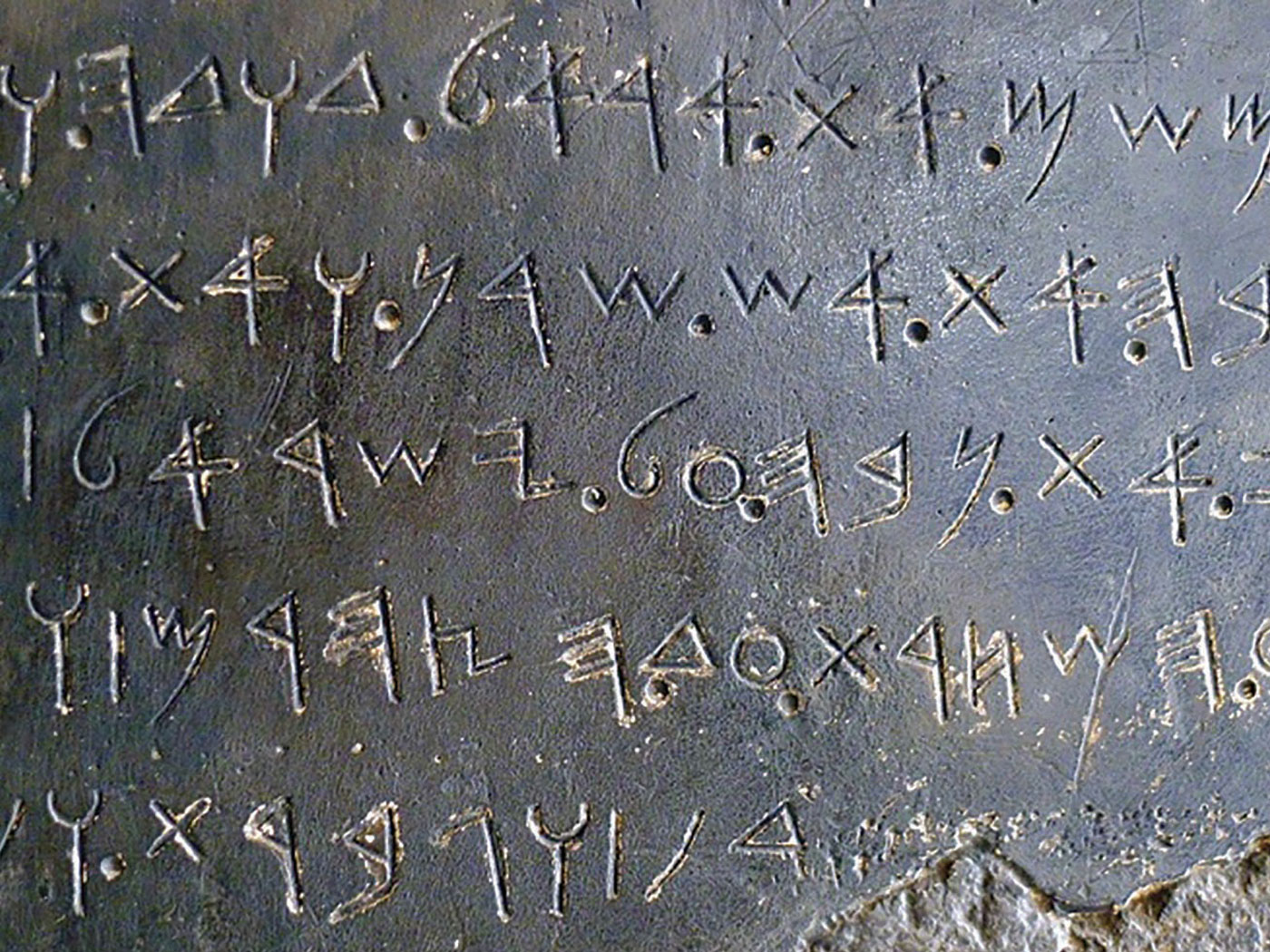 Moabite King's Boast Corroborates GenesisThe Moabite Stone was discovered in 1868 in Dibon (Dhiban in modern-day Jordan). Also called the Mesha Stele, it was set in place as a monument by King Mesha of Moab around 830 BC. The stone is not...
 Contend EarnestlyThe little book of Jude is a short but powerful statement against those who dilute and warp the gospel of grace and salvation through Christ. Written nearly 2,000 years ago to address the teachings...
Full versions of current and previous Acts & Facts can be viewed online in PDF format using the free Adobe® Acrobat® Reader.
You can subscribe to receive a free subscription to Acts & Facts by clicking here.
[body_edit] =>We're excited to announce the grand opening of the ICR Discovery Center for Science & Earth History! Be among the first to walk through our doors on Labor Day, September 2. Will we see you on opening day? How do animals reveal God's handiwork? Why did God flood the whole world? And how does archaeology confirm biblical history? Discover the answers to these questions and more in the July 2019 issue of Acts & Facts! [MACRO aaf_article, 11376] [MACRO aaf_article, 11377] [MACRO aaf_article, 11378] [MACRO aaf_article, 11379] [MACRO aaf_article, 11380] [MACRO aaf_article, 11381] [MACRO aaf_article, 11382] [MACRO aaf_article, 11383] [MACRO aaf_article, 11384] [MACRO aaf_article, 11385] [MACRO aaf_article, 11386]
Full versions of current and previous Acts & Facts can be viewed online in PDF format using the free Adobe® Acrobat® Reader.
You can subscribe to receive a free subscription to Acts & Facts by clicking here.
[typeID] => 9 [visible] => t [pdf] => [publishURL] => inside-july-2019-acts-facts [publishDate] => 2019-07-02 [authorAsterisk] => f [domainID] => 1 [publication] => [volume] => [issue] => [page] => [author] => Staff Writer ) -->
 How Has ICR Changed Your Life?When we recently asked our Facebook followers how ICR has changed their lives, we received so many compelling stories. One reader said, “It’s made a few gray areas a lot clearer.”...
 Genesis and the Character of GodThen God saw everything that He had made, and indeed it was very good. (Genesis 1:31) The message of Genesis isn’t confusing. The information throughout the Bible is consistent: The universe...
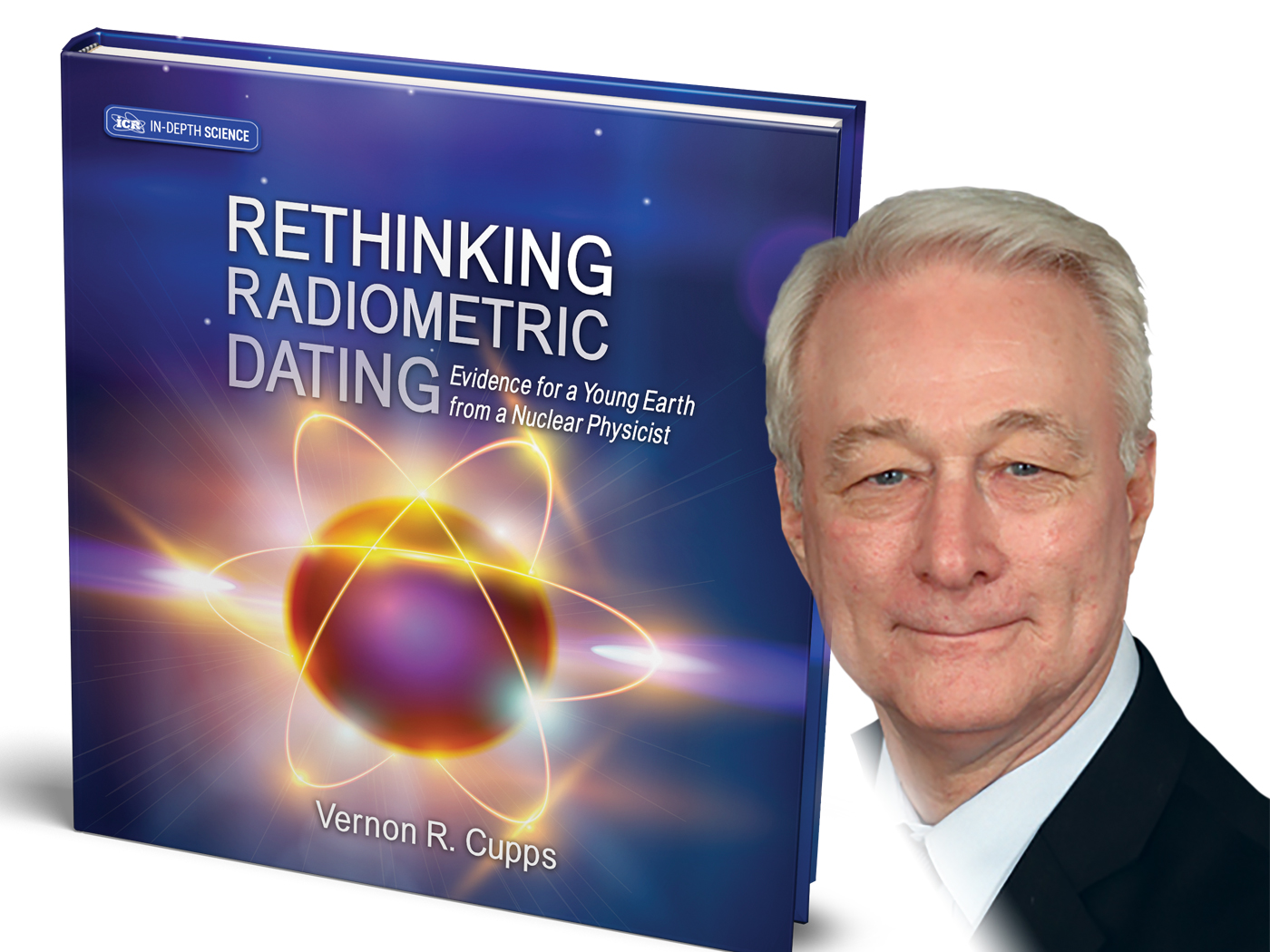 The Truth about Radiometric DatingProve it. That’s the challenge biblical creationists often face when discussing the scientific validity of the Genesis creation account with skeptics. Many people leave the church, especially...
 Four Geological Evidences for a Young EarthMost people believe rock layers require millions of years to form. This assumption has been taught as fact to geology students and the public for generations. In reality, rocks of any type can and do...
 The Genesis Flood and EvangelismSome Christians claim that insisting on a literal Genesis is a hindrance to evangelism. Since science has supposedly proved that the creation and Flood it describes weren’t real, historical events,...
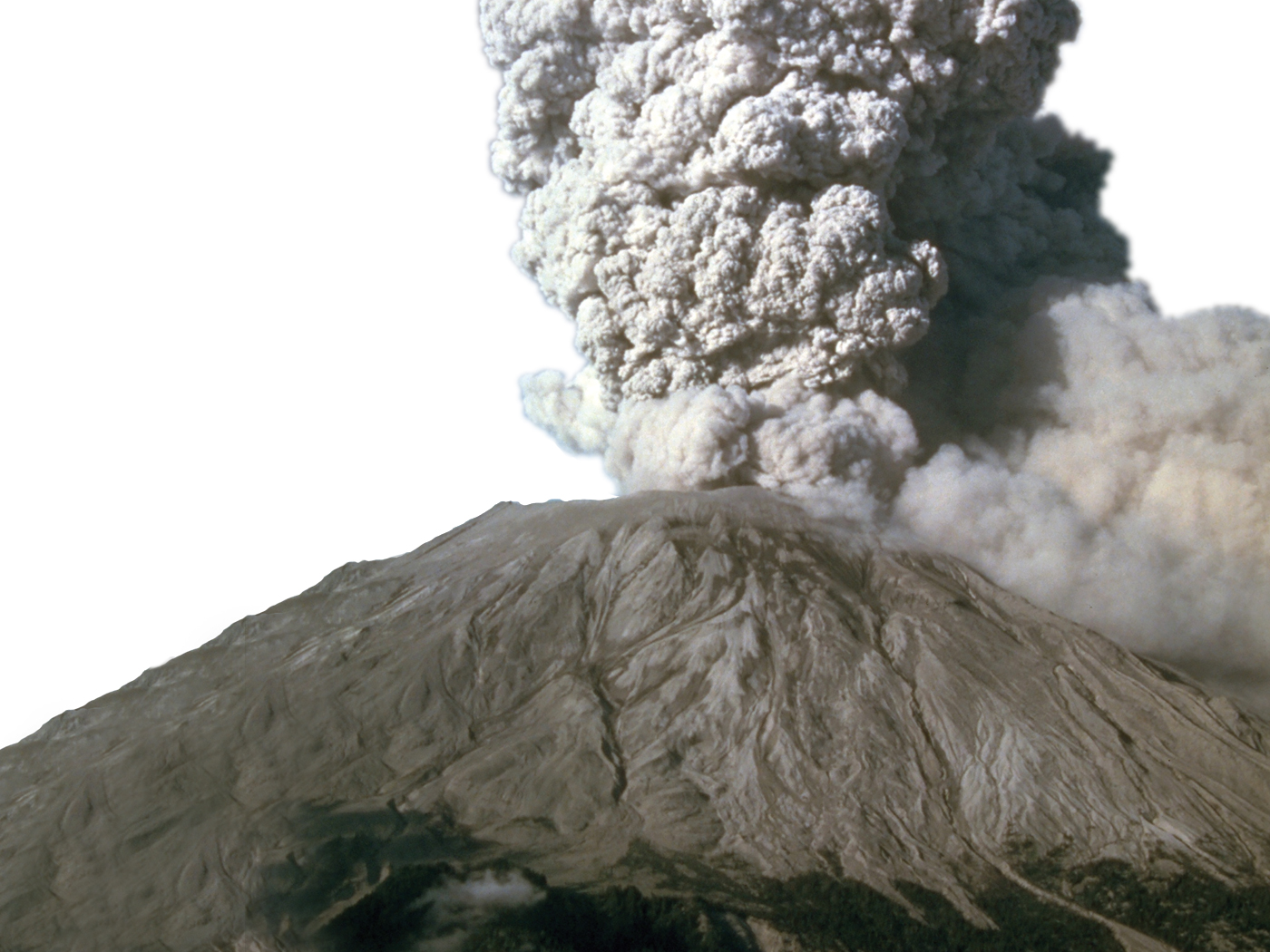 How Mount St. Helens Refutes EvolutionICR was recently pleased to host Gary Bates, CEO of Creation Ministries International-USA, for a private tour of the under-construction ICR Discovery Center for Science and Earth History.1...
 A Literal Adam Is a Gospel IssueWas there a literal Adam? Does it matter? Many academics and even Christians claim humans descended from apes through an evolutionary process over millions of years. This contradicts the biblical account...
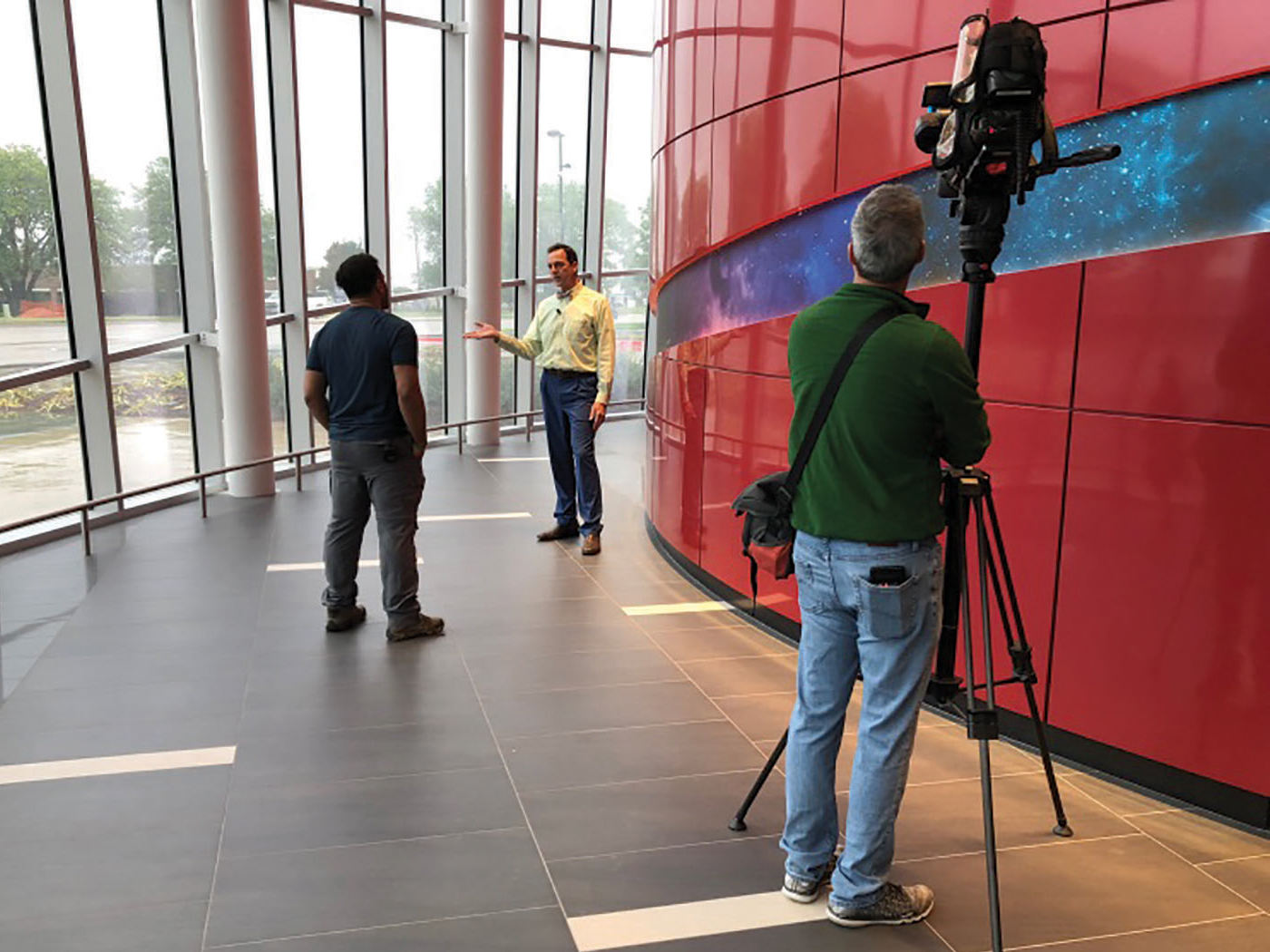 ICR Discovery Center UpdateA local TV reporter recently visited ICR’s campus in Dallas to do a brief news story highlighting the ICR Discovery Center for Science and Earth History.* While we’ve shared about the Discovery...
 Engineered Adaptability: Engineered Features Determine .,.Faster than a speeding bullet. More powerful than a locomotive. Able to leap tall buildings in a single bound. These are the tremendous feats—produced by the incredible traits—of the...
 What Happened to Dinosaurs after the Flood?Genesis says that “every beast after its kind…went into the ark to Noah, two by two, of all flesh in which is the breath of life.”1 Dinosaurs were beasts, and their fossil...
 Does Global Warming Threaten Bird Habitats?If you love birds, should you fight petroleum production in order to reduce greenhouse gas emissions? How you answer depends on whether you believe man-made global warming is threatening Earth’s...
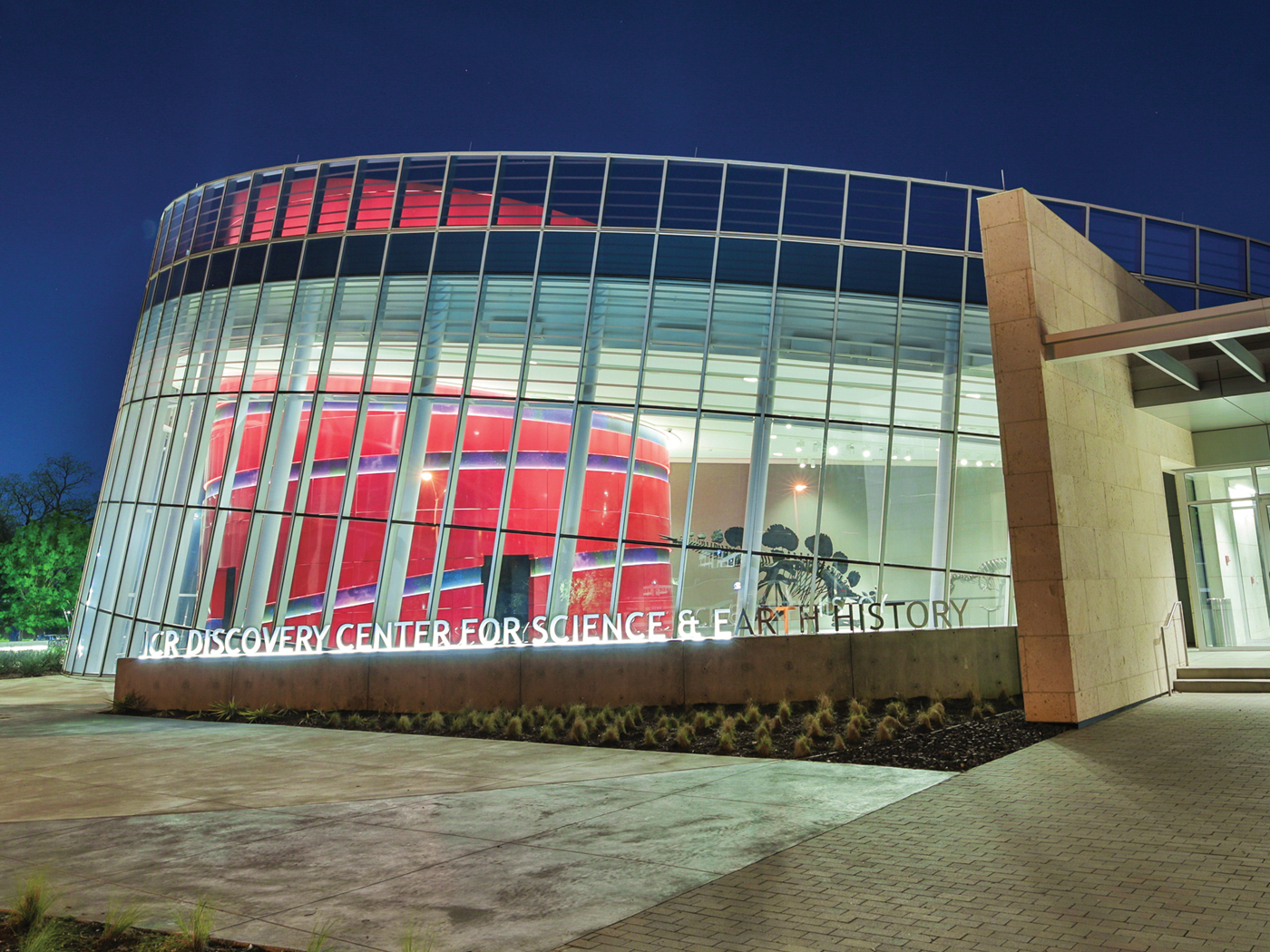 Laborers TogetherWith the arrival of warmer weather, the full beauty of the ICR Discovery Center for Science and Earth History’s park and surrounding grounds is now on glorious display. By day, visitors are welcomed...
Full versions of current and previous Acts & Facts can be viewed online in PDF format using the free Adobe® Acrobat® Reader.
You can subscribe to receive a free subscription to Acts & Facts by clicking here.
[body_edit] =>How can we resolve the conflicting message of a good creation with the evil that surrounds us? How does geological research uncover Earth’s youth? Why is a literal Adam a gospel issue? And what happened to the dinosaurs after the Flood? Discover the answers to these questions and more in the June 2019 issue of Acts & Facts! [MACRO aaf_article, 11292] [MACRO aaf_article, 11293] [MACRO aaf_article, 11294] [MACRO aaf_article, 11295] [MACRO aaf_article, 11296] [MACRO aaf_article, 11297] [MACRO aaf_article, 11298] [MACRO aaf_article, 11299] [MACRO aaf_article, 11300] [MACRO aaf_article, 11301] [MACRO aaf_article, 11302] [MACRO aaf_article, 11303]
Full versions of current and previous Acts & Facts can be viewed online in PDF format using the free Adobe® Acrobat® Reader.
You can subscribe to receive a free subscription to Acts & Facts by clicking here.
[typeID] => 9 [visible] => t [pdf] => [publishURL] => inside-june-2019-acts-facts [publishDate] => 2019-06-04 [authorAsterisk] => f [domainID] => 1 [publication] => [volume] => [issue] => [page] => [author] => Staff Writer ) -->
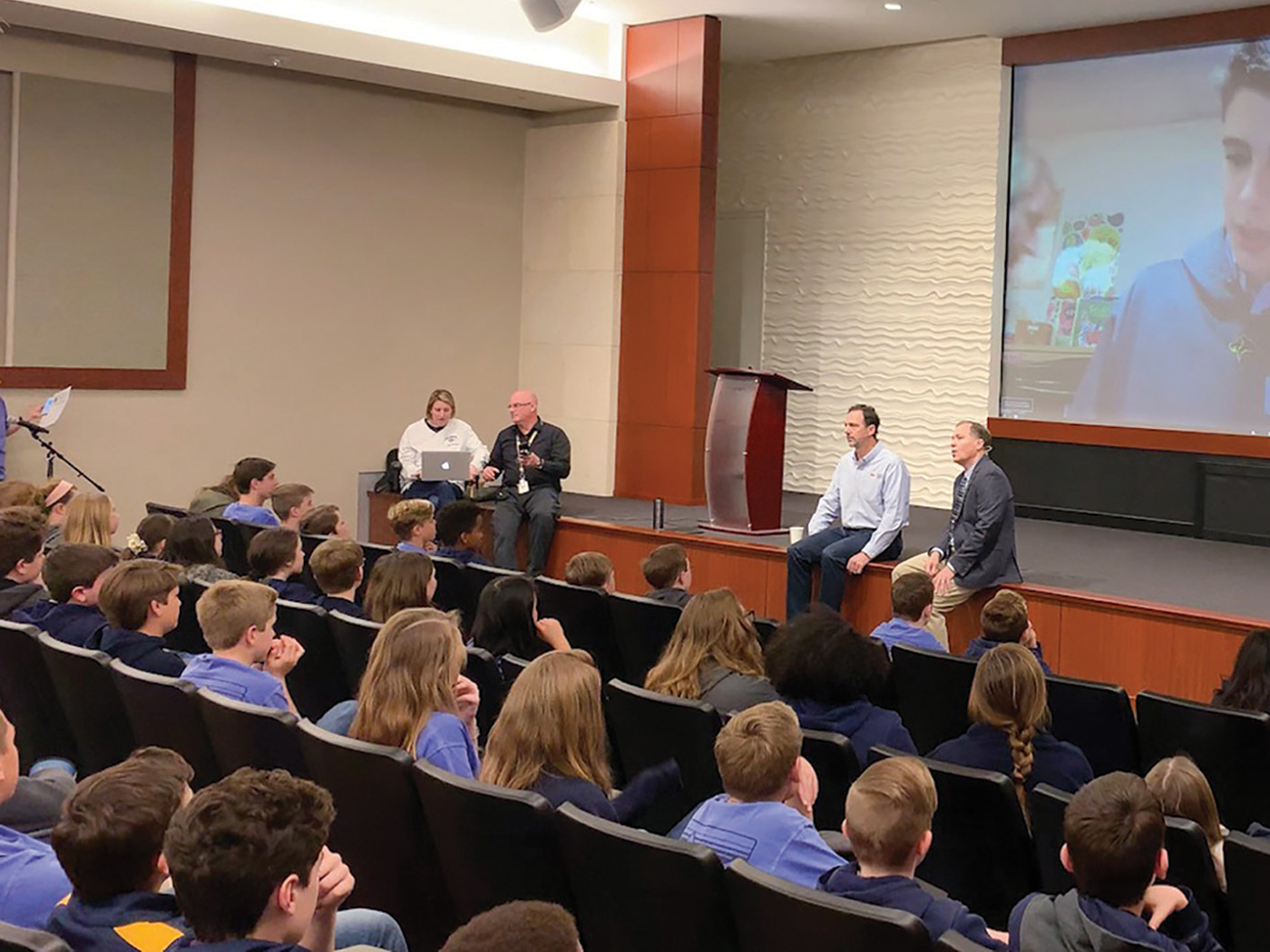 Asking Questions to Point Out Creation TruthThe Institute for Creation Research recently welcomed three busloads of sixth-graders for a sneak-peek experience inside our still-in-progress ICR Discovery Center for Science and Earth History. The...
 Toppling Ten Fake Facts That Prop EvolutionICR founder Dr. Henry Morris wrote in 2003, “Practically all the media strongly promote evolution and...the general public has been taught only evolution in public schools and secular colleges...
 Rocks Reveal the End of the FloodOne of the most important aspects of any Flood model is the definition of its boundaries. Is there an identifiable layer in the rock record where we can say the global Flood ended? And should we expect...
 Six Biological Evidences for a Young EarthWhat does the Bible tell us about the age of the earth? Not only does the Bible describe how God created Earth and its life forms in six days, Genesis also contains detailed genealogies and chronologies....
 Mongolia, Montana, and My BibleI recently completed an online college course on Cretaceous dinosaurs from China, centering on fossils from the Erlian Formation. These rock layers lie in a big basin near the Mongolian border. Clues...
 Scientific and Biblical Truth Converge for Gopher WoodJeffrey P. Tomkins, Ph.D., and James J. S. Johnson, J.D., Th.D. Scientific facts can sometimes yield surprising biblical insight. For example, lignins make hardwood trees hard. They are a complex...
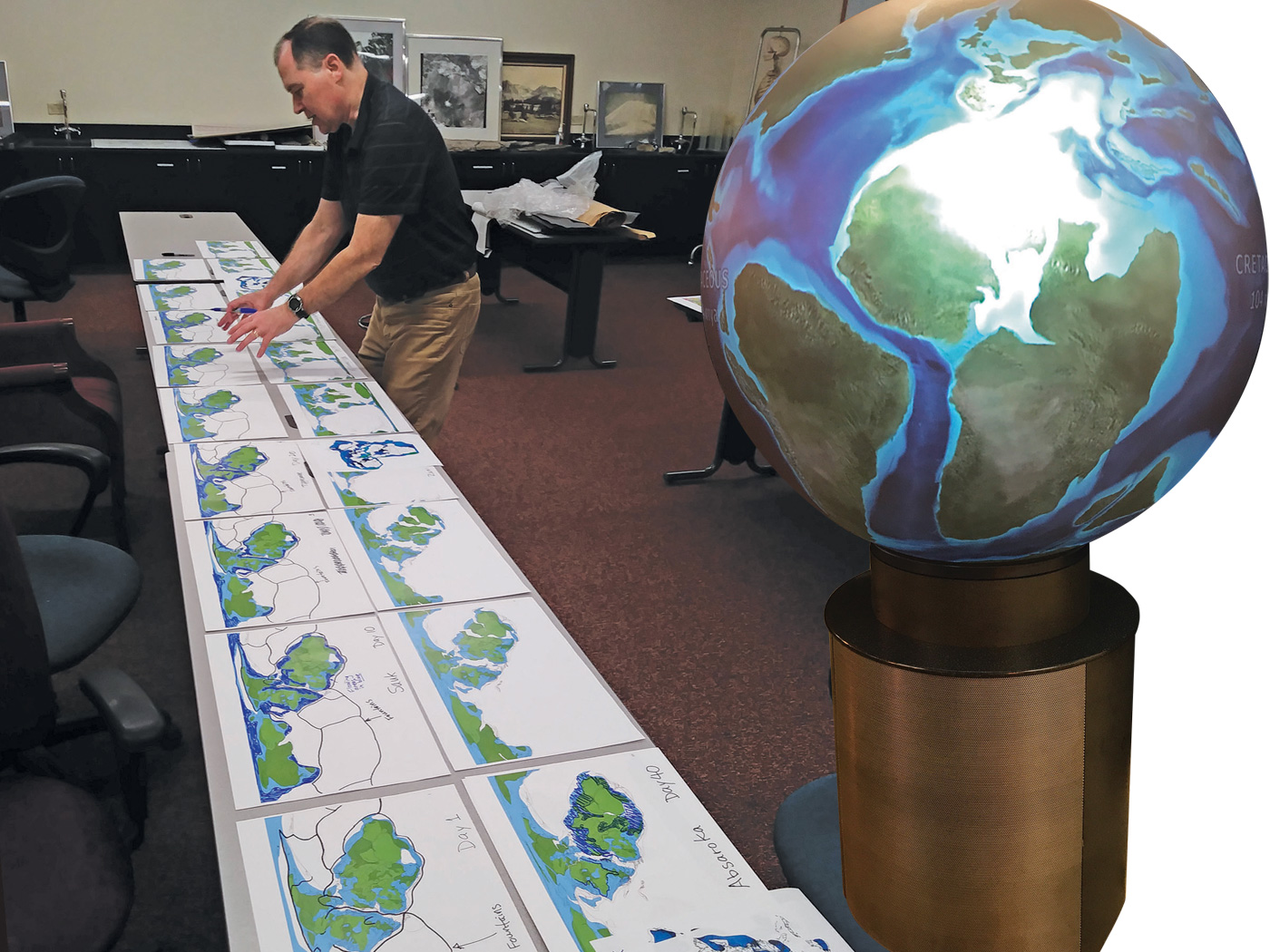 ICR Discovery Center UpdateHow can you wrap your mind around the idea of a worldwide flood that covered all the highest hills and mountains? Wouldn’t it be helpful—and fascinating—to see the global Flood year...
 Engineered Adaptability: Blockchain-Like Process May Pr.,.Phil B. Gaskill and Randy J. Guliuzza, P.E., M.D. The previous article in the Engineered Adaptability series focused on how a population might continuously track environmental changes.1...
 Does Biblical Creation Help Us Glorify God?How well do you glorify God? Robbing God of glory is serious, as illustrated in this brief account in the book of Acts: “So, on a set day Herod, arrayed in royal apparel, sat on his throne and...
 The Circle of the EarthIt is He who sits above the circle of the earth, and its inhabitants are like grasshoppers, who stretches out the heavens like a curtain, and spreads them out like a tent to dwell in. (Isaiah 40:22) Some...
 Stewardship, Science, and Sharing EvidenceGod first expressed His great love toward mankind in the first chapter of the first book of the Bible. “Then God blessed them, and God said to them, ‘Be fruitful and multiply; fill the earth...
Full versions of current and previous Acts & Facts can be viewed online in PDF format using the free Adobe® Acrobat® Reader.
You can subscribe to receive a free subscription to Acts & Facts by clicking here.
[body_edit] =>How can you help friends recognize the solid science that confirms creation? What discoveries from biological research support the Bible? How will the ICR Discovery Center showcase geological research? And how does biblical creation help us glorify God? Discover the answers to these questions and more in the May 2019 issue of Acts & Facts! [MACRO aaf_article, 11271] [MACRO aaf_article, 11272] [MACRO aaf_article, 11273] [MACRO aaf_article, 11274] [MACRO aaf_article, 11275] [MACRO aaf_article, 11276] [MACRO aaf_article, 11277] [MACRO aaf_article, 11278] [MACRO aaf_article, 11279] [MACRO aaf_article, 11280] [MACRO aaf_article, 11281]
Full versions of current and previous Acts & Facts can be viewed online in PDF format using the free Adobe® Acrobat® Reader.
You can subscribe to receive a free subscription to Acts & Facts by clicking here.
[typeID] => 9 [visible] => t [pdf] => [publishURL] => inside-may-2019-acts-facts [publishDate] => 2019-05-01 [authorAsterisk] => f [domainID] => 1 [publication] => [volume] => [issue] => [page] => [author] => Staff Writer ) -->
[body_edit] =>
News reports reverberated with details from a fantastic new fossil site in southern China.1 The Cambrian remains supposedly represent some of the earliest creatures to have evolved on Earth, but two telling details show why these fossils fit better with biblical creation.
Researchers described in the journal Science the unique set of animals buried in black Cambrian siltstone layers.2 Cambrian rock layers are some of the lowest layers on Earth, and thus the earliest to get buried with fossils in them. These sediments bear secular age assignments upwards of 500 million years. Seen through an evolutionary lens, these early layers captured the earliest animals to have supposedly evolved—the so-called basal life forms.
The study authors wrote, “The Qingjiang biota, however, is marked by high abundance and diversity of exceptionally preserved cnidarian fossils, which fills a major gap in knowledge of the morphology [body shapes] and diversity of Cambrian basal metazoans.” Cnidarians include jellyfish and sea anemones. Metazoan refers to any animal made of a variety of different tissues like jellyfish, hagfish, and people. But what do the authors mean when they speak of a major knowledge gap?
The “major gap in knowledge” points back to the challenge of the Cambrian explosion. In short, all basic life forms suddenly appear in their completed forms in these early rocks. Evolution-inspired questions include: From what did the first metazoan evolve? As animals with some of the fewest tissue types, did cnidarians evolve into other life forms? If so, when? When and how did cnidarians evolve? Over a century of fossil studies has answered none of these evolutionary questions, leaving a major gap in knowledge.
The evolutionary story points to simple creatures with few tissue types that supposedly evolved into completely different creatures with new tissue types and whole new organs, organ systems, and body plans. Unfortunately, the only fossil information available to fill this stunning knowledge gap is the presence of regular old jellyfish.
Rather than revealing a record of life rising from raw toward refined forms, we find…more jellyfish.
The study authors found other “living fossils”—fossils in lower layers that look just like modern life forms but are absent from upper layers. The researchers wrote, “It appears that the ctenophore body plan has remained essentially unchanged since the Cambrian explosion.”1 Ctenophores are comb jellies. They are fragile like jellyfish but usually smaller and unique in other ways, found in various discrete kinds throughout the oceans as well as the fossils.
Another group of modern look-alikes found among the Qingjiang rocks include mud dragons of the phylum Kinorhyncha. These tiny worm-like creatures burrow through seafloor mud in search of algae, bacteria, and organic matter. Apparently they were doing that since the dawn of time. The team also found plenty of run-of-the-mill algae.
Of course, the Qingjiang biota comes loaded with extinct animals that died alongside these modern lookalikes. Extinctions show dead-ends of life history—evolution needs open doors. It needs in-between animals. Where are they? The ones we actually see come fully formed right from the start.
All these and other living Cambrian fossils like sea pens,3 entoprocts,4 and fully formed fish5 fill that major gap in evolutionary speculations with creation-friendly finds: God made each creature to reproduce in accord with its own kind, not to change between different basic kinds. No wonder we see so many unchanging animals from fossils to today’s animals.
The second telling detail that better fits biblical creation involves the unique way these fossils formed. The study authors wrote,
Soft-bodied organisms of the Qingjiang biota were entrained [captured en masse] by sediment-gravity flows and transported downslope from habitable environments to nearby anoxic [low oxygen] settings that lay below storm wave base, and rapidly buried, without subsequent disturbance by bioturbation.1
Where does this happen in today’s world? Gravity flows sometimes happen just offshore in narrow sea floor valleys (not in widespread layers), but they don’t preserve the animals they entrain because the sediments stay wet. Worms and clams soon churn through the new deposits searching for food in a process called bioturbation. Any animal remains beneath mud get eaten or simply rot. That didn’t happen at Qingjiang. There, and in vast sedimentary beds on every continent, rapid burial and then dewatering helped preserve billions of ancient carcasses. These sea remnants now found atop the world’s continents sit as silent but widespread reminders of the unique and terrible watery catastrophe described in Scripture.
Stable life forms point to Genesis creation according to kinds. Extinct animal fossils show no evolution either. Extensive rapid burial beneath ancient waters points to Noah’s Flood. That’s why biblical creation best explains the Qingjiang biota’s main features.
References
1. Weisberger, W. Bonanza of Bizarre Cambrian Fossils Reveals Some of the Earliest Animals on Earth. LiveScience. Posted on livescience.com March 21, 2019, accessed March 25, 2019.
2. Fu, D., et al. 2019. The Qingjiang biota—A Burgess Shale-type fossil Lagerstätte from the early Cambrian of South China. Science. 363 (6433): 1338-1342.
3. Batten, D. 2019. Sea Pens. Creation. 41(2): 20-21.
4. Tomkins, J. Another Cambrian Discovery Discredits Evolution. Creation Science Update. Posted on ICR.org January 30, 2013, accessed March 25, 2019.
5. Thomas, B. Cambrian Fossil Intensifies Evolutionary Conundrum. Creation Science Update. Posted on ICR.org September 26, 2014, accessed March 25, 2019.
Stage image: leanchoilia
Stage image credit: Copyright © 2019 D. Fu et al. Science. Adapted for use in accordance with federal copyright (fair use doctrine) law. Usage by ICR does not imply endorsement of copyright holders.
Brian Thomas is Science Writer at the Institute for Creation Research.
[typeID] => 9
[visible] => t
[pdf] =>
[publishURL] => stunning-chinese-fossils-support-creation
[publishDate] => 2019-04-02
[authorAsterisk] => t
[domainID] => 1
[publication] =>
[volume] =>
[issue] =>
[page] =>
[author] => Brian Thomas, Ph.D.
)
-->

 Changing Lives One at a TimeI recently worked a booth at a Dallas women’s conference, where ICR sponsored a table. We provided free books, magazines, devotionals, and information to anyone who stopped by our display. That...
 Theophanies in the Old Testament: The Creator at Work i.,.As Easter approaches, we tend to focus our reflections on the life, death, and glorious resurrection of Christ. We even mark the timeline of history by whether events happened before (BC) or after (AD)...
.jpg) Marine Fossils Mixed with Hell Creek DinosaursRecently, a new species of shark was found at the site where T. rex “Sue” was extracted.1 While this didn’t surprise Flood geologists,2 it required some special...
Marine Fossils Mixed with Hell Creek DinosaursRecently, a new species of shark was found at the site where T. rex “Sue” was extracted.1 While this didn’t surprise Flood geologists,2 it required some special... Climate Alarmism and the Age of the EarthMany evangelical Christians think global warming is a serious issue that demands drastic action.1 At the Institute for Creation Research we tend to be skeptical of the claim that increasing...
 Recent Humans with Archaic Features Upend EvolutionIdeas shaping the concept of human evolution have largely played out through images. Characters with large brow ridges and sloping foreheads—including Homo neanderthalensis and Homo erectus—have...
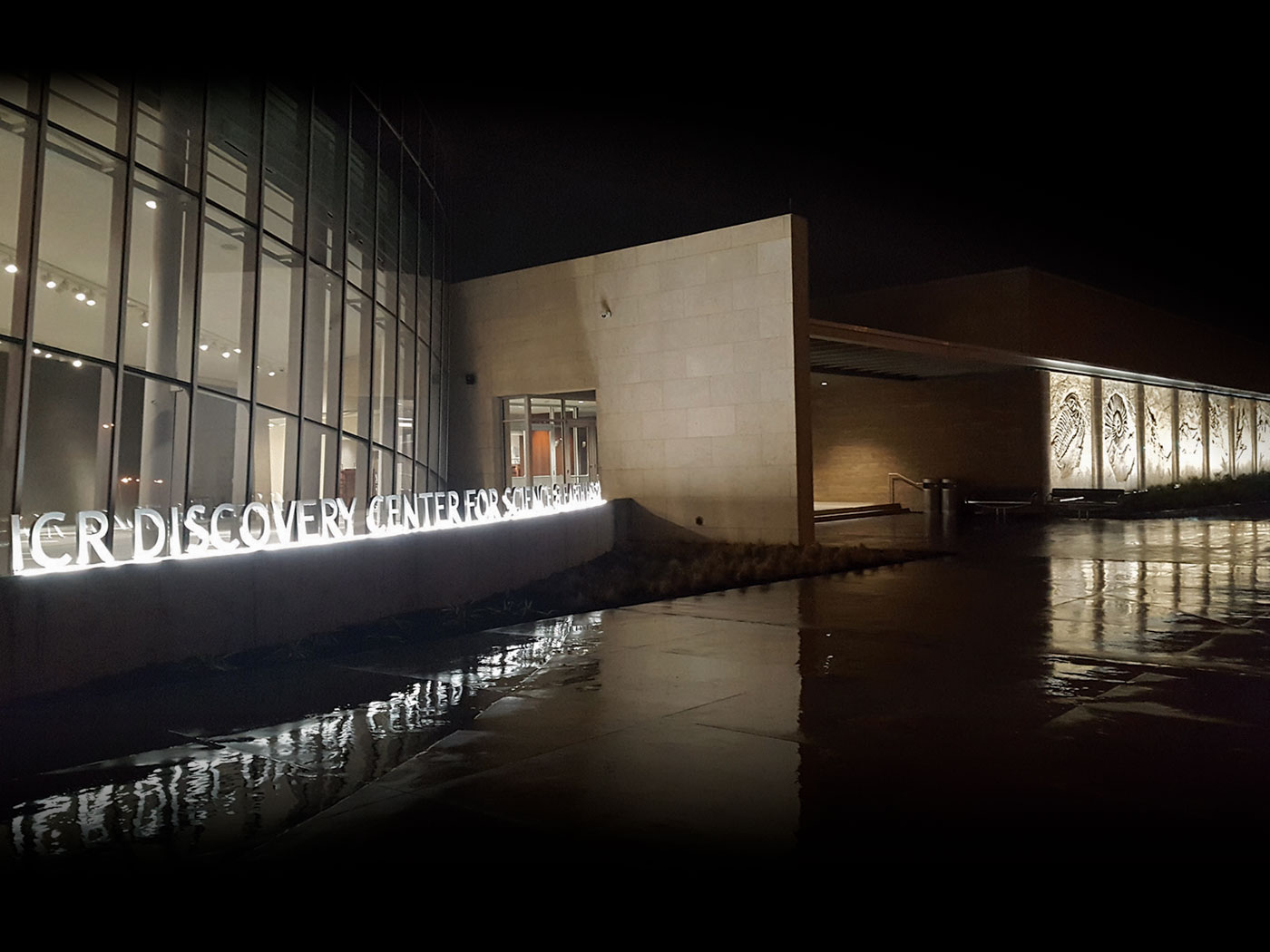 ICR Discovery Center UpdateThe outside of the ICR Discovery Center for Science and Earth History is nearing completion! The nine giant fossil replica panels were recently lifted into place on the outer wall next to Royal Lane....
.jpg) Engineered Adaptability: New Distributed Problem-Solvin.,.Phil B. Gaskill and Randy J. Guliuzza, P.E., M.D. The Engineered Adaptability series of articles in Acts & Facts has argued that most adaptations—broadly mischaracterized as “evolution”...
Engineered Adaptability: New Distributed Problem-Solvin.,.Phil B. Gaskill and Randy J. Guliuzza, P.E., M.D. The Engineered Adaptability series of articles in Acts & Facts has argued that most adaptations—broadly mischaracterized as “evolution”...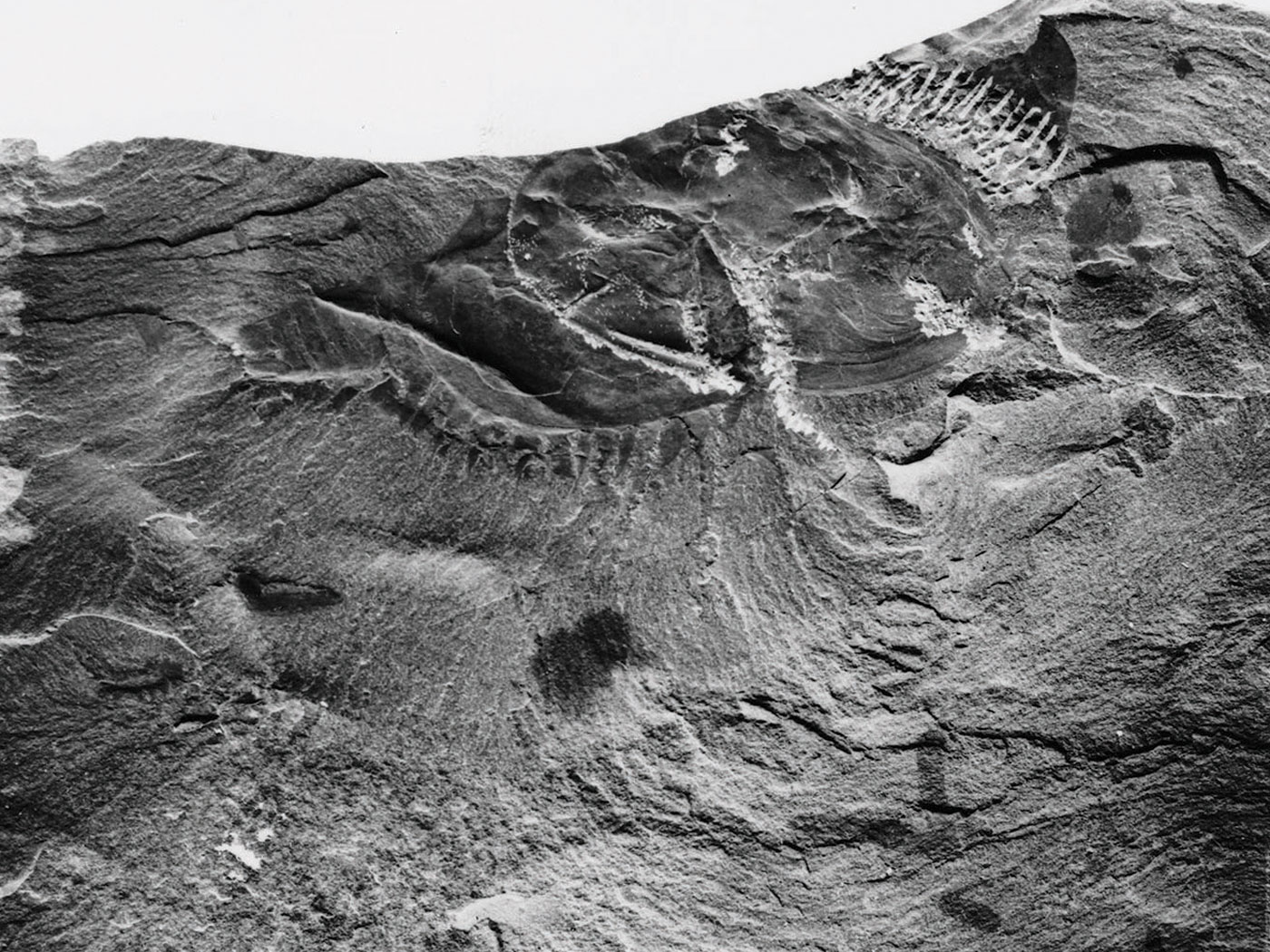 Are Fossils Just Rocks Shaped like Bones?I picked up my first fossil from beneath a swing in Kansas when I was six years old. Fossils have fascinated me ever since. Soon after, our family visited a dinosaur museum. The nice lady there explained...
.jpg) Termite Skyscrapers Hidden in Plain ViewMany evolutionists fail to see what is “hidden in plain view” for the same reason British Celts saw the wrong thing when Julius Caesar attacked them in 54 BC. Since the Britons never recruited...
Termite Skyscrapers Hidden in Plain ViewMany evolutionists fail to see what is “hidden in plain view” for the same reason British Celts saw the wrong thing when Julius Caesar attacked them in 54 BC. Since the Britons never recruited... T. rex, Tours, and TestimoniesNearly a year has passed since work began on the internal exhibits of the ICR Discovery Center for Science and Earth History. Our lifelike animatronic T. rex was the first major installation in April...
Full versions of current and previous Acts & Facts can be viewed online in PDF format using the free Adobe® Acrobat® Reader.
You can subscribe to receive a free subscription to Acts & Facts by clicking here.
[body_edit] =>How has God used ICR to draw people to Christ? Why do we find marine and dinosaur fossils mixed together? How should Christians respond to climate change alarmism? And what can we learn about our Creator when we study ecology? Discover the answers to these questions and more in the April 2019 issue of Acts & Facts! [MACRO aaf_article, 11251] [MACRO aaf_article, 11252] [MACRO aaf_article, 11253] [MACRO aaf_article, 11254] [MACRO aaf_article, 11255] [MACRO aaf_article, 11256] [MACRO aaf_article, 11257] [MACRO aaf_article, 11258] [MACRO aaf_article, 11259] [MACRO aaf_article, 11260]
Full versions of current and previous Acts & Facts can be viewed online in PDF format using the free Adobe® Acrobat® Reader.
You can subscribe to receive a free subscription to Acts & Facts by clicking here.
[typeID] => 9 [visible] => t [pdf] => [publishURL] => inside-april-2019-acts-facts [publishDate] => 2019-04-01 [authorAsterisk] => f [domainID] => 1 [publication] => [volume] => [issue] => [page] => [author] => Staff Writer ) -->
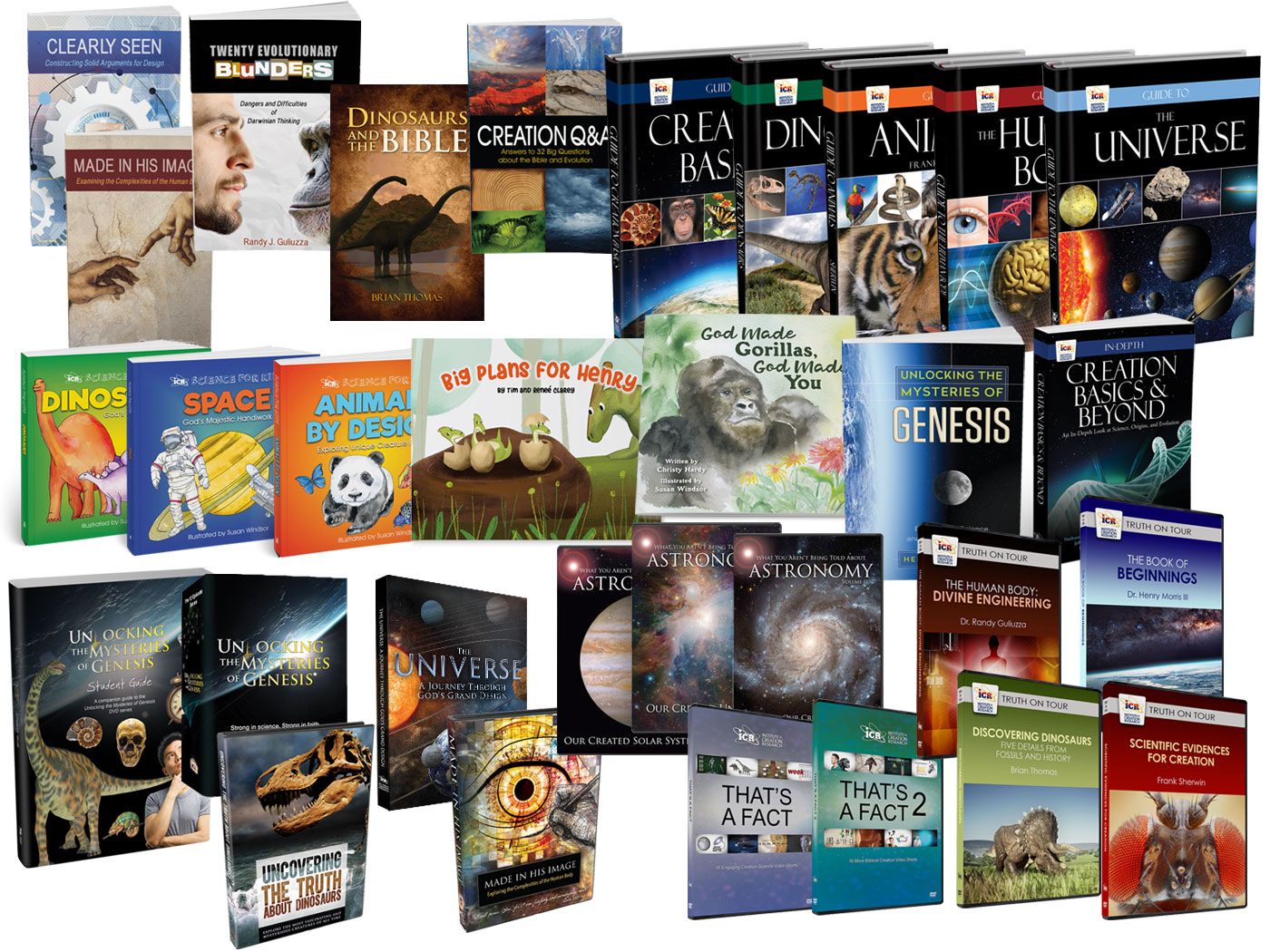 Springtime Planning for Fall LearningBy March, educators are in the homestretch of the current school year, yet they’re also busy planning for the next school year. I’d like to encourage you to consider adding ICR resources...
 An Appointed Time“For the vision is yet for an appointed time; but at the end it will speak, and it will not lie. Though it tarries, wait for it; because it will surely come, it will not tarry.” (Habakkuk...
 Subduction Was Essential for the Ice AgeCreation meteorologist Michael Oard has written extensively about what it takes to make an ice age. The first requirement is much warmer oceans than we have today, which would provide the extra evaporation...
 Does the Toast Model Explain Fossil Protein Persistence?About 10 years ago, I began tracking reports of soft tissue discoveries in fossils. By 2013, I had compiled a list of around 40 secular technical journal articles that describe either literal soft tissues...
 Are Creationists Biased?Creation critics object that creation scientists are biased. Since we seek answers to skeptical objections to the biblical account of creation, this supposedly means our research results are automatically...
 Engineered Adaptability: Creatures' Anticipatory System.,.On January 1, 2019, the American spacecraft New Horizons gathered close-up images of a rocky object over four billion miles from Earth. New Horizons launched in 2006 and was guided over three billion...
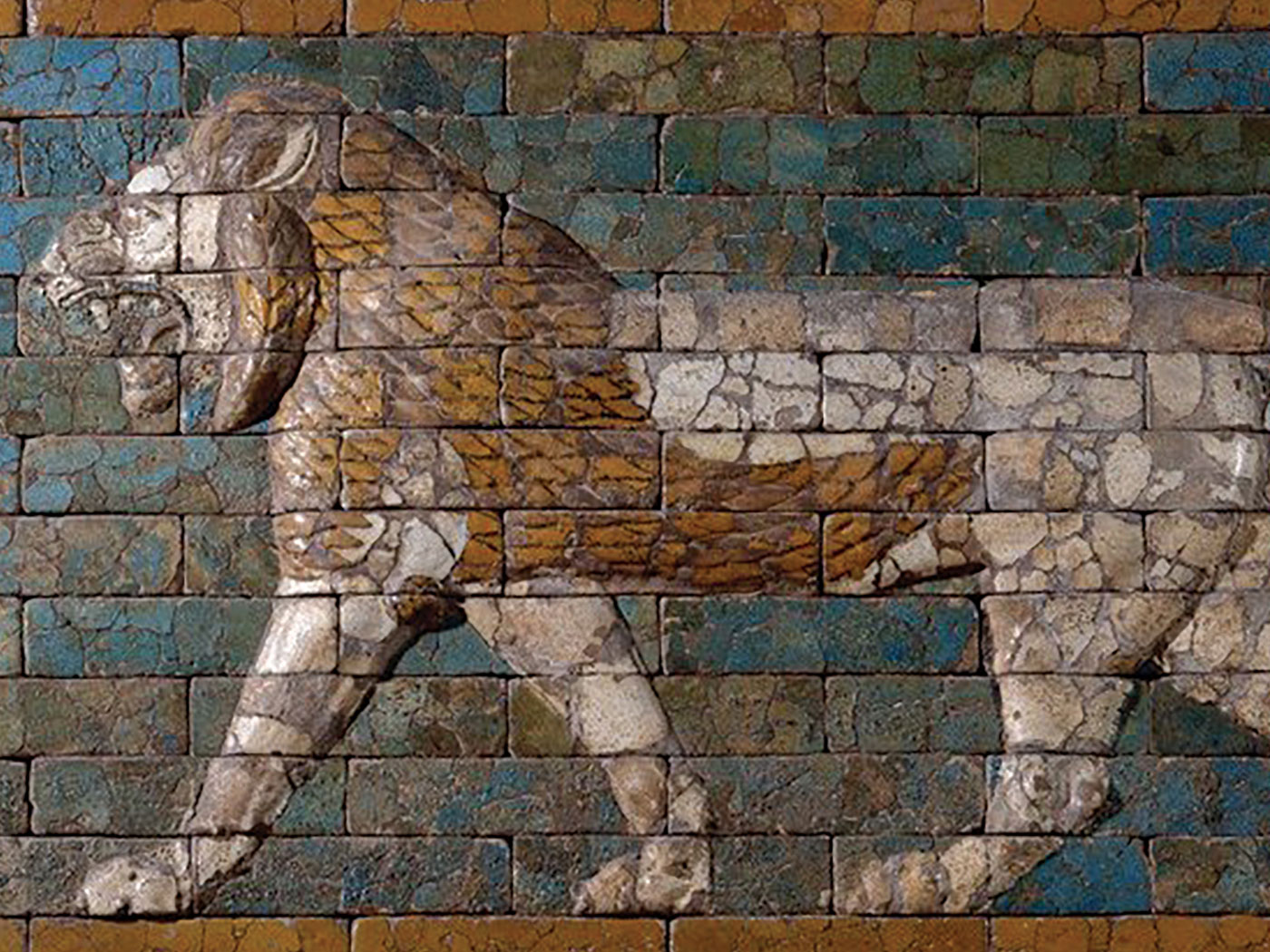 Have Lions Always Been Lions?“Can you hunt the prey for the lion, or satisfy the appetite of the young lions, when they crouch in their dens, or lurk in their lairs to lie in wait?” (Job 38:39-40) When God spoke...
 Ecosystem Engineering Explanations Miss the MarkThe ancient Philistines were embarrassed when Dagon, their chief idol, fell on its face before the Ark of the Covenant, so they propped it back up again.1 Maybe today’s evolutionary...
 Better, Stronger, and More Effective MinistryThe Institute for Creation Research, the first full-time organization dedicated to creation science research, has grown tremendously since its inception in 1970. Financial support was rather lean during...
Full versions of current and previous Acts & Facts can be viewed online in PDF format using the free Adobe® Acrobat® Reader.
You can subscribe to receive a free subscription to Acts & Facts by clicking here.
[body_edit] =>How can ICR educate your students with the truth about God’s creation? What caused the Ice Age? How can dinosaur soft tissue persist in fossils? Have lions always been lions? Discover the answers to these questions and more in the March 2019 issue of Acts & Facts! [MACRO aaf_article, 11134] [MACRO aaf_article, 11135] [MACRO aaf_article, 11136] [MACRO aaf_article, 11137] [MACRO aaf_article, 11139] [MACRO aaf_article, 11141] [MACRO aaf_article, 11142] [MACRO aaf_article, 11143] [MACRO aaf_article, 11144]
Full versions of current and previous Acts & Facts can be viewed online in PDF format using the free Adobe® Acrobat® Reader.
You can subscribe to receive a free subscription to Acts & Facts by clicking here.
[typeID] => 9 [visible] => t [pdf] => [publishURL] => inside-march-2019-acts-facts [publishDate] => 2019-05-27 [authorAsterisk] => f [domainID] => 1 [publication] => [volume] => [issue] => [page] => [author] => Staff Writer ) -->
Instrument data from the Cassini space probe have convinced planetary scientists that Saturn’s rings can be no more than a few hundred million years old.
[abstract_edit] =>
Instrument data from the Cassini space probe have convinced planetary scientists that Saturn’s rings can be no more than a few hundred million years old.
[stage] =>[stage_edit] =>
[body] =>
Data obtained by an instrument aboard the Cassini space probe have convinced planetary scientists that Saturn’s rings can be no more than a few hundred million years old.1 These new data confirmed some researchers’ previous suspicions. For instance, a previous ICR news article described how numerous planetary features within our solar system—including Saturn’s brilliant rings—look “young,” even to secular scientists.2
One of these features is the cleanness of Saturn’s rings. Secular scientists claim that the solar system is around 4.5 billion years old, so if Saturn’s rings were indeed that old, then they should have experienced billions of years’ worth of bombardment by micrometeorites. This would have blackened the icy ring particles, giving them a dark and sooty appearance.
The data obtained from Cassini’s Cosmic Dust Analyzer (CDA) allowed planetary scientists to measure the rate of micrometeorite bombardment:
The flux [of micrometeorite dust], about 10 times higher than estimates from before the Cassini mission, suggest a ring age of between 150 million and 300 million years, or even younger. “Our measurement is the most direct way you can measure it,” [space physicist Sascha] Kempf adds. “There’s not much you can do about it. It has to be young.”1
Note that the rings could be “even younger” than 150 million years. Could the rings be as young as 6,000 years, as implied by the Bible’s historical data? Of course they could, since the 150-300 million year estimate is an upper limit on the age of the rings.
Since secular scientists have been forced to concede that the rings are young, they must somehow explain how the rings could have been formed in the relatively recent past, something which is extremely difficult. As noted by Jeff Cuzzi, an expert on Saturn’s rings, “Part of the reluctance for everyone to leap off this bridge into the unknown is we haven’t had any kind of feasible explanation [for how the rings could form recently].”1 Right now, secular scientists can only offer speculative, hand-waving explanations like these:
It was then that some sort of catastrophe befell the gas giant [Saturn]. Perhaps a stray comet or asteroid struck an icy moon, tossing its remnants into orbit. Or maybe the orbits of Saturn’s moons somehow shifted, and the resulting gravitational tug-of-war pulled a moon apart.1 (emphasis added)
As a systems administrator and a team leader on the Cassini project, creation scientist David Coppedge was able to occasionally interact with planetary scientists at the Jet Propulsion Laboratory (JPL). He recounts,
It was clear to me that nothing would dislodge their belief in billions of years, but there was a subtext that it would be very troubling to them if the rings turned out to be young. These quotes [from reference 1] show that to be the case: they are flummoxed and dumbfounded by the evidence. They have no explanation, and they admit it.3
It should be noted in passing that Coppedge was demoted and eventually fired from his position at JPL in an appalling example of “viewpoint discrimination.” Coppedge’s “crimes” were that he privately shared “intelligent design” materials with his colleagues, and that he supported California’s Proposition 8 opposing homosexual marriage.4,5 Although Coppedge was apparently punished for sharing his own personal views, he recounts that his co-workers were allowed to freely express their personal beliefs with impunity.5 In spite of this blatant double standard, Coppedge lost his anti-discrimination lawsuit against JPL; the judge ruled against him without explanation.6
In spite of this injustice, Coppedge played a part in helping make the Cassini project possible, and the result is still more data confirming the youthfulness of our solar system.
References
- Voosen, P. Saturn’s rings are solar system newcomers. Science. 358 (6370): 1513-1514.
- Hebert, J. Youthful Solar System Bodies Puzzle Evolutionary Scientists. Creation Science Update. Posted on ICR.org February 13, 2013, accessed January 3, 2018.
- Coppedge, D. F. It's Official: Saturn's Rings Are Young. Creation Evolution Headlines. Posted on crev.info January 3, 2018, accessed January 3, 2018.
- Klinghoffer, D. NASA Versus David Coppedge: Most Reprehensible Case of Anti-Intelligent Design Persecution Yet? Evolution News and Science Today. Posted on evolutionnews.org December 19, 2016, accessed January 3, 2018.
- Coppedge, D. F. Wheel of Fortune: The Liberal Culture of Shunning. Footprints of David Coppedge. Posted on davidcoppedge.com October 11, 2017, accessed January 4, 2018.
- Lee, S. After a fiery trial. World Magazine. Posted on wng.org May 28, 2016, accessed January 4, 2018.
*Jake Hebert is Research Associate at the Institute for Creation Research and earned his Ph.D. in physics from the University of Texas at Dallas.
Stage Image Credit: Copyright © 2017. NASA. Used in accordance with federal copyright (fair use doctrine) law. Usage by ICR does not imply endorsement of copyright holder.
Article posted on January 8, 2018.
[body_edit] =>Data obtained by an instrument aboard the Cassini space probe have convinced planetary scientists that Saturn’s rings can be no more than a few hundred million years old.1 These new data confirmed some researchers’ previous suspicions. For instance, a previous ICR news article described how numerous planetary features within our solar system—including Saturn’s brilliant rings—look “young,” even to secular scientists.2
One of these features is the cleanness of Saturn’s rings. Secular scientists claim that the solar system is around 4.5 billion years old, so if Saturn’s rings were indeed that old, then they should have experienced billions of years’ worth of bombardment by micrometeorites. This would have blackened the icy ring particles, giving them a dark and sooty appearance.
The data obtained from Cassini’s Cosmic Dust Analyzer (CDA) allowed planetary scientists to measure the rate of micrometeorite bombardment:
The flux [of micrometeorite dust], about 10 times higher than estimates from before the Cassini mission, suggest a ring age of between 150 million and 300 million years, or even younger. “Our measurement is the most direct way you can measure it,” [space physicist Sascha] Kempf adds. “There’s not much you can do about it. It has to be young.”1
Note that the rings could be “even younger” than 150 million years. Could the rings be as young as 6,000 years, as implied by the Bible’s historical data? Of course they could, since the 150-300 million year estimate is an upper limit on the age of the rings.
Since secular scientists have been forced to concede that the rings are young, they must somehow explain how the rings could have been formed in the relatively recent past, something which is extremely difficult. As noted by Jeff Cuzzi, an expert on Saturn’s rings, “Part of the reluctance for everyone to leap off this bridge into the unknown is we haven’t had any kind of feasible explanation [for how the rings could form recently].”1 Right now, secular scientists can only offer speculative, hand-waving explanations like these:
It was then that some sort of catastrophe befell the gas giant [Saturn]. Perhaps a stray comet or asteroid struck an icy moon, tossing its remnants into orbit. Or maybe the orbits of Saturn’s moons somehow shifted, and the resulting gravitational tug-of-war pulled a moon apart.1 (emphasis added)
As a systems administrator and a team leader on the Cassini project, creation scientist David Coppedge was able to occasionally interact with planetary scientists at the Jet Propulsion Laboratory (JPL). He recounts,
It was clear to me that nothing would dislodge their belief in billions of years, but there was a subtext that it would be very troubling to them if the rings turned out to be young. These quotes [from reference 1] show that to be the case: they are flummoxed and dumbfounded by the evidence. They have no explanation, and they admit it.3
It should be noted in passing that Coppedge was demoted and eventually fired from his position at JPL in an appalling example of “viewpoint discrimination.” Coppedge’s “crimes” were that he privately shared “intelligent design” materials with his colleagues, and that he supported California’s Proposition 8 opposing homosexual marriage.4,5 Although Coppedge was apparently punished for sharing his own personal views, he recounts that his co-workers were allowed to freely express their personal beliefs with impunity.5 In spite of this blatant double standard, Coppedge lost his anti-discrimination lawsuit against JPL; the judge ruled against him without explanation.6
In spite of this injustice, Coppedge played a part in helping make the Cassini project possible, and the result is still more data confirming the youthfulness of our solar system.
References
- Voosen, P. Saturn’s rings are solar system newcomers. Science. 358 (6370): 1513-1514.
- Hebert, J. Youthful Solar System Bodies Puzzle Evolutionary Scientists. Creation Science Update. Posted on ICR.org February 13, 2013, accessed January 3, 2018.
- Coppedge, D. F. It's Official: Saturn's Rings Are Young. Creation Evolution Headlines. Posted on crev.info January 3, 2018, accessed January 3, 2018.
- Klinghoffer, D. NASA Versus David Coppedge: Most Reprehensible Case of Anti-Intelligent Design Persecution Yet? Evolution News and Science Today. Posted on evolutionnews.org December 19, 2016, accessed January 3, 2018.
- Coppedge, D. F. Wheel of Fortune: The Liberal Culture of Shunning. Footprints of David Coppedge. Posted on davidcoppedge.com October 11, 2017, accessed January 4, 2018.
- Lee, S. After a fiery trial. World Magazine. Posted on wng.org May 28, 2016, accessed January 4, 2018.
*Jake Hebert is Research Associate at the Institute for Creation Research and earned his Ph.D. in physics from the University of Texas at Dallas.
Stage Image Credit: Copyright © 2017. NASA. Used in accordance with federal copyright (fair use doctrine) law. Usage by ICR does not imply endorsement of copyright holder.
Article posted on January 8, 2018.
[typeID] => 9 [visible] => t [pdf] => [publishURL] => secular-scientists-dumbfounded-by-saturns [publishDate] => 0000-00-00 [authorAsterisk] => t [domainID] => 1 [publication] => [volume] => [issue] => [page] => [author] => Jake Hebert, Ph.D. ) -->


Some are concerned that global warming will melt the polar ice caps and lead to a rise in global sea level. Is this really happening?
[abstract_edit] =>
Some are concerned that global warming will melt the polar ice caps and lead to a rise in global sea level. Is this really happening?
[stage] =>[stage_edit] =>
[body] =>
Some are concerned that global warming will cause the polar ice caps to melt, leading to an increase in global sea level. If such a rise in sea level occurred slowly, coastal peoples would have time to adjust to the change. But many are concerned that sea level could rise rapidly, leading to a humanitarian catastrophe.
Although some scientists claim that satellite and tide-gauge data confirm a rapidly rising sea level, others are skeptical. In fact, two Australian scientists, Dr. Albert Parker and Dr. Clifford Ollier, have recently charged that Indian Ocean sea-level data for the last 140 years were manipulated to show a dramatic rise in sea level, even though the raw data showed that sea level had remained steady, or even dropped.1,2,3
Concerns over sea level rise are also being stoked by the way secular scientists interpret chemical wiggles within deep-seafloor sediments. These chemical wiggles (called oxygen isotope ratios) are thought to serve as “proxy” or “stand in” values for global ice volume: higher oxygen isotope ratios (denoted by the symbol δ18O) are thought to indicate ice ages, and lower values are thought to correspond to warmer “interglacial” periods.
When water freezes to form ice, less of Earth’s total water is available to remain liquid. Since the total mass of water on Earth remains essentially constant, an increase in global ice volume should result in a decrease in global mean sea level, and vice versa. This means that δ18O values can presumably indicate past global sea levels.
Most secular scientists assume the validity of the astronomical (or Milankovitch) ice age theory, which posits that ice ages are caused by slow, gradual changes in Earth’s orbital and rotational motions, which in turn are thought to affect the way sunlight is distributed on the Earth. Then they use astronomical calculations to infer times in the supposed prehistoric past when these sunlight variations are thought to have resulted in ice ages, and then these ages are assigned to the peak δ18O values.
Then they use these ages to calculate past rates of sea level rise. These calculated rates have led secular scientists to worry about possible future catastrophic global flooding.
Oceanographer Wolfgang Berger asked:
Just when can we expect to see a rapid rise of sea level, ten times higher than the present values of a few millimeters per year? We do not know. All we can say, from experience with the many millennia of the ice-age records in the deep sea, is that once melting starts, it stimulates further melting for centuries. Deglaciation keeps going once begun in earnest: a great example of the dilemma of the sorcerer’s apprentice.4
What Berger is calling “experience” is just a Milankovitch interpretation of the seafloor sediment data. But if the Milankovitch theory is wrong, then the ages assigned to the seafloor sediments are completely fictitious, as are the calculated rates of past sea level rise!
Despite its popularity, there are many problems with the astronomical theory.5 Moreover, recent ICR research has raised serious doubts about a key argument for the theory presented in a well-known paper titled “The Pacemaker of the Ice Ages.”6 The argument is so important that last year the journals Science and Nature both ran articles commemorating the paper’s 40th anniversary.7,8 More than a year later, secular scientists have yet to respond to this new research. Of course, they would probably claim that there is additional evidence for the theory, so that the theory is confirmed even without the Pacemaker paper’s validity. But if the Pacemaker paper is not essential to the argument for the Milankovitch theory, then why are supporters of the theory so reluctant to candidly acknowledge the paper’s problems?
Since the argument for a rapidly rising sea level inferred from seafloor sediments is logically invalid, then evidence for such a claim, if it exists, can only come from satellite and tide-gauge data. Given the history of data manipulation in this field,9 including these recent allegations regarding Indian Ocean data, such claims should be heavily scrutinized before being accepted as valid.
References
- Parker, A. and C. D. Ollier. 2017. Is the Sea Level Stable at Aden, Yemen? Earth Systems and Environment. 1: 18. doi.org/10.1007/s41748-017-0020-z.
- Richard, K. ‘Adjustments’ to Create Spurious Sea Level Rise Have Now Infected the PSMSL Tide Gauge Data. Posted at notrickszone.com December 4, 2017, accessed December 12, 2017.
- Delingpole, J. 2017. Tidalgate: Climate Alarmists Caught Faking Sea Level Rise. Posted at breitbart.com on December 6, 2017, accessed December 12, 2017.
- Berger, W. H. 2012. Milankovitch Theory—Hits and Misses. Scripps Institution of Oceanography, University of California San Diego, La Jolla, California, 16. Emphasis added.
- Oard, M. J. 2007. Astronomical troubles for the astronomical hypothesis of ice ages. Journal of Creation. 21 (3): 19-23.
- Hebert, J. 2016. Revisiting an Iconic Argument for Milankovitch Climate Forcing: Should the "Pacemaker of the Ice Ages" Paper Be Retracted? Part 3. Answers Reserach Journal. 9:229-255.
- Hodell, D. A. 2016. The smoking gun of the ice ages. Science. 354 (6317): 1235-1236.
- Maslin, M. 2016. Forty years of linking orbits to ice ages. Nature. 540 (7632): 208-210.
- McIntyre, S. and R. McKitrick. 2005. Hockey sticks, principal components, and spurious significance. Geophysical Research Letters. 32, L03710.
*Dr. Jake Hebert is Research Associate at the Institute for Creation Research and earned his Ph.D. in physics from the University of Texas at Dallas.
Article posted on January 4, 2018.
[body_edit] =>Some are concerned that global warming will cause the polar ice caps to melt, leading to an increase in global sea level. If such a rise in sea level occurred slowly, coastal peoples would have time to adjust to the change. But many are concerned that sea level could rise rapidly, leading to a humanitarian catastrophe.
Although some scientists claim that satellite and tide-gauge data confirm a rapidly rising sea level, others are skeptical. In fact, two Australian scientists, Dr. Albert Parker and Dr. Clifford Ollier, have recently charged that Indian Ocean sea-level data for the last 140 years were manipulated to show a dramatic rise in sea level, even though the raw data showed that sea level had remained steady, or even dropped.1,2,3
Concerns over sea level rise are also being stoked by the way secular scientists interpret chemical wiggles within deep-seafloor sediments. These chemical wiggles (called oxygen isotope ratios) are thought to serve as “proxy” or “stand in” values for global ice volume: higher oxygen isotope ratios (denoted by the symbol δ18O) are thought to indicate ice ages, and lower values are thought to correspond to warmer “interglacial” periods.
When water freezes to form ice, less of Earth’s total water is available to remain liquid. Since the total mass of water on Earth remains essentially constant, an increase in global ice volume should result in a decrease in global mean sea level, and vice versa. This means that δ18O values can presumably indicate past global sea levels.
Most secular scientists assume the validity of the astronomical (or Milankovitch) ice age theory, which posits that ice ages are caused by slow, gradual changes in Earth’s orbital and rotational motions, which in turn are thought to affect the way sunlight is distributed on the Earth. Then they use astronomical calculations to infer times in the supposed prehistoric past when these sunlight variations are thought to have resulted in ice ages, and then these ages are assigned to the peak δ18O values.
Then they use these ages to calculate past rates of sea level rise. These calculated rates have led secular scientists to worry about possible future catastrophic global flooding.
Oceanographer Wolfgang Berger asked:
Just when can we expect to see a rapid rise of sea level, ten times higher than the present values of a few millimeters per year? We do not know. All we can say, from experience with the many millennia of the ice-age records in the deep sea, is that once melting starts, it stimulates further melting for centuries. Deglaciation keeps going once begun in earnest: a great example of the dilemma of the sorcerer’s apprentice.4
What Berger is calling “experience” is just a Milankovitch interpretation of the seafloor sediment data. But if the Milankovitch theory is wrong, then the ages assigned to the seafloor sediments are completely fictitious, as are the calculated rates of past sea level rise!
Despite its popularity, there are many problems with the astronomical theory.5 Moreover, recent ICR research has raised serious doubts about a key argument for the theory presented in a well-known paper titled “The Pacemaker of the Ice Ages.”6 The argument is so important that last year the journals Science and Nature both ran articles commemorating the paper’s 40th anniversary.7,8 More than a year later, secular scientists have yet to respond to this new research. Of course, they would probably claim that there is additional evidence for the theory, so that the theory is confirmed even without the Pacemaker paper’s validity. But if the Pacemaker paper is not essential to the argument for the Milankovitch theory, then why are supporters of the theory so reluctant to candidly acknowledge the paper’s problems?
Since the argument for a rapidly rising sea level inferred from seafloor sediments is logically invalid, then evidence for such a claim, if it exists, can only come from satellite and tide-gauge data. Given the history of data manipulation in this field,9 including these recent allegations regarding Indian Ocean data, such claims should be heavily scrutinized before being accepted as valid.
References
- Parker, A. and C. D. Ollier. 2017. Is the Sea Level Stable at Aden, Yemen? Earth Systems and Environment. 1: 18. doi.org/10.1007/s41748-017-0020-z.
- Richard, K. ‘Adjustments’ to Create Spurious Sea Level Rise Have Now Infected the PSMSL Tide Gauge Data. Posted at notrickszone.com December 4, 2017, accessed December 12, 2017.
- Delingpole, J. 2017. Tidalgate: Climate Alarmists Caught Faking Sea Level Rise. Posted at breitbart.com on December 6, 2017, accessed December 12, 2017.
- Berger, W. H. 2012. Milankovitch Theory—Hits and Misses. Scripps Institution of Oceanography, University of California San Diego, La Jolla, California, 16. Emphasis added.
- Oard, M. J. 2007. Astronomical troubles for the astronomical hypothesis of ice ages. Journal of Creation. 21 (3): 19-23.
- Hebert, J. 2016. Revisiting an Iconic Argument for Milankovitch Climate Forcing: Should the "Pacemaker of the Ice Ages" Paper Be Retracted? Part 3. Answers Reserach Journal. 9:229-255.
- Hodell, D. A. 2016. The smoking gun of the ice ages. Science. 354 (6317): 1235-1236.
- Maslin, M. 2016. Forty years of linking orbits to ice ages. Nature. 540 (7632): 208-210.
- McIntyre, S. and R. McKitrick. 2005. Hockey sticks, principal components, and spurious significance. Geophysical Research Letters. 32, L03710.
*Dr. Jake Hebert is Research Associate at the Institute for Creation Research and earned his Ph.D. in physics from the University of Texas at Dallas.
Article posted on January 4, 2018.
[typeID] => 9 [visible] => t [pdf] => [publishURL] => global-sea-level-rising [publishDate] => 0000-00-00 [authorAsterisk] => t [domainID] => 1 [publication] => [volume] => [issue] => [page] => [author] => Jake Hebert, Ph.D. ) -->


The Institute for Creation Research has monitored the steady flow of fresh-looking fossils for over a decade. 2017 provided additional discoveries of biochemical variety that includes proteins, pigments, and even a pineal gland. These present a real challenge to the millions-of-years age assignments for these fossils, since best-case scenarios predict that biochemicals fizzle out in less than one million years.
[abstract_edit] =>
The Institute for Creation Research has monitored the steady flow of fresh-looking fossils for over a decade. 2017 provided additional discoveries of biochemical variety that includes proteins, pigments, and even a pineal gland. These present a real challenge to the millions-of-years age assignments for these fossils, since best-case scenarios predict that biochemicals fizzle out in less than one million years.
[stage] =>[stage_edit] =>
[body] =>
The Institute for Creation Research has monitored the steady flow of fresh-looking fossils for over a decade. The year 2017 was impressive with its discoveries of biochemical variety that includes proteins, pigments, and even a pineal gland. Each such discovery presents a real challenge to the millions-of-years age assignments for these fossils, since best-case scenarios predict that biochemicals fizzle out in less than one million years.
ICR’s Creation Science Update highlighted these 2017 discoveries of fresh-looking fossils:
• The University of Wisconsin-Milwaukee researchers recovered amino acids—protein’s chemical building blocks—from preserved cells of a fossilized once-tropical tree from an Antarctic rock deemed 280 million years old. How can these amino acids still be intact?1
• Gerald Mayr from the Senckenberg Research Institute announced this year the discovery of the world’s oldest lipid. Germany’s Messel Shale, regarded as 48 million years old, harbored an ancient bird’s oil-filled preening gland. And the gland had some of the original oil still in it, not shale.2
• An international team described in the journal Scientific Reports fresh-looking pigments darkening the crusty skin of a fossil turtle.2 Nobody has explained what could possibly have kept bacteria from consuming the carbon-rich pigment for 54 million supposed years.
• German and American scientists described turquoise-colored Cretaceous egg pigments from Chinese oviraptor fossils.3
• Chinese researchers clearly photographed the insides of original bird bone that evolutionists insist was buried 120 million years ago. It had delicate internal canals and fine layers instead of the expected mud-borne minerals inside. Given Earth’s relentless degrading processes, including incessant water movement underground, who would expect a buried bone to persist for even a tenth of that imagined time?
• News outlets hailed a fabulous 2017 fossil the world’s best-preserved dinosaur. Later analyses revealed original pigments still inside its naturally mummified scaly skin.4 Such fresh features don’t fit its 112-125 million-year age assignment.
• Sweden’s Lund University reported fresh waxy cuticles coating supposedly 200-million year-old ginkgo leaves. Low-impact scanning techniques stunned scientists who did not expect them to be “full of organic molecules.”5
Finally, famed amber researcher George Poinar described mammalian blood cells still intact inside a tick trapped in Dominican amber. Amber has no magical preservation properties that would suspend the standard laws of chemical decay for millions of years.6
One more report confirmed collagen protein sequence from a supposedly 80-million-year-old Hadrosaur femur excavated in Montana. Published in the prestigious Journal of Proteome Research, the results again revealed the presence of hydroxyproline, an amino acid unique to collagen.7 Some fossil experts who still disbelieve fossil proteins attribute the discoveries to modern bacteria. But bacteria can’t make hydroxyproline—or collagen for that matter.
The story that fossils are too old to still have short-lived chemicals crumbles under the weight of so many fine discoveries. We predict 2018 will add more discoveries to the long list of biochemicals that can’t be millions of years old.
References
- Clarey, T. Fossil Trees in Antarctica Preserve Ancient Proteins. Creation Science Update. Posted on ICR.org December 11, 2017, accessed December 15, 2017.
- Thomas, B. Ancient Animal Biochemicals Again. Creation Science Update. Posted on ICR.org December 7, 2017, accessed December 15, 2017.
- Wiemann, J. et al. Dinosaur origin of egg color: oviraptors laid blue-green eggs. PeerJ. 5:e3706. See also ICR’s original announcement of this fossil: Thomas, B. Colorful Dinosaur Eggs Challenge Deep Time. Creation Science Update. Posted on ICR.org June 11, 2015, accessed December 15, 2017
- Thomas, B. Spectacular Dinosaur Has Skin, Horn, Pigments. Creation Science Update. Posted on ICR.org August 28, 2017, accessed December 15, 2017.
- See references in Thomas, B. Fossil Plants Contain Original Molecules. Creation Science Update. Posted on ICR.org August 3, 2017, accessed December 15, 2017.
- Thomas, B. 2010. Amber Jewelry: A Conversation Piece for Creation Evidence. Acts & Facts. 39 (9): 17.
- Schroeter, E.R. et al. 2017. Expansion for the Brachylophosaurus canadensis Collagen I Sequence and Additional Evidence of the Preservation of Cretaceous Protein. Journal of Proteome Research. 16 (2): 920-932.
*Brian Thomas is Science Writer at the Institute for Creation Research and earned his M.S. in biotechnology from Stephen F. Austin State University.
Stage image credit: Used in accordance with federal copyright (fair use doctrine) law. Usage by ICR does not imply endorsement of copyright holders.
Article posted on December 28, 2017.
[body_edit] =>The Institute for Creation Research has monitored the steady flow of fresh-looking fossils for over a decade. The year 2017 was impressive with its discoveries of biochemical variety that includes proteins, pigments, and even a pineal gland. Each such discovery presents a real challenge to the millions-of-years age assignments for these fossils, since best-case scenarios predict that biochemicals fizzle out in less than one million years.
ICR’s Creation Science Update highlighted these 2017 discoveries of fresh-looking fossils:
• The University of Wisconsin-Milwaukee researchers recovered amino acids—protein’s chemical building blocks—from preserved cells of a fossilized once-tropical tree from an Antarctic rock deemed 280 million years old. How can these amino acids still be intact?1
• Gerald Mayr from the Senckenberg Research Institute announced this year the discovery of the world’s oldest lipid. Germany’s Messel Shale, regarded as 48 million years old, harbored an ancient bird’s oil-filled preening gland. And the gland had some of the original oil still in it, not shale.2
• An international team described in the journal Scientific Reports fresh-looking pigments darkening the crusty skin of a fossil turtle.2 Nobody has explained what could possibly have kept bacteria from consuming the carbon-rich pigment for 54 million supposed years.
• German and American scientists described turquoise-colored Cretaceous egg pigments from Chinese oviraptor fossils.3
• Chinese researchers clearly photographed the insides of original bird bone that evolutionists insist was buried 120 million years ago. It had delicate internal canals and fine layers instead of the expected mud-borne minerals inside. Given Earth’s relentless degrading processes, including incessant water movement underground, who would expect a buried bone to persist for even a tenth of that imagined time?
• News outlets hailed a fabulous 2017 fossil the world’s best-preserved dinosaur. Later analyses revealed original pigments still inside its naturally mummified scaly skin.4 Such fresh features don’t fit its 112-125 million-year age assignment.
• Sweden’s Lund University reported fresh waxy cuticles coating supposedly 200-million year-old ginkgo leaves. Low-impact scanning techniques stunned scientists who did not expect them to be “full of organic molecules.”5
Finally, famed amber researcher George Poinar described mammalian blood cells still intact inside a tick trapped in Dominican amber. Amber has no magical preservation properties that would suspend the standard laws of chemical decay for millions of years.6
One more report confirmed collagen protein sequence from a supposedly 80-million-year-old Hadrosaur femur excavated in Montana. Published in the prestigious Journal of Proteome Research, the results again revealed the presence of hydroxyproline, an amino acid unique to collagen.7 Some fossil experts who still disbelieve fossil proteins attribute the discoveries to modern bacteria. But bacteria can’t make hydroxyproline—or collagen for that matter.
The story that fossils are too old to still have short-lived chemicals crumbles under the weight of so many fine discoveries. We predict 2018 will add more discoveries to the long list of biochemicals that can’t be millions of years old.
References
- Clarey, T. Fossil Trees in Antarctica Preserve Ancient Proteins. Creation Science Update. Posted on ICR.org December 11, 2017, accessed December 15, 2017.
- Thomas, B. Ancient Animal Biochemicals Again. Creation Science Update. Posted on ICR.org December 7, 2017, accessed December 15, 2017.
- Wiemann, J. et al. Dinosaur origin of egg color: oviraptors laid blue-green eggs. PeerJ. 5:e3706. See also ICR’s original announcement of this fossil: Thomas, B. Colorful Dinosaur Eggs Challenge Deep Time. Creation Science Update. Posted on ICR.org June 11, 2015, accessed December 15, 2017
- Thomas, B. Spectacular Dinosaur Has Skin, Horn, Pigments. Creation Science Update. Posted on ICR.org August 28, 2017, accessed December 15, 2017.
- See references in Thomas, B. Fossil Plants Contain Original Molecules. Creation Science Update. Posted on ICR.org August 3, 2017, accessed December 15, 2017.
- Thomas, B. 2010. Amber Jewelry: A Conversation Piece for Creation Evidence. Acts & Facts. 39 (9): 17.
- Schroeter, E.R. et al. 2017. Expansion for the Brachylophosaurus canadensis Collagen I Sequence and Additional Evidence of the Preservation of Cretaceous Protein. Journal of Proteome Research. 16 (2): 920-932.
*Brian Thomas is Science Writer at the Institute for Creation Research and earned his M.S. in biotechnology from Stephen F. Austin State University.
Stage image credit: Used in accordance with federal copyright (fair use doctrine) law. Usage by ICR does not imply endorsement of copyright holders.
Article posted on December 28, 2017.
[typeID] => 9 [visible] => t [pdf] => [publishURL] => best-2017-fleshy-fossils [publishDate] => 0000-00-00 [authorAsterisk] => t [domainID] => 1 [publication] => [volume] => [issue] => [page] => [author] => Brian Thomas, Ph.D. ) -->

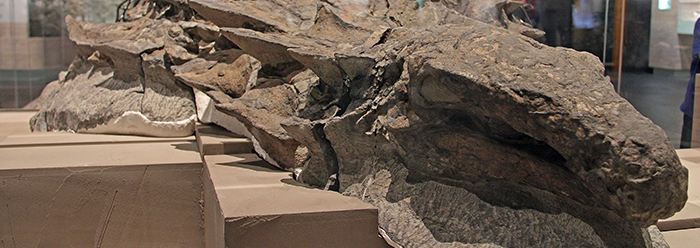
Recent marketing research conducted a 24-country survey about people’s belief in aliens. They released their results just before the next widely anticipated Star Wars installment. How do biblical truths and scientific facts impact humanity’s concept of aliens from outer space?
[abstract_edit] =>
Recent marketing research conducted a 24-country survey about people’s belief in aliens. They released their results just before the next widely anticipated Star Wars installment. How do biblical truths and scientific facts impact humanity’s concept of aliens from outer space?
[stage] =>[stage_edit] =>
[body] =>
Marketing research group Glocalities conducted a 24-country survey about people’s belief in aliens. They released their results just before the next widely anticipated Star Wars installment. How do biblical truths and scientific facts impact humanity’s concept of aliens from outer space?
Reuters news summarized some of the survey results.1 Sixty-one percent of 26,000 respondents said “yes” when asked if they believe in “some form of life on other planets.” That lifeform could mean bacteria or something more intelligent. Forty-seven percent believe “in the existence of intelligent alien civilizations” out there somewhere.
We apparently live in alien-crazed societies. Where is the evidence that has convinced so many of space aliens?
First, Scripture shows no direct support for E.T.s. In fact, the Bible poses a gospel challenge to the existence of intelligent alien civilizations. ICR news wrote in 2011, “Extraterrestrial life would also contradict the Bible’s claim that ‘Christ died once for all’ to pay for the sins of humanity (Hebrews 10:10), since to be fair, He would have to die as many times as there are planets inhabited with intelligent life.”2
Since the Lord Jesus died only once before His resurrection, He could not have gone to die again on alien planets. Therefore, intelligent redeemable E.T.s must not exist.
What about support from science? Even secular researchers have refuted intelligent aliens on the basis of a complete lack of E.T. evidence. Nobody has ever detected a single intelligent signal that came from out there.
Plus, they long ago raised a logical argument against aliens called the “Fermi paradox.”3 So many stars and planets populate the universe that even if a tiny fraction were suitable for life, many should populate the universe today if stars and planets have been emerging for billions of years. Instead it’s as silent as sound in space.
It looks like half the world believes in aliens for reasons other than tangible or logical evidence. So, what feature do E.T.s carry that compels so many to accept the concept?
It does fit right in with evolution’s story of a universe where nature, not God, somehow does all the creating.
The Search for Extraterrestrial Intelligence (SETI) Institute is dedicated to the search for space aliens. ICR news quoted from a 2011 SETI website plea that said, “That’s why we’re appealing to you—someone who recognizes that the evolutionary drama that has taken place on our planet may have happened on other worlds”4 But after listening for years the SETI Institute has zero E.T. evidence.
Cultural phenomena like the movie industry and popular evolutionary dramas may propagate widespread belief in space aliens, but so far it has no biblical or scientific legs to stand on.
References
- Deutsch, A. and L. King. Are Earthlings Alone? Half of humans believe in alien life. Reuters. Posted on reuters.com December 7, 2017, accessed December 8, 2017.
- Thomas, B. Another ‘Goldilocks’ Planet Stirs ET Hopes. Creation Science Update. Posted on ICR.org December 16, 2011, accessed December 8, 2017.
- Lisle, J. Are ETs & UFOs Real? In The New Answers Book. Posted on answersingenesis.org December 6, 2007, accessed December 7, 2011. Also, the upcoming movie Alien Intrusion vividly illustrates the Fermi paradox.
- Thomas, B. 2011. SETI Funding Linked to Belief in Evolution. Creation Science Update. Posted on ICR.org May 9, 2011, accessed December 8, 2011.
*Brian Thomas is Science Writer at the Institute for Creation Research and earned his M.S. in biotechnology from Stephen F. Austin State University.
Article posted on December 26, 2017.
[body_edit] =>Marketing research group Glocalities conducted a 24-country survey about people’s belief in aliens. They released their results just before the next widely anticipated Star Wars installment. How do biblical truths and scientific facts impact humanity’s concept of aliens from outer space?
Reuters news summarized some of the survey results.1 Sixty-one percent of 26,000 respondents said “yes” when asked if they believe in “some form of life on other planets.” That lifeform could mean bacteria or something more intelligent. Forty-seven percent believe “in the existence of intelligent alien civilizations” out there somewhere.
We apparently live in alien-crazed societies. Where is the evidence that has convinced so many of space aliens?
First, Scripture shows no direct support for E.T.s. In fact, the Bible poses a gospel challenge to the existence of intelligent alien civilizations. ICR news wrote in 2011, “Extraterrestrial life would also contradict the Bible’s claim that ‘Christ died once for all’ to pay for the sins of humanity (Hebrews 10:10), since to be fair, He would have to die as many times as there are planets inhabited with intelligent life.”2
Since the Lord Jesus died only once before His resurrection, He could not have gone to die again on alien planets. Therefore, intelligent redeemable E.T.s must not exist.
What about support from science? Even secular researchers have refuted intelligent aliens on the basis of a complete lack of E.T. evidence. Nobody has ever detected a single intelligent signal that came from out there.
Plus, they long ago raised a logical argument against aliens called the “Fermi paradox.”3 So many stars and planets populate the universe that even if a tiny fraction were suitable for life, many should populate the universe today if stars and planets have been emerging for billions of years. Instead it’s as silent as sound in space.
It looks like half the world believes in aliens for reasons other than tangible or logical evidence. So, what feature do E.T.s carry that compels so many to accept the concept?
It does fit right in with evolution’s story of a universe where nature, not God, somehow does all the creating.
The Search for Extraterrestrial Intelligence (SETI) Institute is dedicated to the search for space aliens. ICR news quoted from a 2011 SETI website plea that said, “That’s why we’re appealing to you—someone who recognizes that the evolutionary drama that has taken place on our planet may have happened on other worlds”4 But after listening for years the SETI Institute has zero E.T. evidence.
Cultural phenomena like the movie industry and popular evolutionary dramas may propagate widespread belief in space aliens, but so far it has no biblical or scientific legs to stand on.
References
- Deutsch, A. and L. King. Are Earthlings Alone? Half of humans believe in alien life. Reuters. Posted on reuters.com December 7, 2017, accessed December 8, 2017.
- Thomas, B. Another ‘Goldilocks’ Planet Stirs ET Hopes. Creation Science Update. Posted on ICR.org December 16, 2011, accessed December 8, 2017.
- Lisle, J. Are ETs & UFOs Real? In The New Answers Book. Posted on answersingenesis.org December 6, 2007, accessed December 7, 2011. Also, the upcoming movie Alien Intrusion vividly illustrates the Fermi paradox.
- Thomas, B. 2011. SETI Funding Linked to Belief in Evolution. Creation Science Update. Posted on ICR.org May 9, 2011, accessed December 8, 2011.
*Brian Thomas is Science Writer at the Institute for Creation Research and earned his M.S. in biotechnology from Stephen F. Austin State University.
Article posted on December 26, 2017.
[typeID] => 9 [visible] => t [pdf] => [publishURL] => poll-half-humanity-believes-aliens [publishDate] => 0000-00-00 [authorAsterisk] => t [domainID] => 1 [publication] => [volume] => [issue] => [page] => [author] => Brian Thomas, Ph.D. ) -->


Spread the word. Become a creation advocate. Join us today.
[abstract_edit] =>
Spread the word. Become a creation advocate. Join us today.
[stage] =>[stage_edit] =>
[body] =>
Hello, friends!
We have a new opportunity to reach people with scientific evidence that confirms the Bible’s accuracy. This is our first time participating in Giving Tuesday—“a global day of giving fueled by the power of social media and collaboration.” Will you partner with us today?


- Pray for the impact of God’s Word on hearts around the world.
- Contribute financially to help us continue this vital mission.
- Spread the word about ICR’s ministry via social media, texting, and email.
Follow us on Facebook, Twitter, Instagram, Pinterest, LinkedIn, and Google+.
Thank you for joining us in this online giving event!
Article posted on November 28, 2017.
[body_edit] =>Hello, friends!
We have a new opportunity to reach people with scientific evidence that confirms the Bible’s accuracy. This is our first time participating in Giving Tuesday—“a global day of giving fueled by the power of social media and collaboration.” Will you partner with us today?
- Pray for the impact of God’s Word on hearts around the world.
- Contribute financially to help us continue this vital mission.
- Spread the word about ICR’s ministry via social media, texting, and email.
Follow us on Facebook, Twitter, Instagram, Pinterest, LinkedIn, and Google+.
Thank you for joining us in this online giving event!
Article posted on November 28, 2017.
[typeID] => 9 [visible] => t [pdf] => [publishURL] => giving-tuesdaybecome-creation-advocate [publishDate] => 0000-00-00 [authorAsterisk] => f [domainID] => 1 [publication] => [volume] => [issue] => [page] => [author] => Staff Writer ) -->