Spinosaurus aegyptiacus had a longer body than the enormous T. rex. In Nature journal, researchers published a new reconstruction of the extinct reptile’s tail, showing that it would have undulated side-to-side.1 They found that the tall, flattened tail was well-suited to swimming. These newly assembled spinosaur details help reassemble its place in history.
Big-picture evolution teaches that natural processes turned fish into lizards. In this version of history, one ancestor had descendants that became all the various theropods, from the 48-foot long Spinosaurus to the turkey sized Compsognathus. If the tale holds true, then we should find theropods transitioning from some ancestral state to each of the final forms found as fossils. Instead, fossils typically show only those final forms, with no in-between versions, each fully equipped for its particular way of life.
This new spinosaur reconstruction is no exception. No transitional features—just a fully-formed tail made for swimming in every respect.
For example, most theropods had stiffened tails. Tight junctions and taut tendons tied their tail parts together for efficient land-walking strides. But the Spinosaurus tail shows no evolutionary half-measures. Small junctions and few tendons afforded it flexibility for powerful swimming. The Nature study authors even tested how efficiently its hydrodynamic shape would have served as an outboard motor for the enormous animal. Turns out, its shape is more efficient than a crocodile’s.
Back in 2018, a separate team described Spinosaurus bones as a good match to a “semi-aquatic” habitat.2 Even before then, ICR scientists noted that this dinosaur’s record-breaking skull size and water-friendly features make it a decent candidate for the Bible’s leviathan.3
God in Job and David in Psalms both referred to the leviathan as a real animal, or at least a real group that described large aquatic or semi-aquatic reptiles. The animals must have been real enough to reveal characteristics of their Maker. It swam in waters, yet left “marks in the mire” (Job 41:30)—likely shoreline muds. Imaginary creatures can’t leave visible mud tracks.
This new description of a water-friendly tail matches the creature’s other aquatic features, such as short legs. Its entire body—not just one or two still-evolving aspects—fit a whole semi-aquatic design. The Genesis description of each basic animal type reproducing according to its kind explains Spinosaurus’ uniqueness.
The Nature study authors wrote, “The near-global distribution of spinosaurids (which have now been reported from Europe, Asia, Africa, and South America).” This happens to match the Bible’s description of a global Flood. The fact that these large creatures—plus so many other land, sky, and sea creatures—turned into fossils indicates ruinous sediment-moving mayhem.
If Noah’s Flood formed these fossils, then even Spinosaurus aegyptiacus would have lived at the same time as mankind. This places God’s biblical references to such creatures into the Bible’s short timeline. If something like Spinosaurus was Job’s leviathan, then the creature lived for a time after the Flood, but has since gone extinct.
Swimming spinosaurids look more like Job’s watery leviathan than ever.
References
1. Ibrahim, N., et al. 2020. Nature. Tail-propelled aquatic locomotion in a theropod dinosaur. 581: 67-70.
2. Aureliano, T. et al. 2018. Semi-aquatic adaptations in a spinosaur from the Lower Cretaceous of Brazil. Cretaceous Research. 90: 283–295.
3. Clarey, T. 2015. Tracking Down Leviathan. Acts & Facts. 44 (7).
*Dr. Brian Thomas is Research Associate at the Institute for Creation Research and earned his Ph.D. in paleobiochemistry from the University of Liverpool.
Spinosaurus Swam! How a Swimming Spinosaurus Fits Scripture
More Fossils Reflect Life's Original Diversity
Out-of-Africa Theory Contradicted by Israeli Fossil
The standard evolutionary theory is that humans evolved from a chimp-like ancestor about 3 to 6 million years then migrated out of Africa about 100,000...
New Pterosaur Discovered
Pterosaurs were amazing flying reptiles that came in all shapes and sizes.1 Not surprisingly, when these bizarre creatures are found in the...
Length of the Cretaceous Year Still Leaves Questions
Recently, a team of geochemists from Belgium reported that days might have been 30 minutes shorter in the Late Cretaceous compared to today, giving 372...
More The Global Flood Is the Key to the Past
Dinosaur Washed Out to Sea with Its Last Meal
In 2017, a large dinosaur was discovered washed out to sea,1 similar to the dinosaur bone found 70 miles off Norway’s coast.2...
Greenland Lakebed Fits Flood Narrative
Scientists from the Lamont-Doherty Observatory discovered an enormous ancient lakebed beneath the ice on Greenland.1 Although scientists...
First Land Bug Buried in the Flood
The Scottish island of Kerrera has produced the earliest known bug in the fossil record, a millipede.1 It was found in Silurian System rocks...
More Fossil Record
New Evidence Hurts Feathered Dinosaur Theory
Is a dinosaur still a dinosaur if it has flight feathers? A new study points to some fascinating evidence that contradicts the idea of feathered dinosaurs...
South American Plant Fossils Confirm Flood Boundary
Jeffrey P. Tomkins, Ph.D., and Tim Clarey, Ph.D.
Fossil pollen, leaf and fruit impressions, and petrified wood taken from multiple locations...
Length of the Cretaceous Year Still Leaves Questions
Recently, a team of geochemists from Belgium reported that days might have been 30 minutes shorter in the Late Cretaceous compared to today, giving 372...
More Life Was Created Fully Functional

The Origin of Eukaryotes
Eukaryotes are multicellular organisms that contain diverse differentiated cell types. Within almost every cell there are subcellular compartments called...
Mammalian Brains Prove Evolutionary Disconnect
The evolutionary model of brain development predicted that the complexity of neural connectivity should have increased as brains became larger and the...
Salmon Young Take the Plunge in May
In May, hundreds of salmon fry are experiencing their own version of “live-streaming,” according to a report from Maine Audubon’s Molly...
More Zoology
No Evidence T. rex Hatchlings Had Feathers
The recent discovery of a tiny tyrannosaur jaw bone fragment and a claw has some scientists again pushing dinosaurs as birds.1 But is there...
Does Oddball Platypus Genome Reveal Its Origins?
How in the world did a creature as odd as the duck-billed platypus originate? This creature lays eggs like a reptile, has venom like a reptile, spurs like...
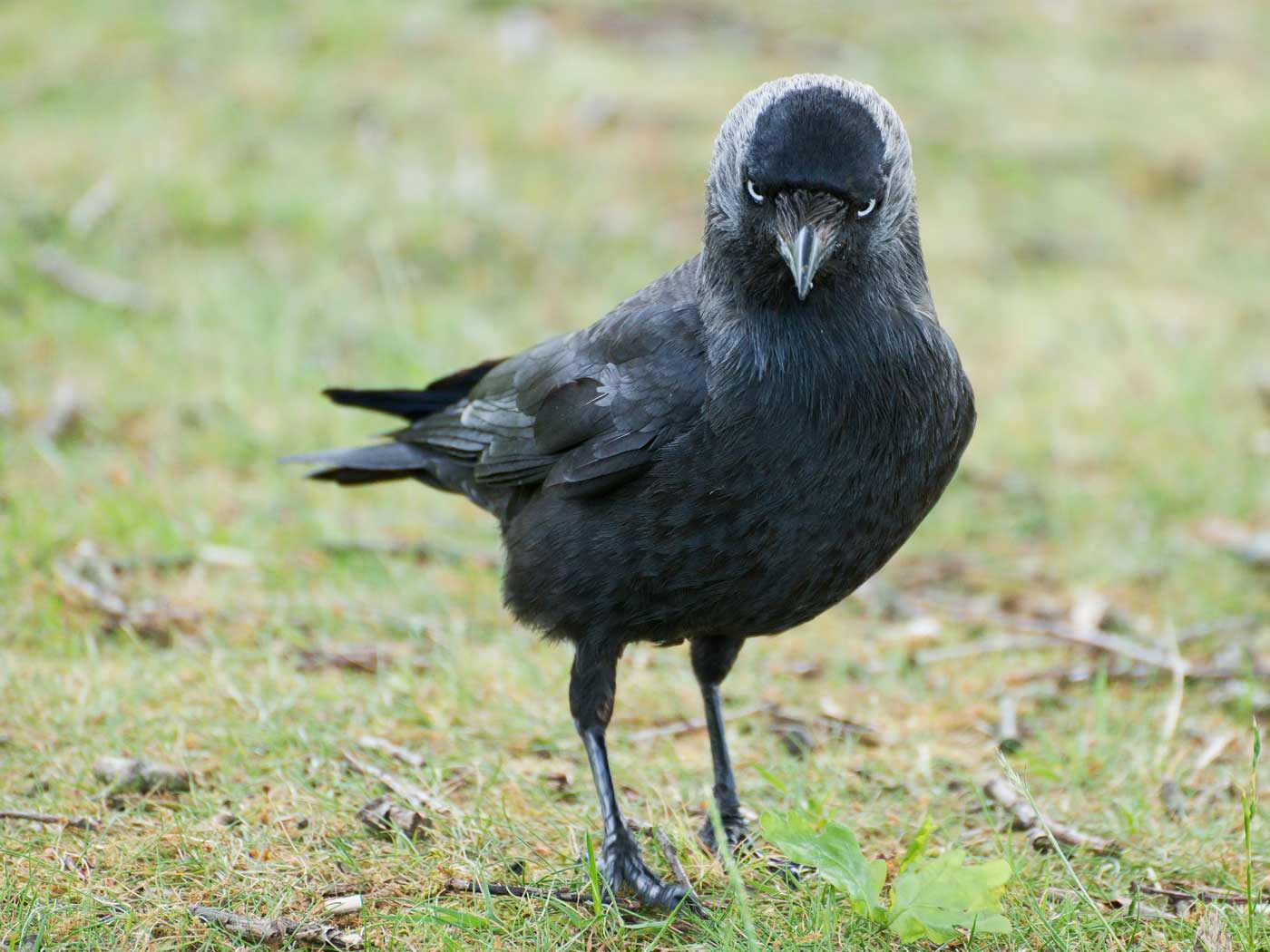
Jackdaws Identify "Dangerous" from "Safe" Humans
Don’t think that humans have a monopoly on “social distancing”—because even birds are prudent in physical distancing, depending...
More Dinosaurs
New Species of Spinosaurus Supports Flood Catastrophe
Many people are fascinated with dinosaur discoveries—a new fossil, a new species, and the impressive size. But whenever we read a news article,...
Dinosaur "Raptors" Likely Hunted Alone
A new study published in Palaeogeography, Palaeoclimatology, Palaeoecology has found that the behavior of dinosaurs in movies is not very accurate at all.1...
T. rex Had Legs Designed for Walking
A new study published in the journal PLOS ONE has found that T. rex had legs made more for walking, rather than running.1 Their long legs were...
More Noah's Ark and Flood
Dinosaur Washed Out to Sea with Its Last Meal
In 2017, a large dinosaur was discovered washed out to sea,1 similar to the dinosaur bone found 70 miles off Norway’s coast.2...
Secular Science Struggles to Explain Origin of Earth&rs.,.
Tim Clarey, Ph.D., and Jake Hebert, Ph.D.
Secular scientists continue to struggle to explain the origin of Earth’s water. And a new study...
Deep-Sea Volcano Gives Glimpse of Flood Eruptions
A team of scientists from Australia and the USA recently studied the ejecta from a subsea volcano, gaining new insights into how magma can explode to the...
More Creation Science Update
March 2023 ICR Wallpaper
"Sing to the Lord with thanksgiving;
Sing praises on the harp to our God,
Who covers the heavens with clouds,
Who prepares rain for the earth,
Who...
Has Real Evolution Unfolded in Puerto Rican Lizards?
“We are watching evolution as it’s unfolding,” said an evolutionist at New York University.
She was referring to “The Puerto...
Bavarian Turtle Fossil Supports Marine Mixing
A new discovery of a foot-long marine turtle fossil was announced in central Bavaria, southern Germany.1 The species, dubbed Solnhofia parsoni,...
The Latest
Brainy Bees Solve Pollen Problem
The uncanny abilities of the honeybee cause entomologists to shake their heads in wonder.1,2
Scientists have long known that honeybees...

October Wallpaper
"Be anxious for nothing, but in everything by prayer and supplication, with thanksgiving, let your requests be made known to God; and the peace...
Possible Ark Site Has Mainstream Media Hopping
An organization named Noah’s Ark Scans is investigating a site called Durupinar, almost 20 miles from Mount Ararat in Turkey. Could it contain...
ANNOUNCEMENTS
Heroes of Creation Science: Henry M. Morris
“The creation/evolution issue is, in a very real sense, the most fundamental issue of all.” —Henry M. Morris
Many people believe the...

Creation Kids: Fungi
Hi, kids! We created a special Acts & Facts page just for you! Have fun doing the activities while learning about the wonderful world...
APOLOGETICS
What is True and False?
by Patrick C . Marks, D. Min., and Brian Thomas, Ph.D.*
In the first article of this series, we explained that truth—that which matches reality—is...
The Cambrian Layer: Explosion or Burial?
The lowest sedimentary layer, rich in hard-shelled fossils, is known as the Cambrian record. Beneath it is the Precambrian, which contains far fewer...
My Sheep Hear My Voice
Young people today can access more information in a matter of days than many people could acquire in an entire lifetime just a century ago. Smartphones,...
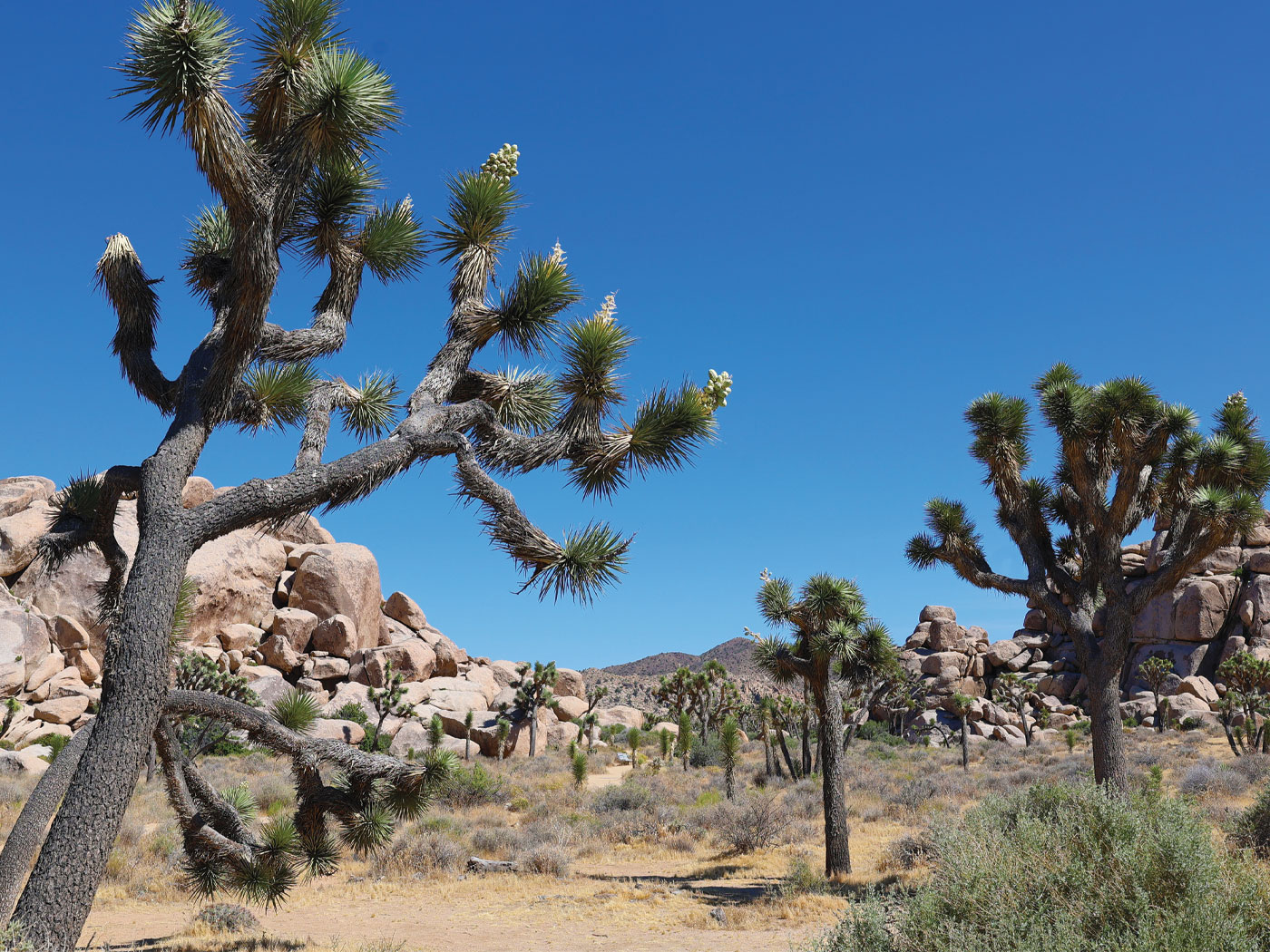
The Land of Truffula Trees
Deserts are often viewed as barren wastelands, yet they boast some of the most captivating organisms on Earth. You have to be unusual to live in a desert,...
ANNOUNCEMENTS
New Novel: The Third Heaven
A visionary plays God by offering mankind the final step in human evolution: the creation of perfectly fabricated transhuman minds and bodies designed...
Shop Related Products