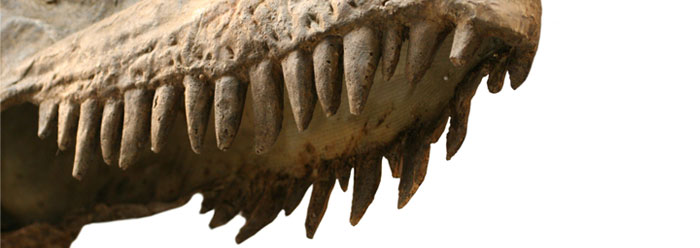
The new study, published in PLOS ONE, examined over 2,300 bones from the Mygatt-Moore Quarry in western Colorado.1 It was led by Stephanie Drumheller, from the Department of Earth and Planetary Sciences, the University of Tennessee, Knoxville, and several colleagues. The scientists determined that about one-third of the uncovered bones had shown evidence of teeth marks.2 The teeth marks seemed to match up best with the large theropod dinosaur Allosaurus.1
The science team also found that about 17 percent of the teeth marks were on theropod bones, leading to the speculation of cannibalism.2 Found in the famous Morrison Formation that is spread across much of the American West, the Mygatt-Moore Quarry was discovered in 1981 by fur hikers, Pete and Marilyn Mygatt and J.D. and Vanetta Moore.1
Drumheller and her co-authors concluded,
The distribution of the bite marks on skeletal elements, particularly those found on other theropods, suggest that they potentially preserve evidence of scavenging, rather than active predation. Given the relative abundances of the MMQ [Mygatt-Moore Quarry] carnivores, partnered with the size-estimates based on the striated bite marks, the feeding trace assemblage likely preserves the first evidence of cannibalism in Allosaurus.1
As Mike McCrae reported, “In desperate circumstances, it's not hard to imagine a population of theropods turning on one another—or the remains of their dead—hungry for any nutrition they could find.”2
Lead author, Drumheller added,
Big theropods like Allosaurus probably weren't particularly picky eaters, especially if their environments were already strapped for resources. Scavenging and even cannibalism were definitely on the table.2
But should it really be a surprise that dinosaurs were opportunistic, even eating their own, especially if many of them were dead already? There are other instances of cannibalism among dinosaur kinds.3 We think the rising waters of the global Flood provides the best explanation for what has been found. In a massive catastrophe, much of this behavior makes sense.
Indeed, as the floodwaters began to wash across the land where dinosaurs resided, probably about day 90-120 of the Flood,4 powerful tsunami-like waves would have deposited and drowned many in massive death assemblages. Any surviving dinosaurs would have been become more and more desperate for survival.
At this point, the instinctual need for food would have made any earlier drowned dinosaurs a readily available food source, regardless of species. Many would likely have taken their last bites on these exposed carcasses. Then these predatory dinosaurs also would have been swept away by the next higher wave of mud, sand, and water, adding another bone bed elsewhere to the Morrison Formation.
Dinosaurs didn’t have brains much different from modern crocodiles.5 They would have been snapping at just about anything they could find. Desperation often leads to changed behavior. The chaotic nature of the Flood forced the dinosaurs to pounce on any food source, and even to scavenge carcasses.
Accepting the reality of a global catastrophe puts these seemingly odd dinosaur discoveries in perspective. Just like strange collection of large predatory dinosaurs recently found in Morocco,6 the unimaginable conditions caused by the Flood makes the most sense of these discoveries.
Stage image: Theropod cannibals.
Stage image credit: Brian Engh. Copyright © 2020. Adapted for use in accordance with federal copyright (fair use doctrine) law. Usage by ICR does not imply endorsement of copyright holders.
References
1. Drumheller, S.K. et al. 2020. High frequencies of theropod bite marks provide evidence for feeding, scavenging, and possible cannibalism in a stressed Late Jurassic ecosystem. PLOS ONE. 15(5): e0233115.
2. McCrae, M. 2020. Dinosaurs Turned to Cannibalism in Hard Times, Fossil Evidence Shows. ScienceAlert. Posted on ScienceAlert May 27, 2020, accessed May 29, 2020.
3. Clarey, T. 2015. Dinosaurs: Marvels of God’s Design. Green Forest, AR: Master Books, 145.
4. Clarey, T. 2020. Carved in Stone. Dallas, TX: Institute for Creation Research.
5. Clarey, T. 2015. Tyrannosaurus rex Was No Birdbrain. Acts & Facts. 44 (8).
6. Clarey, T. Massive Cache of Dangerous Carnivores Found. Creation Science Update. Posted on ICR.org May 6, 2020, accessed May 29, 2020.
*Dr. Clarey is Research Associate at the Institute for Creation Research and earned his doctorate in geology from Western Michigan University.