The takeoff and flight of butterflies has long been derided by evolutionists as being an unstable and inefficient product of evolution. However, a new study has shown that the spectacular complexity and efficiency of butterfly wing design is an optimized system worthy of emulating in a new generation of flying robotic drones.1
Butterflies fluttering around a sunny garden grab our curiosity and fascinate us like no other creature. In fact, butterflies look like no other flying animal because they have such unusually broad and large wings relative to their small body size. Thus, secular scientists have been mystified as to how this specific type of flight could have come about. When evolutionary scientists first began to study butterfly wings, they claimed that they utilized unsteady aerodynamic mechanisms and that the upstroke of the wings, known as wing clap, was a particularly inefficient feature.
In this new study, which was considerably more high-tech than previous projects, scientists analyzed the wing action and aerodynamics of a type of butterfly called the silver-washed fritillary (Argynnis paphia). They used a technique called tomographic particle image velocimetry which measures the velocity of objects in three dimensions. They also applied a mechanical analysis called kinematics which defines the motion of an object without any reference to the forces which cause it. The data for these analyses was obtained by the high-speed filming of butterflies during take-off and flight in a specialized wind tunnel.
The results of the research were startling. Other free-flying creatures, including other types of insects, lack the unique type of mechanism observed, so the wing design of the butterfly was totally unexpected. During an upward stroke, the optimized design of the flexible wings produces a specialized cavity that creates an air-filled pocket. As the wings continue to compress, the air is forced out like a jet engine, propelling the butterfly forward. The downward wing stroke has yet another purpose: stabilizing the flight pattern and keeping the butterfly in the air. Not only does this mechanism allow for efficient flight, but it also allows for rapid takeoff when the butterfly needs to escape a predator.
When they compared their butterfly data to that of insects with more rigid wings, the researchers were able to demonstrate an increase in forceful impulse of more than 22% combined with an increase in overall efficiency of more than 28%. One must also consider that this boost in power and efficiency would also likely contribute to overall resilience. For example, the Monarch butterfly makes a lengthy migration across North America where it has been shown to fly 50 to 100 miles per day.
Needless to say, this fabulous wing engineering was immediately scrutinized for its potential to benefit mankind. The authors of the paper stated, “Furthermore, our findings could aid the design of man-made flapping drones, boosting propulsive performance.”1
However, as is the norm in secular research publications, no credit or glory was given to our mighty Creator, the Lord Jesus Christ, whose handiwork was clearly revealed. As the Bible says, “For since the creation of the world His invisible attributes are clearly seen, being understood by the things that are made, even His eternal power and Godhead, so that they are without excuse, because, although they knew God, they did not glorify Him as God, nor were thankful, but became futile in their thoughts, and their foolish hearts were darkened.”2
References
1. Johansson, L.C., and P. Henningsson. 2021. Butterflies fly using efficient propulsive clap mechanism owing to flexible wings. Journal of The Royal Society Interface. 18 (174): 20200854. DOI: 10.1098/rsif.2020.0854.
2. Romans 1:20.
*Dr. Tomkins is Director of Research at the Institute for Creation Research and earned his doctorate in genetics from Clemson University.
Butterfly Wing Design Repudiates Evolution
More Zoology
Maine Lobsters Make International News
The life of a Maine lobster is mostly a matter of crawling around on muddy continental shelf seafloors, not far from a coastline. Benthic scavenging is...
Desperate Dinosaurs Cannibalized During Global Flood
Scientists recently discovered evidence that large theropods were possibly guilty of cannibalism.1
The new study, published in PLOS ONE,...
First Tapejarid Pterosaur Found In Great Britain
The very first tapejarid pterosaur identified in the United Kingdom was recently found on the Isle of Wight along the southern coast of England.1...
More Science
Strange Ocean Crust Waves Discovered
While searching for a missing plane on the ocean floor, scientists made an interesting geological discovery.
On March 8, 2014, Malaysia Airlines flight...

Potential Coronavirus Treatments Enter Large Clinical Trials
Some good news in potential treatment options for COVID-19 was reported in the American journal Science.1 Four new treatment options were being...
Ghost Crabs Growl by Gnashing their Gut Teeth!
A recent science news video shows barium-marked fluoroscopy of a ghost crab’s gut teeth in action. The video reveals how that species of crab can...
More God's Design Is an Engineering Wonder

The 3-D Genome: A Marvel of Adaptive Engineering
In eukaryotes, which are organisms with nucleated cells, the vast majority of hereditary and coded information is stored, copied, and replicated...

Insect Eyes Reflect Creation
Research into insect eyes continues to reveal amazing structure and function. For example, although fruit flies’ eyes are attached firmly to their...
Tiny Cells, Precise Engineering
Even the smallest living cells face a big design problem. How do they keep the right shape while many parts inside them are moving? A recent study in...
More Living Creatures Were Clearly Designed
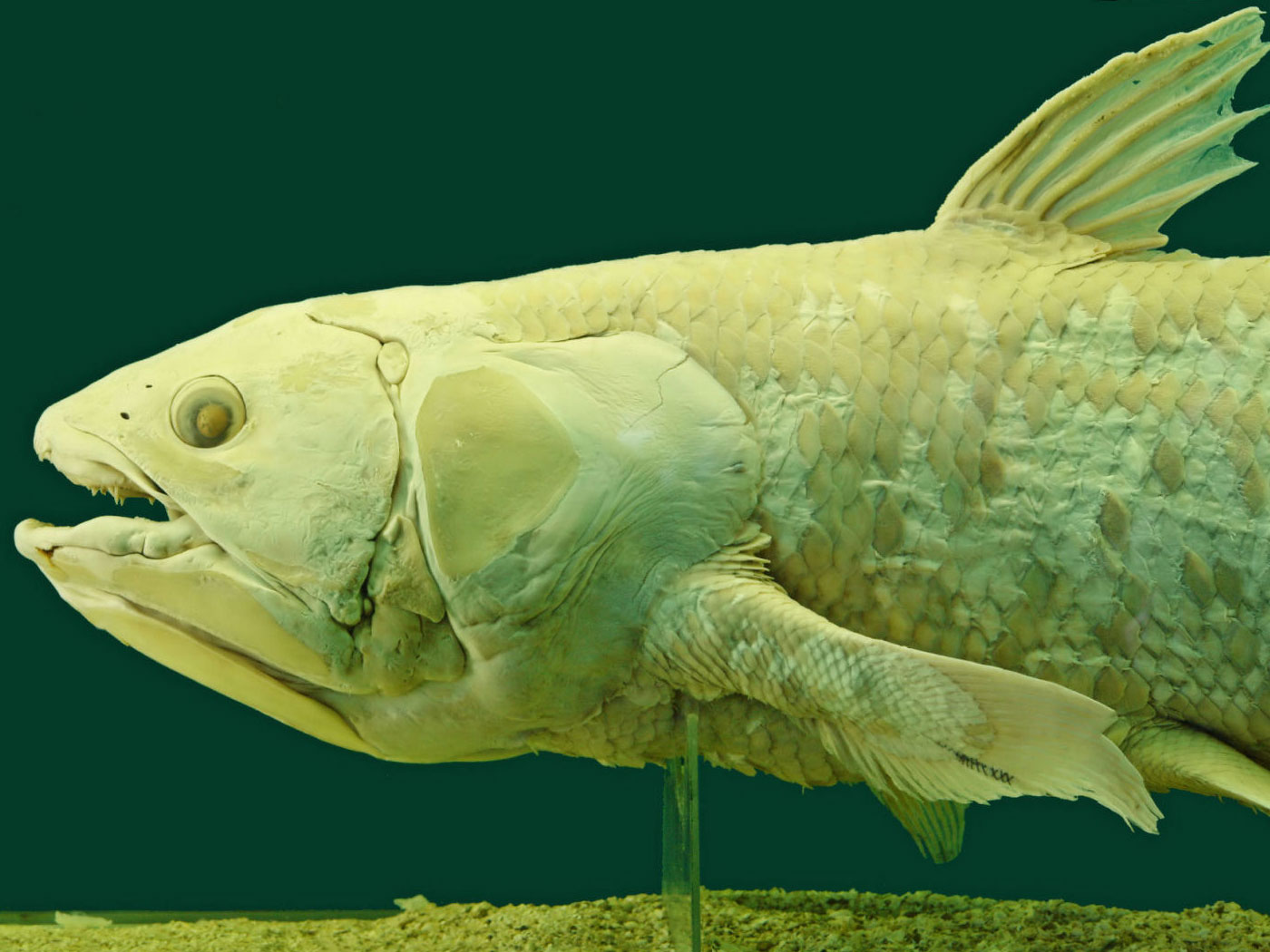
The Coelacanth: A Living Window into God's Design
Imagine a fish designed with such precision that it has thrived in deep, dark ocean waters for generations unchanged, resilient, and wonderfully suited...

How General Revelation Can Inform a Theory of Biologica.,.
Holiness! Omnipotence! Just exclaiming these attributes focuses our attention where it should rightfully go—to God. Another attribute often overlooked...

Did Fossil Birds Live Longer than Today's Birds?
The Bible matter-of-factly states that humans living before and shortly after the Genesis Flood had centuries-long lifespans (Genesis 5 and 11). Yet...
More Design Found in Nature Inspires Innovation

A Molecular Snowmobile
People following—or actively involved in—creation science are no doubt aware of the incredible molecular motor called the flagellum,1,2...
Scientists Try to Duplicate Clam Glue and Bacterial Biofilm
Many clams glue themselves onto a solid surface like a rock or coral reef to keep from being tossed about by the surf. The "glue" sets when...
Woodpecker Inspires Designers, Knocks Evolution
When boring into wood in search of food, a woodpecker exerts so much force with each strike that its beak should crumble, its skull should crack, and...
More Creation Science Update
ICR Research Is Revealing Evidence for Pre-Flood Longevity
One of the claims of Scripture most ridiculed by skeptics is the Bible’s matter-of-fact assertion that ancient people once lived for hundreds...
The Spectral IR Ledge
Life requires many parameters in order to survive and thrive. The more data that are uncovered, the more evidence there is that Earth and its environs...
Is the Earth Round?
Some readers might think the answer to this question is so obvious that maybe we’re offering it as a kind of joke—but it’s no joke....
The Latest

September Wallpaper
"[Cast] all your care upon Him, for He cares for you." (1 Peter 5:7, NKJV)
ICR's September 2026 wallpaper is now...
Life’s Origins: The Bootstrap Problem
Could life’s instructions exist without ever being made? This question raises what is called a “bootstrap problem.”1 It...
The Power of a Meek Life
One of the clearest voices calling believers to surrender to Jesus was George Whitefield, who said, “I have just put my soul as a blank into the...

Extent of the Curse and the Hope of Redemption
“For we know that the whole creation groaneth and travaileth in pain together until now.” Romans 8:22*
At the end of the sixth day of...

Modern Idolatry: Crediting Natural Selection as the Creator
“Have no other gods before Me.” Exodus 20:3
In the beginning God created the heavens and the earth” (Genesis 1:1). The Creator...

Is Death a Curse or Life’s Change Agent?
“The last enemy that will be destroyed is death.” 1 Corinthians 15:26
Without a doubt, there is a sting to death that is felt by Christians...

A Literal First Adam and Redemption in Christ
“ . . . the son of Enosh, the son of Seth, the son of Adam, the son of God.” Luke 3:38
Was there a literal Adam created along with his...

How Can Anyone Believe There Was a Global Flood?
“Whereby the world that then was, being overflowed with water, perished.” 2 Peter 3:6*
I am often asked, “Where is the evidence...

Creation in Six Days: Both Biblical and Practical
“For in six days the LORD [Yahweh] made the heavens and the earth.” Exodus 20:11
We are clearly told in Genesis 1 that God created the...

General Revelation: Power and Wisdom in God’s Creation
“Thou madest him to have dominion over the works of thy hands; thou hast put all things under his feet.” Psalm 8:6*
God is the great...
Shop Related Products
The Fossils Still Say No
$29.99