Tiny volcanic glass beads suggest “surprisingly recent” lava flows on the moon that are “difficult to reconcile with the accepted history of lunar volcanism.”1,2 These tiny glass beads were retrieved by the Chinese Chang’e 5 spacecraft, a replica of which is shown in the above photo. The spacecraft returned to Earth in 2020. Subsequent chemical analysis of the beads suggested they were volcanic in origin, and radiometric dating yielded ages of about 120 million years.
Creation scientists, of course, don’t accept these uniformitarian age assignments, which are greatly inflated. God created all the heavenly bodies, including the moon, just a few thousand years ago on Day 4 of creation week. And there is abundant evidence that radiometric dating techniques are flawed.3 However, their belief that radiometric dating is trustworthy forces uniformitarian scientists to accept that lunar volcanism was occurring just 120 million years ago, even though they long claimed such volcanism had ceased billions of years ago.1,2,4,5
Their surprise is due to the fact that our moon is a relatively small body, and small planets and moons lose their thermal energy to space relatively quickly. Hence, any internal heat necessary to drive recent volcanic or tectonic activity should have been lost to space eons ago. So, evidence for recent (and possibly ongoing) lunar tectonic activity was a great surprise to them.6 Recent and ongoing geological lunar activity makes far more sense if our moon is just thousands of years old.
For the same reason, conventionalscientists were surprised to discover that small planets and moons have internally-generated magnetic fields. Uniformitarian dynamo theories of planetary magnetism require warm liquid cores, and liquid cores in small moons and planets should freeze and solidify after billions of years.
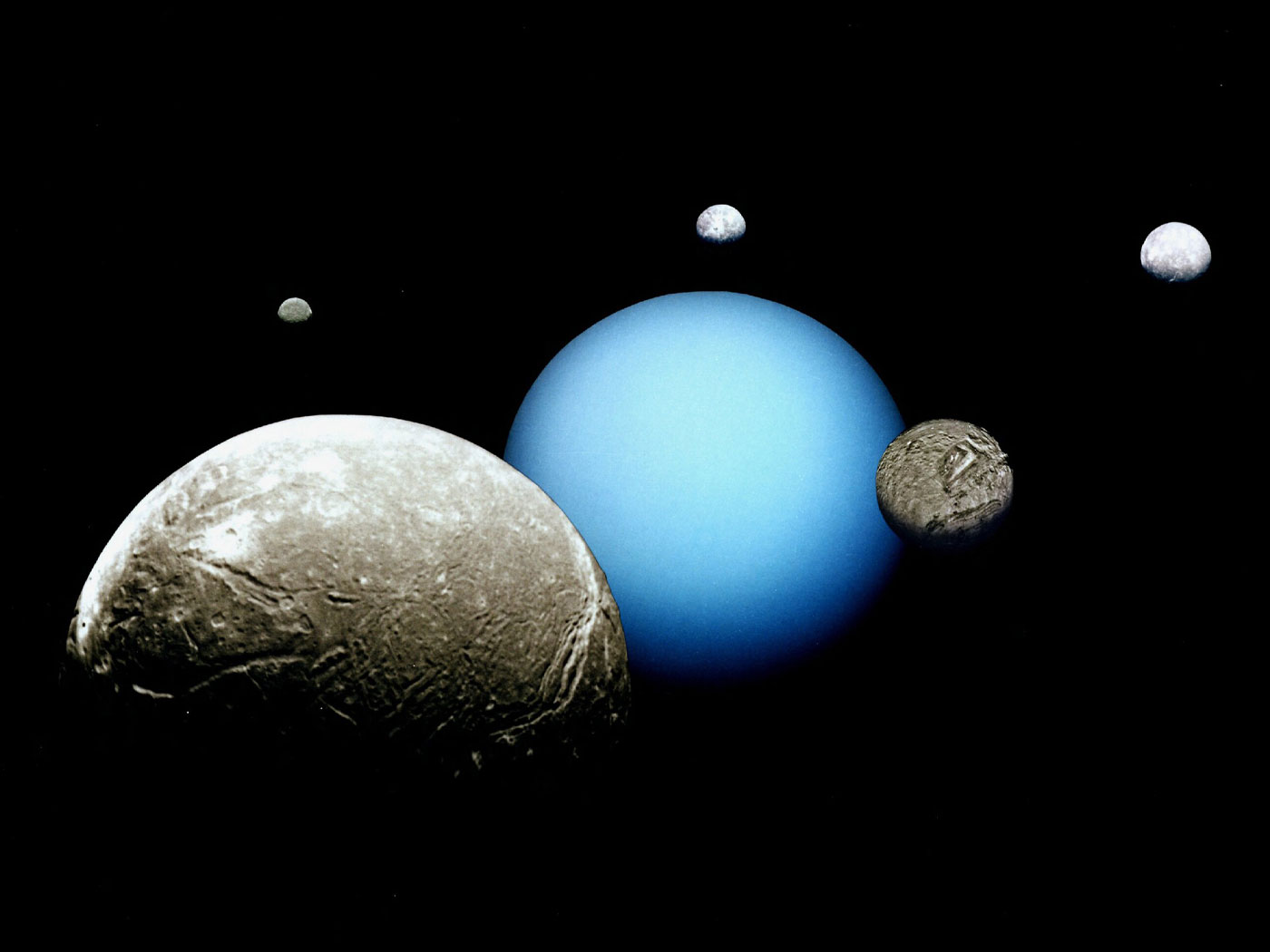
Evidence of relative youth is super abundant in our solar system and has repeatedly “surprised” conventional uniformitarian scientists.7 Astronomical data don’t demand an age of billions of years for our sun, but this belief presents conventional astronomers with a thorny dilemma called the “young faint sun paradox.”8 Tiny Mercury has a magnetic field and is still cooling and shrinking.9 Venus has a young-looking surface and is probably still geologically active today.10 Conventional scientists can’t explain how Earth’s magnetic field could be maintained for billions of years.8 Like the moon, Mars has “surprising” recent volcanism.11 Jupiter’s Galilean moons show evidence of youth,12 as do Saturn’s moons and rings.13–15 Biblical, young-universe assumptions enabled a creation physicist to successfully predict the magnetic moments of both Uranus and Neptune.16 Comets are a strong argument for youth.17 And on and on it goes.
Bible-believing Christians should be encouraged—but not surprised—that the scientific evidence confirms that the heavenly bodies are relatively young, as implied by the Bible’s short chronological history and the testimony of the Lord Jesus Himself.18,19
References
- Wilson, L. The Moon Had Surprisingly Recent Volcanic Activity, Samples from Chinese Space Mission Confirm. The Conversation. Posted on theconversation.com September 6, 2024, accessed September 9, 2024.
- Wang, B.-W. et al. 2024. Returned Samples Indicate Volcanism on the Moon 120 Million Years Ago. Science. 835 (6713): 1077–1080.
- Thomas, B. and J. Morris. 2013. Doesn’t Radioisotope Dating Prove Rocks Are Millions of Years Old? Acts & Facts. 42 (2): 20.
- Evolution of Our Solar System: Earth’s Moon. Lunar and Planetary Institute. Posted on lpi.usra.edu, accessed September 9, 2024.
- Cooling History of Planetary Bodies. James Madison University. Posted on csmgeo.csm.jmu.edu, accessed September 9, 2024.
- Hebert, J. Moon Is Unexpectedly Still Cooling and Shrinking. Creation Science Update. Posted on ICR.org June 6, 2019, accessed September 9, 2024.
- Coppedge, D. F. Don’t Trust Scientists Who Were Wrong: Fire Them. Creation Evolution Headlines. Posted on crev.info June 25, 2017, accessed September 9, 2024.
- Hebert, J. 2018. Our Young Solar System. Acts & Facts. 47 (9): 10–13.
- Hebert, J. Youthful Mercury: Still Cooling and Shrinking. Creation Science Update. Posted on ICR.org October 16, 2023, accessed September 9, 2024.
- Hebert, J. Venus Likely Geologically Active. Creation Science Update. Posted on ICR.org August 16, 2021, accessed September 9, 2024.
- Hebert, J. Martian Lander Discovers “Surprising” Martian Volcanism. Creation Science Update. Posted on ICR.org January 2, 2023, accessed September 9, 2024.
- Hebert, J. 2023. Jupiter’s Young Moons. Acts & Facts. 52 (5): 14–16.
- Thomas, B. Saturn’s Ring Rain Rates Run Fast. Creation Science Update. Posted on ICR.org January 15, 2019, accessed September 9, 2024.
- Hebert, J. Reminder: Saturn’s Moon Titan Really Looks Young. Creation Science Update. Posted on ICR.org February 8, 2021, accessed September 9, 2024.
- Hebert, J. A Subsurface Ocean on Mimas? Creation Science Update. Posted on ICR.org March 18, 2024, accessed September 9, 2024.
- Humphreys, D. R. 1990. Beyond Neptune: Voyager II Supports Creation. Acts & Facts. 19 (5).
- Hebert, J. 2020. Comets: Signs of Youth. Acts & Facts. 49 (9): 17–19.
- Johnson, J. J. S. How Young is the Earth? Applying Simple Math to Data Provided in Genesis. Acts & Facts. 37 (10): 4.
- See Mark 10:6; 13:19; and Luke 11:50.
Stage image: Chang'e-5 lander and ascender stack full-scale mockup display
Stage image credit: Copyright © Shujianyang. Used in accordance with federal copyright (fair use doctrine) law. Usage by ICR does not imply endorsement of copyright holder.
* Dr. Jake Hebert is a research associate at the Institute for Creation Research and earned his Ph.D. in physics from the University of Texas at Dallas.