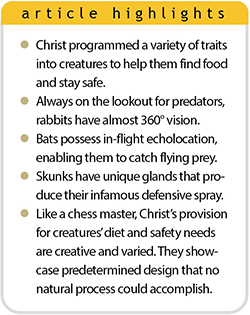
 God’s multifarious and marvelous designs for basic creature needs are so innovatively clever and providentially purposeful that Christ’s workmanship is repeatedly and ubiquitously demonstrated.1 Little furry mammals clearly display that Christ is the best chess master who understands every aspect of His creation and the best moves for every part of it.
How does someone master chess? Among other things, (1) thoroughly understand the pieces. (2) Plan strategically for both long-term and immediate goals. (3) Maintain positional awareness and calculate moves in advance. (4) Thoroughly know chess principles and how the game works.
Christ is the infinite chess master. With His infinite wisdom, He understood the specific needs, abilities, and vulnerabilities of the creatures He created and equipped them for the environments they’d occupy and the challenges they’d face. Our Creator designed and orchestrates all big and small creatures as they fill their respective ranges and niches on planet Earth.
Consider two basic animal needs: (a) eating useful food and (b) keeping safe from hostile weather and predators. God did not apply a one-size-fits-all solution to those challenges because He values variety.1 Consider three small mammals with distinct abilities Christ provided for them to acquire suitable food and seek safety.1
Rabbits
Rabbits are herbivores. Grasses, flowers, and seeds can’t flee from hungry rabbits. However, many plants are not very digestible, so God equipped rabbits for coprophagy (“double digestion” systems). Rabbits benefit from hard-to-access plant nutrients by eating and digesting, then defecating, and then re-ingesting and re-digesting their food.2
What about safety? Rabbit hindlegs are powerful, allowing them to jump with speed and might. They can also evasively zigzag or circle to avoid capture—if they see the danger coming. Noticing predators is critical. Christ designed rabbits with almost full-circle horizontal fields of vision, and rabbit eyes can also scan some sky to have early warning of danger from above (e.g., hawks). A rabbit’s vision is an invaluable part of its ability to speedily recognize and respond to hazards by making specific escapes.2
Bats
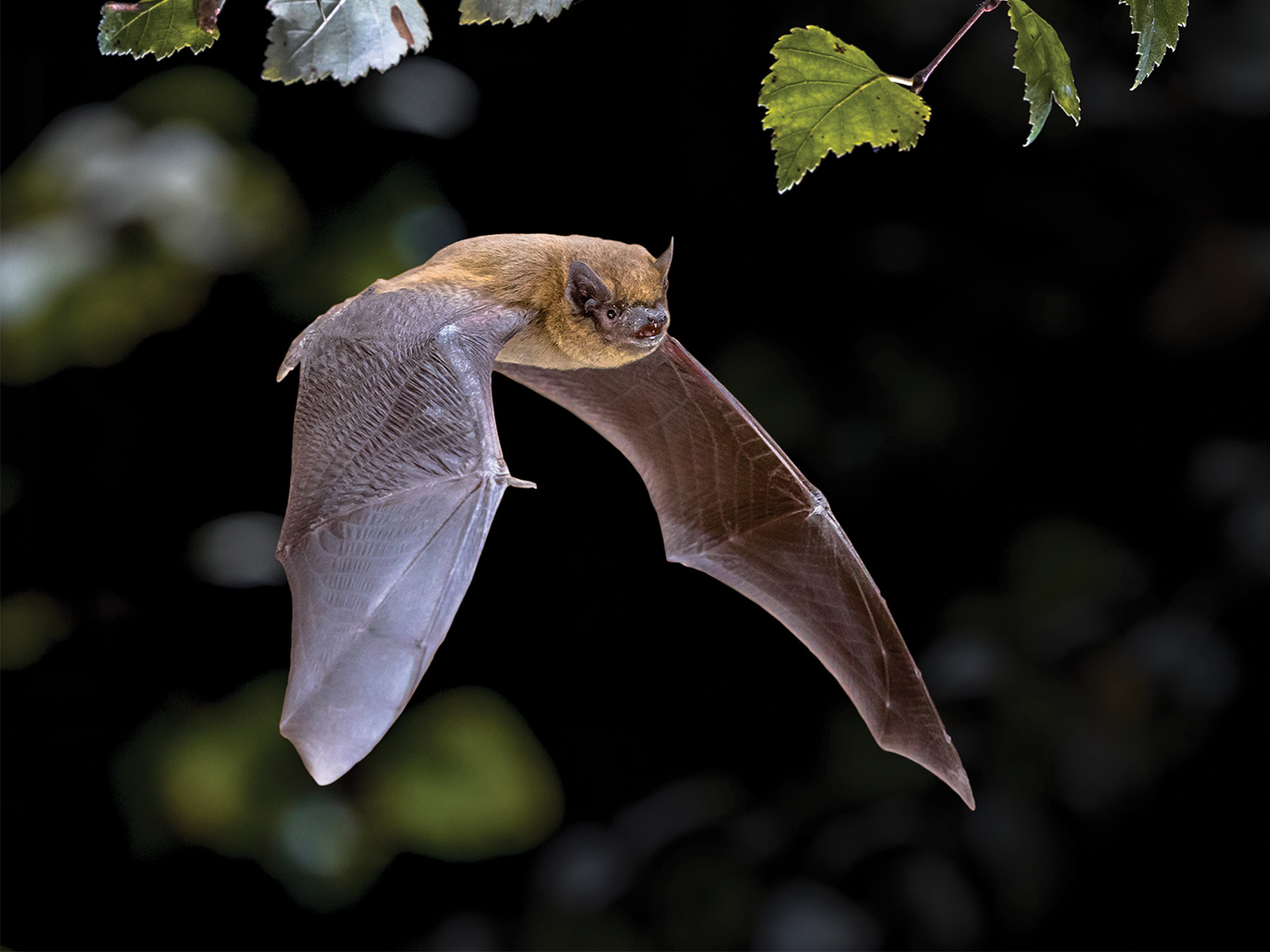
Bats mostly eat flying insects—moths, midges, mayflies, mosquitoes, etc. Each furtive prey is a tiny protein packet, so myriads must be captured and eaten to fuel the demanding metabolism of bats.2,3 As Dr. Frank Sherwin has reported, bats are equipped to use in-flight echolocation to locate (and relocate multiple times with precision and speed) their “meals-on-wings” prey.4
Bats are also vulnerable to freezing winter conditions because keeping warm is costly and their favorite food is unavailable. God designed them to travel to warmer climates or to warmer dwellings inside caves or mines before winter.2
Skunks
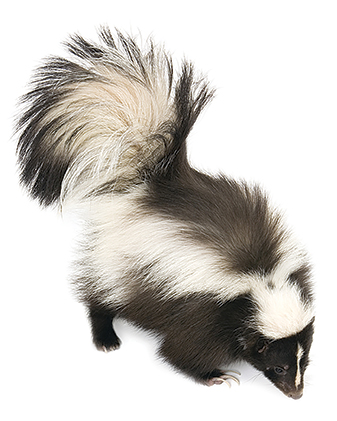 Skunks are versatile omnivores, eating what is available. They mostly hunt small animals (mice, voles, earthworms, bird eggs, bugs) nocturnally and eat plant food (seeds, nuts, berries).2
For safety, however, skunks usually don’t need to flee. Fight, not flight, is often their confrontational response to unwelcome intruders. Beware! Skunks are mustelids whose anal glands produce an oily and pungent (stinking!) spray that is aimed and projected with accuracy and repetition up to 15 feet!2
Earth’s animals, including small furry mammals, display the Lord Jesus Christ’s workmanship. The proof of His creatorship is so irrefutable that failing to glorify Him for His work in creation is inexcusable.5
References
- Johnson, J. J. S. 2012. Valuing God’s Variety. Acts & Facts. 41 (9): 8–9.
- Tekiela, S. 2005. Mammals of Minnesota Field Guide. Cambridge, MN: Adventure Publications, 92–119 (bats), 200– 207 (skunks), 208–219 (rabbits).
- Bats have high-maintenance metabolism requirements. Lactating Myotis lucifugus bat mothers may eat their entire weight, nightly, in insects!
- Sherwin, F. Bat Echolocation Defies Evolutionary Explanations. Creation Science Update. Posted on ICR.org January 31, 2022.
- Romans 1:19–21; Job 12:7–9. These well-equipped animals cannot have originated from some kind of mystical animistic natural selection. Nor were these wee critters generated from imaginary entropy-conquering evolutionary luck.
Dr. Johnson is the associate professor of apologetics and chief academic officer at the Institute for Creation Research.