Over the years, many have claimed the Garden of Eden has been found. Of course the location of each "discovery" is in a different location. The Bible describes the area around the Garden in Genesis 2, even using recognizable place names such as Ethiopia. It mentions a spring in the Garden which parts into four major rivers, including the Euphrates. This has led many, including Bible scholars, to conclude that the Garden of Eden was somewhere in the middle eastern area known today as the Tigris-Euphrates River Valley, with its remains long ago vanishing.
It is also true that this area (the "fertile crescent") was the location of the ancient Tower of Babel and the patriarch Abraham's home in the city of Ur. Without a doubt, the Tigris-Euphrates River Valley plays a unique role in Biblical history, but was it the location of the Garden of Eden? I think not.
First, let's examine the Biblical information. While the Tigres and Euphrates both have their headwaters in the area surrounding Mt. Ararat, they do not flow from a source like the spokes on a wheel, filling the land as mentioned. Nor are the other two rivers present and none go to Ethiopia. Furthermore, the mineral deposits mentioned bear no resemblance to those in this area. In short, the geography and descriptions don't match.
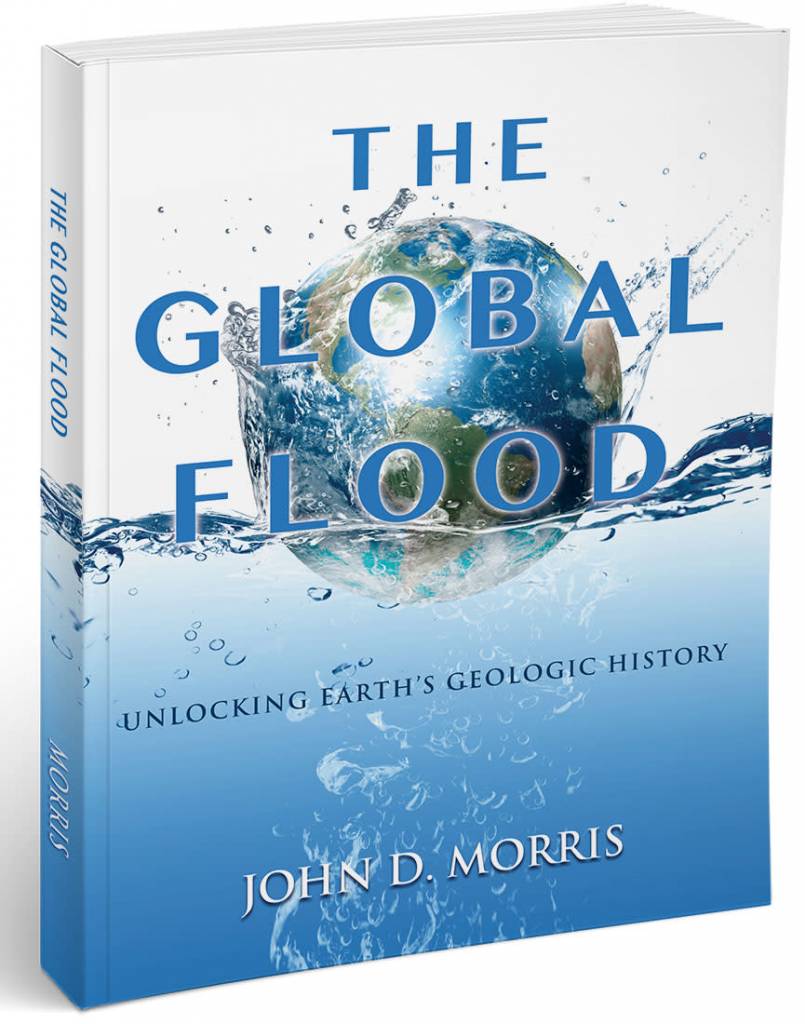
The key is in recognizing that through the Flood of Noah's day, "the world that then was, being overflowed with water, perished" (II Peter 3:6). As described in Genesis 6-9, the Flood would have totally restructured the surface of the globe. It would have done what major floods do—erode the land surface in one area and redeposit those sediments elsewhere. Biblically, the Flood covered the planet with processes operating at rates, scales, and intensities far beyond those possible today. No place on Earth could have survived untouched.
These sediments would have been full of organic debris, which over time would either fossilize or metamorphose into oil and gas. The sediments would harden into sedimentary rock, in places bending into mountains or breaking along fault systems.
Today, the Tigris-Euphrates River Valley contains sediments over two miles thick, from which are pumped enormous quantities of oil and gas. The sediments, now rock, are dramatically bent into modern mountains as well as subsurface mountains, and brutally broken by major fault systems. They deeply cover and obscure any possible pre-flood locations. Furthermore, the basement rock, if indeed it was present before the Flood, would have likely undergone erosion also. No present topography or underground surface could possibly bear any resemblance to the pre-flood world. That world is gone!
Noah and his family would have encountered the present-day Tigris and Euphrates Rivers soon after leaving the Ark. As their descendants migrated, they would give familiar names to the new rivers and places.
God placed an angel at the entrance to the Garden to keep pre-flood men from returning. The Flood made even that precaution unnecessary.
* Dr. John Morris is President of the Institute for Creation Research.
Cite this article: Morris, J. 1999. Where Was the Garden of Eden Located? Acts & Facts. 28 (12).