According to the fossil record, arthropods—in all their complexity—have always been arthropods.1,2 They belong to the phylum Arthropoda, the largest phylum in the animal kingdom.
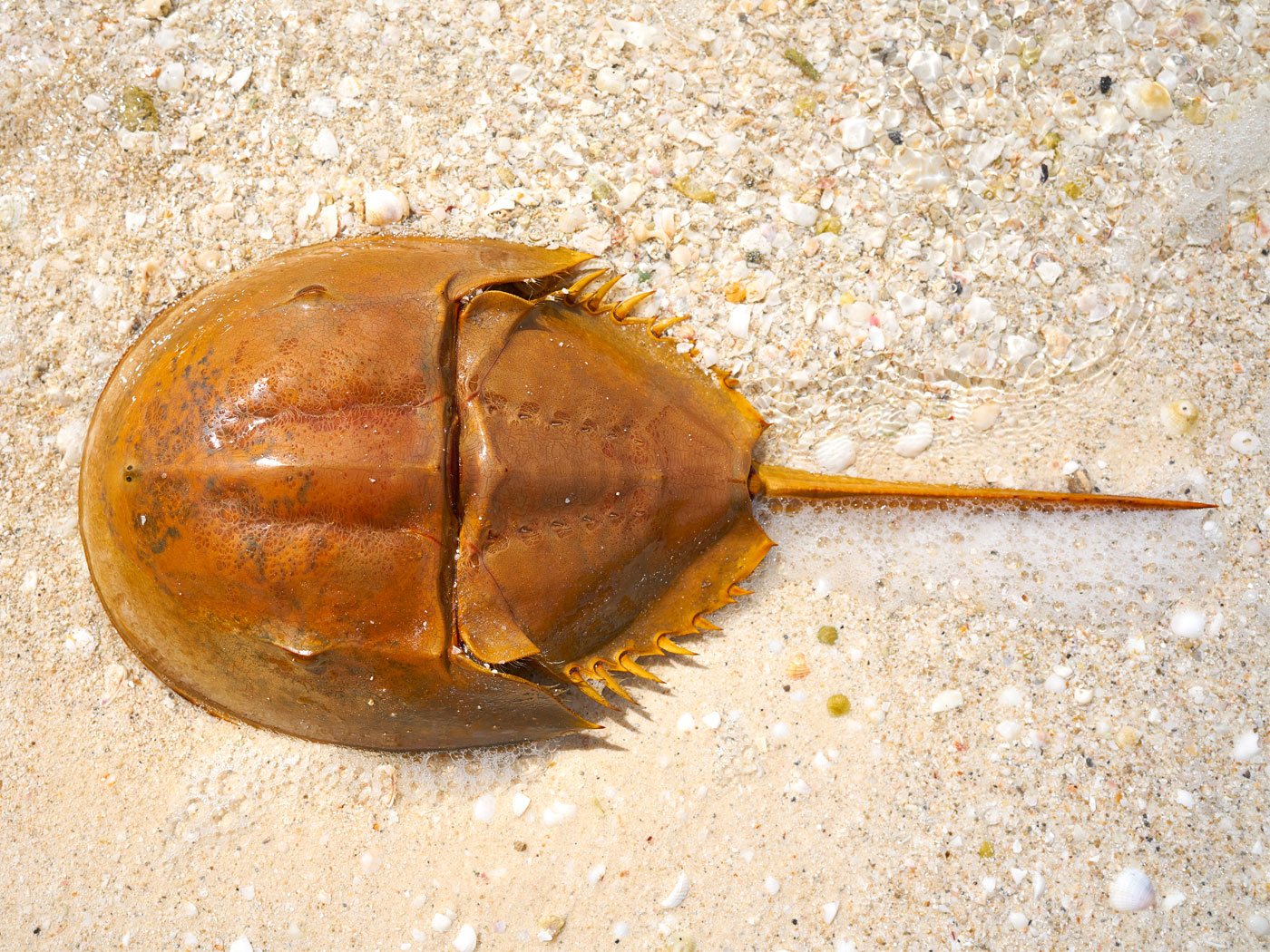
The creation model states that if there was a worldwide flood, one would expect bottom-dwelling creatures like arthropods in the ocean to be catastrophically buried first.3 This is indeed the case with aquatic creatures known as chelicerates, which belong to Chelicerata, a subphylum of arthropods that includes spiders, scorpions, and horseshoe crabs. They appear complete and fully formed in the sedimentary rocks with no indication of evolutionary progression.4
Recently, zoologist Rudy Lerosey-Aubril discovered the oldest chelicerate ever found, Megachelicerax cousteaui, in Utah’s West Desert.5 Yet this oldest chelicerate is still a chelicerate. Lerosey-Aubril and fellow author Javier Ortega-Hernández stated that “this finding provides unequivocal evidence of large predatory chelicerates in the Cambrian.”5 Lerosey-Aubril believed it showed “that the anatomical blueprint of spiders and horseshoe crabs was already emerging 500 million years ago.”6 But a blueprint doesn’t come about through chance, time, and natural processes. It’s a result of plan, purpose, and special creation. In other words, it comes from a mind.
Ortega-Hernández added, “This tells us that by the mid-Cambrian, when evolutionary rates were remarkably high, the oceans were already inhabited by arthropods with anatomical complexity rivaling modern forms [emphasis added].”6 The chelicerates suddenly appear during the Cambrian Explosion.7,8 Like all other life forms, they were created after their kind.9 They were designed with the innate ability to adapt in order to move in and fill the oceanic ecosystem.10
As far back as paleontologists look, chelicerates have remained chelicerates (with the possibility of discovering new and unique species). In this case, the discovery of M. cousteaui “pushes the evolutionary history of chelicerates back by 20 million years.”6 Clearly, “20 million years” earlier it was still a chelicerate—exactly what creationists would expect. M. cousteaui is a 100% arthropod with no evidence of an evolutionary ancestor.
This fossil discovery does not rewrite the origin of chelicerates, spiders, or horseshoe crabs. Instead, these and others like them were suddenly caught up and buried fully formed in the early stages of the Genesis Flood about 4,500 years ago.11,12
References
- Thomas, B. Cambrian Shrimp Eyes Are ‘Surprisingly Advanced.’ Creation Science Update. Posted on ICR.org July 20, 2011.
- Sherwin, F. Half-Billion-Year-Old Fossil Brains? Creation Science Update. Posted on ICR.org July 18, 2022.
- Clarey, T. Trilobites: Sudden Appearance and Rapid Burial. Acts & Facts. 43 (2): 13.
- Clarey, T. Cambrian Explosion Alive and Well. Creation Science Update. Posted on ICR.org January 14, 2021.
- Lerosey-Aubril, R. and J. Ortega-Hernández. 2026. A Chelicera-Bearing Arthropod Reveals the Cambrian Origin of Chelicerates. Nature. 652: 931–937.
- Harvard University. A 500-Million-Year-Old Clawed Predator Rewrites the Origin of Spiders and Horseshoe Crabs. Phys.org. Posted on phys.org April 1, 2026.
- Thomas, B. Is the Cambrian Explosion Problem Solved? Creation Science Update. Posted on ICR.org December 12, 2011.
- Clarey, T. Cambrian Explosion Alive and Well. Creation Science Update. Posted on ICR.org January 14, 2021.
- Sherwin, F. Are the Galápagos Islands a Laboratory of Evolution? Creation Science Update. Posted on ICR.org August 14, 2018.
- Guliuzza, R. and P. Gaskill. 2018. Continuous Environmental Tracking: An Engineering Framework to Understand Adaptation and Diversification. Proceedings of the International Conference on Creationism. 8: 158–184, article 11.
- Clarey, T. 2023. The Genesis Flood: Upheaval in Uniformitarian Geology. Acts & Facts. 52 (6): 4.
- Clarey, T. 2021. Some Marine Extinctions Were Caused by the Flood. Acts & Facts. 50 (4): 13.
* Dr. Sherwin is a science news writer at the Institute for Creation Research. He earned an M.A. in invertebrate zoology from the University of Northern Colorado and received an honorary doctorate of science from Pensacola Christian College.