by Tim Clarey, Ph.D., and Michael J. Boyle, Ph.D.*
One of the most influential ideas over the history of the world is that billions of years of nothing created everything! Remarkably, this idea continues to dominate society, and in particular the academic mindset within conventional science. Yet we should remain steadfast in our knowledge that such conjecture is only a myth: “an unfounded or false notion.”1
Evolutionary concepts were around in one form or another as far back as ancient Greece. But Charles Darwin refined the myth to account for the origin and diversification of all forms of life on Earth, earning him most of the credit for the theory of evolution. In his 1859 book On the Origin of Species by Means of Natural Selection, Darwin envisioned that species were relatively plastic and could transform from one kind into another through a process he called natural selection.2 He argued that nature preserved species that were favored to endure different environmental pressures and reproduce. In effect, he replaced the God of creation with “Mother Nature.” When an organism couldn’t adapt to new conditions, it went extinct and was replaced by another version that was better suited.
However, the way this process actually works is vague and undefined. What is environmental pressure? What decides which organisms are better suited? And how does nature select without intelligence?
These questions ultimately depend on the early formation of molecules and living cells. But none of them could be answered by Darwin or his theory. Furthermore, he realized that the fossil record didn’t support evolution either, but he still believed we’d find all the missing links between organisms in the future. Today, 166 years later, the missing links are still missing.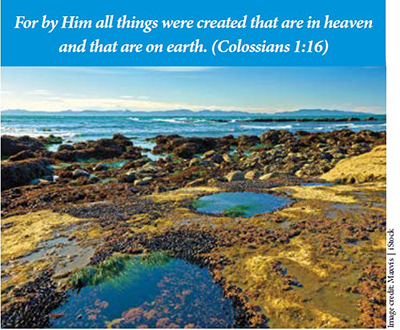
Regardless, Darwin duped the scientific community into believing his myth. To do so, he had to embrace the paradigm of deep time that James Hutton put forth in the late eighteenth century.3 Darwin needed vast amounts of time for small changes to accumulate into big changes. For example, he proposed that notable differences in finch beaks provided supporting evidence, claiming their beaks evolved slowly through natural selection. Since then, intensive studies have revealed that Galápagos finch beaks undergo minute changes within the same bird, in the same generation, in response to seasonal differences in the availability and size of seeds in their diets.4 The variation in these finches was, ironically, part of the basis of Darwin’s theory of evolution.5
Moreover, in the evolutionary zeal to find missing links, conventional scientists have created hoaxes and made mistakes, including Piltdown Man and the more recent half-bird, half-dinosaur Archaeoraptor liaoningensis.6,7 In reality, there are few, if any, undisputed transitional fossils.8 Instead, many fossils are discovered as complete creatures in their order of burial by the Flood. Scientist Michael Denton summarized this dilemma by stating,
Whatever view one wishes to take of the evidence of paleontology, it does not provide convincing grounds for believing that the phenomenon of life conforms to a continuous pattern. The gaps have not been explained away.9
That is, not without introducing another unsolved mystery of punctuated equilibrium.10 Collectively, the lack of evidence for the origin of life, the evolution of life, and transitional fossil life remains an insurmountable problem for conventional scientists.
At ICR, we understand that nature could never create life or transform one creature into another. All organisms are created with forethought and intention to self-adjust in order to adapt to their respective environments. And thus, organisms are the agents of control. As a collection of physical laws, nature is certainly not a living force and is therefore void of any creative capacity. For these and many other reasons, we recognize Jesus Christ as the Creator and Sustainer of life. “All things were created through Him, and for Him” (Colossians 1:16).
References
-
Merriam-Webster, s.v. “myth.” Accessed July 29, 2025. https://www.merriam-webster.com/dictiona
ry/ myth. - Darwin, C. 1859. On the Origin of Species. London: John Murray.
- James Hutton proposed deep time after a 1788 visit to the east coast of Scotland. See Clarey, T. 2023. Siccar Point, the Shrine of Deep Time. Acts & Facts. 52 (3): 21–22.
- Burrows, L. For Darwin’s Finches, Beak Shape Goes Beyond Evolution. Harvard John A. Paulson School of Engineering and Applied Sciences. Posted on seas.harvard.edu/news November 12, 2021.
- 18.1C: The Galapagos Finches and Natural Selection. Introductory and General Biology. General Biology (Boundless). LibreTexts. Posted on bio.libretexts.org.
- Sloan, C. P. 1999. Feathers for T. rex? National Geographic. 196 (5): 98–107.
- Simons, L. W. 2000. Archaeoraptor Fossil Trail. National Geographic. 198 (4): 128–132.
- Morris, J. D. and F. J. Sherwin. 2010. The Fossil Record: Unearthing Nature’s History of Life. Dallas, TX: Institute for Creation Research.
- Denton, M. 1986. Evolution: A Theory in Crisis. Bethesda, MD: Adler & Adler Publishers, 194.
- Gould, S. J. and N. Eldridge. 1977. Punctuated Equilibria: The Tempo and Mode of Evolution Reconsidered. Paleobiology. 3 (2): 115–151.
Dr. Clarey is the director of research and Dr. Boyle is a research scientist at the Institute for Creation Research. Dr. Clarey earned his Ph.D. in geology from Western Michigan University, and Dr. Boyle earned his Ph.D. in zoology from University of Hawaii at Manoa.