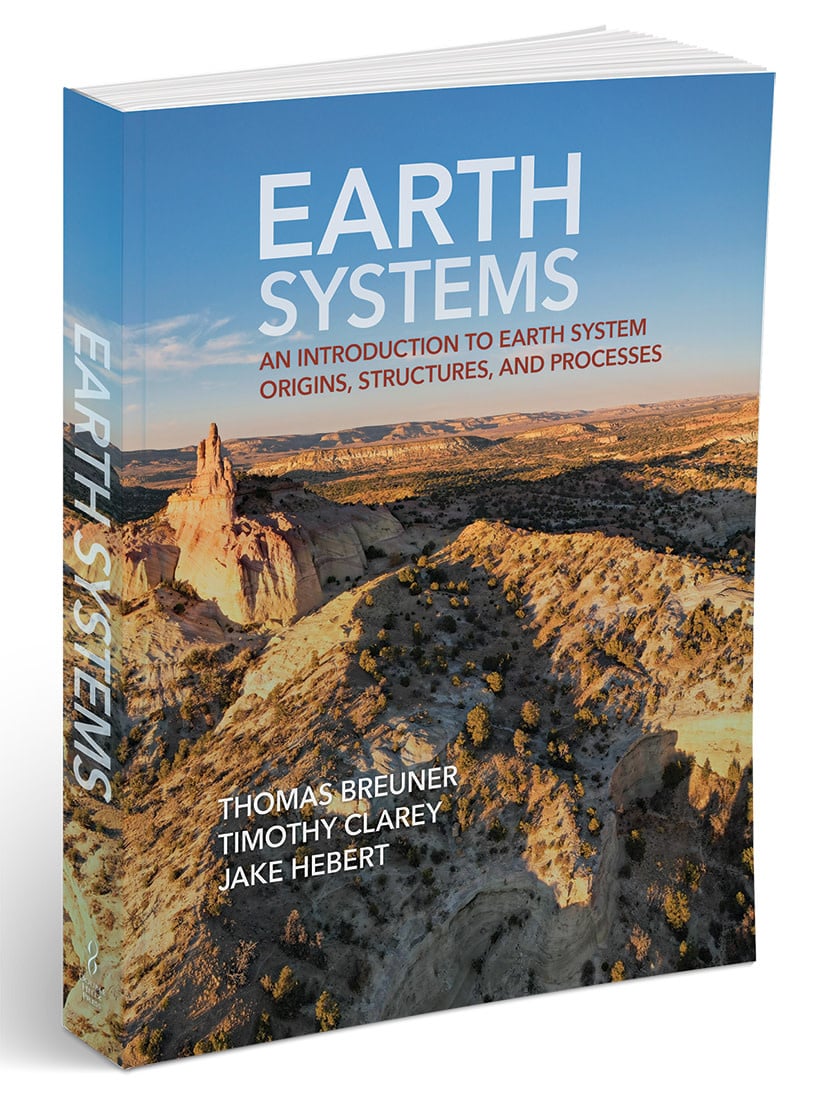
Hugh Ross’ latest book, Noah’s Flood Revisited: New Depths of Insight from Science and Scripture, is both dismissive of young earth creation (YEC) research and full of fabricated tales.1 Nonetheless, he begins his book by sounding fairly reasonable for the most part. In the first three chapters, he reminds readers of the literal and historical account of Noah in Genesis: it was a real event and not merely poetry, allegory, or myth.1 Next, he explains the “universal nature” of the Flood and how it affected all humanity.1 He supports this by reviewing and comparing many global flood legends to the account in the Bible. He even explains why the Hebrew version, although not the oldest, can still be the most accurate.
However, Ross does two things in the rest of the book that quickly show he still supports a local flood. First, he simply dismisses all of the geological research that supports a global Flood (he actually begins to do this in chapter one). Second, he fabricates fiction to try to justify his local flood story. This brief review will not be able to discuss all the issues in Ross’ book, but it will cover some of the most egregious.
What Does He Dismiss?
Beginning in chapter one, Ross dismisses young earth creationist geoscientists. Ross claims, “Adults on every continent, especially those with formal training in the sciences, recognize that no geological evidence exists—at least none confirmed as credible by the scientific community—for a globally extensive flood during the past several thousand years.”1 By making this statement, he not only disregards the many M.S. and Ph.D. scientists in the YEC community but also the global geological evidence preserved in the rocks. This treatment ignores ICR’s column project research that has been conducted in the last 12 years, not mentioning any of it in the text or references. This research compiled over 3,200 stratigraphic columns across every continent, including every uplift, basin, country, US state, and Canadian province. It shows conclusively that there was a global, progressive Flood.
ICR’s results demonstrated that all of the continents have the same rocks deposited in the same relative order. And all continents show initial flooding in areas we interpret as shallow seas followed by the flooding of the lowlands. Finally, the uplands were covered as the water level rose higher during the Flood year. In addition, all continents have the same fossils found in the rocks in the same order.2 And all continents show a similar peak water level at about the same time—just what one would expect from a global Flood.2,3 How else can these global similarities in rocks and fossils on every continent be reasonably explained?
Ross also dismisses the ground-breaking geophysical models of Dr. John Baumgardner in his derision of rapid plate motion in chapter 13. He doesn’t address any of the calculations and results of Baumgardner’s physics models; he just ridicules the model’s high plate velocities compared to today’s rates.4
Conveniently, Ross never mentions the numerous cold slabs found deep in the mantle in the last 20 years via seismic tomography.4,5 These are the remnants of ocean lithosphere (crust and upper mantle) that were rapidly subducted into the deep mantle. And they are still cold! This demonstrates they didn’t move to the base of the mantle over the course of 75 million years, as conventional geologists claim using today’s slow plate rates. If that were the case, they would have assimilated to the extreme temperatures in the lower mantle. Instead, they must have moved down into the mantle quickly and recently to maintain their colder temperatures, just as Baumgardner’s models predicted.
Fabricated Tales
Dr. Ross makes many outlandish statements throughout his book, many without a single reference. His fictions include conflation of the clear teaching of Scripture in his section on why a global Flood really wasn’t global. He claims the Flood only covered the known world. So, when the Bible says “the whole earth” (Genesis 8:9), he says it really just meant as far as Noah could see.1 He then asserts that belief in a global Flood is one reason many choose to reject the Bible altogether, adding on page 158: “The notion of a ‘geologically impossible’ global flood is one major obstacle skeptics will point to as a reason to reject the Bible’s accuracy and authority.”
In addition to Ross’ concerns about the lack of geological evidence for a global Flood, he also claims there was not enough water. He writes on page 154, “To cover all Earth’s surface with water would require more than four times the sum of all water currently present in Earth’s oceans, lakes, and rivers, atmosphere, and crust.” But Ross seems to forget how much liquid water the oceans alone hold today (with ice sheets holding some, too). If the earth were completely flat, the ocean would cover the earth to a depth of over 8,800 feet!6
Recall, the most likely mechanism for the global Flood was catastrophic plate tectonics that destroyed the original ocean floor and created a completely new one.2,3 Rapid production of a new, hot seafloor would have elevated the bottom of the ocean surface, pushing water higher and higher onto the land, culminating with complete inundation by Day 150 of the Flood year. YEC geologist Dr. Andrew Snelling has calculated that this raising of the seafloor could have pushed global sea level up by as much as one mile!7 And, if the pre-Flood earth only had hills as high as 5,000 feet, this could easily flood the entire planet to a depth of 15 cubits (about 23 feet). After all, there were no Himalayan Mountains, Alps, Zagros, Andes, or Rockies before the Flood.3 Those formed during the Flood year.
On page 156, Ross lays out another false challenge. Here, he correctly claims that catastrophic plate tectonics would generate thousands of massive tsunamis. These tsunamis were a major part of the flooding of the land.2–4 But then Ross nonchalantly adds on page 156, “Thousands of kilometers (miles) of tectonic movement within less than 150 days would generate not just one but thousands of tsunamis larger than the one produced by the Lituya Bay landslide [1958 tsunami in Alaska]. The ark and its inhabitants could not have survived such as onslaught of tsunamis.”
However, tsunamis do not cause large waves in deep ocean waters. They zip by at about 500 miles per hour but only make a small wave of a few feet in height as they pass—hardly enough to impact the massive Ark. It isn’t until the waves are squeezed upward by the shallowing of the ocean near land that they grow to become walls of water that sweep across the land at speeds of 30–50 miles per hour or more. So, the Ark could survive just fine. But unfortunately, Ross places his fictitious Ark in the shallow waters of the Persian Gulf or the Mesopotamian Plain, creating a challenge that never existed.
To maintain his parody of a local flood, Ross claims only animals affected by human wickedness were killed in Noah’s Flood, stating, “Therefore, the devastation of Noah’s flood came only upon animals, specifically nephesh (soulish) animals, irreparably damaged by contact with human reprobation.”9 If this were the case, why take two of every kind of air-breathing land animal if most kinds that were scattered across the globe survived? The survivors, beyond the reach of the local flood, could have simply migrated back and repopulated the Middle East. So why take any animals at all?
Ross also believes Noah’s Flood took place during the latter part of the Ice Age (Ross claims between 120,000 and 45,000 years ago),1 where this colder weather and massive build-up of ice herded all of the world’s people to “the Persian Gulf region, southern and central Mesopotamia, and lowland regions bordering the Gulf of Oman. This latter area would seem to represent the minimal extent of Noah’s Flood.”8
But, during the Ice Age, there were mammoths, mastodons, sloths, and all varieties of animals scattered across the globe. And humans were scattered, too, since they were hunting these animals, leaving bone cut marks and artifacts at many Ice Age kill sites from Michigan to Florida and Texas.10 So, how can Ross claim humans had not dispersed across the globe at this point?
Finally, Ross asserts that Noah couldn’t have traveled away from the location of the future Flood because it would have been too dangerous. He writes,
Lot’s move [from Sodom and Gomorrah] was a relatively short one. Noah’s emigration would have been an extremely distant one through regions inhabited by wicked people. Risks to himself, his family, his animals and his possessions would have been enormous. Losses would have been inevitable and of such a proportion as to hamper the relaunch of civilization after the flood.11
So, instead, Ross hampers and limits the power of the Lord Jesus to rescue Noah, his family, and their possessions, claiming it’s too great of a distance to travel for the Lord to protect him. Yet, parting the Red Sea wasn’t too much? Sending manna from heaven wasn’t too much? Ross continues with his speculation, adding,
For Noah and his family, a long walk to safety could be interpreted as an illustration of salvation by works. The rescue of Noah and his family in the ark beautifully illustrates salvation by grace alone. Salvation by grace is even seen in the miracle of Noah’s successful construction of the ark. Without God’s detailed instructions and daily assistance, Noah could never have accomplished the task.12
So, walking to safety was work, but building the Ark over many decades was not work? Ephesians 2:8–9 tells us, “For by grace you have been saved through faith, and that not of yourselves; it is the gift of God, not of works, lest anyone should boast.” Building the Ark simply demonstrated Noah’s faith in the then-coming global Flood and faith that the Lord would save him and his family inside it.
Numerous times in the Flood account the Bible specifically mentions bird kinds were brought to the Ark for their survival. But couldn’t birds have just flown away if it was a local flood? Ross contends that birds had to be taken on the Ark because they couldn’t have flown away to safety during the heavy downpours of the Flood, even going so far as to say, “At least some of the bird species on board the ark may have come from outside the vast area covered by the flood, but for these birds to repopulate would have taken far longer had they not been spared.”13 But the other birds, beyond the reach of Ross’ local flood, could have simply flown back and repopulated the flooded region very quickly. The repopulation would likely have been completed in a few years or less. Mount St. Helens demonstrated that animal and plant recovery of a devasted area is much faster than biologists first believed!14
In summary, Ross’ latest foray into Noah’s Flood is flawed throughout by maintaining it was a local flood. He immediately dismisses all YEC geologists as well as the geological evidence for a global Flood. His gyrations through the Scriptures and fictitious tales used to justify this view may sound reasonable to those who already agree with Ross, but the clarity of Scripture precludes Ross’ whimsical speculations, and the rocks across the globe tell us it was a true and global event. The Flood account in the Bible is accurate as written, as are all the Scriptures from beginning to end. Genesis says waters covered “the whole earth” (8:9), and the rocks confirm it.
References
- Ross, H. 2025. Noah’s Flood Revisited: New Depths of Insight from Science and Scripture. Covina, CA: RTB Press.
- Clarey, T. L. and D. J. Werner. 2023. A Progressive Global Flood Model Confirmed by Rock Data Across Five Continents. Proceedings of the International Conference on Creationism: 9, article 23: 412–445.
- Clarey, T. 2020. Carved in Stone: Geological Evidence of the Worldwide Flood. Dallas, TX: Institute for Creation Research.
- Baumgardner, J. R. 2003. Catastrophic Plate Tectonics: The Physics Behind the Genesis Flood. Proceedings of International Conference on Creationism. 5, 113–126.
- Schmandt, B. and F. C. Lin. 2014. P and S Wave Tomography of the Mantle Beneath the United States. Geophysical Research Letters. 41 (18): 6342–6349.
- Garrison, T. S. and R. Ellis. 2024. Oceanography: An Invitation to Marine Science, 10th Student Edition. Boston, MA: Cengage.
- Snelling, A. A. and S. W. Boyd. 2014. Geophysical Issues: Understanding the Origin of the Continents, Their Rock Layers and Mountains. In Grappling with the Chronology of the Genesis Flood. S. W. Boyd and A. A. Snelling, eds. Green Forest, AR: Master Books, 111–143.
- Ross, Noah’s Flood, 158.
- Ross, 122.
- Young, L. Did Humans Exist with Mastodons? Posted at iere.org November 20, 2025, accessed December 23, 2025.
- Ross, 136.
- Ross, 161.
- Ross, 167.
- Clarey, T. and F. Sherwin. 2020. Mount St. Helens, Living Laboratory for 40 Years. Acts & Facts. 49 (5): 10–13.
*Dr. Clarey is the director of research at the Institute for Creation Research and earned his doctorate in geology from Western Michigan University.