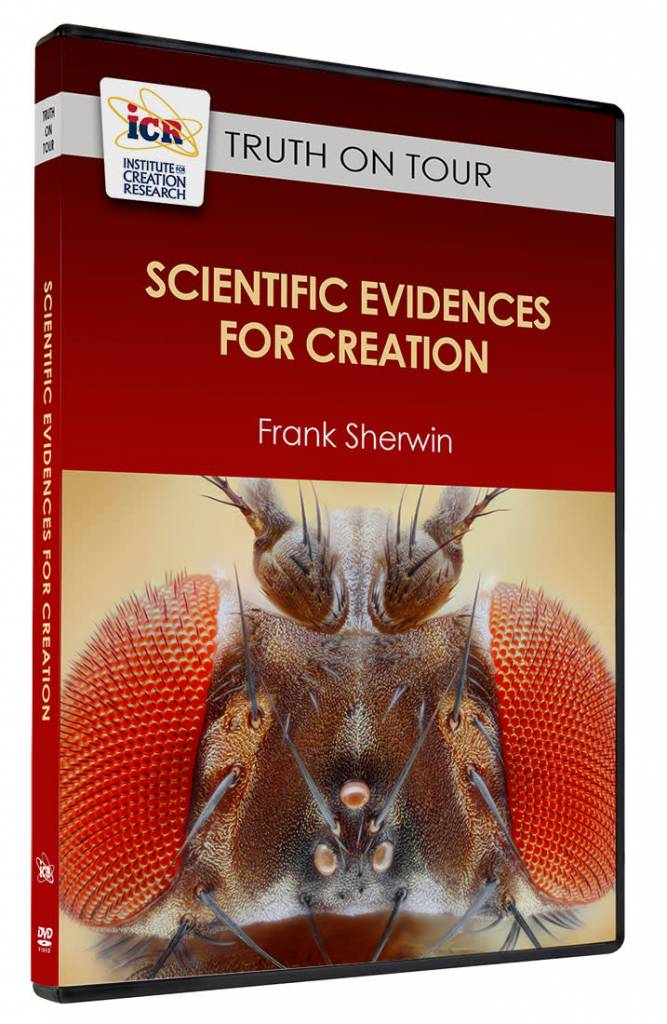
The lowly fruit fly (Drosophila) is the research biologist’s friend in fields such as biomedical science, genetics, and developmental biology. The insect takes up little space, is easily fed, has just four pairs of chromosomes, and reproduces rapidly.
Recently, zoologists have been investigating “how a structure essential for [fruit] fly flight, the haltere [balancer], is formed. This small organ, located behind the main wings, functions as a biological gyroscope that helps the insect stay stable in the air.”1 The halteres are amazing mechanosensory organs that aid the fruit fly’s flight.
The halteres are designed to work like vibrating structural gyroscopes or strain gauges, helping in navigational capability and controlling the fly’s equilibrium in flight. Such vibrations exert a force on the insect’s body and is detected by the fly. Specifically, the haltere gives “three-axis angular velocity information, namely roll, pitch and yaw axes, for flight control.”2
Halteres look like tiny rotating drumsticks or dumbbells, but how do they maintain such a shape? According to a study published in Current Biology, the haltere dorso-ventral “projections absorb deforming tensile loads to preserve globular shape.”3 For decades it was erroneously thought that these tiny structures were hollow, but the Current Biology study has shown that “its two surfaces are internally connected by a sophisticated cellular system that stabilizes its rounded shape.”1
An article from University of Elche further stated, “The study also reveals that the haltere is under constant tension: one force pulls at its base, while another anchors it to the insect’s outer cuticle. It is precisely this internal tensor system that balances both forces to maintain the haltere’s geometry.”1
Researcher José Carlos Pastor Pareja stated, “This structure is a stabilization system reminiscent of architectural supports: without these internal connections, the haltere elongates and loses its shape, like a tent without guy ropes.”1 Of course, in engineering, “architectural supports” are structures carefully designed by architects and are not a product of chance.
Speaking of engineering, three evolutionists describe the biomechanical basis of wing and haltere coordination in flies, stating that the wing movements must be both fast and exact.
This system requires a clutch mechanism in the wing hinge to independently engage each wing with the vibrating thorax. Once the wings are engaged, the gearbox modulates the amplitude of each wing. Thus, the force transmission mechanism from thorax to wings in flies bears remarkable similarity to automobile transmission systems.4
When one thinks of a clutch mechanism, gearbox, and automobile transmission system, one naturally thinks of finely-tuned, purposeful engineering by highly intelligent individuals where nothing is left to chance. Is it any wonder the late Francis Crick said, “Biologists must constantly keep in mind that what they see was not designed, but rather evolved.”5
In the mid-80s, this author had a formal debate with an evolutionary biologist who taught at a university in Denver. His primary argument was that the halteres of the fruit fly could be mutated to produce a second pair of wings: voilà, a beneficial mutation of the ultrabithorax (Ubx), which is a large and complex homeobox gene found in insects such as the fruit fly. He triumphantly showed a picture of the four-winged fruit fly.
But what he didn’t tell the audience was the fruit fly was at an extreme disadvantage. The extra set of wings had no flight muscles! Its flight was handicapped, making flying slow and erratic (having lost its three-axis angular velocity input). The only place such a mutated four-winged fly could possibly survive is in the protective confines of a laboratory. If released into the environment, the slow and clumsy fly would rapidly become a meal for a predator. Such a mutation caused a scientist to state,
The mutants that produce four-winged fruit flies survive today only in a carefully controlled environment and only when skilled researchers meticulously guide their subjects through one non-functional stage after another. This carefully controlled experiment does not tell us much about what undirected mutations can produce in the wild.6
Regardless, evolutionists must posit these well-designed structures were not created but evolved from ancestral hindwings or forewings (some erroneously call the halteres “modified hindwings”), but there is no evidence this occurred. It is only theoretical.7 Halteres are 100% halteres the first time they’re found. Evolutionists must rely on the tired theory of convergent evolution8 to describe the origin of halteres in the insect orders Diptera and the Strepsiptera. So far, halteres are not found anywhere else in nature.
The flight and balancing systems of the little fruit fly show God’s clearly seen creation (Romans 1:20).
References
- How Flies Grow Their Gyroscopes: Study Reveals How Flight Stabilizers Take Shape. University of Elche. Posted on phys.org June 12, 2025.
- Kim, C. et al. 2022. Development and Evaluation of Haltere-Mimicking Gyroscope for Three-Axis Angular Velocity Sensing Using a Haltere-Mimicking Structure Pair. Bioinspiration & Biomimetics. 18 (1) .
- Song, Y. et al. 2025. Mechanical Coupling between Dorsal and Ventral Surfaces Shapes the Drosophila Haltere. Current Biology. 35 (13): 3090–3105.
- Deora, T. et al. 2015. Biomechanical Basis of Wing and Haltere Coordination in Flies. Proceedings of the National Academy of Sciences. 112 (5): 1481–1486.
- Crick, F. 1990. What Mad Pursuit: A Personal View of Scientific Discovery. London, UK: Penguin Books, 138.
- Meyer, S. C. et al. 2007. Explore Evolution: The Arguments for and Against Neo-Darwinism. London, UK: Hill House Publishers, 105.
- Hersh, B. et al. 2007. The UBX-Regulated Network in the Haltere Imaginal Disc of D. melanogaster. Developmental Biology. 302 (2): 717–727.
- Guliuzza, R. 2017. Major Evolutionary Blunders: Convergent Evolution Is a Seductive Intellectual Swindle. Acts & Facts. 46 (3): 17–19.
* Dr. Sherwin is a science news writer at the Institute for Creation Research. He earned an M.A. in invertebrate zoology from the University of Northern Colorado and received an honorary doctorate of science from Pensacola Christian College.