Omnipotent Creator or God Particle? [Podcast] | The Institute for Creation Research

Omnipotent Creator or God Particle? [Podcast]

Does science support the Big Bang? Should Christians trust scientific headlines? ICR physicist Dr. Jake Hebert provides answers to common questions about origins, the Big Bang, and the scientific method. From the ocean floor to the physics of outer space, join Dr. Hebert in examining the science, logic, and historical data that indicate a young universe fashioned by the all-powerful Creator God.

1) Manganese Nodules and the Age of the Ocean

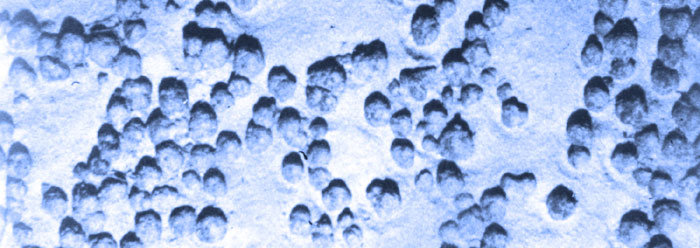
Many secular scientists extrapolate current seafloor sediment deposit rates. They then publish Earth age assignments of millions of years. Are they following the scientific method? How do manganese nodules present problems for old-Earth proponents? Does evidence line up with recent creation and the global Genesis Flood?

2) Does the “God Particle” Prove the Big Bang?

Is the “God particle” truly “a blow to the Christian faith,” or “a nail in the coffin of religion”? Where does reality end and hype begin? Dr. Hebert exposes the flaws of the Big Bang theory and offers a logical evaluation of the scientific community.

3) Our Young Universe

According to the Big Bang origins model, our universe is said to be 13.8 billion years old. But a straightforward reading of the Bible—including historical information and the testimony of the Lord Jesus—confirms a young universe closer to 6,000 years old. How can Christians answer Big Bang claims? Dr. Hebert provides scientific and biblical reasons for a young universe.

4) The Big Bang Is Broken

Secular cosmologists claim that the universe originated in an explosion 13.8 billion years ago. Some Christians believe this Big Bang is the means God used to create the universe. Is there evidence to support this? How should laypeople respond to the 3 main arguments for the Big Bang? Why should Christians reject the Big Bang?

5) The Scientific Method

We are constantly bombarded with fantastic claims about the past that are touted as scientific. The scientific method—a way to study the natural world—will help us better analyze these claims. Why should everyone know the scientific method? What role does the method play in studying historical events or unobserved speculations?




For more radio programs, click here.

The Latest
NEWS
An Egg Doesn't Crack the Mammal-Reptile Mystery
A small and interesting plant-eating reptile called Lystrosaurus is in the news recently because it was found to have laid eggs (as reptiles do). So...

NEWS
Surprisingly Thicker Whopper Sand Best Explained by the Flood’s...
Recently, an update on the Whopper Sand in the Gulf of America (Mexico) was published in the oil field trade magazine, AAPG Explorer.1 New...

NEWS
Stolen Chloroplasts Steal the Show
Amazing tiny chloroplasts found within equally incredible plant cells continue to reveal the detailed workmanship of the Creator who created plants...

NEWS
May 2026 Wallpaper
"that you may walk worthy of the Lord, fully pleasing Him, being fruitful in every good work and increasing in the knowledge of God."  (Colossians...

NEWS
Reptile Evolution Ideas Are Challenged—Again
A small fossil reptile with strange and intricate skin outgrowths has been discovered that is forcing evolutionists to once again reexamine their understanding...

ACTS & FACTS
Creation Kids: Stegosaurus
Hi, kids! We created a special Acts & Facts just for you! Have fun doing the activities while learning about the wonderful world God...

ACTS & FACTS
Adaptive Trait Variation Conferred by Engineered Genetic Diversity
Global environments are highly diverse and dynamic, offering many changes and adaptive challenges to creatures. However, DNA sequence variability engineered...

ACTS & FACTS
Canyonlands National Park: A Bird's-Eye View
Certain overlooks at Canyonlands National Park in eastern Utah make you wish you could soar overhead to see and explore more crannies and canyons. Visitors...

ACTS & FACTS
Criticizing a Perfectly Engineered Eye: Evolutionists Humiliate...
Updated and modified from Guliuzza, R. J. 2016. Major Evolutionary Blunders: Evolutionists Can’t See Eye Design. Acts & Facts. 45 (10): 16–18. Robert...

ACTS & FACTS
Casting Out Doubts: The Fruits of ICR Research
Do you remember the first time that you read about Uzzah and the Ark of the Covenant (2 Samuel 6)? I read it as a young person and remember feeling...