In short, no way. But Christians should understand the biblical and biological reasons why not. Then we can have a meaningful conversation with friends and family, made more relevant by the theatrical re-releases of 3-D versions of the Jurassic Park films that imagine cloned dinosaurs.
Evolutionists also answer “no” to this question, but for a somewhat misguided reason. Christians should understand this, too. An online LiveScience article listed seven ways that dinosaur science has changed in the 20 years since Jurassic Park was first released, and the seventh item on the list argued that cloning dinosaurs would not be possible because their DNA would have completely degraded after millions of years.1 It referenced a recently published DNA-in-bone decay rate.2 The senior author of that study—and head of Murdoch University’s ancient DNA research laboratory—Mike Bunce emailed LiveScience, “Even under the best scenarios, in 6-7 million years [the DNA would be gone.]”
So, if someone found dinosaur DNA, it would require that the fossil be younger than 6-7 million years. Indeed, one paleontologist recently reported finding Tyrannosaurus rex DNA and nuclear proteins, albeit using hushed and guarded wording, showing that dinosaur fossils are not nearly as old as secular scientists often claim.3 Does real dinosaur DNA now mean we can clone a T. rex? The answer is still no, because DNA decays so fast at Earth-surface temperatures that DNA in bone would still degrade too quickly to use for cloning after just several thousand years.
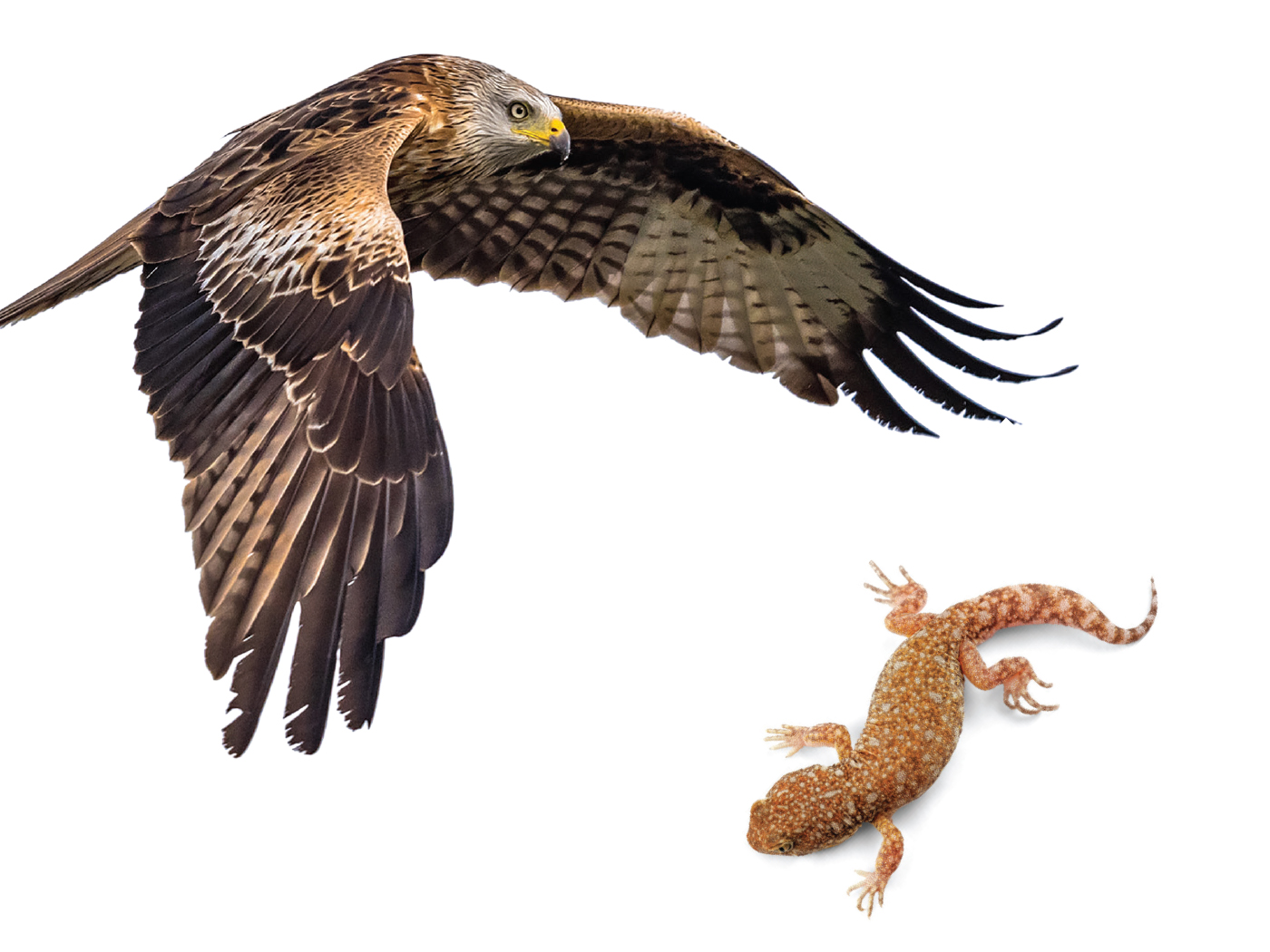
But none of this addresses the main reason why cloning a dinosaur remains outrageously unlikely. It relates to the seldom discussed Law of Biogenesis: Life always comes from life. One could also describe how, so far as we know, life always comes from the same basic kind of life. In practical language, a finch has never hatched from an iguana egg, or vice versa.
Modern whole-animal cloning reflects this within-kind life principle by using like-kind mothers. In 1997, Scottish scientists cloned the famous short-lived sheep named Dolly by replacing sheep egg cell DNA with adult sheep skin cell DNA, then chemically coaxing the egg to begin development. Researchers then used in vitro fertilization to implant the tinkered egg into a sheep womb. Similarly, other scientists have so far cloned goats, calves, mice, pigs, and a few other animals using cells and wombs from within their basic kind.4
It takes a whole creature (i.e., a mother) to produce another generation of that creature. One cannot make a dinosaur with mere dinosaur DNA any more than one can make an apartment complex with its mere blueprints. The mother’s body provides an array of technically precise biological essentials, including various hormone levels, and pH, nitrate, CO2, and temperature balancers. So, even if we somehow had access to high fidelity T. rex DNA, we could not clone a whole dinosaur without a real, living female T. rex, complete with her ability to properly produce eggs.
However, cloning a mammoth might be possible. Finding quality mammoth DNA presents the first major hurdle. Siberian scientists working on a remote arctic island recently found a thawing female mammoth carcass with flowing red blood that might harbor useful genetic material. But any hint of hope for success lies in a mammoth’s living relative—a female elephant—likely one of its kind.
Scientists with the determination to attempt cloning a mammoth deserve admiration. Meanwhile, unless we find a still-living female dinosaur, “Jurassic Park will remain a fantasy.”5
References
- Dhar, M. T. Rex at 20: How ‘Jurassic Park’ Science Has Evolved. LiveScience. Posted on livescience.com June 10, 2013, accessed June 11, 2013.
- Allentoft, M. E. et al. 2012. The half-life of DNA in bone: measuring decay kinetics in 158 dated fossils. Proceedings of the Royal Society B. 279 (1748): 4724-433.
- Schweitzer, M. H. et al. 2012. Molecular analyses of dinosaur osteocytes support the presence of endogenous molecules. Bone. 52 (1): 414-423.
- For example, see Thomas, B. Extinct Ibex Clone Dies at Birth. Creation Science Update. Posted on icr.org February 13, 2009, accessed June 11, 2013.
- Criswell, D. 2006. How Soon Will Jurassic Park Open? Acts & Facts. 35 (6).
*Mr. Thomas is Science Writer at the Institute for Creation Research.
Cite this article: Thomas, B. 2013. Could We Clone a Dinosaur? Acts & Facts. 42 (8): 20.