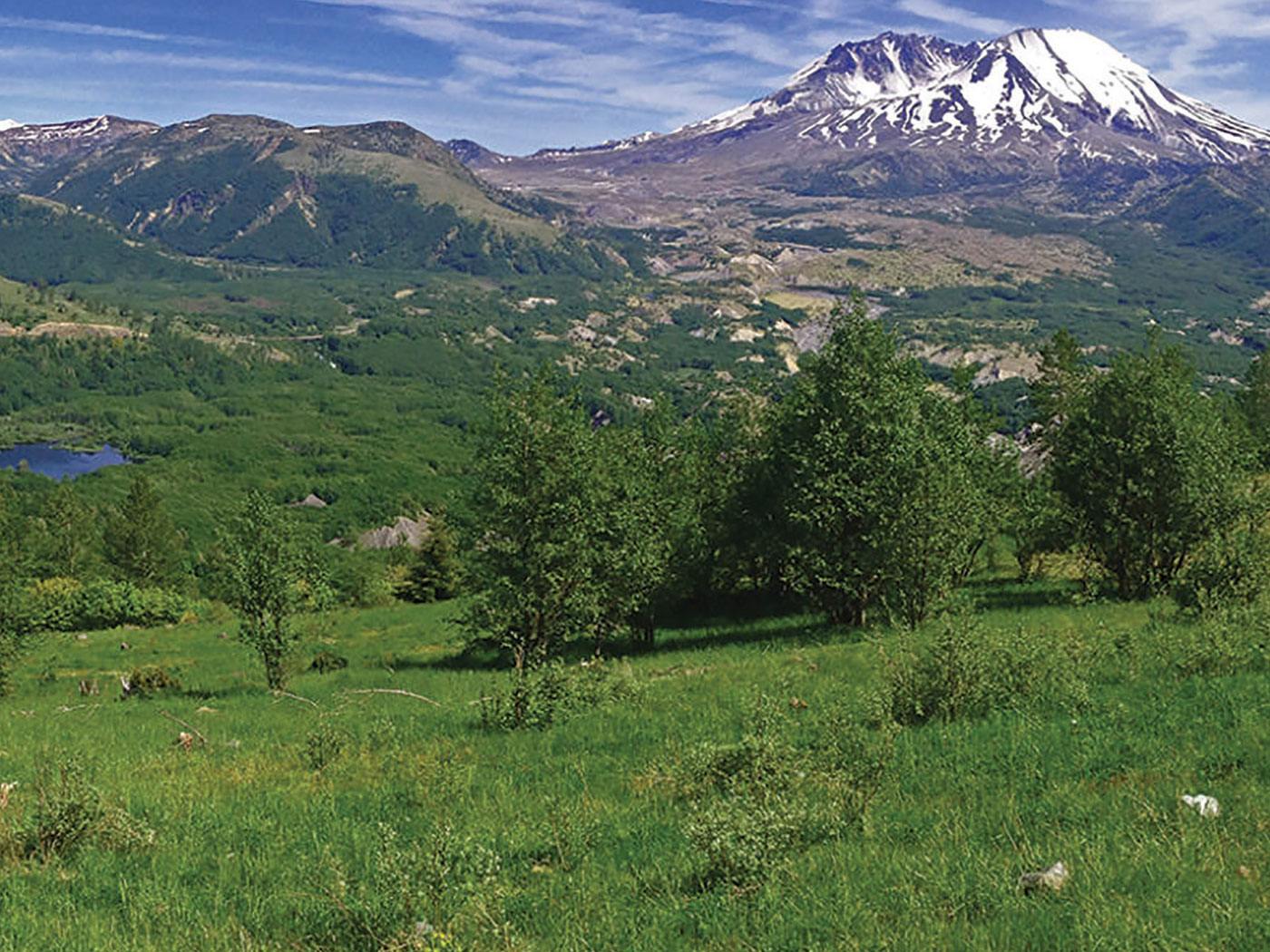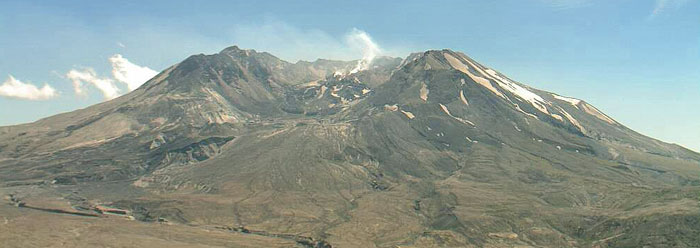
Ever since the May 18, 1980, eruption of Mount St. Helens, ICR has made it a focus of intense research. From it we have learned a great deal about the origin of rocks and geologic features, and the processes needed to form them.
In general, ICR holds that most of earth's rocks were formed rapidly during the great Flood of Noah's day, not over the millions of years of supposed geologic history. But here's the problem. Geologists like to study modern rocks and the processes which form them, and infer past circumstances. Yet Noah's Flood was a totally unique event, unlike any in our experience. Those geologists who assume uniformity in history thus seem to have an advantage. But the rocks really do appear to have been formed by dramatic processes operating at rates, scales, and intensities far beyond those we experience. Only modern, local catastrophes, such as the eruption of Mount St. Helens, can give us a glimpse into earth's geologic power, particularly as we expand our thinking onto the worldwide scale of Noah's Flood. Thus the Mount St. Helens catastrophe becomes a scale model for the great Flood.
Keep in mind that most of the damage done by the eruption was water related. Mount St. Helens had been glacier-covered, and when it got hot, water raced down the mountain as a mighty flood, eroding soil, rocks, trees -- everything in its path -- eventually redepositing them at the foot of the mountain. Volcanic episodes added to the fury. When the eruption calmed, up to 600 feet of sediments had been deposited, full of plant and animal remains. Now the sediments have hardened into sedimentary rock and the dead things have fossilized. Furthermore, wood is petrifying. Peat (the precursor to coal) has formed. A deep canyon has been gouged out. Many features which geologists are taught take long ages to form, were seen to happen rapidly. Igneous rocks which formed since 1980 yield radioisotope dates of millions of years, but are obviously much younger in age.
A catchy slogan helps illustrate this. To form geologic features, it either takes a little bit of water and a long time, or a lot of water and a short time. Even though we didn't witness the Flood, we do see modern catastrophes, and they rapidly accomplish things the Flood did on a grander scale. In a short, Biblically compatible time scale, such a Flood can account for the features we see on earth, features which many geologists mistake for evidence of great age. Earth doesn't really look old, it looks flooded.
*Dr. John D. Morris is the President of the Institute for Creation Research.
Cite this article: Morris, J. 2007. Why Does ICR Study the Mount St. Helen's Eruption? Acts & Facts. 36 (5).