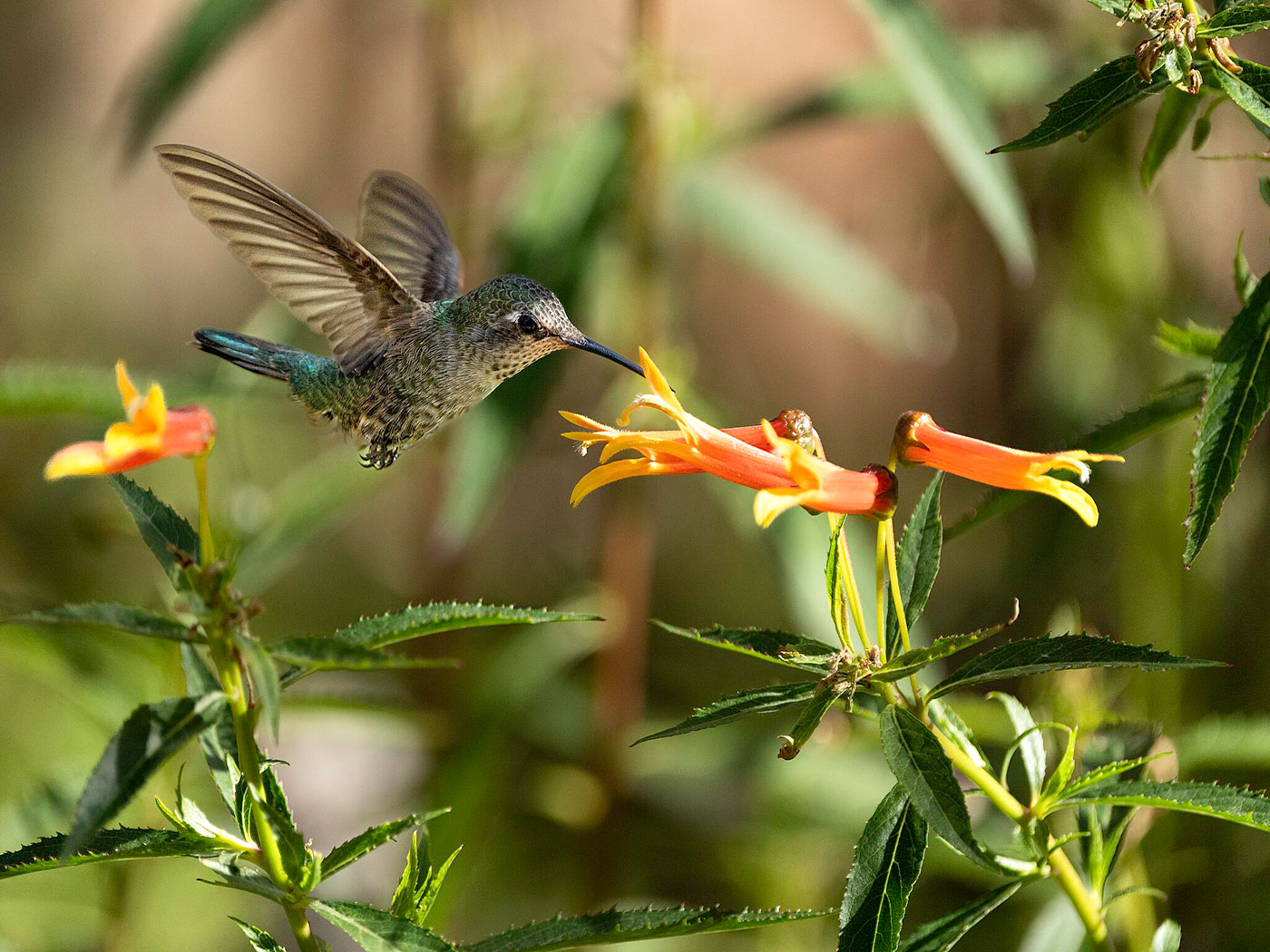
Soaring birds are a majestic sight to behold, especially when they undergo such climbing and endless spiraling so effortlessly. Not surprisingly, evolutionists see this elegant soaring ability as having originated via deep time and evolution.
Now, an international team of researchers led by University of Florida evolutionary biologist Emma Schachner, Ph.D., has reported for the first time that soaring birds use their lungs to enhance their flying in a way that has evolved over time.1
Dr. Schachner stated, “that breathing is functionally linked to locomotion, and it has been demonstrated that flapping enhances ventilation.”1 She went on to say their
“findings demonstrate that the opposite is also true in some species. We have shown that a component of the respiratory system is influencing and modifying the performance of the flight apparatus in soaring birds, who are using their lungs to modify the biomechanics of their flight muscles.”1
Schachner discovered a unique structure—an air sac—quite by accident while dissecting a hawk. It was named the subpectoral diverticulum, or SPD, and was the subject of her article in Nature.
The subpectoral diverticulum (SPD) is an extension of the respiratory system in birds that is located between the primary muscles responsible for flapping the wing. Here we survey the pulmonary apparatus in 68 avian species, and show that the SPD was present in virtually all of the soaring taxa investigated but absent in non-soarers.2
When viewing a soaring bird, the wings seem to be held in a motionless, horizontal position. Much of this has to do with the birds’ pectoralis muscle and the muscle’s ability to produce force.
The team found that the anatomy of the pectoralis muscle of soaring birds is significantly different from that of nonsoaring birds in ways that improve force generation. Taken together, these results provide strong evidence that the SPD optimizes the function of the pectoralis muscle in soaring birds by improving their ability to keep the wing in a static, horizontal position.1
The case for design is clearly seen in this SPD discovery and research. The scientists in the Nature article said, “The discovery of a mechanical role for the respiratory system in avian locomotion underscores the functional complexity and heterogeneity of this organ system.”2 Even before this study was conducted, the avian respiratory system was not completely understood, such as the bird’s airflow: “Within this vast system of connecting passageways, there are no valves to suggest what the pattern of airflow might be. This has led to much speculation about the roles played by the different parts of the respiratory system”3 and includes the mystery of the amazing syrinx.4
Add to this the “heterogeneity of this organ system” as flight mechanics, respiratory physiology, and locomotion are combined to produce an amazing designed creature of flight.2
Articles in Nature and Phys.org described the SPD discovery in soaring birds as having evolved “at least seven times independently across distantly related soaring lineages.”1 This naturally evolving just once would strain credibility, but Schachner et al. speak of “repeated appearance of the SPD in soaring lineages.”2
There is a better, non-evolutionary explanation for the important SPD. Creationists see it as being placed in soaring birds by the Lord Jesus in the beginning. Dr. Schachner states, “This evolutionary pattern strongly suggests that this unique structure is functionally significant for soaring flight.”1 Creationists respond that the SPD found in soaring birds—and absent in all nonsoaring birds—is functionally designed for soaring flight.
As an eagle stirs up its nest, hovers over its young, spreading out its wings, taking them up, carrying them on its wings… (Deuteronomy 32:11)
References
- An Air-Filled Sac within Birds’ Lungs Is Believed to Modify Mechanics of Flight while Soaring. University of Florida. Posted on phys.org June 12, 2024.
- Schachner, E. et al. 2024. The Respiratory System Influences Flight Mechanics in Soaring Birds. Nature. 630 (8017): 671–676.
- Kardong, K. 2012. Vertebrates, 6th ed. New York, NY: McGraw-Hill, 438.
- Sherwin F. 2019. The Syrinx Song. Acts & Facts. 48 (8): 15.
* Dr. Sherwin is a science news writer at the Institute for Creation Research. He earned an M.A. in invertebrate zoology from the University of Northern Colorado and received an honorary doctorate of science from Pensacola Christian College.