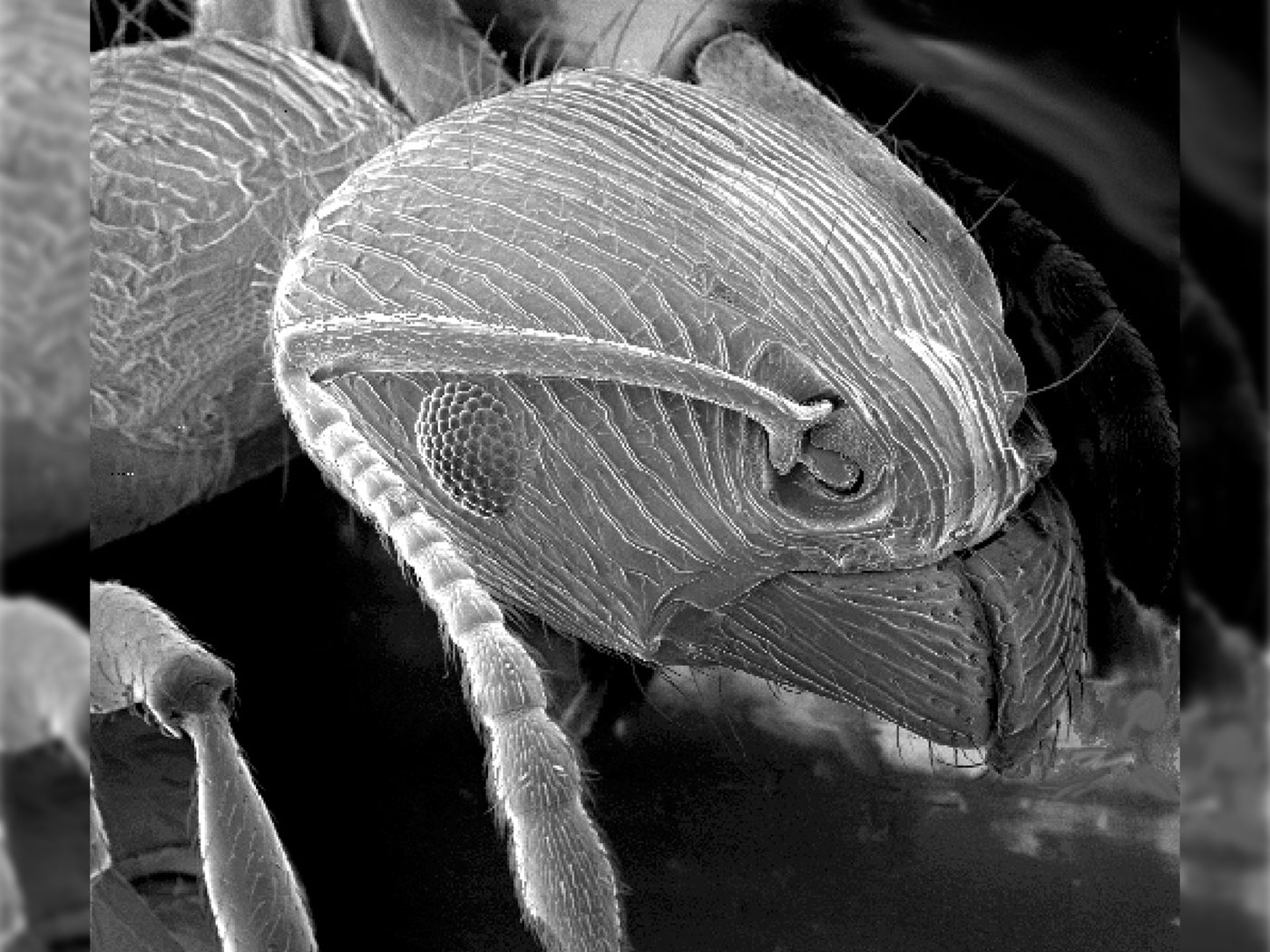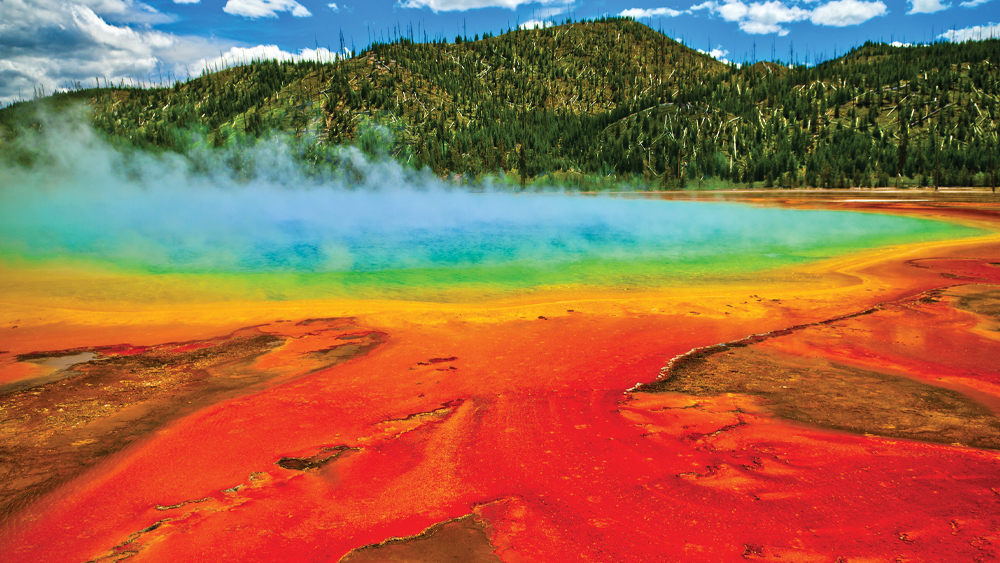
God designed a domain of prokaryotes called Archaea that thrive in harsh and extreme environments. In 1969, two microbiologists, Thomas Brock and Hudson Freeze, discovered a heat-resistant bacterium in a hot spring in Yellowstone National Park. This thermophile was named Thermus aquaticus. From this bacterium, biochemist Alice Chien and others isolated a DNA polymerase called Taq polymerase (Taq) that was later used in polymerase chain reactions to amplify (copy) targeted regions of DNA.
A fascinating part of thermophiles is their unique anatomy that aids in their resistance to extreme heat. For example, unlike other bacteria, thermophilic bacteria have plasma (or cell) membranes composed of fatty acyl ester lipids. Within the cell are special heat-resistant enzymes called extremozymes designed to operate efficiently in very high temperatures. Other proteins inside the cell have reduced surface loops and surprisingly weak bonds that stabilize the structure under such hot conditions.
Through the decades much work has been done regarding this group with the general name extremophiles (organisms that can survive in extreme environments).1,2 Recently, there has been a new discovery concerning bacteria from a Yellowstone hot spring by biologists at Montana State University.3 Researcher Lisa Keller and two others recovered Aquificales (an order of thermophilic bacteria) and experimented with these samples using oxygen, hydrogen, and sulfur. To their surprise, they discovered simultaneous aerobic (requiring the presence of oxygen) and anaerobic (able to exist only in the absence of oxygen) respiration. Cotton reports, “Cells respire, or breathe, oxygen or alternatives to oxygen through aerobic and anaerobic respiration, respectively. However, they are not known to do both at the same time. At least, that was the prevailing thought.”4
Peoples’ (and animals’) muscle cells function normally by delivering oxygen via blood vessels to contracting muscles. But if the individual is out of shape, blood vessels do not perfuse the muscles adequately, and oxygen doesn’t get to the rapidly contracting tissue under strenuous conditions. But instead of the muscle dying due to oxygen starvation, God designed the muscle to switch to anaerobic respiration that forms energy (ATP) and lactic acid. It is this acid that causes a burning sensation and stiffness 24 hours after the activity. In other words, the muscle is designed to switch between aerobic and anaerobic metabolism.
Although the scientists knew thermophiles could undergo both anaerobic and aerobic processes, they discovered the Aquificales could conduct both metabolic rates at the same time: “while the bacteria were producing sulfide—an anaerobic process—they were using oxygen, meaning that both metabolisms were occurring.”4 The scientists stated in Nature, “These observations challenge existing paradigms of strict delineations between aerobic and anaerobic metabolism.”3
They also stated something that supports the creation theory of continuous environmental tracking (CET)5: “This aerobic, S0-reducing metabolism is suggested to provide a competitive advantage in environments where O2 availability is low and variable.”3 In other words, the Aquificales bacterium Hydrogenobacter is designed with genetic machinery so it is able to move in and fill low-oxygen environments.
Cotton in Phys.org gave an evolutionary explanation regarding these unique entities.
Many of the organisms found in Yellowstone’s hot springs are ancient lifeforms that reflect life on early Earth when there was no oxygen.
The results of this study shed potential light on how ancient lifeforms adapted to the progressive oxygenation of Earth that began around 2.8 billion years ago.4 (Emphasis added)
This is speculation involving unobserved deep evolutionary time. What Keller et al. discovered is a bacterium “capable of simultaneous aerobic and anaerobic respiration when provided with hydrogen (H2), elemental sulfur (S0), and O2.”3 But to say this discovery may enlighten conditions on Earth over two and a half billion years ago is simply conjecture.
References
- Thomas, B. Exploring Earth’s Extremes in a Futile Quest for Life in Space. Creation Science Update. Posted on ICR.org May 11, 2010.
- Sherwin, F. ‘Incredible, Unique, and Truly Weird’ Yellowstone Microbes. Creation Science Update. Posted on ICR.org March 26, 2019.
- Keller, L. et al. 2025. Simultaneous Aerobic and Anaerobic Respiration in Hot Spring Chemolithotrophic Bacteria. Nature. 16, article 1063.
- Cotton, R. Simultaneous Aerobic and Anaerobic Respiration in a Yellowstone Thermophile Challenges Scientific Norms. Phys.org. Posted on phys.org March 7, 2025.
- Guliuzza, R. and P. Gaskill. 2018. Continuous Environmental Tracking: An Engineering Framework to Understand Adaptation and Diversification. Proceedings of the International Conference on Creationism. 8: article 11, 158–184.
* Dr. Sherwin is a news writer at the Institute for Creation Research. He earned an M.A. in invertebrate zoology from the University of Northern Colorado and received an honorary doctorate of science from Pensacola Christian College.