Scientific Evidence for Divine Design [Podcast] | The Institute for Creation Research

Scientific Evidence for Divine Design [Podcast]

Geology, astronomy, and biology all point to a divine Designer. ICR zoologist and researcher Frank Sherwin examines the evidence in this 5-part podcast series. Mr. Sherwin uncovers the scientific and biblical evidence for a global Flood, designed universe, and true origin and history of biological structures.

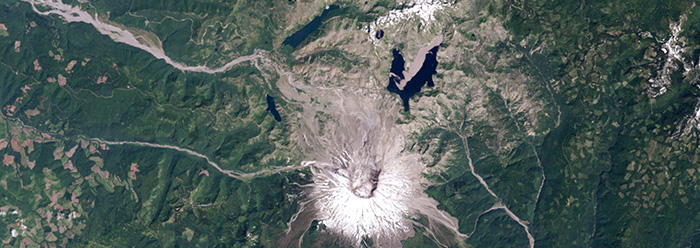
1) Mount St. Helens: An Outdoor Laboratory

Geologist Dr. Steve Austin called the Mount St. Helens eruption “the geologic event of the twentieth century.” Mount St. Helens was not the largest volcano episode of the last century, but it became the most informative. What can the Mount St. Helens explosions, volcanic mud flows, and rapid ecological recovery tell us about the Genesis Flood?

2) Mount St. Helens Recovery

The Mount St. Helens events give us a glimpse into Earth’s geologic power, the origin of rocks, and the formation of geologic features. How does the ecological recovery of Mount St. Helens affirm the work of creation scientists? And what does this outdoor science lab teach us about the great Flood of Noah’s day?

3) The Unique Earth and Unique Universe

How do scientific measurements and fundamental constants reflect the Creator’s divine hand? Our universe permits physical, interactive life only because these and many other numbers are exquisitely and independently balanced. How did such incredibly fine-tuned numbers come about: by chance and time, or by plan and purpose?

4) The Moon

Our moon is unusually large, but it’s just the right size to aid life on Earth. As a masterpiece of design, it shouts God’s creation. How does lunar science support biblical truth?

5) Hair, Feathers, and Scales

Creation scientists observe hair, feathers, and scales as unique structures revealing design. Evolutionary naturalists disagree, of course, maintaining a common origin for these skin appendages. Why does this issue matter? And how does this impact the study of origins and biological history?




For more radio programs, click here.

The Latest
NEWS
The Flood Explains 18,000 Dinosaur Tracks in Bolivia
A new discovery of 18,000 individual dinosaur tracks in the Bolivian El Molino Formation contains the highest number of theropod dinosaur tracks in...

NEWS
Prolonged 40-Year Growth in T. Rex: Evidence for Pre-Flood Longevity?
An open access 2026 PeerJ research paper claims that T. rex took 40 years to reach its full adult body size, in contrast to a much shorter previous...

NEWS
Recent Discovery of a Strange Microbe Gives No Clues to Evolution
Research into God’s living creation is dynamic and always surprising. This is true whether one peers into the deepest reaches of space or dives...

NEWS
Built to Adapt: What Microbial Flexibility Reveals about Biological...
Imagine a machine that keeps working even when its parts change slightly or its surroundings shift. Most human-made machines would fail under that kind...

CREATION PODCAST
Scientists Ignored This DNA Pattern for DECADES! | The Creation...
Almost every living organism has tiny stretches of DNA that repeat over and over again. Scientists call these tandem repeats, and for a long time they...

NEWS
#1 Origins News Story of 2025: ICR Dr. Jeff Tomkins' Chimp Genome...
Research by ICR geneticist Dr. Jeff Tomkins was at the center of origins news in what has been called the “No. 1 Story for 2025.”1...

NEWS
Pterosaur Herbivory
The fascinating flying reptiles called pterosaurs are in the news again.1 In a not-so-surprising development, paleontologists have discovered...

NEWS
January 2026 ICR Wallpaper
"But those who wait on the LORD Shall renew their strength; They shall mount up with wings like eagles, They shall...

NEWS
Infrared Radiation and Pollination Reflects Recent Creation
by Jeffrey P. Tomkins, Ph.D., and Frank Sherwin, D.Sc. (Hon.)* The fascinating pollination of plants has been complex from the beginning of creation....

NEWS
Did Scientists Find "6 Million-Year-Old Ice" in Antarctica?
by Jake Hebert, Ph.D., and Frank Sherwin, D.Sc. (Hon.)* A small portion of surface ice in Antarctica is called blue-ice areas (BIAs), and for good...