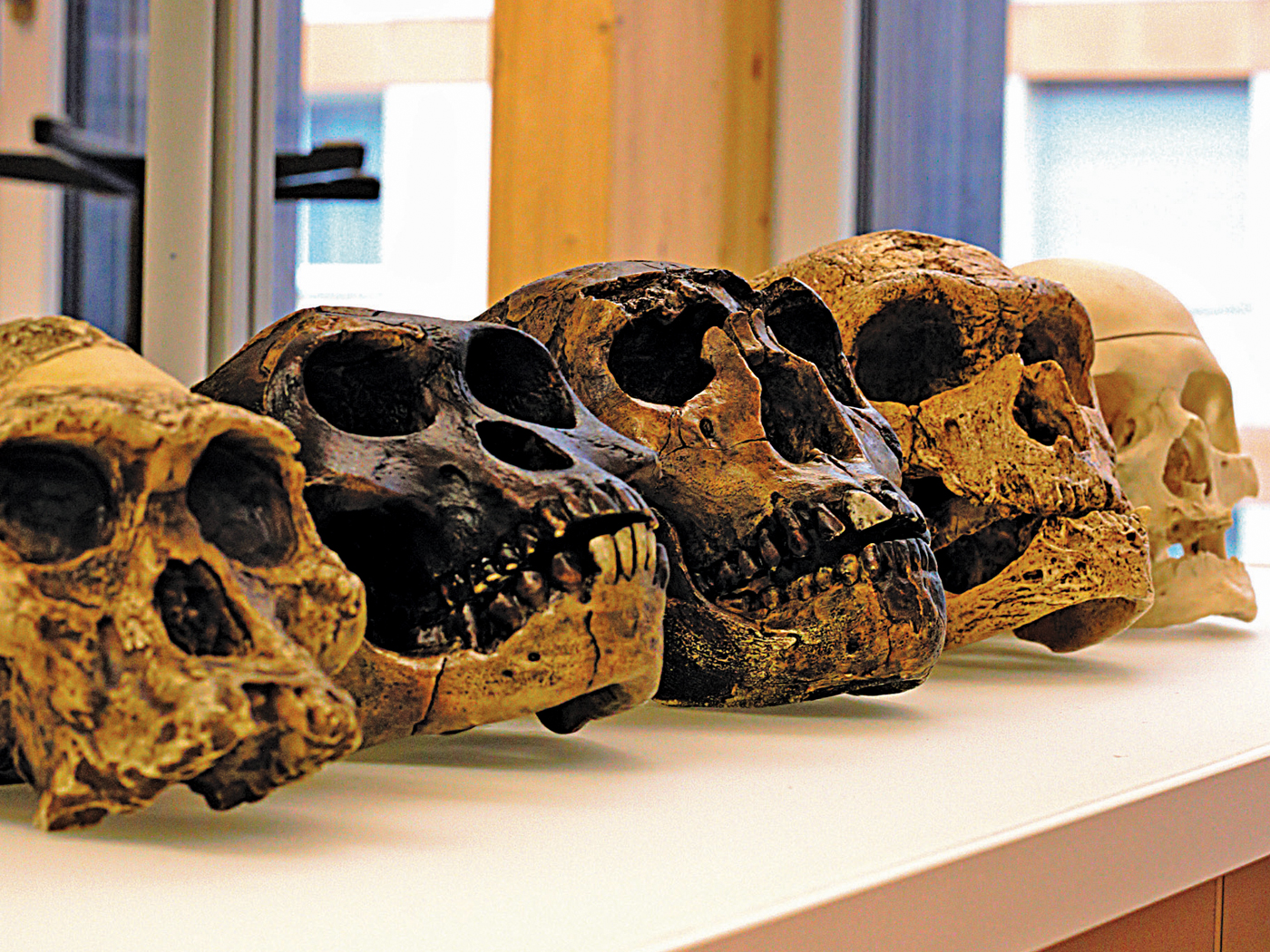
Either the current animals on this planet somehow evolved from simple creatures or they suddenly appeared—amazingly complex the first time we find them—with no evolutionary ancestors. Put another way: Are animals the result of chance, time, and natural processes—or are they the result of purpose, plan, and special creation?
Biologists at Auburn University recently investigated the genome (DNA) of a ctenophore, a type of jellyfish, called the Pacific sea gooseberry (Pleurobrachia bachei). These small creatures have transparent bodies and often generate their own light. (You can view the fantastic display these creatures produce by typing in “ctenophore bioluminescence” on YouTube.) The researchers discovered that the species is quite unique, particularly in the design of its muscles and nerves.1 As stated in the journal Nature:
Ctenophores (comb jellies) are enigmatic animals that combine two distinct nervous systems with an elementary brain-like centre and possess mesoderm-derived muscles appropriate to their predatory life.2
According to secular scientists, this discovery shakes the very foundation of Darwinism because, they contend, this new research places ctenophores at the evolutionary base of the animal kingdom—replacing sponges, as previously supposed. Auburn biologist Dr. Kenneth Halanych stated, “The new genomic data overturns 150 years of scientific theories about the early evolution of animals.”3
The problem begins with the overt complexity of these “first animals.” Other evolutionists do not understand Ctenophora origins either:
Joseph Springer and Dennis Holley confess, “The phylogeny and taxonomy [evolutionary history] of ctenophora must be regarded as unsettled.”4
Peter Raven admits, “The phylogenetic position [i.e., where it belongs on the evolutionary tree] of the Ctenophora is unclear.”5
Dr. Halanych also voiced a second, more significant problem. He said, “There is strong evidence that animal nervous systems, and maybe neurons, have evolved at least twice independently.”6
Non-evolutionary scientists find this statement to be truly astounding.7 To have complex neurons or an elaborate nervous system evolve in the first place is impossible enough. But to have them evolve “at least twice independently” stretches all reason. When evolutionists say something evolved twice, it appears they mean they have no idea how the organ or animal evolved traits similar to those of unrelated creatures. Indeed, one large group of evolutionists said it best: “The origins of neural systems remain unresolved.”8 There’s no doubt about that from an evolutionary standpoint! The typical neuron and its process of electrical impulses is a wonder, as any university physiology text will attest.
It is presumptuous for secularists to insist on a naturalistic origin for life on Earth in all its unparalleled sophistication—a clear hallmark of design (Ecclesiastes 11:5). Evolutionists do not know where ctenophores or their nervous systems came from, or where their placement should be on the evolutionary tree. But, “regardless of where ctenophores finally end up on the tree, the development and evolution of the complex nervous system of these creatures will be an enigma for some time.”2
It might be an enigma for evolutionists, but Genesis provides the true source of this amazing system—the Creator God of the Bible!
References
- Birchfield, C. Auburn scientists make ground-breaking discovery in the field of evolutionary study. Auburn University’s News Feed. Posted on wireeagle.auburn.edu May 22, 2014, accessed October 14, 2014.
- Hejnol, A. 2014. Evolutionary biology: Excitation over jelly nerves. Nature. 510 (7503): 38-39.
- Birchfield, Auburn scientists make ground-breaking discovery.
- Springer, J. T. and D. Holley. 2013. An Introduction to Zoology. Burlington, MA: Jones & Bartlett, 156.
- Raven, P. et al. 2014. Biology, 10th ed. New York: McGraw Hill, 654.
- Birchfield, Auburn scientists make ground-breaking discovery.
- Tomkins, J. Comb Jelly Genome Gums Up Evolution. Creation Science Update. Posted on icr.org June 11, 2014, accessed October 15, 2014.
- Moroz, L. L. et al. 2014. The ctenophore genome and the evolutionary origins of neural systems. Nature. 510 (7503): 109-114.
* Mr. Sherwin is Research Associate, Senior Lecturer, and Science Writer at the Institute for Creation Research.