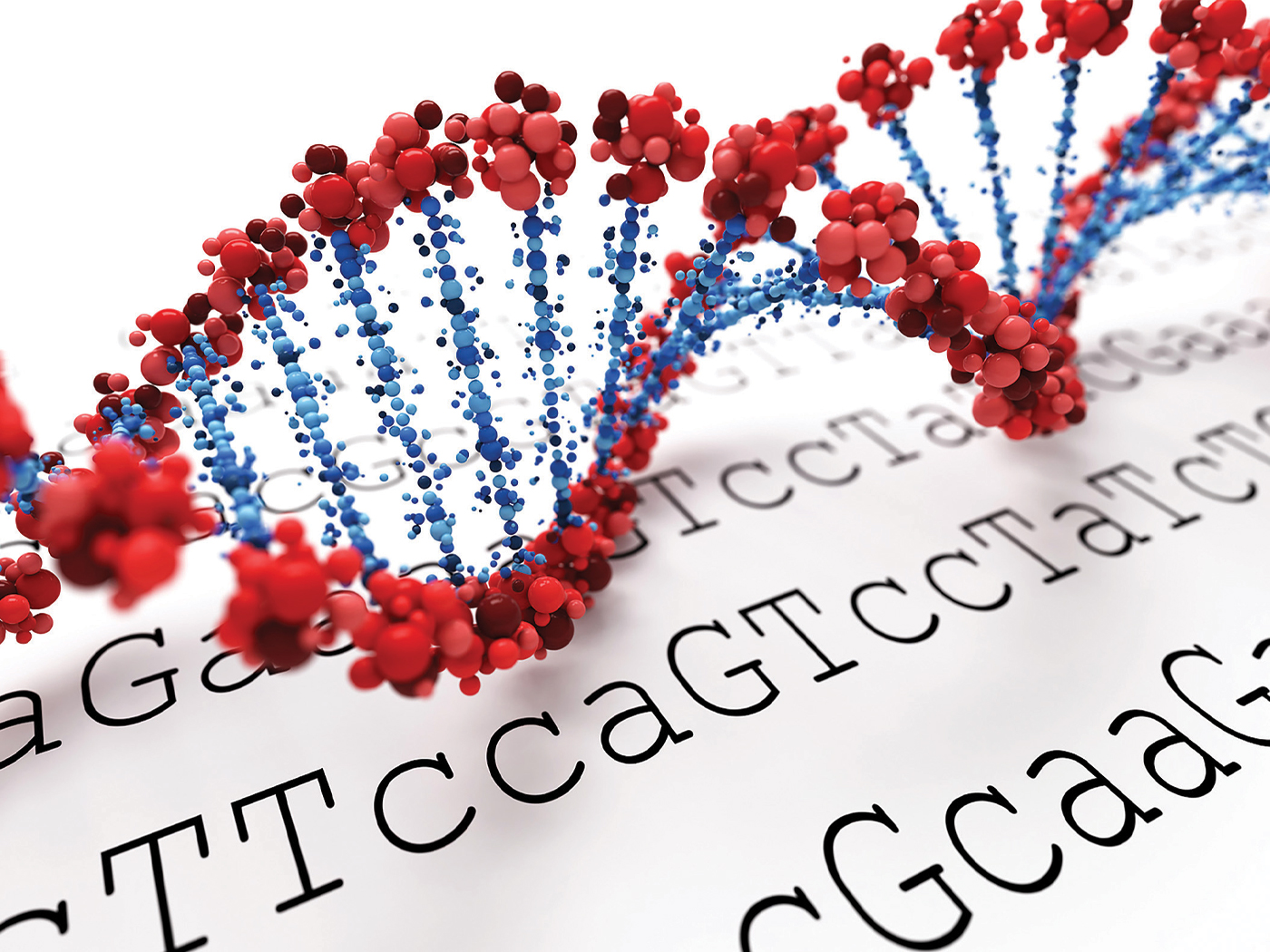
Not only have many pseudogenes been proven to be highly functional, a recent study has unveiled mind-boggling complexity behind the PTEN pseudogene, showing that it functions both forwards and backwards as part of an intricate gene network.1
Pseudogenes were once thought to be nothing but genomic fossils of broken genes littering the genomes of plants and animals deposited over eons of evolutionary history. However, as scientists begin to unravel the complexity of the genome, they are discovering that pseudogenes are not so "pseudo" after all.2
One of the most widely studied pseudogenes in humans has been the "PTEN pseudogene." It is an unprocessed pseudogene, meaning that it has all of the same DNA features of a regular protein-coding gene, except that it lacks the ability to code for a protein due to specific changes in its sequence. The PTEN pseudogene is an important player in human health because of its ability to regulate another gene with which it shares similarity, called simply PTEN. Together, and along with a host of other important genes, they control cell growth. When the PTEN pseudogene gene is disrupted, the outcome is often cancer.1
The PTEN pseudogene was originally found to encode and produce a long non-coding RNA (lncRNA) that indirectly controlled the PTEN protein-coding gene. Like many genes in the genome, a class of small regulatory RNA molecules, called micro RNAs (miRNA), regulates the PTEN gene. The lncRNA encoded by the PTEN pseudogene helps control the concentration of PTEN-regulating miRNAs by acting like a sponge and maintaining their proper levels in the cell. Now it appears that the PTEN pseudogene produces several other types of regulatory RNA molecules, but in the other direction on the DNA strand.1 And these RNA products play completely different roles in how they regulate the PTEN gene.
Not only does this amazing pseudogene code for functional RNA molecules in both forward and reverse directions, but it does so from multiple start sites so that it can produce different functional variants of the RNAs. And the RNA products that it produces to regulate other genes, interact with a variety of proteins and other RNA molecules in a complex regulatory network that is only beginning to be understood.
These intricate and dynamically produced regulatory RNA molecules encoded by the PTEN pseudogene work to help regulate the PTEN protein-producing gene and do so at a multitude of levels. One is called the "transcriptional" level, meaning that the control is related to activating and regulating how many protein-coding transcripts are produced by a gene. The second level of regulation is called "post-transcriptional," whereby the RNA products of a gene are regulated after they are produced—thereby controlling how much protein is produced from the gene's transcripts.
It is nearly impossible to imagine how something this complex could arise by naturalistic processes. In fact, much simpler computer code engineered by humans can only be written in one direction. And certainly, the term "pseudo" now appears to be a highly inaccurate method of describing these misunderstood types of genes which are now believed to be almost as plentiful in number as protein-coding genes in the human genome.3 The only logical conclusion is that divine engineering by an omnipotent and wise Creator is the source for this amazing biological code.
References
- Johnsson, P. et al. 2013. A pseudogene long-noncoding-RNA network regulates PTEN transcription and translation in human cells. Nature Structural and Molecular Biology. 20 (4): 440–446.
- Wen, Y. et al. 2012. Pseudogenes are not pseudo any more. RNA Biology 9 (1): 27–32.
- Chan, W. et al. 2013. pseudoMap: an innovative and comprehensive resource for identification of siRNA-mediated mechanisms in human transcribed pseudogenes. Database (Oxford). doi:10.1093/database/bat001.
* Dr. Tomkins is Research Associate at the Institute for Creation Research and received his Ph.D. in Genetics from Clemson University.
Article posted on June 14, 2013.