Oxygen gives cells energy. But oxygen can also harm cells. Any organism that uses oxygen must both harness the power and protect itself against being damaged. A recent paper in Nature reports that certain Asgard archaea contain genes linked to oxygen use and suggests this helps explain how complex cells evolved over long ages.1 The key issue is not whether these microbes have oxygen-related genes—they do. The real question is whether those genes prove evolution or instead show careful biological design.
The study examined hundreds of Asgard archaeal genomes.1 Researchers found genes connected to electron transport chains, heme production, and enzymes that process oxygen. A University of Texas press release said, “oxygen may have played a crucial role in the emergence of complex life.”2 This claim assumes that once oxygen use appeared, more complex cells could develop step by step.
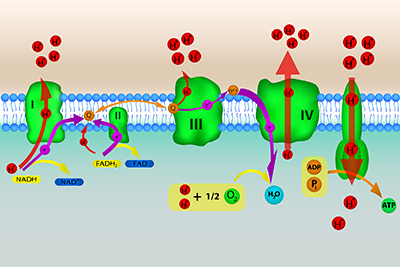
But oxygen metabolism is not a simple trait. It requires many parts to work together. Electron transport chains are made of several protein complexes. These proteins sit in cell membranes and pass electrons in order to make energy. If even one major step fails, energy production stops. At the same time, oxygen creates harmful byproducts. Cells must use enzymes like superoxide dismutase to prevent damage. Without these protective systems, oxygen destroys key molecules.
This shows coordinated design. Energy production and damage control must operate at the same time. From an engineering point of view, this looks like an integrated system, not a loose collection of parts. That raises an important question: do observed changes in microbes actually build such systems, or do they only modify what already exists?
Research on microbial change supports the latter. Most observed microbial adaptations involve modifying or reducing existing functions rather than building new complex systems from scratch.3 The Asgard study documents genetic capability, but it does not demonstrate one kind of cell turning into another. Instead, it shows microbes already equipped with complex energy systems.
Conventional scientists interpret shared genes between Asgard archaea and complex cells as proof of common ancestry.1 Yet similar genes can also reflect shared function. Systems that move electrons must follow the same chemical rules (which limit design options). Similar structures may appear because they work well, not because one organism became another. To evaluate that possibility, we must distinguish between biological flexibility and structural limits.
Microbes show flexibility by adjusting to different environments. They can turn genes on or off. That variation fits within created kinds. But the basic structure of energy production remains stable. Studies of mitochondrial systems describe coordinated energy networks that resemble engineered power grids, highlighting integrated design rather than piecemeal construction.4 The Asgard genomes show the same kind of organized framework.
This study adds useful data about microbial diversity and expands what we know about oxygen use in archaea. It directly shows complex and ordered bioenergetic machinery. Scripture reminds us, “For by Him all things were created that are in heaven and that are on earth” (Colossians 1:16). When we observe systems that require many parts working together, we see structured function.
The oxygen-handling systems in Asgard archaea are detailed and coordinated. Such integrated systems do not arise from partial, disconnected steps. They reflect purposeful biological design. When examined through an engineering lens, the evidence points clearly to intentional workmanship rather than gradual evolutionary construction.5
References
- Appler, K. E. et al. Oxygen Metabolism in Descendants of the Archaeal-Eukaryotic Ancestor. Nature. Preprint. Posted on biorxiv.org July 4, 2024.
- University of Texas at Austin. Scientists Uncover Oxygen-Loving Ancestor of All Complex Life. ScienceDaily. Posted on sciencedaily.com February 20, 2026.
- Behe, M. and D. E. Dykhuizen. 2010. Experimental Evolution, Loss-of-Function Mutations, and “the First Rule of Adaptive Evolution.” The Quarterly Review of Biology. 85 (4): 419–445.
- Thomas, B. Cell Feature Resembles Power Grid. Creation Science Update. Posted on ICR.org August 20, 2015.
- Guliuzza, R. J. Engineered Adaptability: Engineering Principles Point to God’s Workmanship. Creation Science Update. Posted on ICR.org May 31, 2017.
* Dr. Corrado earned a Ph.D. in systems engineering from Colorado State University and a Th.M. from Liberty University. He is a freelance contributor to ICR’s Creation Science Update, works in the nuclear industry, and is a Captain in the U.S. Naval Reserve.