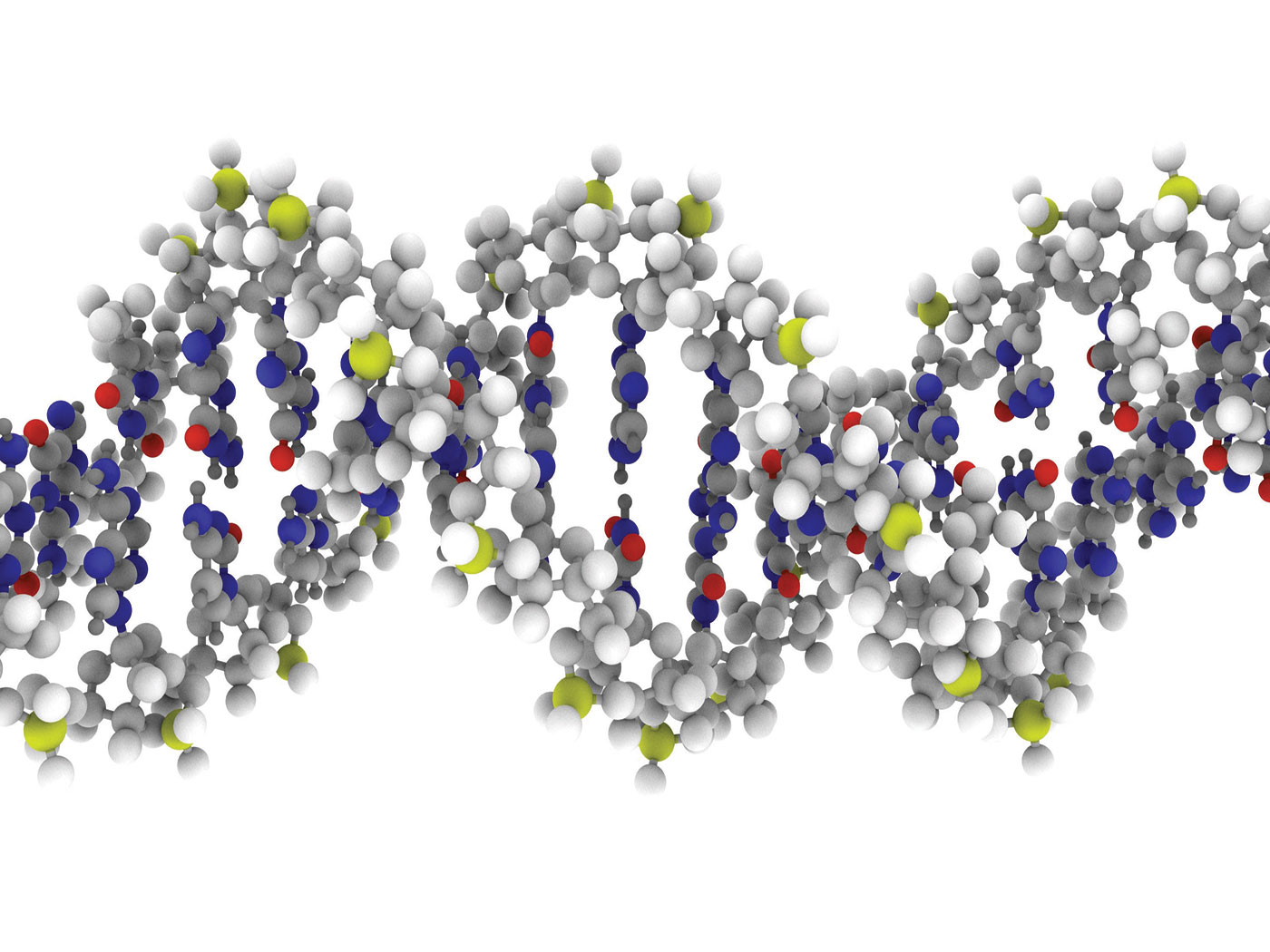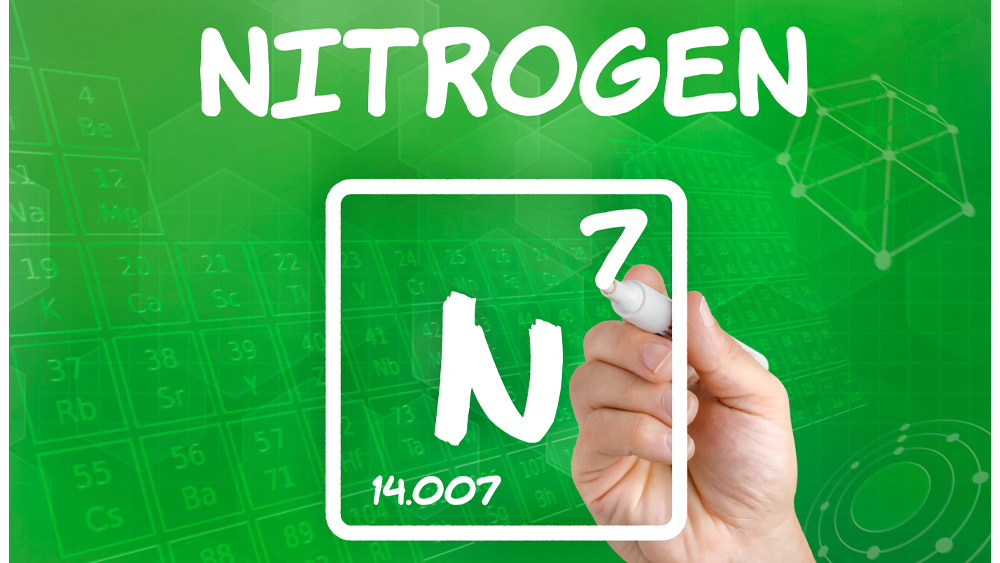
The element nitrogen is critical in the living world. It is a basic building block of structural and regulatory proteins, nucleic acids, and chlorophyll in plants. God created the nitrogen metabolic networks found in people and various living organisms.
There is a large group of versatile nitrogen-containing enzymes called aminotransferases (ATs) or transaminases. They are designed to move amino groups (the building blocks of proteins) between amino acids and keto acids. Their importance lies in the basic metabolism of people and animals (e.g., amino acid synthesis).
Recently, scientists published research in the Proceedings of the National Academy of Sciences1 that Phys.org reports allegedly traces “the evolution of a specific enzyme family called aminotransferases (ATs).”2
Yasuo Yoshikuni, a biologist at the Joint Genome Institute in Berkley, California, stated, “It turns out that all of life created the minimum set of ATs that act together to create the robust network to supply amino acids fast enough for life to grow.”2 That’s quite a statement, but there is no way to observe and verify how the set of ATs supposedly acted together to produce the healthy network. Creationists do not appeal to all of life creating ATs but to the Creator—Jesus—who designed this finely-tuned, robust network.
Koper et al. in Proceedings of the National Academy of Science suggested a very theoretical idea of how the ATs allegedly evolved multisubstrate specificity.
It is hypothesized that the primordial enzymes were highly promiscuous and were able to catalyze a broad spectrum of related reactions. Although such catalysts were likely inefficient, a small set of these multifunctional enzymes could provide the necessary biochemical diversity to sustain ancient metabolism. Later, these primordial enzymes divergently evolved through gene duplication and specialization of each paralog to catalyze specific biochemical reactions.1 (Emphasis added)
Scientists writing in the Journal of Biological Chemistry said, “ATs likely diverged into four distinct AT classes before the appearance of the last universal common ancestor and further expanded to a large and diverse enzyme family [emphasis added].”3 Actually, the four distinct AT classes were created as such thousands of years ago. Furthermore, the supposed last universal common ancestor (LUCA) has yet to be identified.4
The Joint Genome Institute appealed to the cryptic tree of life in an attempt to trace aminotransferase evolution, “To understand how founder AT enzymes became integral to core nitrogen metabolism, this team built a phylogenetic tree using bioinformatic software called FastTree and identified 62 distinct AT groups.”2
Great. They identified 62 distinct AT groups. But it should be kept in mind that the various trees of life are only theoretical. Evolutionist W. Ford Doolittle—a bioinformatics specialist—stated in the journal Science, “the history of life cannot properly be represented as a tree.”5 There is what is called “rogue” genetic information that confronts a tree of life interpretation. This includes taxonomically restricted genes and microRNA genes.6 In addition, the empty “nodes” of a typical tree of life are the common ancestors between kinds that have never been found.7
The Phys.org article also stated, “For enzymes in specialized metabolism, organisms tend to evolve multiple copies of enzymes.”2 “Organism tend to evolve”? This is extremely simplistic, and, actually, “How protein enzymes evolved is perhaps the greatest unsolved problem.”8,9,10
Koper et al. said there was “biochemical diversity of the robust nitrogen metabolic networks that exist among various extant organisms” but attributed it to a cryptic “evolutionary trajectory.”1 In other words, these enzymes appeared suddenly in creatures without any evolutionary precursors—exactly what the biblical creation model predicts.
Creationists recognize biochemical diversity in these nitrogen metabolic networks in creatures today as having been created in situ in the beginning.
References
- Koper, K., et al. 2024. Multisubstrate Specificity Shaped the Complex Evolution of the Aminotransferase Family across the Tree of Life. Proceedings of the National Academy of Science. 121 (26).
- Enzymes Evolved Mix-and-Match Characteristics to Shape Nitrogen Metabolism Diversity across the Planet. DOE/Joint Genome Institute. Posted on phys.org December 12, 2024.
- Koper, K. et al. 2022. Evolutionary Origin and Functional Diversification of Aminotransferases. Journal of Biological Chemistry. 298 (8).
- Sherwin, F. Evolution’s Hypothetical Last Universal Common Ancestor. Creation Science Update. Posted on ICR.org September 16, 2024.
- Doolittle, W. 1999. Phylogenetic Classification and the Universal Tree. Science. 284 (5423): 2124–2128.
- Tomkins, J. and J. Bergman. 2013. Incomplete Lineage Sorting and Other ‘Rogue’ Data Fell the Tree of Life. Journal of Creation. 27 (3): 84–92. See also Denton, M. 2016. Section 7.4. In Evolution: Still a Theory in Crisis. Seattle, WA: Discovery Institute Press.
- For a detailed discussion of the numerous drawbacks of the animal tree of life, see Meyer, S. 2013. Chapter 6, The Animal Tree of Life. In Darwin’s Doubt. San Francisco, CA: Harper One.
- Futuyma, D. and M. Kirkpatrick. 2017. Evolution. Sunderland, MA: Sinauer Associates, 437.
- Cornell University researcher John Sanford discusses the challenge of enzyme copies in his book Genetic Entropy.
- Thomas, B. New Study Shows Enzymes Couldn't Evolve. Creation Science Update. Posted on ICR.org November 10, 2011.
* Dr. Sherwin is a news writer at the Institute for Creation Research. He earned an M.A. in invertebrate zoology from the University of Northern Colorado and received an honorary doctorate of science from Pensacola Christian College.