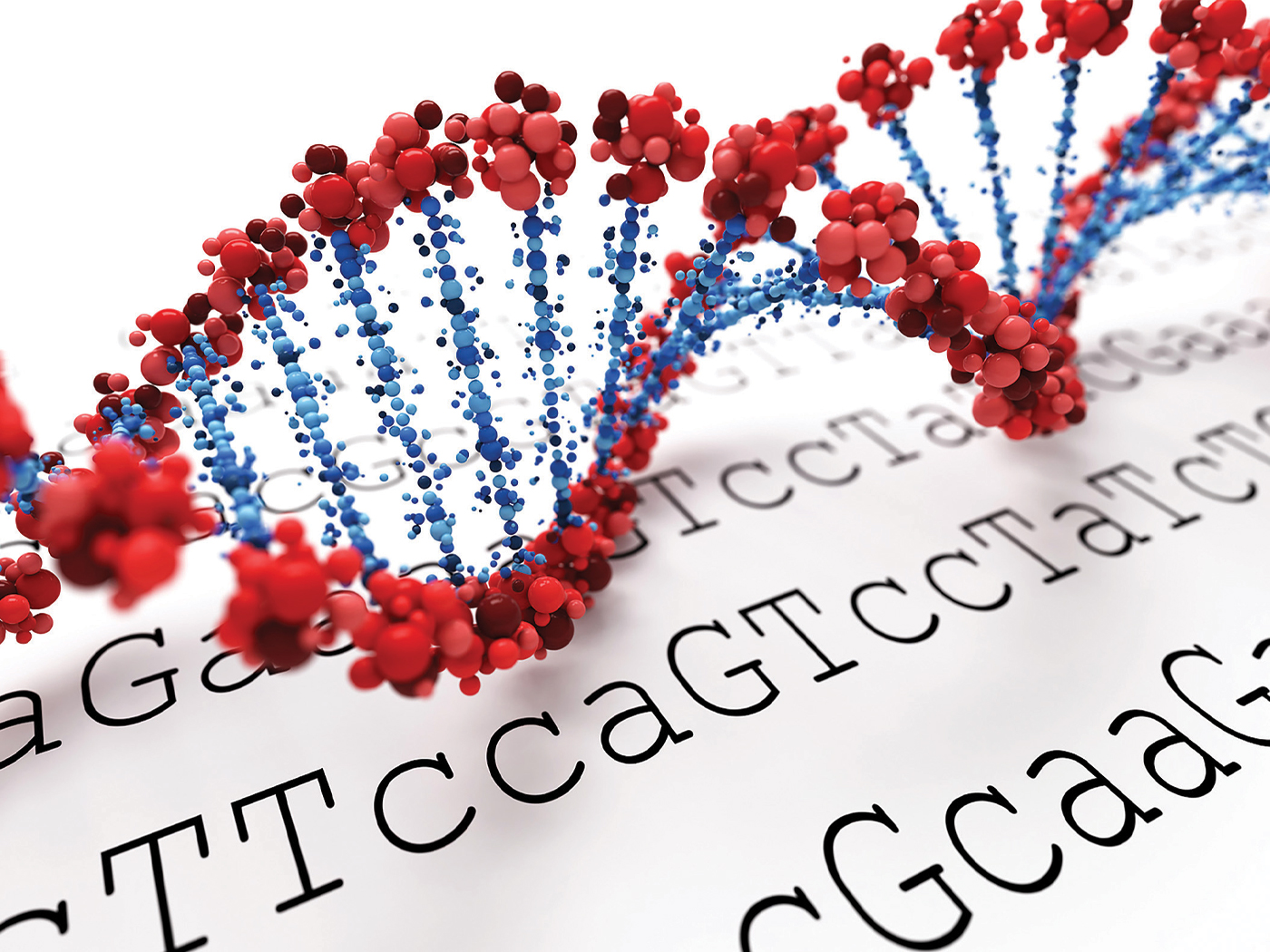
The junk DNA paradigm has proven to be an ill-founded icon of evolution. We’ve witnessed its pet sub-theories systematically debunked as we learn more and more about how creatures’ DNA systems work. And now one of the pet darlings of junk DNA speculation, the alleged useless nature of introns (intervening noncoding pieces of genes), has also been tossed in the evolutionary trash heap.
When scientists first began elucidating gene structure, they started with seemingly simple creatures like bacteria (called prokaryotes) where the genes were contained in concise uninterrupted messages on single circular chromosomes. Then researchers began analyzing creatures with more complex linear chromosomes that were housed in a compartment called a nucleus (in creatures called eukaryotes). Much to the amazement of researchers, it was discovered that eukaryotic genes in everything from single-celled yeast to plants and animals were in pieces. Some sections of the gene coded for proteins and were called exons while intervening segments, called introns, did not seem to code for anything and were spliced out from the RNA message that was copied from the gene.
At first, introns seemed to contain useless information that did not contribute to the final protein product created from an RNA template copied from a gene. Because the neutral model theory of evolution needed lots of junk in the genome to provide mutational fodder to somehow magically spit out new and useful DNA sequences for the mystical forces of selection to act upon, introns were promptly plopped in the neutral DNA or junk category.1 In fact, some scientists even speculated that they were a negative burden on the genome.
However, as scientific discovery advanced and more DNA function and complexity was uncovered, it soon became apparent that introns contained many different codes needed for proper gene function.2-4 In some cases, introns were even found to contain small genes imbedded inside them and some were circularized after gene copying and splicing to form RNA structures that regulated gene activity. But most importantly, introns were found to play important roles in the alternative splicing of exons so that a single gene could produce literally tens to hundreds of different RNA and protein end products—like a Swiss army knife on steroids.
However, despite all of the amazing discoveries made concerning the introns of plants and animal genes, some evolutionists still speculated that perhaps introns in more seemingly simple one-celled eukaryotes, were still unnecessary and useless products of random evolution. Now, a new study in yeast cells has put this naturalistic foolishness to rest.5
The small and compact yeast genome only contains about 295 introns, and scientists were able to systematically delete each of them and then observe the effects on yeast growth. Under normal lab conditions that involve optimal nutrient-rich cultures, the yeast suffered no ill effects. But in nature, they don’t have it so good and yeast must often adapt in response to limited nutrients. Therefore, the scientists also grew the various intron-deletion strains of yeast under nutrient stressed environments and were shocked to discover that the introns were key to survival. The researchers stated, “We have shown that introns affect cell growth in response to nutrient depletion, regardless of host-gene function.” 5
In fact, the whole intron system in yeast genes provides an ingenious mechanism of engineered adaptability in the genome. The researchers unwittingly reveal God’s creative genius in this respect when they say, “Our work reveals a paradigm of nutrient sensing and adaptation to stationary growth that uses introns as enhancers of gene repression during starvation.”

As scientific discovery progresses, the case for evolution exponentially dwindles and the genius of our mighty Creator in His amazing engineered creatures is highlighted. As Psalm 104:24 says, “O LORD, how manifold are Your works! In wisdom You have made them all: the earth is full of Your possessions.”
References
1. Tomkins, J. and J. Bergman. 2017. Neutral Model, Genetic Drift and The Third Way - A Synopsis Of The Self-Inflicted Demise Of The Evolutionary Paradigm. Journal of Creation. 31 (3): 94-102.
2. Tomkins, J. P. 2013. Circular Intronic RNAs Defy Junk DNA Dogma. Creation Science Update. Posted on ICR.org October 9, 2013, accessed January 17, 2019.
3. Tomkins, J. P. 2014. Gene Complexity Eludes a Simple Definition. Acts & Facts. 43 (6): 9.
4. Tomkins, J. P. 2014. Mind-Boggling Complexity in the Fruit Fly Transcriptome. Creation Science Update. Posted on ICR.org on March 26, 2014, accessed January 17, 2019.
5. Parenteau, J. et al. 2019. Introns are mediators of cell response to starvation. Nature. doi.org/10.1038/s41586-018-0859-7.
Dr. Jeffrey Tomkins is Director of Life Sciences at the Institute for Creation Research and earned his Ph.D. in genetics from Clemson University.