A recent claim of a newly discovered “feathered” dinosaur has pushed the controversy over birds and dinosaurs back into the limelight.1 Were dinosaurs really feathered, and did they evolve into birds?2
One of the biggest stumbling blocks to the idea that dinosaurs evolved into birds is the lack of actual fossil support. Fossils of true birds with real feathers are found in rocks buried prior to the claimed bird-like dinosaurs. Likewise, alleged bird ancestors such as Velociraptor and Deinonychus are found in Upper Cretaceous system rocks, supposedly deposited 37 million years after the lower layers containing the true bird Archaeopteryx.3,4 This flips the evolutionary timeline upside down. But these facts are downplayed by the advocates for dinosaur-to-bird evolution. They insist that some yet-to-be-discovered ancestor lived prior to Archaeopteryx and will prove to be the common link between both groups despite the lack of fossil evidence.5
Secular paleontologists have identified hairlike structures protruding from the body of some dinosaur fossils. They claim these are “proto-feathers,” precursors to true feathers. Alan Feduccia and his colleagues found no evidence in any of the published discoveries from China that these hairlike structures are feathers or even proto-feathers.6 They determined that the presumed proto-feathers were the remains of thin collagen fibers left over from partly decomposed skin. Their research included analysis of decomposing collagen skin fibers in modern reptiles, sharks, and dolphins, and comparisons of these fibers with those of several dinosaurs.6
Some claimed “feathered dinosaurs” later turned out to be true birds after more careful examination. In 2002, Stephen Czerkas and his wife, Sylvia, self-published a book called Feathered Dinosaurs and the Origin of Flight in which they described Scansoriopteryx as a theropod dinosaur. But in 2014, Mr. Czerkas and Alan Feduccia re-examined the Scansoriopteryx fossil and concluded it had an “absence of fundamental dinosaurian characteristics.”7 They imaged the specimen with advanced 3-D microscopy and high-resolution photography. Both techniques revealed features in the wrist bones, feathers, and hind limbs that clearly demonstrated it was a bird and not a dinosaur.
Archaeopteryx and Scansoriopteryx were likely gliding birds like modern roadrunners—not dinosaurs.
One of the newest fossils in this controversy, Zhenyuanlong suni, was described as a dromaeosaurid theropod dinosaur like Velociraptor.1 It had large wings made of true pennaceous (non-downy) feathers on its short arms and similar feathers on the tail, just like birds. And yet Junchang Lü and Stephen Brusatte claimed it was a dromaeosaurid dinosaur and not a bird. When reading their article in Scientific Reports, it’s difficult to see how they came to this conclusion. They repeatedly use phrases that point out dissimilarities between Z. suni and dinosaurs, such as “differing from Tianyuraptor and most other dromaeosaurids,” and “the latter is a highly unusual feature among theropods…not seen in any other dromaeosaurids,” and “differs from the proportions of most other dromaeosaurids.”1
The presence of fully developed wing and tail feathers and the dimensional differences described between Z. suni and other dromaeosaur dinosaurs make one wonder why it was ever called a dinosaur. Will future studies show this is just another bird, like Scansoriopteryx and Archaeopteryx?
While a “feathered” dinosaur would fit the evolutionary worldview, this theory is not supported by data-driven science. Like Scansoriopteryx, the true feathers and unusual body dimensions of Z. suni do not add up to a dinosaur but rather a bird. Again and again, fossils support that birds were birds and dinosaurs were dinosaurs from the moment of creation, just as Genesis says.
References
- Lü, J. and S. L. Brusatte. 2015. A large, short-armed, winged dromaeosaurid (Dinosauria: Theropoda) from the Early Cretaceous of China and its implications for feather evolution. Scientific Reports. 5: 11775.
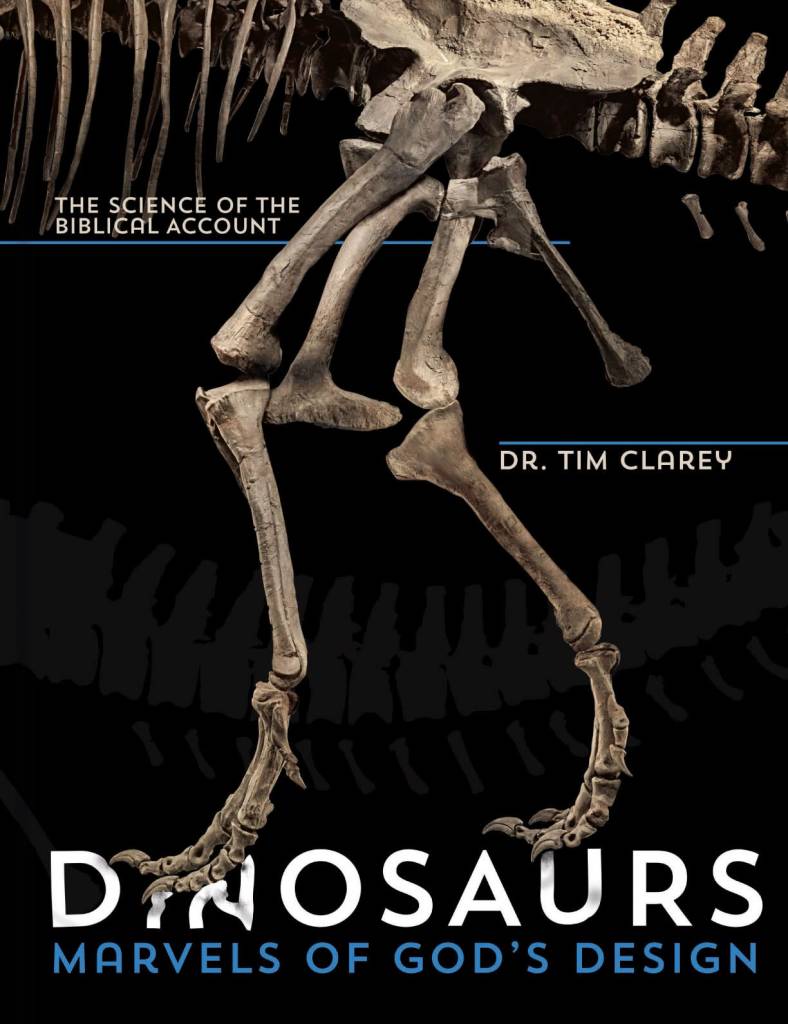
- Clarey, T. L. 2015. Dinosaurs: Marvels of God’s Design. Green Forest, AR: Master Books, 125-126. Available at www.ICR.org.
- Thomas, B. Archaeopteryx Is a Bird. . . Again. Creation Science Update. Posted on ICR.org November 8, 2011, accessed January 19, 2016.
- Shipman, P. 1998. Taking Wing: Archaeopteryx and the Evolution of Bird Flight. New York: Simon & Schuster.
- This is called a ghost lineage because it hasn’t been found or seen.
- Feduccia, A., T. Lingham-Soliar, and J. R. Hinchliffe. 2005. Do Feathered Dinosaurs Exist? Testing the Hypothesis on Neontological and Paleontological Evidence. Journal of Morphology. 266 (2): 125-166.
- Czerkas, S. A. and A. Feduccia. 2014. Jurassic archosaur is a non-dinosaurian bird. Journal of Ornithology. 155 (4): 841-851.
Image Credit: The claimed dromaeosaurid Zhenyuanlong suni. Jinzhou Paleontological Museum, Liaoning Province, China. Copyright © 2015 T. Ha. Adapted for use in accordance with federal copyright (fair use doctrine) law. Usage by ICR does not imply endorsement of copyright holder.
* Dr. Clarey is Research Associate at the Institute for Creation Research and received his Ph.D. in geology from Western Michigan University.