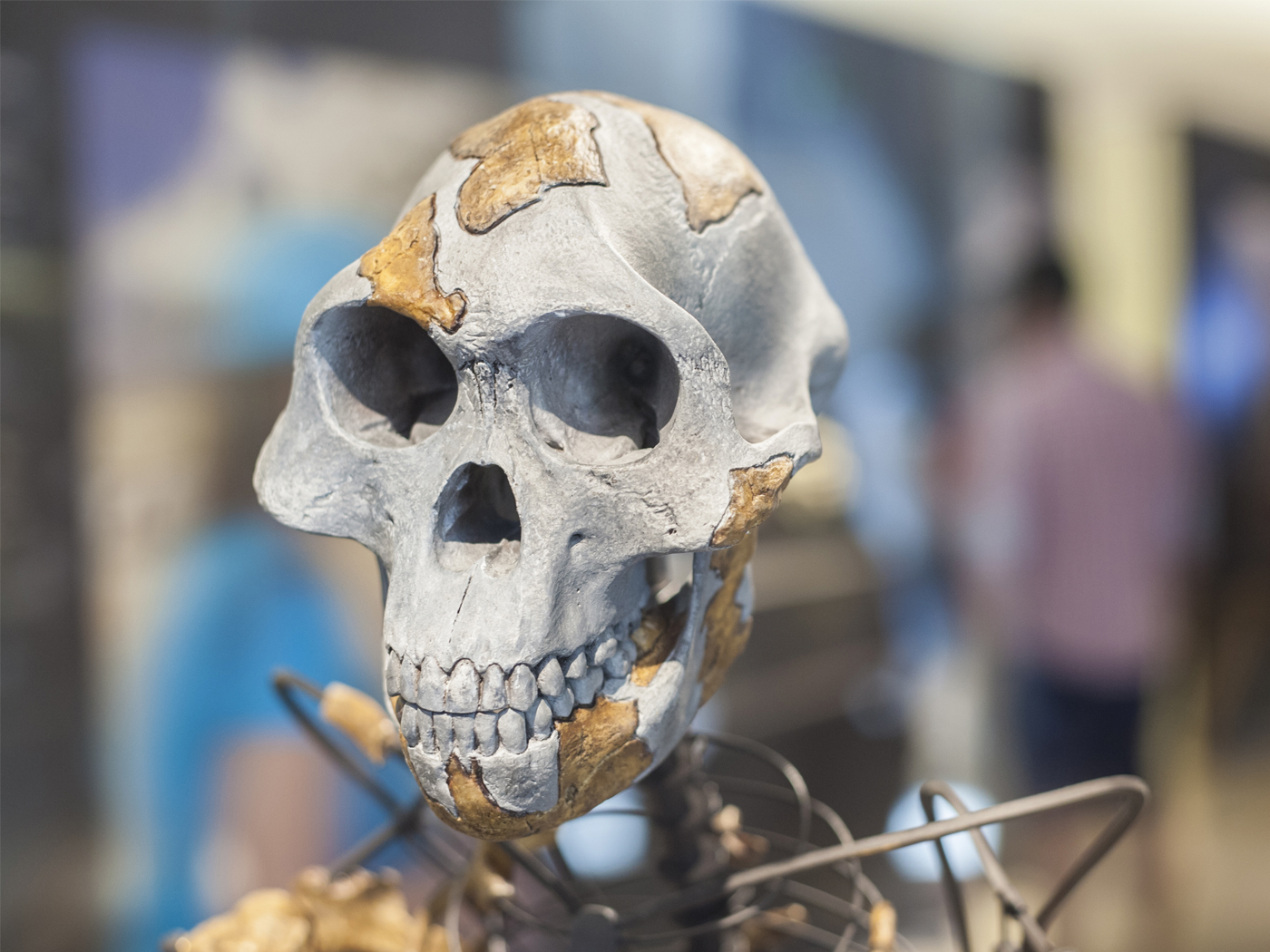
What does it mean when two different species have the same "break points" in a supposedly broken gene? Does it suggest that God created them with similar features, or does it show that the two species evolved from one ancestor? How one answers this question may depend more on prior beliefs than evidence, but new findings make the latter scenario increasingly difficult to maintain.
Chimpanzees and humans have essentially the same sequence for the beta-globin pseudogene. A pseudogene looks like a functional gene, but it has differences that prohibit it from being translated to protein.1 It was therefore thought to be a "broken" gene. The beta-globin "errors" are in the same places on the DNA in both species. This evidence has been interpreted to mean that a functioning gene or an extra copy of it mutated in a male/female pair of imaginary ancestors of both humans and chimpanzees. Since both species have the same DNA sequence, it is assumed they must have received it from these common ancestors, thus self-validating the concept of human evolution.
However, the fact that these sequence "errors" are so very similar suggests that they have a well-designed function after all. Some formerly designated "broken" genes have been discovered to actually play vital regulatory roles.2 Such may prove to be the case with the beta-globin pseudogene. First, it might be actively transcribed into RNA. Research suggests that the RNA transcript itself might be useful, even if it is not translated into a protein. Second, RNA transcripts in other very similar pseudogenes have been found to regulate the transcription of nearby genes.3
The regulation of globin genes is critical, because when mammalian babies are still inside the womb, they use a special version of hemoglobin to ensure that their tissues get needed oxygen. Once born, the baby begins switching to adult hemoglobin. The regulation of when and which globin genes…or portions of them…are turned off and on is more complicated than the gene sequences themselves. In February 2011, researchers even cloned the human globin genes into mice in order to further study how the globin genes are regulated.4
The way that some RNA transcripts of pseudogenes were found to help regulate nearby functional genes in mice is compelling. The transcripts bind to their corresponding gene to block transcriptional machinery from accessing that gene. If, as the creation model predicts, the beta-globin pseudogene was created on purpose, then research will probably verify that it functions as a globin gene regulator.
As pointed out in a recent article in the Journal of Creation, it is entirely reasonable to believe that the beta-globin pseudogene's RNA transcript binds to the nearby globin gene to block it from processing.5 If this turns out to be true, then one of the most popular arguments for human evolution can no longer be used.
References
- In 1997, pseudogene was defined as "an ancestral gene that has become inactive through mutation" (emphasis in original). More recent definitions exclude "mutation," since the DNA differences so often result in functional RNAs. See Rudin, N. 1997. Pseudogene. Dictionary of Modern Biology. Hauppauge, NY: Barron's Educational Series, Inc., 309.
- Thomas, B. 'False' Gene Discovery Confirms Creation Prediction. ICR News. Posted on icr.org July 12, 2010, accessed March 24, 2011.
- Wang, J. et al. 2004. Mouse transcriptome: Neutral evolution of 'non-coding' complementary DNAs. Nature. 431 (7010): 1-2.
- McConnell, S. C. et al. 2011. Human globin knock-in mice complete fetal-to-adult hemoglobin switching in postnatal development. Molecular and Cellular Biology. 31 (4): 876-883.
- Anderson, B. 2011. Shared mutations in the human and chimpanzee β-globin pseudogenes is not evidence for a common ancestor. Journal of Creation. 25 (1): 10-12.
* Mr. Thomas is Science Writer at the Institute for Creation Research.
Article posted on April 4, 2011.