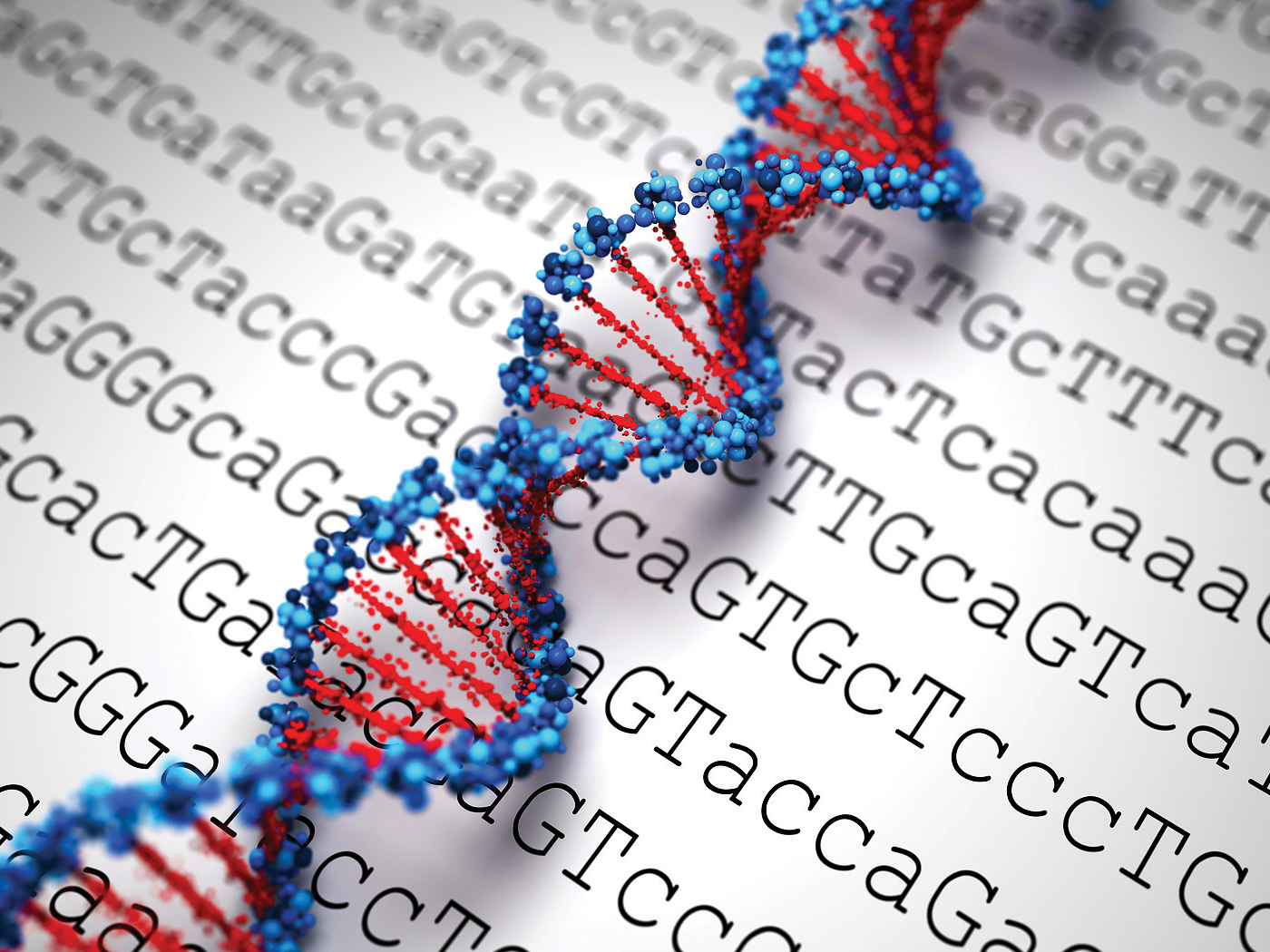
Genes are portions of DNA that contain just the right codes to specify proteins, which make everything in cells work. But how does the cell know which protein should be manufactured, how often, how much, or how fast? If it doesn't get these right, then cellular disaster results.
Scientists are finding the answer to this question in places they least expected--specifically, in the parts of DNA they thought were useless leftovers from random evolution. Early analyses of all that "junk" revealed that it was not random, and later studies showed patterns in the non-gene-coding DNA, although at the time there were no known functions for them.1
A new study published in Nature disclosed the discovery of a totally new mechanism for gene regulation that uses pseudogenes.2 These look very similar to actual genes, but contain enough differences that they could not be used to properly code for proteins. For example, they often have a genetic "stop sign" buried in the middle of the sequence instead of at the end, where the coding gene has it.
The word pseudogene means "false gene." They were named this because they were considered to be broken, useless copies of real genes that harbored coding errors from a long evolutionary history of genetic mistakes. But what if pseudogenes had those coding differences not because they were broken-down versions of the real genes, but because they were purposefully designed with specific similarities to help regulate their corresponding genes?
The researchers found exactly that in two gene-pseudogene systems. They documented direct evidence that the pseudogene PTENP1 "can regulate cellular levels of [its corresponding gene] PTEN and exert a growth-suppressive role."2
Not only is the pseudogene PTENP1 not useless, it has two previously unknown functions. PTENP1 acts as a decoy to attract smaller regulatory molecules. When these small molecules attach to PTENP1 instead of PTEN, the PTEN gene becomes more accessible and is translated into protein more often.
The gene and its pseudogene also appear to exist in a balancing act that affects each other's expression levels. This relationship was further established by observing that cells without the PTENP1 pseudogene are cancerous. Other diseases, like Cowden's disease and Bannayan-Zonana syndrome, are associated with poorly regulated PTEN gene expression.3
The researchers suspected that this regulation scheme was not limited to just one pseudogene-gene system and that it might well be found throughout the living world. Sure enough, they found the same regulatory balances in the gene KRAS and its pseudogene KRAS1P.
So, a cell can regulate the output of genes and their protein products in "intricately dynamic" networks2 because of formerly designated "junk" DNA like transposons4 and pseudogenes. Since no networks--especially not those that provide essential regulatory functions--are seen arising from any natural process, these must have arisen from an intelligent and benevolent source outside of nature.
Based on the idea that both genes and non-gene DNA were produced by a Creator, rather than the laws of physics, creation scientist John Woodmorappe predicted in 2003 that pseudogenes would be discovered to play an important regulatory role in cells.5 Science is now showing that to be accurate.
References
- The ENCODE Project Consortium. 2007. Identification and analysis of functional elements in 1% of the human genome by the ENCODE pilot project. Nature. 447 (7146): 799-816.
- Poliseno, L. et al. 2010. A coding-independent function of gene and pseudogene mRNAs regulates tumour biology. Nature. 465 (7301): 1033-1038.
- Keim, B. New Form of Gene Regulation Hints at Hidden Dimension of DNA. Wired Science. Posted on wired.com June 24, 2010, accessed June 29, 2010.
- Thomas, B. Evolution's Best Argument Has Become Its Worst Nightmare. Acts & Facts. 39 (3): 16-17.
- Woodmorappe, J. 2003. Pseudogene function: regulation of gene expression. TJ. 17 (1): 47-52.
* Mr. Thomas is Science Writer at the Institute for Creation Research
Article posted on July 12, 2010.