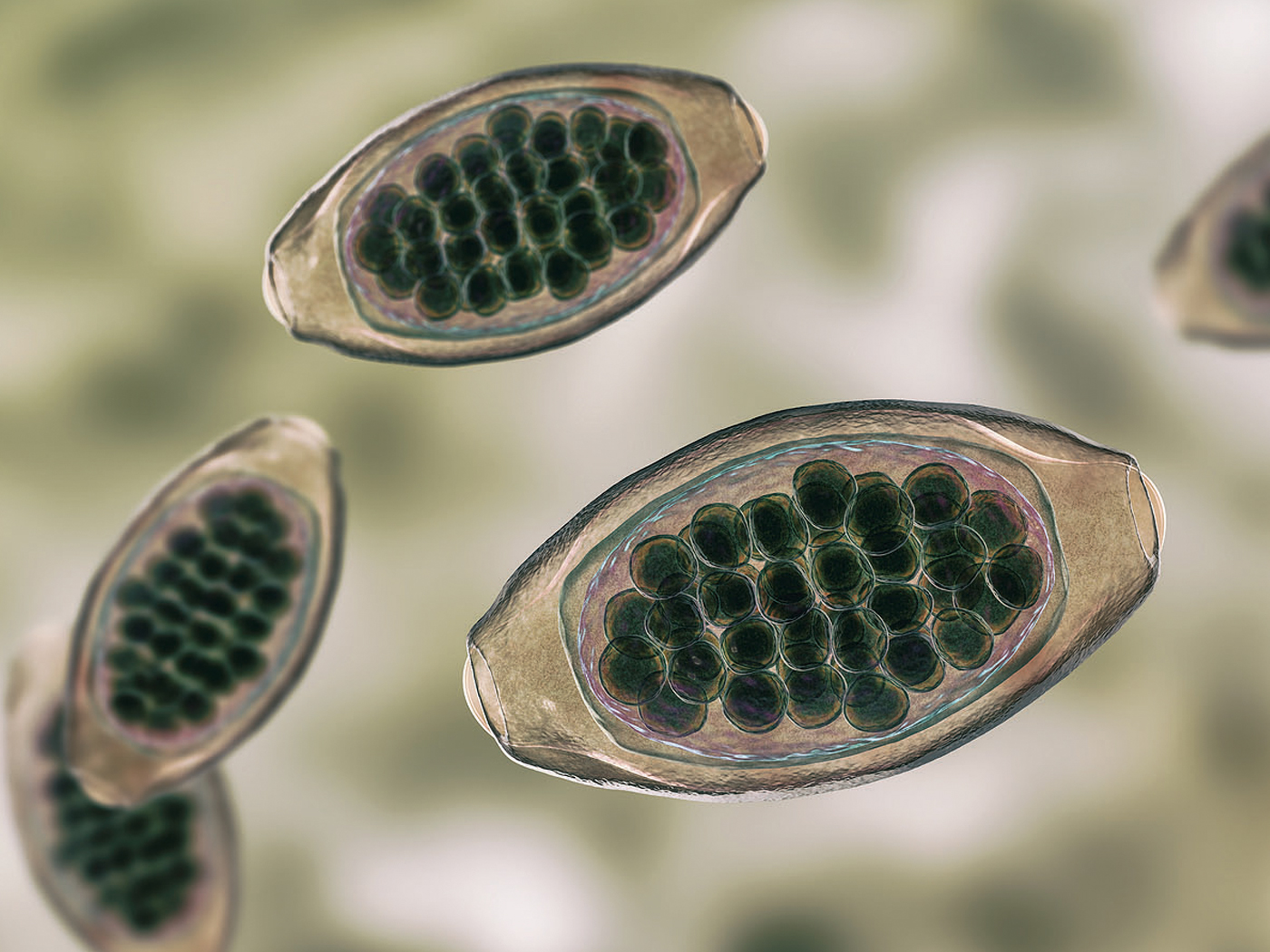
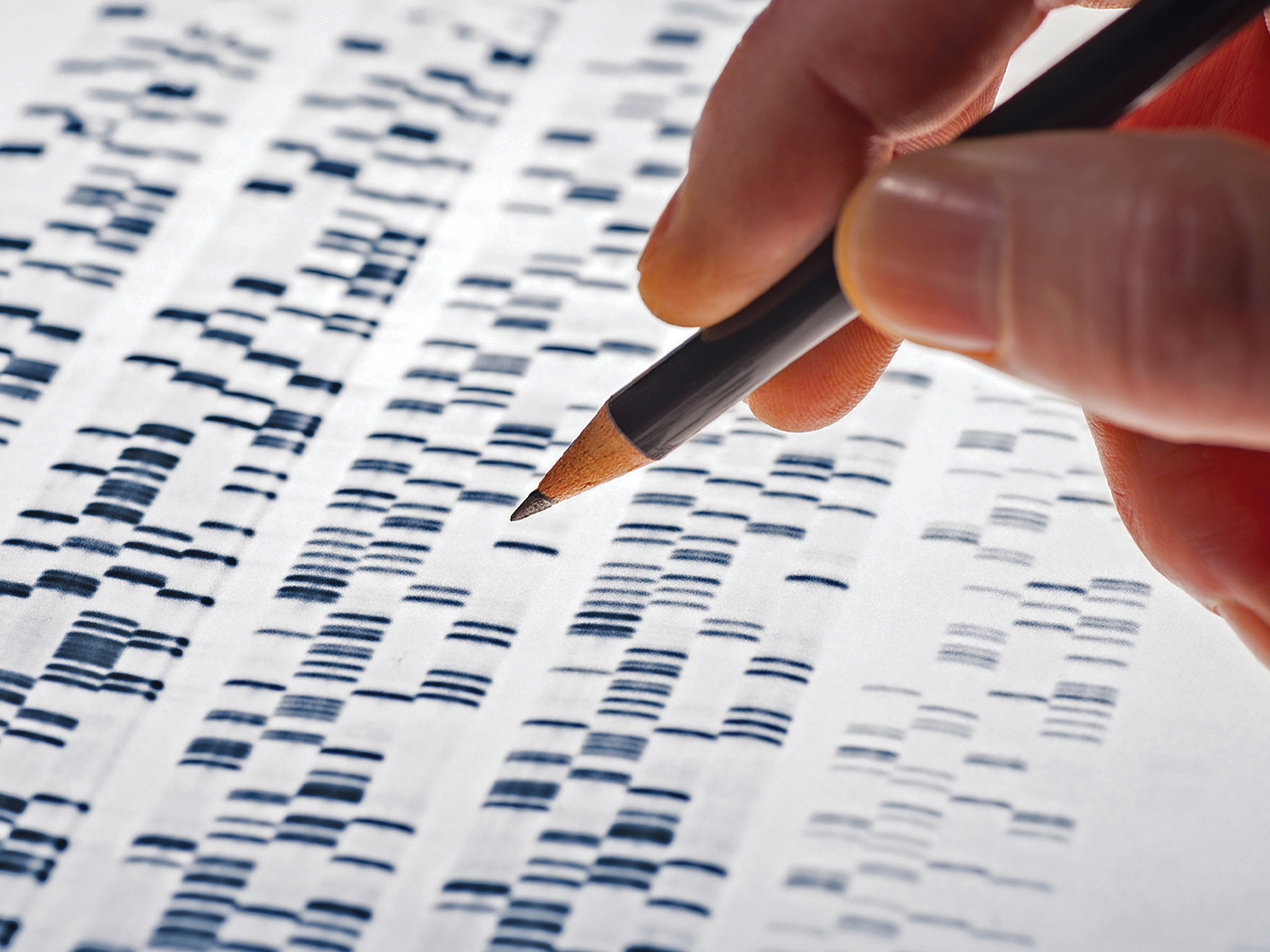
In 2008, Penn State biochemists found ultra-tiny bacteria in an ice core that had been drilled almost three kilometers deep in a Greenland glacier. They were able to get these bacteria to grow by incubating them. In a recent issue of the International Journal of Systematic and Evolutionary Microbiology, the researchers characterized details on the genetics of the bacteria, which appears to be a new species.1
The ice at that depth is supposedly 120,000 years old.2 How were the bacteria alive so far down, and were they really there that long?
Ice cores are long cylinders of ice extracted in sections by special drills. They show layers that are interpreted as records of past ice-forming precipitation events. By counting the layers, scientists estimate the age at a particular layer or depth. The top 1,500 meters or so of layers are well-correlated with known volcanic events, and thus reliably reflect annual snowfall.3
However, lower layers are ambiguous, subject to deformation and mixing, and are dated by extrapolating distances, not by counting and correlating layers. Individual lower layers do not necessarily correspond to individual years. There is evidence that some lower layers could represent snowstorms from the Ice Age, which the creation timescale estimates occurred between roughly 2500 and 2000 BC, the centuries immediately following Noah’s Flood.
Further, the physics of Ice Age formations are incompatible with slow-and-gradual concepts of weather change. The Ice Age must have required a catastrophe that warmed the oceans and cooled the continents, just like Noah’s Flood would have done.4 During this time, many storms could have deposited many layers during a single year.
Use of ice cores as natural timeclocks is highly problematic and therefore far inferior to the reliable record of history given in Scripture.5 Thus, the scientific data in no way demands that these bacteria be dated at 120,000 years old.
But how did they survive under such cold conditions? Other bacteria are known to live in near-freezing temperatures. The researchers do not know if this new species survived as dormant spores or as actively living cultures. However, it is clear that these particular organisms have been outfitted with special biochemistry that enables them to survive (whether actively or inactively) in the cold. This ability opens intriguing possibilities for study. One of the Penn State professors, Jennifer Loveland-Curtze, even applied for a patent to use enzymes isolated from another species of cold-loving bacteria as stain removers in cold water.6
These well-designed bacteria were created with at least the potential for specialized existence under icy environments. This means that not only did they have the required minimum biochemistry to just survive, but they have additional biochemistry to survive in ice for long time spans. Although it is conceivable that they could live on for 120,000 years, they have certainly not done so yet.
References
- Loveland-Curtze, J., V. I. Miteva and J. E. Brenchley. 2009. Herminiimonas glaciei sp. nov., a novel ultramicrobacterium from 3042 m deep Greenland glacial ice. International Journal of Systematic and Evolutionary Microbiology. 59: 1272-1277.
- Bryner, J. 2009. Microbe Wakes Up After 120,000 Years. LiveScience. Posted on livescience.com June 15, 2009. Accessed June 19, 2009.
- Vardiman, L. 1992. Ice Cores and the Age of the Earth. Acts & Facts. 21 (4).
- Oard, M. 1987. The Ice Age and the Genesis Flood. Acts & Facts. 16 (6).
- Vardiman, L. 1993. Ice Cores and the Age of the Earth. Santee, CA: Institute for Creation Research, 21-25.
- Low Temperature Enzymes Derived from Particular Bacterial Strain. Free Patents Online. Posted on Freepatentsonline.com June 23, 2000, accessed June 19, 2009.
* Mr. Thomas is Science Writer at the Institute for Creation Research.
Article posted on July 6, 2009.