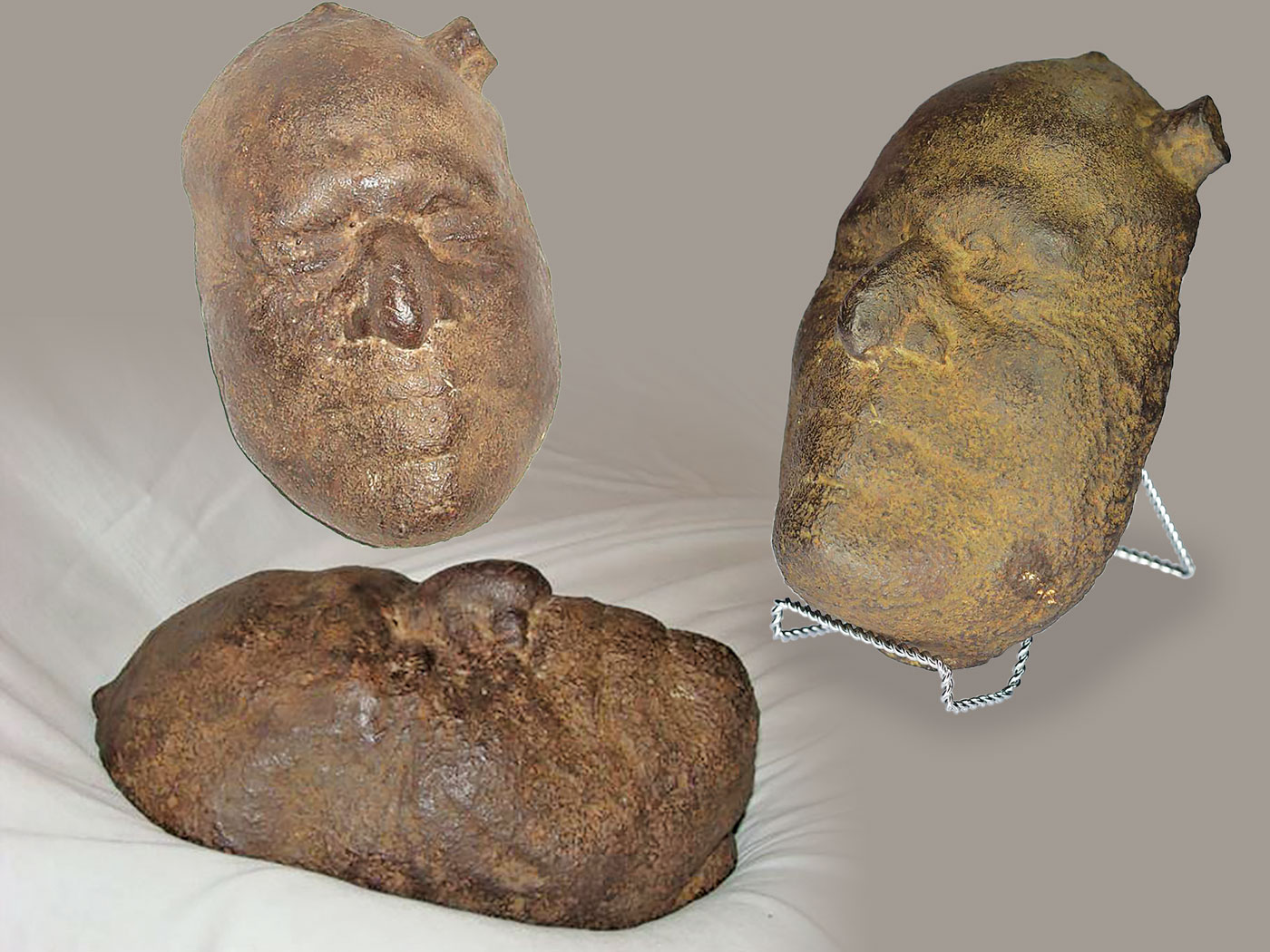
Scientists of the early sixteenth century faced a dilemma: how did fossils originate? Tradition had held for centuries that the existence of marine shells on hilltops was due to the Genesis Flood. On the other hand, pagan philosophies like Aristotelianism and Neoplatonism, which were undergoing a renaissance in Europe (at the time), led to very popular interpretations that they had mysteriously formed in place within the rocks (akin to "spontaneous generation"). Which was true? The similarities between living marine organisms and those funny shapes called "fossils" were becoming too glaring to deny, yet the Flood model was resisted. Why?
According to science historian Martin Rudwick in his excellent book, The Meaning of Fossils: Episodes in the History of Paleontology (Univ. of Chicago Press, 2nd ed., 1985), the Flood had failed as an explanation for fossils. The intractable problem was this: a literal reading of the Genesis Flood revealed an event of insufficient violence to sweep marine fossils onto continents. Furthermore, (1) the growing biological awareness of the number of animal species and the inadequacy of the Ark to hold them all, and (2) the production and subsequent disappearance of such huge volumes of water are fatal problems to a Flood model. And so, according to Rudwick, "vulgar notions of a universal Flood," were really tried and found wanting. The only rational alternative, said Rudwick, was to reconcile the Flood narrative of Scripture with the natural philosophy of Aristotle. In other words, the Flood was merely one of many local inundations, and "the continuous, gradual changes in physical geography" was the only means to explain such vast changes in geography. The seas advanced slowly and gradually over a vast timescale, in other words. Rudwick, to his credit, saw what most modern theologians could not -- that diminishing the role of the Flood in this way is tantamount to denying God's sovereignty in all of Earth history. But absent an answer to the above apologetics questions, he saw this as the only rational recourse. In short, the consensus became that Aristotle had it wrong about the origin of fossils, but was right on the vast antiquity of the earth and on geologic gradualism.
How insurmountable were Rudwick's "problems"? I would not want to argue with God that a Flood which began with a rupturing of all the deep ocean basins and covered "all the high hills under all the heavens" in a matter of weeks is logically insufficient to explain marine fossils on continents. Any serious appraisal of the room needed in the Ark for representatives of every kind (or, baramin, not species) of known land-dwelling and air-breathing creature, is enough to make one wonder what Noah did with all the spare deck-space (shuffleboard, maybe?). As for the production and disappearance of the huge volumes of water for the Flood, one need only be reminded that here on the "water planet" the ocean basins are far deeper than the mountains are high. A mere flexing of the Pacific Ocean floor could easily inundate the earth, and there are indications from Scripture of Flood-associated tectonics that were far more severe than this.
Several lessons can be gained from this. First, God never asks man to believe in nonsense. Second, pagan philosophies are as alluring in the twenty-first century as they were in the sixteenth, and science suffers for it. Third, the Genesis Flood can stand in the marketplace of ideas.
*William A. Hoesch, M.S. geology, is research assistant in Geology.
Cite this article: Hoesch, W. 2007. Vulgar Notions of a Universal Flood. Acts & Facts. 36 (2).