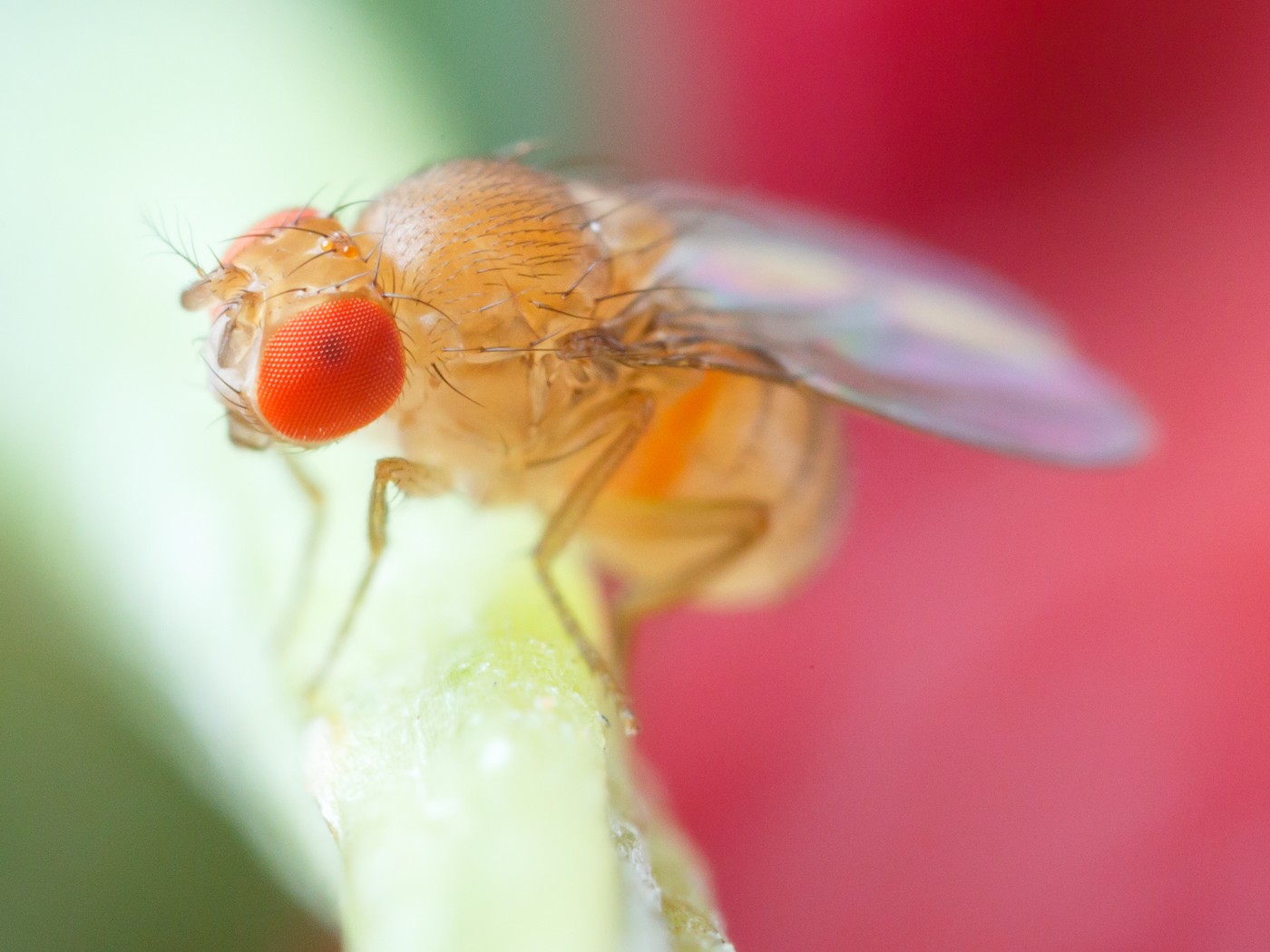
A male daddy longlegs may spend days guarding a cluster of eggs. He cleans them and drives away threats.1 A new study says this type of parental care arose many times through evolution.2 A report from the Linnean Society of London describes the research as helping explain the “origins of fatherhood.”3 Yet the study did not observe fatherhood coming into existence. Instead, it documented creatures that already had the senses, timing, and physical abilities needed to protect their young.
Daddy longlegs are arachnids—a group of eight-legged animals that includes spiders, scorpions, ticks, and mites—but they are not true spiders. In some species, females guard the eggs. In others, males do so. Some daddy longlegs hide their eggs, place them in protected sites, or cover them with debris. These critters use many methods to protect their young.1
The research team studied 165 species and added 85 records of parental behavior as a result of their investigation.2 The claim about evolution came from a later step, when the team placed the observed traits on a proposed family tree, called a “supertree.”2 A computer model then estimated which traits unseen ancestors may have had.
The model said female care arose from no care. It also said male care arose from either no care or female care.2 But a model is not a direct record of the past. Any results it produces depend on the chosen tree, the computer program’s rules, and the inputted data. No one observed a daddy longlegs without parental care gain the senses, nerves, timing, and actions needed to guard eggs.
A study’s data can only tell scientists so much. For example, an animal sitting on eggs is easy to see and photograph, but it’s harder to prove that a species gives no care.2,3 Of the 85 new behavioral records, 78 showed female or male care, while only seven showed no care.2 This uneven sample could affect how often the model estimates that care appeared or disappeared. Regardless, information that came out of the computer’s software was only the result of data that went in.
An engineering view asks what parts must work together for egg care to succeed. A guarding daddy longlegs has to find and identify the eggs, remain near them, and react to danger, while also balancing care with food, mating, and survival. The right signal must lead to the right action at the right time. To believe these key behavioral factors evolved all at once, thereby allowing daddy longlegs to survive into the present, is asking a lot.
Furthermore, egg care requires nerve signals and coordinated movement working together, much like a control system. The daddy longlegs receives sensory input, processes information, and produces a useful response at the right time.4 Even though the creatures have several working forms of care, the paper doesn’t indicate that an unguided process built this integrated system from scratch.
The evidence shows that daddy longlegs have always used engineered systems to protect the next generation. Those traits point to careful design and to the Creator’s wisdom, not to a history of gradual evolution.
References
- Machado, G. and M. Burns. 2024. Reproductive Biology of Harvestmen (Arachnida: Opiliones): A Review of a Rapidly Evolving Research Field. Current Zoology. 70 (1): 115–135.
- Machado, G. et al. 2026. One Small Step for Citizens, One Giant Leap for Science: iNaturalist Records Boost Our Understanding of the Evolution of Parental Care in a Clade of Arachnids. Zoological Journal of the Linnean Society. 207 (2).
- The Linnean Society of London. Spider-Like Creatures Help Uncover the Surprising Origins of Fatherhood. ScienceDaily. Posted on sciencedaily.com July 12, 2026.
- Guliuzza, R. J. 2017. Arriving at a Design-Based Framework for Adaptability. Acts & Facts. 46 (8): 17–19.
* Dr. Corrado earned a Ph.D. in systems engineering from Colorado State University and a Th.M. from Liberty University. He is a freelance contributor to ICR’s Creation Science Update, works in the nuclear industry, and is a Captain in the U.S. Naval Reserve.