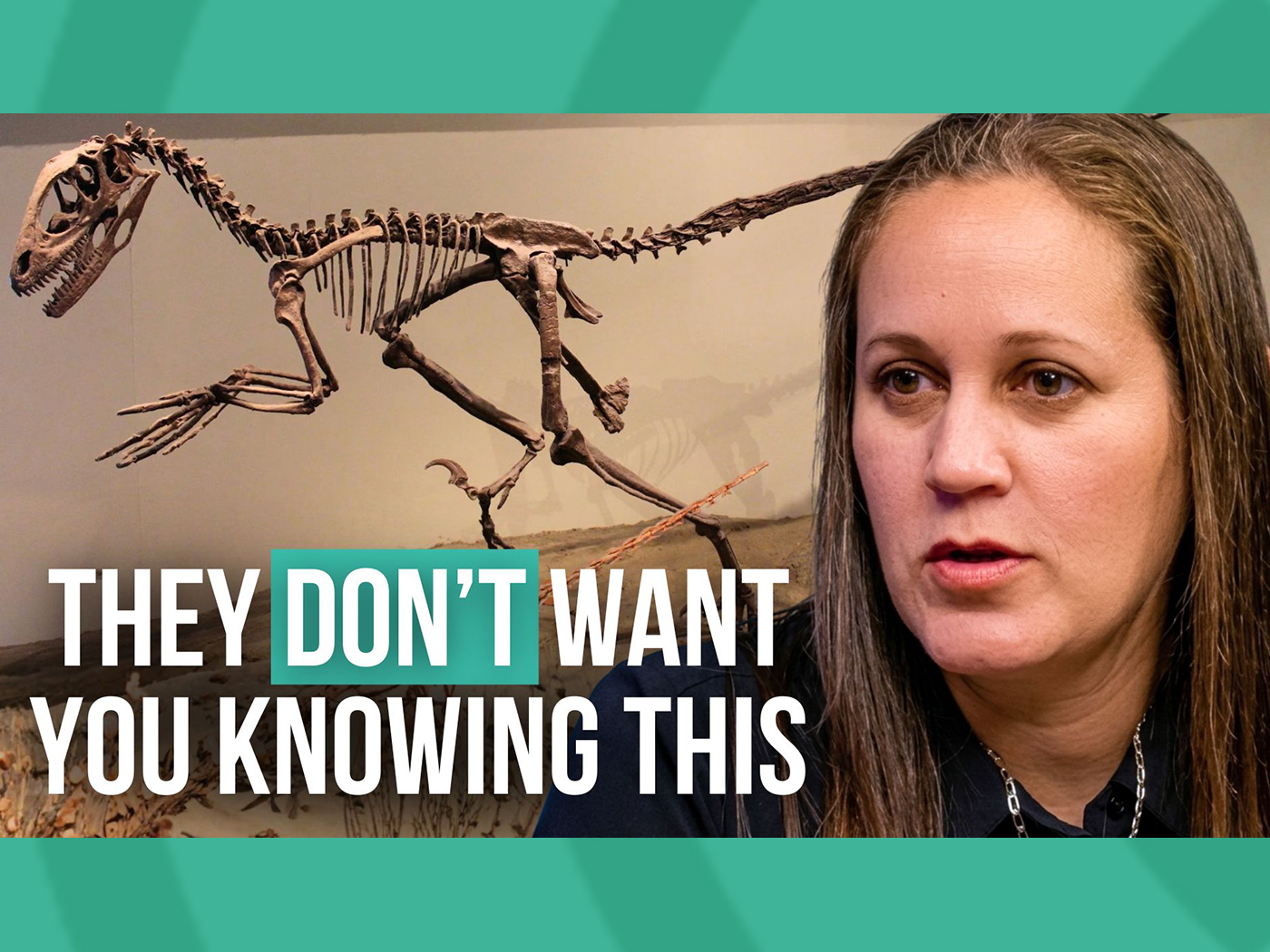
A new dinosaur fossil from Patagonia (the southern tip of South America) is making headlines. Conventional scientists say it shows how a group of strange dinosaurs evolved.1 The fossil belongs to the species Alnashetri cerropoliciensis, a small dinosaur about the size of a crow that lived about 90 million years ago according to conventional dating methods.1,2 Researchers suggest this fossil illustrates that these dinosaurs became small before developing unusual body features. But the fossil itself tells a different story. Instead of showing evolution, it shows a complete and functional design.
The dinosaur belongs to a group called alvarezsauroids. These dinosaurs had very short arms and one large claw on each hand.1 The claw was thick and strong. Many scientists think it helped the animal break into insect nests such as those of ants or termites.2 Whether that idea is correct or not, the structure itself is clear. The claw is built to focus force at the tip, a type of design common in tools that dig or break hard surfaces.
The bones of the arm show the same pattern. The forelimb bones are short and sturdy. This creates a compact lever system that sends force through the claw. Engineers often design tools in the same way. Shorter levers can increase strength and control. The fossil shows this system working together as one unit.
This raises an important question. How could such a system form step by step through evolution? A digging claw needs strong bones, joints, and muscles that work together. If one part is missing, the system will not function well. Yet, the fossil record usually shows these systems already complete.
The study claims that these dinosaurs became smaller before developing their special features.1 But fossils cannot show how a structure formed—they only show the final shape of an organism. Scientists must build evolutionary models to suggest how fossils might be related. When new fossils are found, these models often change, revealing how uncertain these evolutionary stories can be.
From a biblical view, the fossil fits a different explanation. Genesis says God created land animals “according to [their] kind” (Genesis 1:24). Animals within a kind can vary in size and shape. This type of variation is called biological flexibility. We see it in many living animals today. At the same time, core biological systems remain stable, signifying biological inflexibility—meaning that a creature may vary in size or proportions, but the main body plan remains the same. The digging claw of Alnashetri shows this type of deliberate design. The dinosaur’s bones and joints form a working system built for a clear purpose.
Creation scientists have proposed that all organisms have built-in systems that allow them to respond to environmental changes. ICR researchers call this continuous environmental tracking.3 In this model, organisms use internal biological systems to sense and adjust to their surroundings rather than rely on undirected evolutionary processes. Other creation researchers have pointed out that the fossil record often shows organisms appearing suddenly with complete and functional traits.4 This pattern is consistent with the biblical idea that creatures were created with purposeful designs.
The small dinosaur Alnashetri cerropoliciensis fits well within this framework. The fossil shows a compact and efficient skeletal system designed to perform a task. The creature’s claw, arm bones, and joints work together as a mechanical unit. The discovery adds an interesting fossil to the dinosaur record. But instead of documenting evolution, the evidence points to something else. It reveals a well-designed organism whose structure reflects purposeful engineering—exactly what we would expect from a wise Creator.
References
- Makovicky, P. J. et al. 2026. Argentine Fossil Rewrites Evolutionary History of a Baffling Dinosaur Clade. Nature.
- University of Minnesota. This 2-Pound Dinosaur Is Rewriting What Scientists Know About Evolution. ScienceDaily. Posted on sciencedaily.com March 10, 2026.
- Continuous Environmental Tracking: An Engineering-Based Biological Model. Institute for Creation Research. Posted on icr.org/cet.
- Thomas, B. 2015. Carbon-Dating Fossils. Acts & Facts. 44 (8): 8–9.
* Dr. Corrado earned a Ph.D. in systems engineering from Colorado State University and a Th.M. from Liberty University. He is a freelance contributor to ICR’s Creation Science Update, works in the nuclear industry, and is a Captain in the U.S. Naval Reserve.