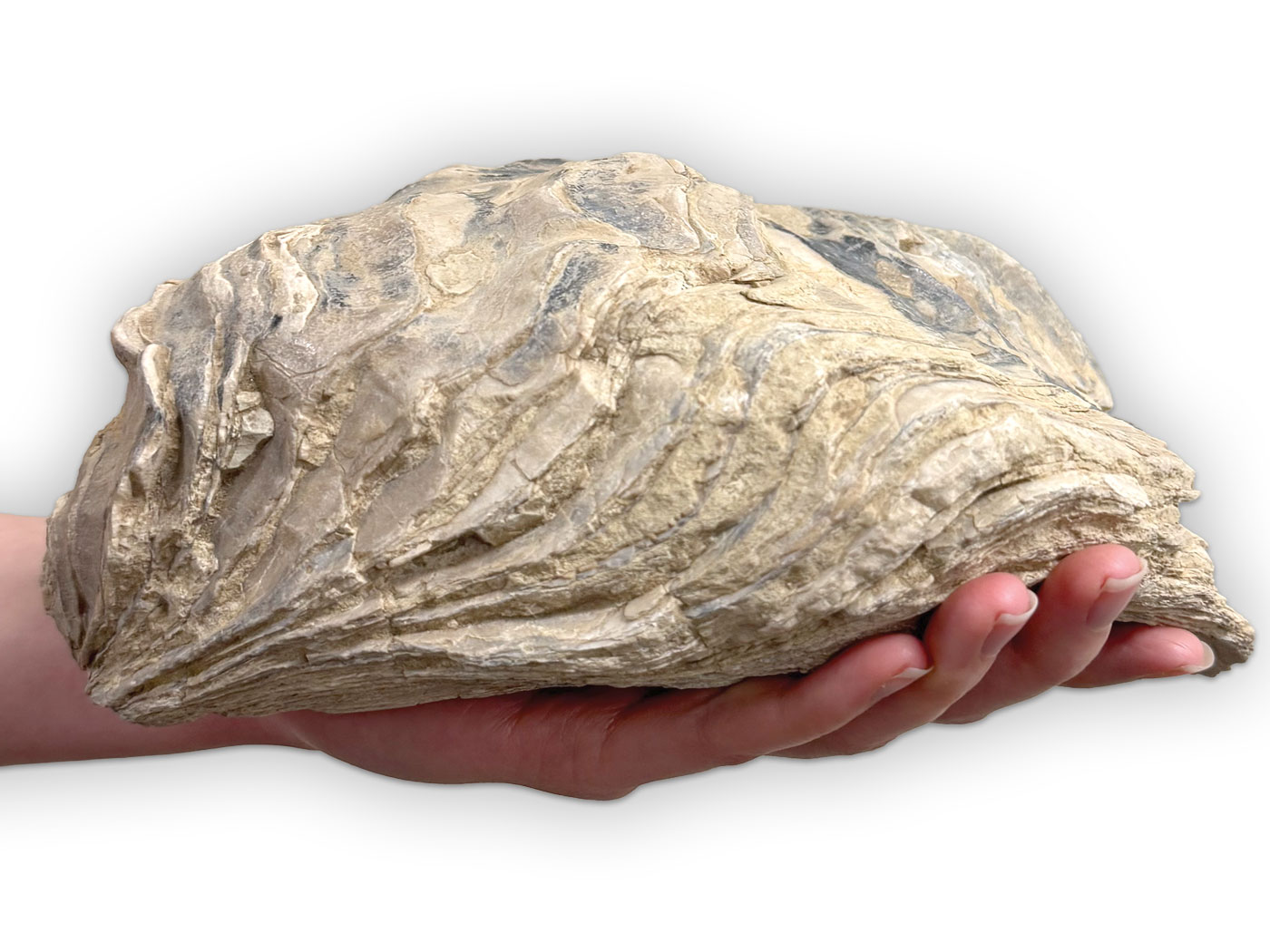
Some discoveries stand out, not because they change the story of evolution, but because they show clear design from the start. That is what happened when scientists found a new crocodile-like fossil in Egypt’s Western Desert called Wadisuchus kassabi. At first it may look like another ancient reptile, but a closer look shows something more exciting—a creature built from the start for life in the water, not a half-formed step in a long chain of changes. Its features point to a body plan that was already complete and ready for its environment.
Research shows that Wadisuchus was about 3.5 to 4 meters long.1 It had a long, narrow snout that helped minimize friction and resistance as it moved through the water, almost like a natural spear cutting through the surface. And its sharp, pointed teeth were perfect for catching fish and turtles. Nostrils on top of the snout made breathing possible while most of the body stayed under water. These individual traits form a complete design; they aren’t random or faulty pieces waiting to become something else. Modern crocodiles have the same clever structure, demonstrating that this layout works well across time and habitat.
An interesting way in which crocodiles today are different from Wadisuchus is that many crocodyliforms have five teeth at the front of their snouts, but Wadisuchus has four. This small difference may have allowed it to grip certain prey more easily.1 Instead of looking like a tooth pattern in transition, the fossil shows an anatomy that fits the reptile’s needs and lifestyle. The more we study the bones, the more we see a set of traits that work together—like parts of a well-designed tool, each with a purpose.
Scientists also found fossils from adolescent and adult animals, which enabled them to compare how the creature grew.1 Even with this range of ages, the same overall design is consistent from juvenile to adult. Creation researchers point out that this matches the Bible’s record of created kinds—organisms that can vary in small ways but do not turn into completely new forms over time.2 This also fits what we see in the fossil record: many creatures appear suddenly and remain stable (stasis), without long chains of slow change.3 Wadisuchus is one more example of this pattern.
The place where the fossil was found—layers from ancient coastal or wetland areas—also supports a creation perspective. In such areas, sudden flooding could cover animals quickly and protect their remains. Rapid burial is needed for fossils to form at all, and Flood-based geology explains why so many fossils, including those of Wadisuchus, are found in water-laid sediments around the world.2 Creation researchers also explain how global flooding could create the distribution of fossils we see today, spreading animals into different layers as water rose and moved across the land.4
Looking at all of its details together, Wadisuchus kassabi points not to evolution but to intentional design—the snout, teeth, nostrils, and body shape all work as a single system built for life in shallow water. Nothing in the fossil looks unfinished. Instead, every part is purposeful. This creature joins many others that appear in the fossil record as complete and well equipped from the beginning. Its design reflects the skill of the Creator, whose wisdom can be seen in every living kind.
References
- Saber, S. et al. 2025. An Early Dyrosaurid (Wadisuchus kassabi gen. et sp. nov.) from the Campanian of Egypt Sheds Light on the Origin and Biogeography of Dyrosauridae. Zoological Journal of the Linnean Society. 205 (2).
- Tomkins, J. P. and T. L. Clarey. 2023. Developing a Comprehensive Model of Global Flood Paleontology: Integrating the Biostratigraphic Record with Global Megasequence Deposition. Proceedings of the International Conference on Creationism. 9, article 25: 561–587.
- Clarey, T. Oldest Dinosaurs in North America Explained by the Flood. Creation Science Update. Posted on ICR.org January 27, 2025.
- Wise, K. P. 2002. Faith, Form, and Time: What the Bible Teaches and Science Confirms About Creation and the Age of the Universe. Nashville, TN: B & H Publishing Group, 221.
* Dr. Corrado earned a Ph.D. in systems engineering from Colorado State University and a Th.M. from Liberty University. He is a freelance contributor to ICR’s Creation Science Update, works in the nuclear industry, and is a Captain in the U.S. Naval Reserve.