Research into God’s living creation is dynamic and always surprising. This is true whether one peers into the deepest reaches of space or dives into the unexpected in laboratory research. Indeed, the vast field of microbiology (bacteria, fungi, and archaea) has barely been touched when it comes to discovering and describing new species of organisms.
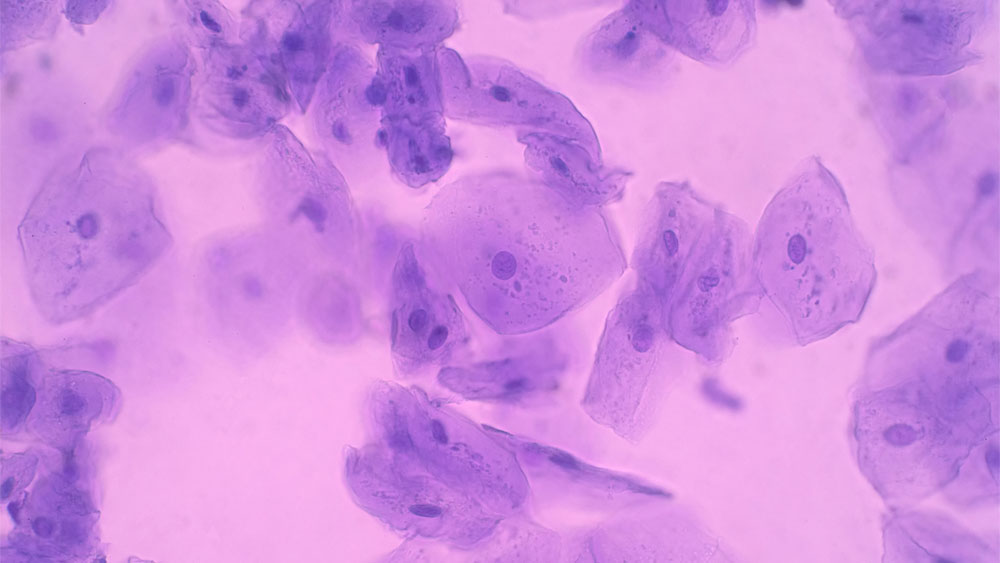
In 2011, scientists found a strange and fascinating single-celled microorganism (eukaryote) in water samples from Croatia and named it Solarion arienae.1 Solarion was found to be slightly motile and very small, which is why it went unnoticed for decades. Two scientists involved in Solarion’s research stated that it’s “a remarkable reminder of how little we still know about the diversity of microbial life.”2
This new and unique-looking species is described as “an inconspicuous, free-living heterotrophic protist with two morphologically distinct cell types and a novel type of predatory extrusome.”1 Because the tiny extrusomes are round with delicate stalks, they give Solarion a sun-like appearance.
Researchers are excited and postulate that Solarion can give insight into the evolutionary process of eukaryotes (having one or more cells with a distinct nucleus), especially as it pertains to the cellular powerhouse called the mitochondria. Evolutionary theory states mitochondria came from an alphaproteobacterial ancestor millions of years ago, but there is no way to validate this.3,4 Because the evolutionary community dismisses creation out of hand, they must explain S. arienae’s origin from a naturalistic viewpoint. This involves purely hypothetical explanations involving an unknown last eukaryotic common ancestor and mitochondrial ancestors.
The retention of ancestral alphaproteobacterial pathways in some protist lineages reveals that the mitochondrion of the last eukaryotic common ancestor was more metabolically versatile than are the highly derived [a feature that has evolved in a particular lineage but is not present in its ancestors] mitochondria that are found in most modern eukaryotes.1
The scientists placed Solarion, along with an enigmatic protist named Meteora sporadica, into a supergroup called Disparia. Science writer Joseph Shavit states, “This cluster [Disparia] stands as one of the major branches inside a larger section of the tree of life called Diaphoretickes.”5 But the tree of life is more than troublesome.6–8 Evolutionary bioinformatics specialist W. Ford Dolittle stated in the pages of the prestigious magazine Science that “the history of life cannot properly be represented as a tree.”9
God created the vast microbial world thousands of years ago as a foundation for the entire biosphere, supporting life on Earth. These entities are designed with physiological, metabolic, and genetic aspects and are the groundwork for life as we know it.10 Within these innumerable microbes is the innate design and ability for them to move in and fill environments both large and small:11 “Solarion might be common only in very narrow habitats or part of what researchers call the ‘rare biosphere,’ a community made up of species that live at very low numbers.”5 Nonetheless, S. arienae was created to fill a unique ecological niche.
To conclude, contrary to what biologists are saying, this interesting finding does nothing to elucidate the origin and evolution of eukaryotic life.12 Creationists applaud the discovery of Solarion but challenge attempted evolutionary explanations of its origin and associated extreme ages. Solarion arienae is unique and has even been placed in a new phylum called Caelestes, but this has nothing to do with its evolutionary origin.
References
- Valt, M. et al. 2026. Rare Microbial Relict Sheds Light on an Ancient Eukaryotic Supergroup. Nature. 649 (8096): 388–395.
- Cockerill, J. Newly Discovered Organism Could Represent a Whole New Branch in The Tree of Life. ScienceAlert. Posted on Sciencealert November 25, 2025.
- Thomas, B. Origin of Cells Study Uses Bad Science. Creation Science Update. Posted on ICR.org August 4, 2011.
- Tomkins, J. 2015. Endosymbiosis: A Theory in Crisis. Acts & Facts. 44 (11): 13.
- Shavit, J. Microbe Discovery Reveals Ancient Clues to How Complex Life Began. AOL. Posted on aol.com November 22, 2025.
- Tomkins, J. and J. Bergman. 2013. Incomplete Lineage Sorting and Other ‘Rogue’ Data Fell the Tree of Life. Journal of Creation. 27 (3): 84–92.
- Tomkins, J. Epigenetic Study Produces ‘Backwards’ Human-Ape Tree. Creation Science Update. Posted on ICR.org August 16, 2013.
- Thomas, B. Shared Genes Undercut Evolutionary Tree. Creation Science Update. Posted on ICR.org February 25, 2011.
- Dolittle, W. F. 1999. Phylogenetic Classification and the Universal Tree. Science. 284 (5423): 2124–2129.
- Thomas, B. Newfound Nitrogen Harmony Saves Tropical Forest Trees. Creation Science Update. Posted on ICR.org November 4, 2013.
- Sherwin, F. Aerobic and Anaerobic Hot Spring Bacteria. Creation Science Update. Posted on ICR.org March 27, 2025.
- Sherwin, F. A Billion-Year Evolutionary Tale. Creation Science Update. Posted on ICR.org July 22, 2024.
* Dr. Sherwin is a science news writer at the Institute for Creation Research. He earned an M.A. in invertebrate zoology from the University of Northern Colorado and received an honorary doctorate of science from Pensacola Christian College.