Students of the creation-evolution debate know the changing explanations for how creatures originated and operate. Originally, the great minds of most pioneering scientists concluded that creatures were designed by God. Darwin’s contradictory narrative claimed that nature cobbles organisms together by trial and error so that they look designed when they actually aren’t. Now a body of research that’s gained momentum for over two decades is pointing back to an engineering-based explanation. ICR and others use these findings to construct a theory of biological design (TOBD).
Yet, a passionate defender of theistic selectionism claimed at an ICR event that the TOBD’s engineered approach to biology could never explain a classic example of “natural selection favoring” a totally random genetic mistake like sickle cell hemoglobin. When challenged that the genetic change perhaps wasn’t a truly random genetic mistake but possibly a directed type of genetic change (by as yet a poorly understood innate mechanism), he dismissed this way of thinking as inconceivable. But not conceiving of directed genetic adaptations is years out of date.
We’ll discuss two powerful genetic studies of human adaptive response to disease, one of which relates to that venerated icon of selectionists: the sickle cell trait and its relative protection against malaria. These studies allow us to put the basic assumptions of Darwinian selectionism and a TOBD to a head-to-head test. They confirm the basic premises of the TOBD and completely contradict evolutionary assumptions.
But far more importantly, they’ll assist creationists and intelligent design advocates to move beyond simply seeing complex biological features toward experiencing the real benefits of thinking radically differently about biological observations. This means not mentally framing our explanations as lighter, limited versions of Darwinism but within an engineering framework.
Sickle Cell Trait as a Nonrandom Genetic Change: Implications for Theoretical Assumptions
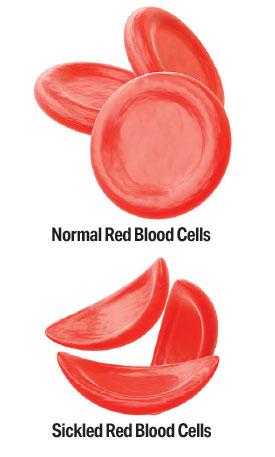 The American Association for the Advancement of Science provocatively titled the sickle-cell hemoglobin research: “Groundbreaking Study Uncovers First Evidence of Long-Term Directionality in the Origination of Human Mutation, Fundamentally Challenging Neo-Darwinism.”1 It identifies the fundamental assumption of selectionism (Neo-Darwinism) that this research disputed:
For the past century scientists have assumed that mutations occur by accident to the genome and that natural selection, or the survival of the fittest, favors beneficial accidents. The accumulation of these presumed genetic accidents under natural selection over the millennia leads in turn to adaptations, from the hawk’s sharp eye to the human cardiovascular system.1 (emphasis added)
In contrast, the TOBD’s basic premises, assumptions, and predictions are essentially the opposite of selectionists’.2 In short, a TOBD is intentionalistic. The theory doesn’t concoct ways to explain away the purposeful biological activity observed in countless areas. Rather, goal-directed activity on an organismwide basis is predicted at every research level. Next, a TOBD is necessarily internalistic. Identifiable control systems within an organism are the true cause for all operations, including adaptations. When an organism’s trait(s) is observed to solve an environmental challenge, the TOBD’s default interpretation is that the underlying genetic (or epigenetic) changes3 for the successful trait(s) were purposeful or directed—not due to random mutations—unless evidence confirms randomness. The TOBD, therefore, predicts multiple innate mechanisms facilitate purposeful genetic changes (or post-genetic modifications) that produce purposefully adaptive anatomic or physiologic traits.
The Head-to-Head Test of Basic Assumptions
Scientists from Israel and Ghana have developed a new ultra-accurate detection method to determine if the probability of genetic changes associated with protective outcomes in humans for certain diseases indicates randomness or internally directed mechanisms.
Two studies, a 20224 and 20255 study, found the genetic changes protective for malaria and African sleeping sickness were not random after all but directed. These researchers first observe that previous research had not measured the likelihood of adaptive genetic change in people regularly exposed to disease versus in those not routinely exposed.
Given that previous studies had not measured the probabilities of target individual mutational events in the DNA, could it be that there actually is a relationship between the likelihood of a particular mutational event and its specific value to the organism, which could not have been systematically and effectively uncovered with previous methods? It is tempting to answer with a resounding “no” to this question, given that there could hardly be a more fundamental assumption in evolutionary theory that data could violate.5
Professor Adi Livnat of Haifa University, Israel, explained the shocking results: “For over a century, the leading theory of evolution has been based on random mutations. The results show that the HbS [sickle cell] mutation is not generated at random but instead originates preferentially in the gene and in the population where it is of adaptive significance.”1 The news report expounded on the significance, saying,
Unlike other findings on mutation origination, this mutation-specific response to a specific environmental pressure cannot be explained by traditional theories. . . .
The HbS mutation originated de novo not only much faster than expected from random mutation, but also much faster in the population (in sub-Saharan Africans as opposed to Europeans) and in the gene (in the beta-globin as opposed to the control delta- globin gene) where it is of adaptive significance. These results upend the traditional example of random mutation and natural selection.1
The follow-on study on the adaptive genetic change to the parasite causing African sleeping sickness also found that “the human APOL1 gene arises not randomly but more frequently where it is needed to prevent disease, fundamentally challenging the notion that evolution is driven by random mutations.”6 Livnat added, “The new findings challenge the notion of random mutation fundamentally.”6
Internal Control Systems Regulate Genetic Changes
How are genetic changes preferentially directed toward adaptive outcomes? Discoveries from multiple studies point to extreme regulation of the strength of the interaction between genes.5 This includes the movement of transposable elements and gene-fusions (each pair of genes has its own fusion probability). Fusions and other changes are highly influenced by regulated information in the genome such as promoters, enhancers, transcription factors, and epigenetic markers.
Livnat characterized these regulatory system elements as “a previously unrecognized internal force [that] operates inside the organism, putting together genetic information that has accumulated over generations in useful ways”6—as the TOBD assumes.
Infusions of Serendipity and Mysticism to the Rescue
Evolutionary biologists know that when their findings contradict Darwinian selectionism and clearly point to purposeful outcomes, they must come up with an atheistic alternate explanation to maintain their evolutionist bona fides and stave off excommunication. Thus, Livnat developed a theory he specifically identifies as “parsimonious” (meaning succinctly tying many individual observations into a single explanation).7 The press release summarizes Livnat’s theory:
Genes that evolved to interact tightly are more likely to be fused; single-letter RNA changes that evolved to occur repeatedly across generations via regulatory phenomena are more likely to be “hardwired” as point mutations into the DNA; genes that evolved to interact in incipient networks, each under its own regulation, are more likely to be invaded by the same transposable element that later becomes a master-switch of the network, streamlining regulation, and so on.1 (emphasis added)
That seems like a lot of serendipity to explain that creatures have internal regulating mechanisms. Livnat invented a concept called natural simplification as life’s indispensable mystical power to coordinate all the materialistic kismet he needs.5,7 Natural simplification carries all of the transcendent personifications of Darwin’s natural selection.
The bottom line is that none of these researchers’ findings fit with Darwinian selectionism, but they align perfectly with the internalistic and intentionalistic interpretative framework of a TOBD. The most parsimonious explanation for why creatures look engineered at every research level is that they are engineered. At ICR, we gratefully give the credit to the Lord Jesus Christ for these creatures that were “created by Him and for Him” (Colossians 1:16).
References
- Groundbreaking Study Uncovers First Evidence of Long-Term Directionality in the Origination of Human Mutation, Fundamentally Challenging Neo-Darwinism. EurekAlert! Posted on eurkalert.org January 31, 2022. Note: These researchers use “mutation” to mean nonpurposeful genetic mistakes or accidents as it’s overwhelmingly used in evolutionary literature and commonly understood by laymen. Technically, though, mutation means any genetic change. They also recognize the core mission of evolutionary theory is to explain why biological complexity exists.
- Guliuzza, R. J. 2024. Why Biology Needs A Theory of Biological Design—Part 3. Acts & Facts. 53 (4): 4–8.
- It’s more precise to refer to a change in DNA sequence simply as a genetic change. This prevents a biased characterization to fit a particular theory or equivocating between a genetic mistake and regulated change.
- Melamed, D. et al. 2022. De Novo Mutation Rates at the Single-Mutation Resolution in a Human HBB Gene-Region Associated with Adaptation and Genetic Disease. Genome Research. 32 (3): 488–498.
- Melamed, D. et al. 2025. De Novo Rates of a Trypanosoma-Resistant Mutation in Two Human Populations. Proceedings of the National Academy of Sciences. 122 (35): e2424538122.
- Mutations Driving Evolution Are Informed by the Genome, Not Random, Study Suggests. University of Haifa. Posted on phys.org September 3, 2025.
- Livnat, A. and D. Melamed. 2023. Evolutionary Honing in and Mutational Replacement: How Long?Term Directed Mutational Responses to Specific Environmental Pressures Are Possible. Theory in Biosciences. 142 (2): 87–105. Livnat, A. 2017. Simplification, Innateness, and the Absorption of Meaning from Context: How Novelty Arises from Gradual Network Evolution. Evolutionary Biology. 44 (2): 145–189.
* Dr. Guliuzza is the president of the Institute for Creation Research. He earned his doctor of medicine from the University of Minnesota, his master of public health from Harvard University, and received an honorary doctor of divinity from Southern California Seminary. He served in the U.S. Air Force as 28th Bomb Wing flight surgeon and chief of aerospace medicine. Dr. Guliuzza is also a registered professional engineer and holds a B.A. in theology from Moody Bible Institute.