The supposed evolution of bipedalism continues to be a major obstacle in the narrative that humans evolved from apelike ancestors.1,2
For example, in 2024, researchers from New York University reported, “While scientists have long been intrigued by the question of how humans’ bipedal stance and movement evolved from a quadrupedal ancestor, neither past studies nor fossil records have permitted the reconstruction of a clear and definitive history of the early evolutionary stages that led to human bipedalism.”3
Recently, evolutionists from Harvard allegedly found “the genetic clues that let humans walk on two legs,” stating that “two small changes in human DNA may have played a big role in helping our ancestors walk upright [emphasis added].”4
According to their interpretation, one of these supposed changes caused the ilium (hip bone) to shift 90° in humans. This is significant because muscle attachment to the pelvis would also have needed to radically change.
Terence Capellini, an evolutionary biologist and study coauthor at Harvard, said these alleged changes were “essential for creating and shifting muscles that are usually on the back of the animal, pushing the animal forward, to now being on the sides, helping us stay upright as we walk.”4
Evolutionary explanations are awash with such just-so stories. What are the specific links in human evolution that document such a transition? “Creating and shifting muscles”?4 How could all of that happen at the same time?
To investigate developmental differences, the scientists examined samples of developing pelvic tissue from chimps, mice, and people, pairing the microscopic samples with CT scans. What did they find?
Analysis revealed that the difference came from subtle changes in gene regulation—the “on-off switches” that control how and when certain genes are active.
In humans, cartilage-forming genes switched on in new regions, prompting horizontal growth, while bone-forming genes activated later, slowing the hardening process.
Because primates share most of the same developmental genes, researchers believe these changes appeared early in human evolution, after our lineage split from chimpanzees.4 (emphasis added)
However, evolutionists don’t know when our lineage split from chimps nor what this common ancestor was. Furthermore, sharing many common developmental genes is hardly surprising since humans also share genes with other organisms for breaking down and digesting proteins, fats, and carbohydrates. This is evidence of a common Designer, not a common ancestor.
God designed people as people, including our distinctive pelvic cartilage that grows sideways, while it grows vertically in apes and chimps. A Nature article addressing the evolution of hominin bipedalism described the difference of the ilia of humans and apes: “One of the earliest and most important shifts was an ilium, or superior pelvic bone, that became shortened cranial-caudally, widened anterior-posteriorly, and aligned parasagittally compared with the ilia of apes.”5 Exactly.
But there was no shift from one into the other. The scientists were simply describing the human ilium as it exists today. They also observed “a unique perichondral pattern of bone formation (both radial and non-internalizing) in human ilia that differs from and is delayed (underwent a heterochronic shift) compared with all studied non-human primates and the mouse.”5 These descriptions highlight additional anatomical differences between humans and the animals listed.
The same Nature article went on to say, “The ilium changes compared with living primates are an evolutionary novelty,” and it claimed these “innovations facilitated further growth of the human pelvis and the unique formation of the ilium among primates.”5 But terms like “novelty” and “innovation” have no single agreed-upon definition in evolutionary biology. Evolutionist Michael Denton stated that “explaining how novelties come about is one of the major unfinished tasks of evolutionary biology.”6
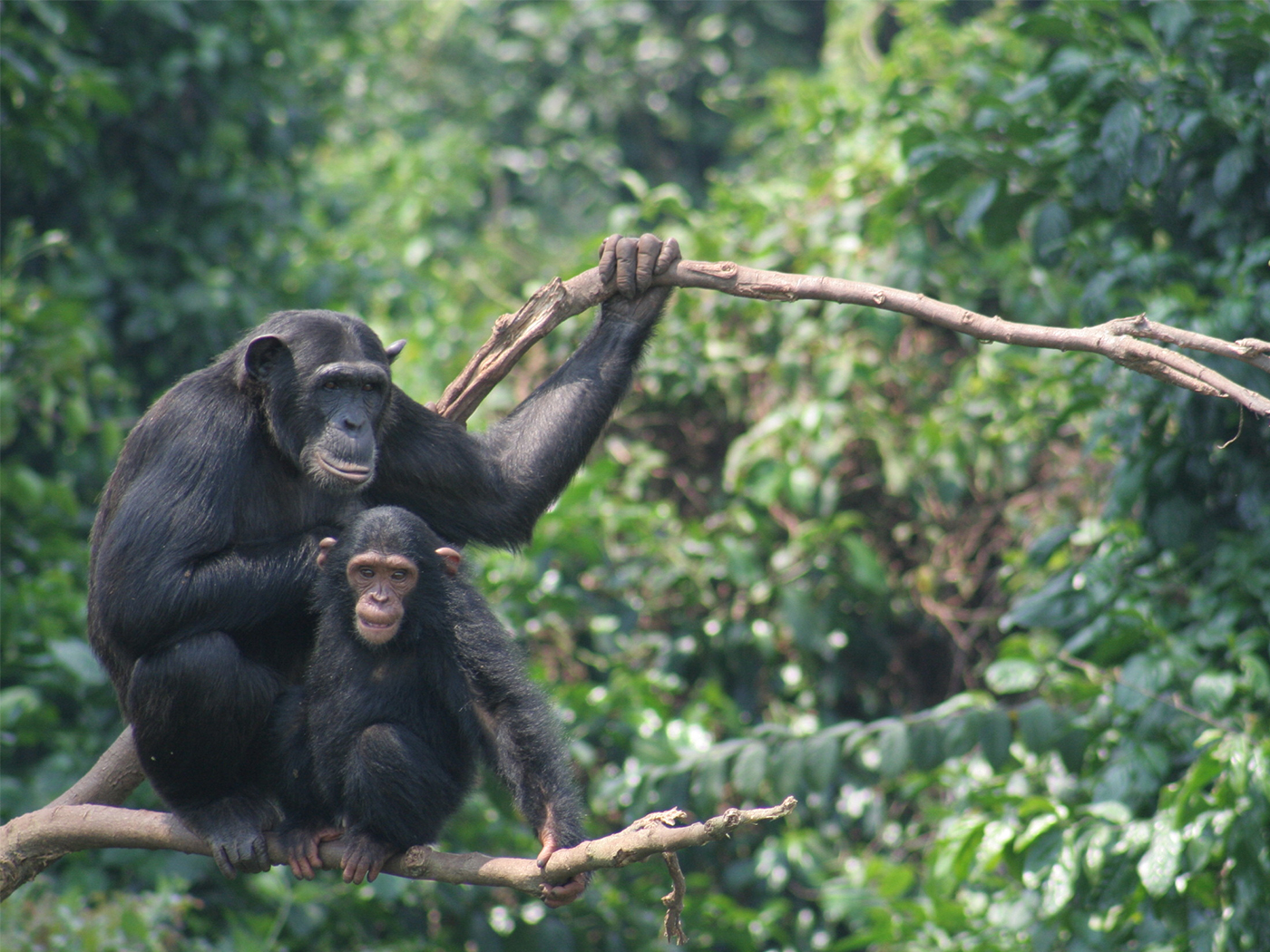
But did the ilium slowly change as unknown primates became human? No. At least, there is no fossil evidence for this. The human pelvis is designed for upright walking, and that of the chimp is designed for climbing.
Evolutionists are still stumped trying to explain any human-chimp connection. One evolutionist said, “How and why natural selection favored the transition to bipedal posture and locomotion are likewise ongoing subjects of scholarly debate and conjecture.”7
To conclude, chimps have always been chimps and people have always been people.8,9 Without fossil evidence, evolutionists do not know what the common ancestor of humans and chimps was, nor when this divergence occurred. If that is true, how can they be so sure that our upright walking was due to “two major developmental genetic innovations that shaped the human ilium [emphasis added]”? 5 What they discovered are two more genetic differences uniquely found in human DNA, furthering the divide between man and chimps.
References
- Sherwin, F. Man: Created to Walk Upright. Creation Science Update. Posted on ICR.org May 8, 2023.
- Rupe, C. and J. Sanford. 2017. Contested Bones. FMS Publications.
- Inner Ear of 6-Million-Year-Old Ape Fossil Reveals Clues about the Evolution of Human Movement. New York University. Posted on phys.org January 29, 2024.
- Edwards, I. Scientists Find the Genetic Clues That Let Humans Walk on Two Legs. Medical Xpress. Posted on medicalxpress.com November 2, 2025.
- Senevirathne, G. et al. 2025. The Evolution of Hominin Bipedalism in Two Steps. Nature. 645: 952–963.
- Denton, M. 2016. Evolution: Still a Theory in Crisis. Seattle, WA: Discovery Institute Press, 57.
- Stanford, C. 2006. Arboreal Bipedalism in Wild Chimpanzees: Implications for the Evolution of Hominid Posture and Locomotion. American Journal of Physical Anthropology. 129 (2): 225–231.
- Tomkins, J. 2021. Chimps and Humans. Dallas, TX: Institute for Creation Research.
- Tomkins, J. 2022. Human Origins. Dallas, TX: Institute for Creation Research.
* Dr. Sherwin is a science news writer at the Institute for Creation Research. He earned an M.A. in invertebrate zoology from the University of Northern Colorado and received an honorary doctorate of science from Pensacola Christian College.