The discovery of a new species of a plant or animal would probably not spark much excitement to the non-scientist. But in this case, the conditions surrounding the discovery of two new species of little-known fish should cause Christians who are interested in origins to take notice.
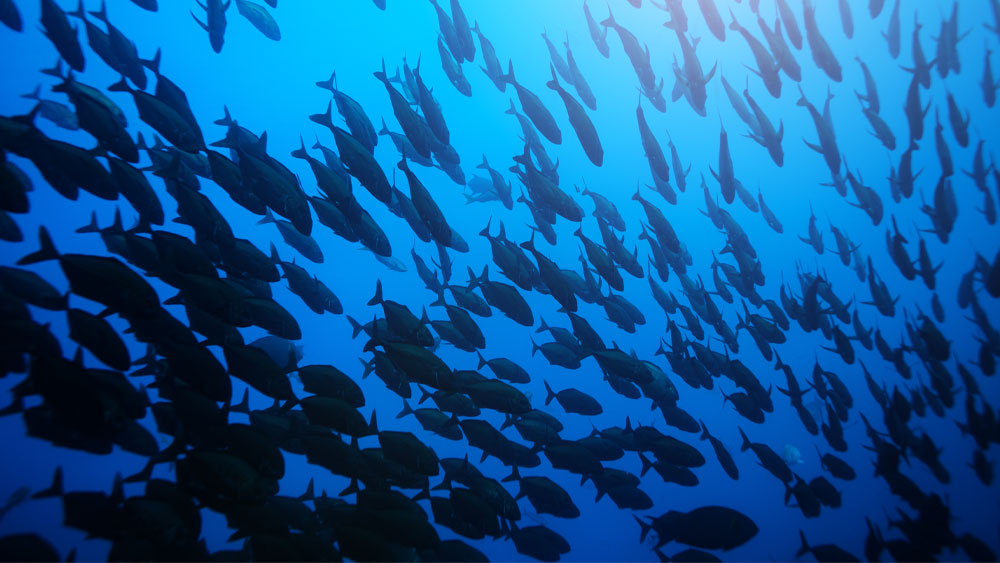
Locations in Dorset, England, and Ettling, Germany, revealed two new species of the genus Thrissops: Thrissops ettlingensis sp. nov. and Thrissops kimmeridgensis sp. nov.1 These are members of the order Ichthyodectiformes, which belongs to the large Teleostei group (96% of all fish).
What is interesting are the conditions in which the fish were found: “Six adults and one juvenile of Th. ettlingensis in excellent preservation, some with stomach content and color pattern, were excavated in Ettling by the author.”1 Sandee Oster of Phys.org reported,
Some of the Ettling specimens are so well-preserved that they still contain their last meals and color patterns. More specifically, two of the Th. ettlingensis contained Orthogonikleithrus hoelli fish in their stomach. The still-connected vertebrae indicated that the fish had not been fully digested at the time of death, indicating they had been eaten only shortly prior.
Similarly, the color patterns are preserved on some of the specimens, similar to Thrissops formosus. A dark pigment melanin was observed in the center of a scale.2
One could suggest the fish perished and were catastrophically buried by the Flood to be so well preserved. The late president of ICR, Dr. John Morris, stated,
Over 95 percent of all fossils are marine creatures. They died and are fossilized by the trillions. Many are buried in great fossil graveyards, tightly packed together, choked with sediments, buried before they had time to decay. Obviously, they didn’t live in the environment in which they died. They were transported by rapidly moving water and then buried in sedimentary deposits.3
In addition to the evidence for a speedy and watery burial, the preserved coloring and pigment melanin indicate a recent burial. The melanin found in the scale is an organic (carbon-based) molecule that should not have lasted even a fraction of the millions of years the evolutionary theory claims.
ICR’s Dr. Brian Thomas wrote about scientists finding fossil halos made of melanin—specifically melanosomes (organelles inside animal cells) in marine reptile fossils.
Overall, the pigmentation patterns of these fossils resemble those of today’s creatures and show no signs of evolutionary transitioning—which is the first clue.
A second challenging clue is the presence of original biochemistry in specimens assigned an age of, for the ichthyosaur, 190 million years. The researchers offered no reason why melanin should ever be expected to last even a tiny fraction of that supposed span. If the fossils were actually that old, then their melanin should have chemically broken down long before now, leaving nothing behind.4
Fish fossils are like dinosaur fossils. As new fish species are constantly being found by paleontologists, they often appear in the sedimentary rocks en masse, much like dinosaur graveyards, as 100% fish with no evolutionary ancestors.
To conclude, these two new species of Thrissops were found to be excellently preserved and still contained organic material that belies the millions of years preached by Darwinists. Instead, this is more evidence of the recent Genesis Flood.5,6
References
- Elbert, M. 2025. New Species of the Genus Thrissops (Teleostei, Ichthyodectiformes) in the Upper Jurassic of the Solnhofen-Archipelago (Germany) and Kimmeridge Clay (England). Zitteliana. 99: 1–32.
- Oster, S. Two New Thrissops Species Provide Insights into Early Teleost Evolution. Phys.org Posted on phys.org August 13, 2025.
- Morris, J. 2011. Fish in the Flood. Acts & Facts. 40 (5): 16.
- Thomas, B. Fossil Skin Pigment Evolved Three Times? Creation Science Update. Posted on ICR.org February 5, 2014.
- Clarey, T. 2020. Carved in Stone: Geological Evidence of the Worldwide Flood. Dallas, TX: Institute for Creation Research.
- Morris, J. and F. Sherwin. 2017. The Fossil Record: Unearthing Nature’s History of Life. Dallas, TX: Institute for Creation Research.
* Dr. Sherwin is a science news writer at the Institute for Creation Research. He earned an M.A. in invertebrate zoology from the University of Northern Colorado and received an honorary doctorate of science from Pensacola Christian College.