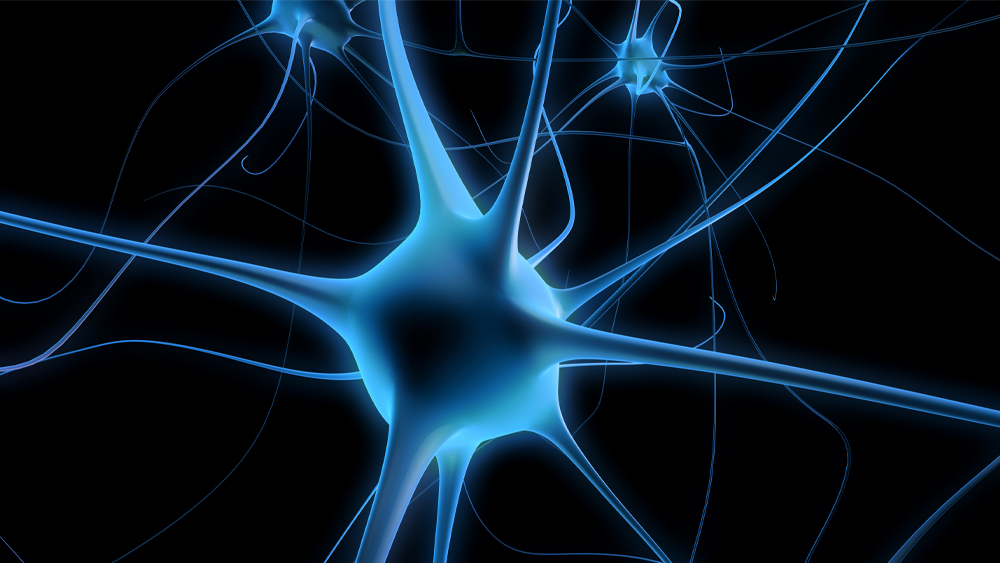
Eukaryotes are multicellular organisms that contain diverse differentiated cell types. Within almost every cell there are subcellular compartments called organelles that manage specific functions. The most important organelles include the nucleus, mitochondrion, and chloroplast, which are each enclosed within a distinct phospholipid bilayer (double membrane). These membrane-bound organelles are highly complex and provide distinct resources that are critical for life. Humans, plants, fungi, and animals are composed of eukaryotic cells.
One of the most controversial issues within the theory of evolution is the belief that free-living, single-cell prokaryotes (bacteria and archaea) became the major organelles of unicellular and multicellular eukaryotes. In other words, over vast unobservable periods of time, single-cell organisms were transformed into membrane-bound organelles inside the stunning complexity of multicellular organisms that fill the earth today. The proposed mechanism? Endosymbiosis.
The endosymbiotic theory states that an aerobic bacterium was engulfed by a large archaean cell. But this is purely hypothetical. ICR’s Dr. Jeff Tomkins stated,
However, now that genome sequencing is inexpensive and widespread, the evolutionary story of endosymbiosis has become increasingly clouded and controversial. As new bacterial and eukaryotic genomes are sequenced and the proteins they encode are deduced, the whole evolutionary idea of endosymbiosis has been thrown into utter confusion.
One of the most unexpected discoveries has been the utter lack of identified genes that would support the evolutionary tale.1
Scientists stated in a recent Proceedings of the National Academy of Sciences article that
The origin of eukaryotes represents one of the most significant events in evolution since it allowed the posterior emergence of multicellular organisms. Yet, it remains unclear how existing regulatory mechanisms of gene activity were transformed to allow this increase in complexity.2
Regardless, this increase in complexity (“this major reorganization of life”) was somehow achieved through a mixture of chance, time, and natural processes acting in concert to produce a cryptic “algorithmic phase transition.”2 An algorithm is “a process or set of rules to be followed in calculations or other problem-solving operations, especially by a computer.”3
These scientists performed a “blend of theoretical and empirical approaches”2 in their research. The empirical approach is conducted by what researchers possess now, in real time, whereas the theoretical (hypothetical or speculative) approach is based on their faith in the deep time of evolution. Not surprisingly, when blended together they will find answers or evidence to support their specific area of evolutionary theory. “Our blend of theoretical and empirical approaches will ultimately uncover how the tension between a conserved [genetic material that remains unchanged] process of gene growth and the constraints on the increasingly longer proteins resolved in a phase transition signaling the emergence of the eukaryotic cell.”2
Just as those who study biological systems are finding increased engineering parallels,4,5 Muro et al. are also finding “intriguing similarities” between their work with proteins and corresponding genes and the field of computer science.6
Predictions regarding the accumulation of intragenic noncoding regions reveal intriguing similarities with a continuous phase transition akin to those observed in computer science, by which algorithms suddenly find more efficient ways of solving a problem.6
If systems or structures that clearly look engineered (e.g., ATP synthase and vertebrate retina) require an engineer, then intragenic noncoding regions and computer algorithms should require a programmer.
These scientists “developed a simple multiplicative model of gene growth” through time that predicted two laws, both of which are based on none other than the last universal common ancestor (LUCA).2 This mysterious LUCA is an unknown entity that existed from an unknown time ago at an unknown place by an unknown chain of unknown processes.
The nature of the last universal common ancestor (LUCA), its age and its impact on the Earth system have been the subject of vigorous debate across diverse disciplines, often based on disparate data and methods. Age estimates for LUCA are usually based on the fossil record, varying with every reinterpretation. The nature of LUCA’s metabolism has proven equally contentious, with some attributing all core metabolisms to LUCA, whereas others reconstruct a simpler life form dependent on geochemistry.7
LUCA forms the base of an unprovable tree of life8,9 and “is still just a hypothetical organism.”10
Explaining the materialistic origin of the eukaryotic cell continues to be as problematic as the origin of the prokaryotic cell. And when conclusions are ultimately rendered by those seeking an evolutionary explanation, we are unsurprised to find that “all of this argues for the need for more complex models involving more time, more partners, and more gradual steps.”11
Indeed, all evidence points to eukaryotic cells, and all other forms of life, as the results of the matchless, incomprehensible power and works of our Lord!
The works of the LORD are great, sought out of all them that have pleasure therein. His work is honourable and glorious: and his righteousness endureth for ever. He hath made his wonderful works to be remembered: the LORD is gracious and full of compassion.12
References
- Tomkins, J. 2015. Endosymbiosis: A Theory in Crisis. Acts & Facts. 44 (11): 13.
- Muro, E. et al. 2025. The Emergence of Eukaryotes as an Evolutionary Algorithmic Phase Transition. PNAS. 122 (13).
- Oxford Languages. Oxford University Press. Languages.oup.com.
- Guliuzza, R. Biological and Engineered Systems Employ Same Principles. Creation Science Update. Posted on ICR.org October 17, 2019.
- McDiarmid, A. Emily Reeves: How to Study Biology with Systems Engineering Principles. Evolution News and Science Today. Posted on evolutionnews.org March 31, 2025.
- Ferrada, E. 2025. An Algorithmic Constraint at the Transition to Complex Life. PNAS. 122 (17).
- Moody, E. et al. 2024. The Nature of the Last Universal Common Ancestor and Its Impact on the Early Earth System. Nature Ecology & Evolution. 8: 1654–1666.
- Thomas, B. Darwin’s Evolutionary Tree ‘Annihilated.’ Creation Science Update. Posted on ICR.org February 3, 2009.
- Thomas, B. Shared Genes Undercut Evolutionary Tree. Creation Science Update. Posted on ICR.org February 25, 2011.
- Gough, E. Could Life Exist in Molecular Clouds? Universe Today. Posted on universetoday.com November 30, 2023.
- Galbaldóm, T. 2021. Origin and Early Evolution of the Eukaryotic Cell. Annual Review of Microbiology. 75: 631–647.
- Psalm 111:2–4.
* Dr. Sherwin is a science news writer at the Institute for Creation Research. He earned an M.A. in invertebrate zoology from the University of Northern Colorado and received an honorary doctorate of science from Pensacola Christian College.