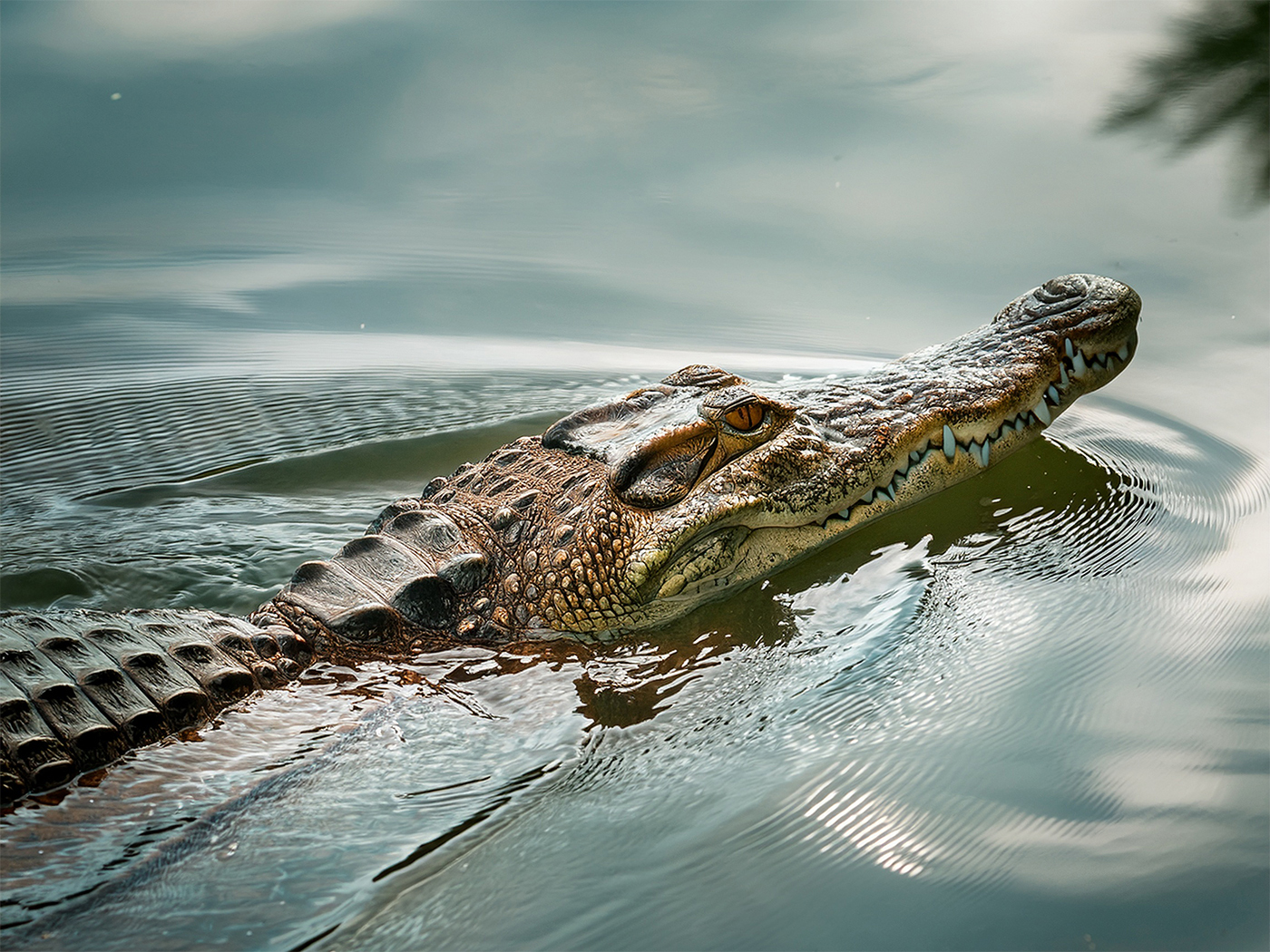
The lepidosaurs are a large and diverse group of land vertebrates that include the snakes and lizards. There are almost 12,000 species of these animals. But evolutionists still do not know where they came from. Vertebrate paleontologist Michael Benton stated, “The early history of squamates [snakes, lizards] is patchy,” and the debate of snake origin “is far from resolved.”1
Five years later, five evolutionists said in regard to squamate origin that “lizards appeared” and “snakes appeared.”2 This is not a scientific description of their origin or their supposed ancestry.
Squamates have been around for at least 240 million years according to evolution, but there are precious few fossils to trace their supposed evolution. Since their evolutionary origin is basically unknown, scientists must make the best of the minor variation that is seen in the fossil record and call it “evolution.”
Recently, zoologists at the University of Bristol in England reported that “new research unlocks jaw-dropping evolution of lizards and snakes.”3 They were addressing “how lizards and snakes...have evolved remarkably varied jaw shapes, driving their extraordinary ecological success.”3
In addition, the article stated, “The lower jaw -- a vital component of the vertebrate feeding apparatus -- has been a key element in their ecological experimentation and adaptation.”3 But can the environment experiment? Of course not. Evolution states the formation of morphological structures (e.g., mandibles) were by countless random beneficial mutations across deep evolutionary time. Indeed, Hickman stated in regard to the unique skull construction of the Squamata that
Skulls of squamates are modified from the ancestral diapsid condition by loss of bone ventral and posterior to the lower temporal opening. This modification allowed evolution, in most lizards and snakes, of a kinetic skull having movable joints.2
A kinetic skull is one that allows for substantial movement between skull bones. The kinetic skull (including the jaw) of squamates is unique, having been designed by the Lord Jesus, and is not some modification from an unknown ancestral diapsid.
ICR’s scientists see this mandible variation within the lepidosaurs as an example of biological adaptability called continuous environmental tracking (CET).4 Creation based on CET suggests “an engineering-based, organism-focused characterization of adaptation”4 where creatures such as snakes and lizards can move into existing niches or fill new ones through nonrandom adaptations that are preprogramed by their Designer, the Lord Jesus.
The University of Bristol report stated,
“Interestingly, we found that jaw shape evolves particularly fast in ecologically specialised groups, such as in burrowing and aquatic species, and in herbivorous lizards, suggesting that evolutionary innovation in the lower jaw was key to achieve these unique ecologies,” explained Dr Antonio Ballell Mayoral based in Bristol’s School of Earth Sciences.
“Our study shows how lizards and snakes evolved their disparate jaw shapes which adapted to their wide range of ecologies, diets, and habitats, driving their extraordinary diversity.”3
Clearly, these creatures remain snakes and lizards, but they have the ability to quickly adapt their jaw shape. This is not due to cryptic “evolutionary innovation” but the reptile’s innate ability to detect environmental conditions via intelligently engineered systems within the animals’ DNA. Adaptations within the Squamata can be seen not only as rapid but also as highly regulated.
To conclude, the snakes and lizards have been created with the genetic ability to undergo “remarkably varied jaw shapes” that have led to “their extraordinary ecological success” as they move in and fill various niches.
References
- Benton, M. 2015. Vertebrate Paleontology. Hoboken, NJ: Wiley-Blackwell, 252.
- Hickman, C. et al. 2024. Integrated Principles of Zoology. New York, NY: McGraw-Hill, 583.
- New Research Unlocks Jaw-Dropping Evolution of Lizards and Snakes. University of Bristol. Posted on sciencedaily.com December 11, 2024.
- Guliuzza, R. and P. Gaskill. 2018. Continuous Environmental Tracking: An Engineering Framework to Understand Adaptation and Diversification. Proceedings of the International Conference on Creationism. 8: 158–184, article 11.
* Dr. Sherwin is a news writer at the Institute for Creation Research. He earned an M.A. in invertebrate zoology from the University of Northern Colorado and received an honorary doctorate of science from Pensacola Christian College.