Five hundred years ago in Wittenberg, Germany, an unusual scholar changed the course of human history using pen and hammer. Dr. Martin Luther protested unbiblical church teachings and practices—especially selling indulgences—sparking the Protestant Reformation.1 Unsurprisingly, a review of Luther’s treatment of Genesis shows how taking Scripture seriously logically leads to taking creation seriously. In fact, Luther appreciated creation enough to record detailed observations of jackdaws and ravens.2
Many remember Dr. Luther mostly for the biblical doctrine of justification by faith, as ICR founder Dr. Henry Morris indicated:
This great principle—“the just shall live by faith”—was the Scripture that so inflamed the soul of Martin Luther that it became the watchword of the Reformation. It occurs first here in the small prophecy of Habakkuk [2:4], but is then quoted three times in the New Testament. The term “just,” of course, means “justified” or “righteous.”3
Accordingly, we should thank God for how He led Dr. Luther to take the Bible seriously in order to recover and clarify the vital truth regarding how God gives righteousness to those who believe in Christ.
It’s also fitting to appreciate how Luther defended the Genesis account of creation, refusing to exchange it for popular, yet unbiblical, opinions of his generation.
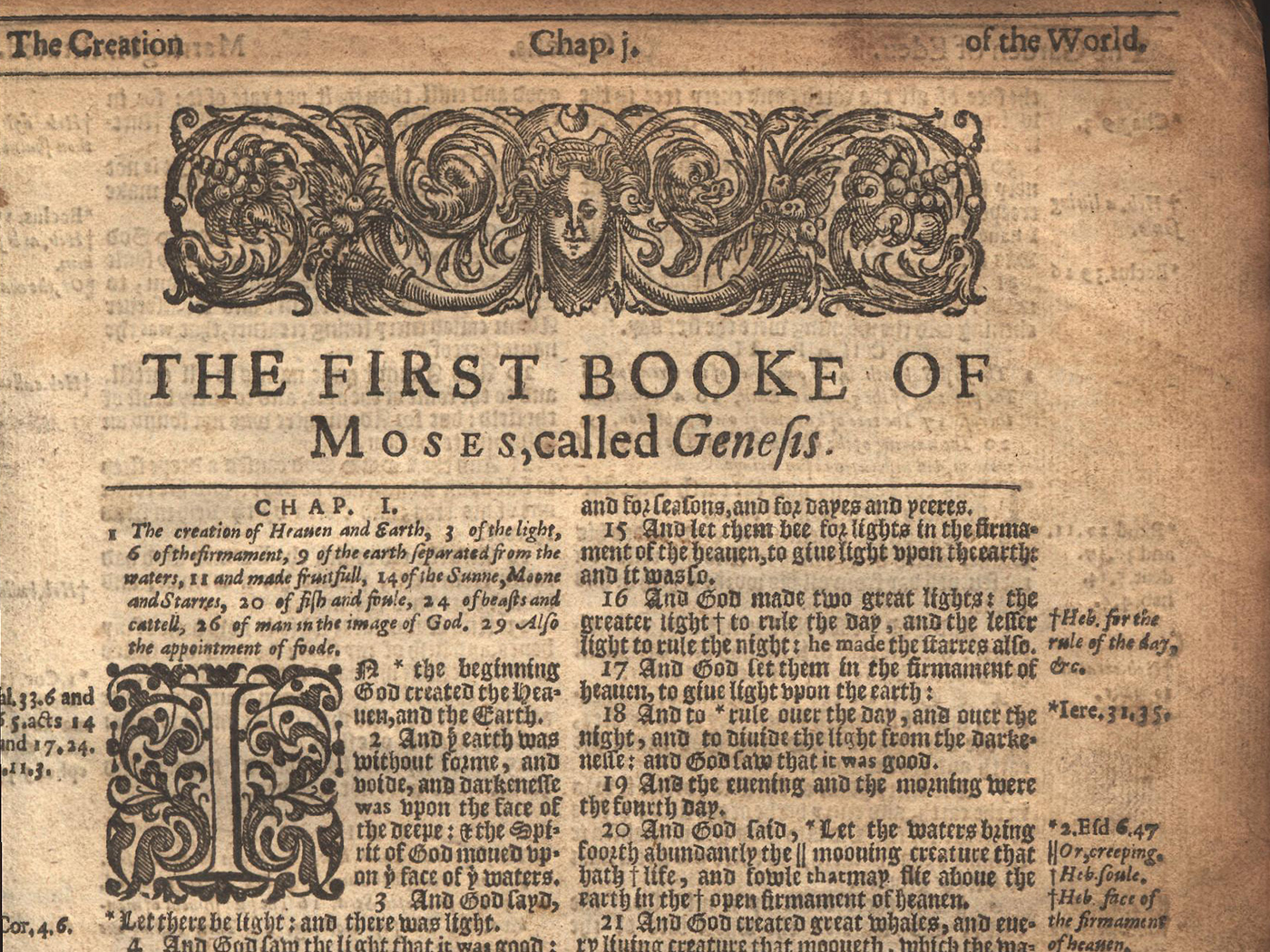
From Moses however we know that 6000 years ago the world did not exist. But of this no philosopher can in any way be persuaded….But all these [philosophers’] disputations, though subtle and clever, are not to the point in question.…Equally useless is it to consider Moses in the beginning of his [Genesis] history as speaking mystically or allegorically.…Moses spoke literally and plainly and neither allegorically nor figuratively; that is, he means that the world with all [original] creatures was created in six days as he himself expresses it.…Let us come at once to Moses as a far better teacher, whom we may more safely follow than we may philosophers, who dispute without the Word about things they do not understand.4
Ironically, those who opposed a six-day creation account during Luther’s lifetime decided that God should have created everything at once, in an instant, because He could. But God chose otherwise, and Luther affirmed that God told us (through Moses) how He chose to do it—in six normal days.5
The Lord Jesus Himself, almost 1,500 years before Luther’s ministry, warned the religious leaders of His day to take seriously the books of Moses, including Genesis:
How can you believe, who receive honor from one another, and do not seek the honor that comes from the only God? Do not think that I shall accuse you to the Father; there is one that accuses you—Moses, in whom you trust. For if you believed Moses, you would believe Me; for he wrote about Me. But if you do not believe his writings, how will you believe My words?6
It is no surprise that a serious reliance upon the God-given Scriptures for authoritative and relevant truth leads one to take seriously the Genesis account of the creation week. Here we stand.
References
- “On the 31st October 1517, at noon on the day preceding the festival [of All Saints], Luther, who had already made up his mind, walks boldly towards the [Wittenberg] church, to which a superstitious crowd of pilgrims was repairing, and posts upon the door ninety-five theses or propositions against the doctrine of indulgences. Neither the Elector, nor Staupitz, nor Spalatin, nor any even of his most intimate friends, had been made acquainted with [his] intentions.” Quoting J. H. Merle D’Aubigne. 2001. The History of the Reformation of the Sixteenth Century, vol. 1. Harrisonburg, VA: Sprinkle Publications, 269.
- Sears, B. 2010. The Life of Luther. Green Forest, AR: New Leaf Publishing/Attic Books, 449-451.
- Morris, H. M. The Just Shall Live by Faith. Days of Praise, September 14, 1996, citing Habakkuk 2:4, Romans 1:17, Hebrews 10:38, and Galatians 3:11.
- Luther, M. Luther on the Creation: A Critical and Devotional Commentary on Genesis. H. Cole, trans., J. N. Lenker, ed., 40-43. Posted on martinluthersermons.com.
- Ibid, 83 and 125.
- John 5:44-47.
* Dr. Johnson is the Associate Professor of Apologetics and Chief Academic Officer at the Institute for Creation Research.