Most people don’t think about the mental process of recognizing locations. We just take it for granted.
Any sort of complicated manmade device, like a modern cell phone or car, constantly monitors its spatial position. But what about living creatures—do they have a similar design feature? Scientists recently identified a type of brain cell that acts like an internal compass that puts human engineered systems to shame.1
Think about the importance of being able to recognize and process your location during the day—not just being able to find the bathroom down the hall or the coffee machine, but also being able to get home or to the grocery store after work. As it turns out, people who have damage to a certain part of their brain called the retrosplenial cortex, which functions as the brain’s inner compass, become easily disoriented and can’t readily navigate. Despite the importance of this brain region for daily life and to avoid getting lost, the neurons (specialized brain cells) and their circuits remain poorly studied.
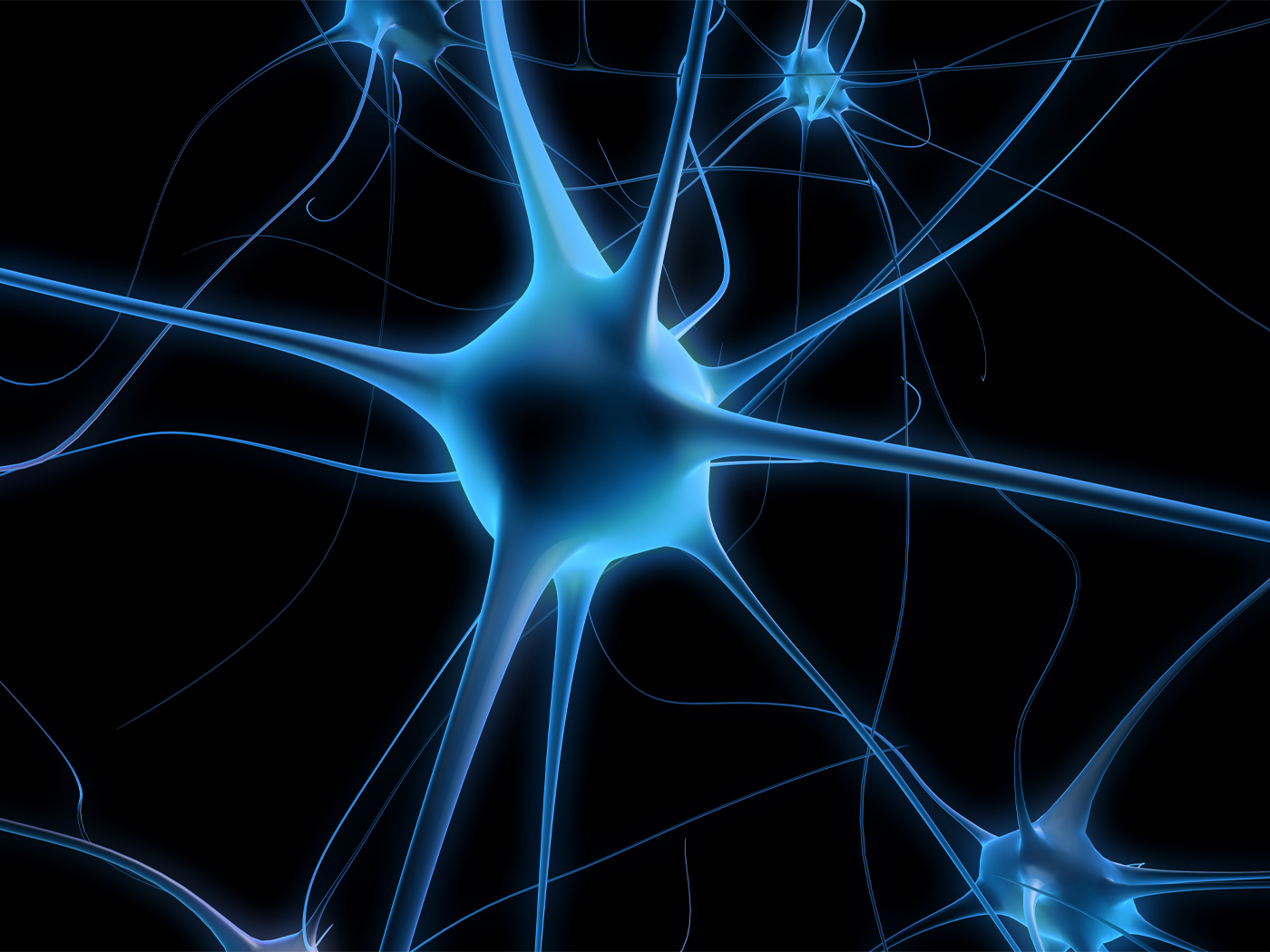
To figure out how this unique part of the brain works, scientists recorded electro-chemical signals from individual neurons in different parts of the mouse brain. By examining the various types of brain cells, they identified a unique neuron in the retrosplenial cortex. The specific signaling properties of this neuron were found to be ideally suited to encoding direction-related information over long durations of time acting much like a compass.
Omar Ahmed, the lead scientist for the study stated,
He went on to say, “You ideally need another kind of neuron—a neuron that can continuously encode your orientation over long durations even when your head is not moving.”
Many neurons in the brain slow down their signaling activity fairly quickly. In contrast, these newly characterized compass neurons are very persistent and fast. In other words, they are able to continue firing their signals at high rates for extended periods of time. Another unique feature of these neurons is their extreme sensitivity in that they need very little input to be activated. This combination of uniquely engineered traits makes these cells optimally suited to code and control continued directional properties so essential to humans and other creatures like the mice that were studied.
Shyam Sudhakar, another scientist on the project, further clarified the significance of the discovery when he stated, “It’s important for my brain to know when I change direction, but it’s not good if all my brain detects is change.”2 In other words, a compass always has to know which way north is in order to continuously function. That is exactly what these newly characterized rheobase neurons are able to provide. Thus, the lead author of the study Ahmed hypothesized, “This is probably why the vast majority of Alzheimer's patients suffer from spatial disorientation and get lost easily—because their retrosplenial cells are not working as they should.”
This new research is just one more example of a highly complex and divinely engineered system feature that provides overwhelming evidence for an Omnipotent Creator. Studies like this also show how creatures continuously track the environments around them using all-or-nothing mechanisms and systems that could not possibly have evolved bit-by-bit through chance random processes as claimed by evolutionists.3 This innate compass points directly to our mighty Creator God.
References
1. Brennan, E. K., S. Kumar, S. Izabela, J.-C. Tibin, T. Omar, J. Ahmed. 2020. Hyperexcitable Neurons Enable Precise and Persistent Information Encoding in the Superficial Retrosplenial Cortex. Cell Reports. 30: 1598-1612. DOI: 10.1016/j.celrep.2019.12.093
2. University of Michigan. 2020. Unique neuron computes like a compass. ScienceDaily. Posted on sciencedaily.com on February 4, 2020, accessed February 11, 2020.
3. Guliuzza, R. J., and P. B. Gaskill. 2018. Continuous environmental tracking: An engineering framework to understand adaptation and diversification. In Proceedings of the Eighth International Conference on Creationism, ed. J. H. Whitmore. Pittsburgh, Pennsylvania: Creation Science Fellowship, 158-184.
*Dr. Tomkins is Life Sciences Director at the Institute for Creation Research and earned his doctorate in genetics from Clemson University.