Scientists from the University of Arizona recently announced that what is now the Sahara desert was once wet and green and extended as far north as the Mediterranean Sea.1,2
The scientists examined chemical clues found within leaf waxes preserved in four marine sediment cores located off the northwestern African coast. Plants experience subtle changes in the chemical composition of their wax, depending upon the wetness or dryness of the climate. Because leaf wax washes into the oceans, it can be preserved in sediment cores extracted from the ocean floor. Hence, this team of researchers used wax chemical clues found within these cores to infer past climate conditions in the Sahara. The scientists estimated that past Saharan rainfall was ten times greater than today's between 5,000 and 11,000 years ago.1,2
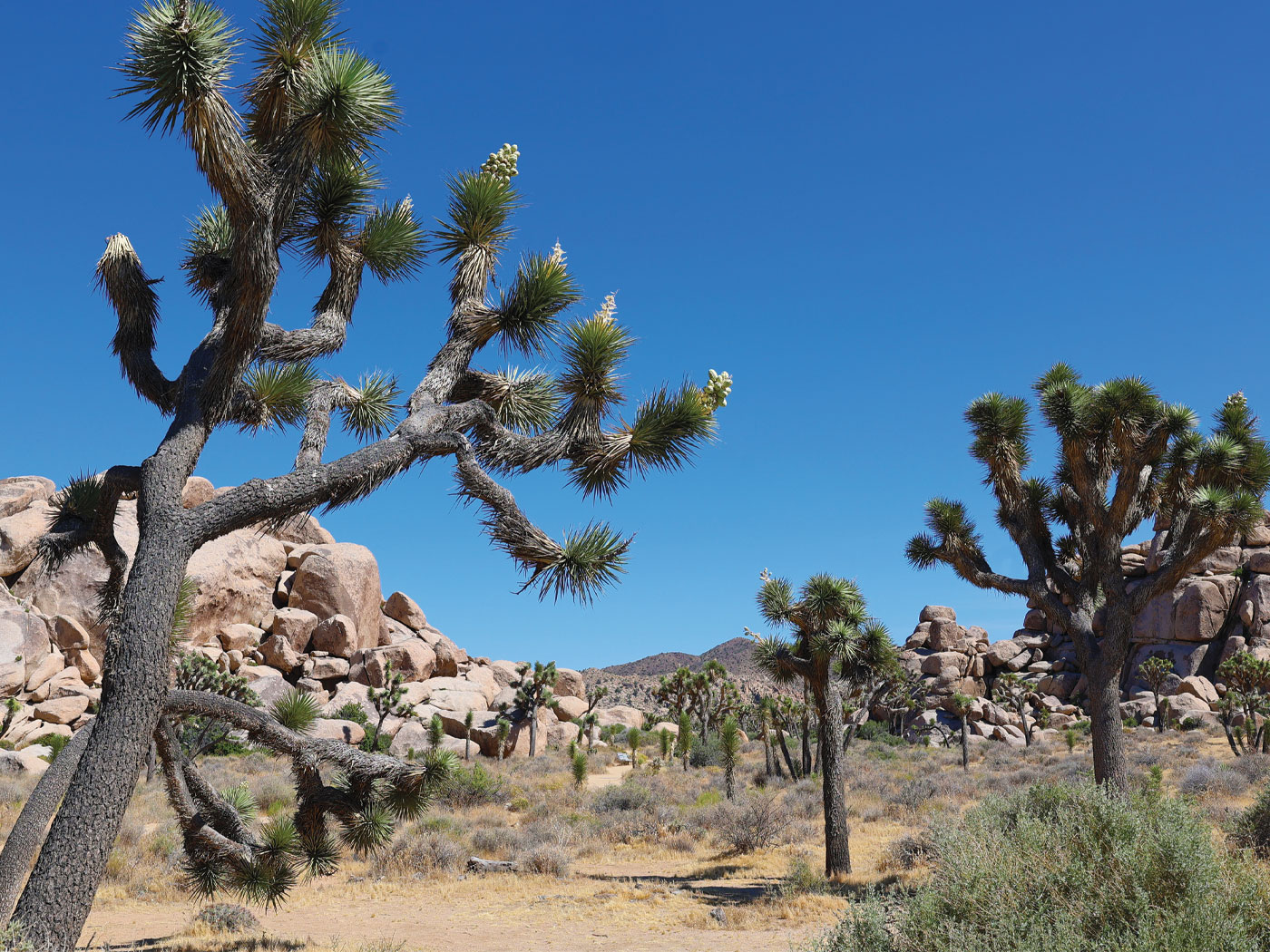
Biblical creationists don't accept these age estimates, which are higher than allowed by the Bible's short chronology and are based on doubtful uniformitarian assumptions. However, both geological and archaeological evidence indicates that the now-desolate Sahara was once characterized by lush vegetation. Satellite radar images have revealed the remains of past "megalakes" beneath the desert sands, as well as a "monumental" network of past rivers.3,4 Likewise, archaeologists have found abundant evidence of past human habitation, including rock art, tools, and pottery. Crocodile, hippopotamus, clam, and fish fossils also show that the Sahara was once much wetter than today.5
And it wasn't just the Sahara that received greater rainfall in the past. The American Southwest once contained large pluvial lakes. Utah's Great Salt Lake is a remnant of one of these.5 Likewise, the Bible testifies that at least some portions of the Middle East once received more rainfall and had more vegetation than today. Genesis describes the region near the Dead Sea as "well-watered everywhere . . . like the garden of the LORD, like the land of Egypt as you go toward Zoar" (Genesis 13:10). Likewise, the land of Canaan was described by the LORD Himself as "a land flowing with milk and honey" (Exodus 3:8).
Clearly, much of the world has dried out since the time of the patriarchs and the conquest of Canaan. Yet, this past climate change is difficult for secular scientists to explain. Some uniformitarian scientists claim the wet Green Sahara was caused by changes in Earth's orbital motions (the astronomical or Milankovitch theory of climate change), which caused a small increase in solar radiation some 9,000 years ago. This extra solar radiation supposedly warmed the continents, intensifying summer monsoons over Europe and Africa.6
But there are serious problems with attributing past climate change to astronomical motions.7 Furthermore, as pointed out on our website, one iconic argument for the astronomical theory has been invalid for a quarter century, although uniformitarian scientists seem unable or unwilling to acknowledge this.8
Interestingly, climate models were largely unable to reproduce the higher amount of past Saharan rainfall that the scientists inferred from their analysis of the sediment cores:
With some notable exceptions (40), climate model simulations do not predict these high rainfall rates, nor do they indicate that the Green Sahara extended as far north as 31° N . . . . Although in general the simulations with dynamic vegetation produced a greater increase in precipitation than their paired simulations without vegetation, dynamic vegetation was not a panacea. It is virtually certain (>99.5% probability) that rainfall rates across the Green Sahara as a whole were higher than the multimodel mean simulated changes in the PMIP [Paleoclimate Modeling Intercomparison Project] experiments, consistent with previous assessments based on pollen data (41,42).2 [parenthesis in original]
The authors concluded,
The systematically low simulated rainfall amounts suggest that there is a missing component to the forcings or the feedbacks involved.2
They suggested that this missing component was a changing amount of atmospheric dust, because the only computer simulation (out of 31 simulations) that yielded very high Saharan rainfall rates was one that involved both vegetation and dust feedbacks. But even this model failed to match the high inferred rainfall rates at higher latitudes.2 Furthermore, past studies yielded contradictory results. Some concluded that dust can enhance monsoons while others concluded that dust can suppress them!
However, models based on the Biblical history succeed where uniformitarian models fail. A creationist expects much greater rainfall during the post-Flood Ice Age. Rapid seafloor spreading and volcanic activity during the Genesis Flood would have significantly warmed the world's oceans. This would have greatly increased evaporation, putting much more moisture into the atmosphere. This increased moisture would have resulted in much more precipitation, in the form of snow, in the higher latitudes and on mountaintops, and rain at lower latitudes and elevations.9,10 Since it would have taken a long time for the oceans to cool, this increased rainfall would have affected the climate for hundreds of years after the Flood.
Generally speaking, computing atmospheric circulation during the post-Flood Ice Age is difficult, but it would not be surprising if areas that are very dry today received much greater rainfall at that time.5 Hence, the post-Flood Ice Age—part of the creation model—helps explain why the Sahara, the American Southwest, and the Middle East received much more rainfall in the not-too-distant past.
We can take two important lessons from this. First, the conclusion of increased Saharan rainfall in the recent past is in perfect agreement with the history recorded in Genesis, even though the ages uniformitarians assigned to this wet Sahara are off. Second, that such dramatic climate change—including an Ice Age and a wet Sahara—occurred in the recent past should help put current concerns over human-caused climate change into perspective.
References
- Jensen, M. N. Green Sahara's Ancient Rainfall Regime Revealed by Scientists. UA News. Posted on uanews.arizona.edu January 18, 2017, accessed January 23, 2017.
- Tierney, J. E., et al. 2017. Rainfall regimes of the Green Sahara. Science Advances. 3 (1): e1601503.
- Watson, T. One of the driest places on Earth, the Sahara Desert, once ran with water. USA Today. Posted on usatoday.com November 10, 2015, accessed January 23, 2017.
- Thomas, B. Genesis and a 'Wet' Sahara. Creation Science Update. Posted on ICR.org November 3, 2008, accessed January 23, 2017.
- Oard, M. J. 2006. Frozen in Time. Green Forest, AK: Master Books, 41-44, 83-85.
- Kutzbach, J. E. 1981. Monsoon Climate of the Early Holocene: Climate Experiment with the Earth's Orbital Parameters for 9000 Years Ago. Science. 214 (4516): 59-61.
- Oard, M. J. 2007. Astronomical troubles for the astronomical hypothesis of ice ages. Journal of Creation. 21 (3): 19-23.
- Hebert, J. 'Big Science' Celebrates Invalid Milankovitch Paper. Creation Science Update. Posted on ICR.org December 26, 2016, accessed January 23, 2017.
- Oard, M. J. 1990. An Ice Age Caused by the Genesis Flood. El Cajon, CA: Institute for Creation Research.
- Morris, J. D. 2009. The Ice Age: Causes and Consequences. Acts & Facts. 38 (8): 15.
*Dr. Hebert is Research Associate at the Institute for Creation Research and earned his Ph.D. in physics from the University of Texas at Dallas.
Article posted on February 23, 2017.