by Brian Thomas, M.S., and Jason Lisle, Ph.D. *
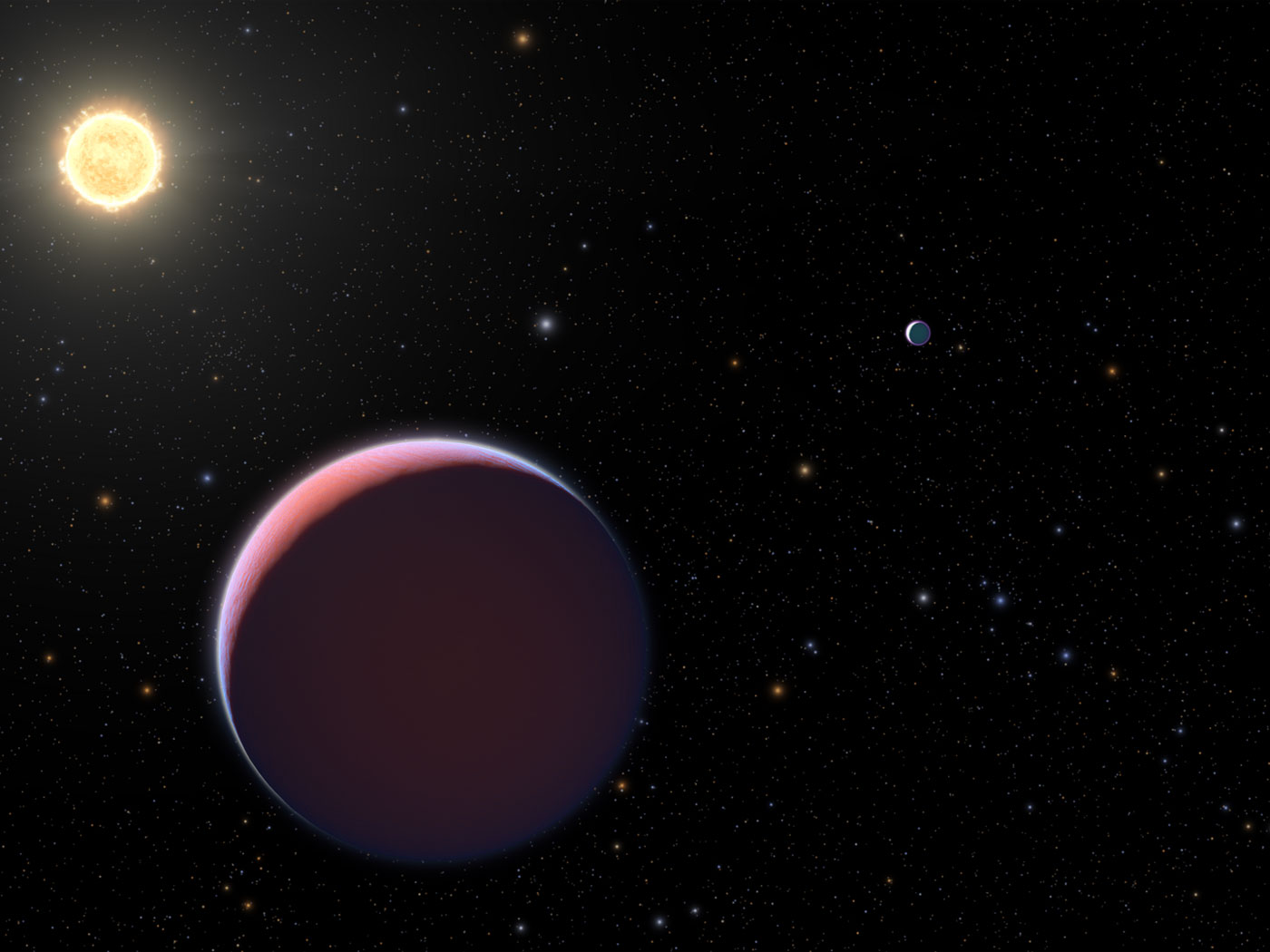
It's not a planet, nor a comet, but the faraway object named 2012 VP113 now joins Sedna as only the second member of what secularists term the "inner Oort cloud." First, can we really infer the existence of a whole cloud from merely two objects? Second, this "cloud" presents a mystery—these objects should not even be there. How could they have traveled there, and what do they really represent?
The two objects orbit the sun on highly eccentric tracks far beyond Neptune, the most distant of our eight planets. The reason they should not be there is, according to Nature, "These objects are in a no-man's-land between the giant planets and the Oort cloud where nothing in the known configuration of the modern-day Solar System could have emplaced them."1
The Oort cloud appears to come from naturalistic deductions about comets, not scientific observation. The logic goes something like this: The Solar system's comets are short-lived—only thousands of years old.2 Assuming those comets came from a natural rather than a supernatural source, secular astronomers have invoked a distant Oort cloud of icy objects that wait for rare gravitational effects to somehow "boot" them toward the Sun. This unobserved process is supposed to intermittently replenish the Solar System's limited and ever-diminishing comet supply.
Sedna and 2012 VP113 orbit far closer to the sun than the predicted inner radius of the Oort cloud. The predicted inner radius of the (inner) Oort cloud is about 2000 AU. Neither Sedna nor 2012 VP113 reaches half that distance, even at the furthest distance of their respective orbits.
Nature wrote, "2012 VP113 is the smoking gun for the existence of the inner Oort cloud," but is it reasonable to infer the existence of a massive cloud of trillions of icy objects at distances greater than 2000 AU on the basis of only two objects that orbit much closer than 1000 AU?
So, although astronomers talk of this Oort cloud as though it were real, they have found zero objects in that region of space. The two closer objects they did find present additional mysteries.
Nature wrote that they orbit at similar and unique angles relative to the plane of the Solar System. Therefore, future attempts to reconstruct how these two objects arrived "will need to explain this orbital structure," what pulled them into such distant orbits, and what led to such high orbital eccentricities.1
Secularists have speculated that gravitation from a now long-gone, but once-nearby, star might have done the trick, but they have not yet satisfied themselves with any realistic details. It's as though a person, not gravitational effects, placed these objects out there.
If all naturalistic options are exhausted, will astronomers consider a supernatural one?3 For example, perhaps a Creator placed 2012 VP113 and Sedna right where He wanted them to orbit—right where they would pose a challenge for nature-only origins stories.
References
- Schwamb, M. E. 2014. Solar System: Stranded in no-man's-land. Nature. 507 (7493): 437-439.
- For example, many hoped the recent comet Ison would be the brightly shining "comet of the century" as it approached Earth, but it vaporized when it neared the sun, and the big show never opened. See Lisle J. 2014. The Solar System: Asteroids and Comets. Acts & Facts. 43 (5): 12-15.
- Many have reached a similar conclusion when considering the language encoded on DNA. Since no reasonable option explaining how natural processes could invent a language presents itself, an intelligence outside nature is the best match. See Flew, A. and R. Varghese. 2007. There Is a God: How the World's Most Notorious Atheist Changed His Mind. New York: Harper One, 132.
Image Credit: S. S. Sheppard (CIS) & C. Trujillo (Gemini Obs.), NOAO. Adapted for use in accordance with federal copyright (fair use doctrine) law. Usage by ICR does not imply endorsement of copyright holders.
* Mr. Thomas is Science Writer at the Institute for Creation Research. Dr. Lisle is Director of Physical Sciences at the Institute for Creation Research and received his Ph.D. in astrophysics from the University of Colorado.
Article posted on May 9, 2014.