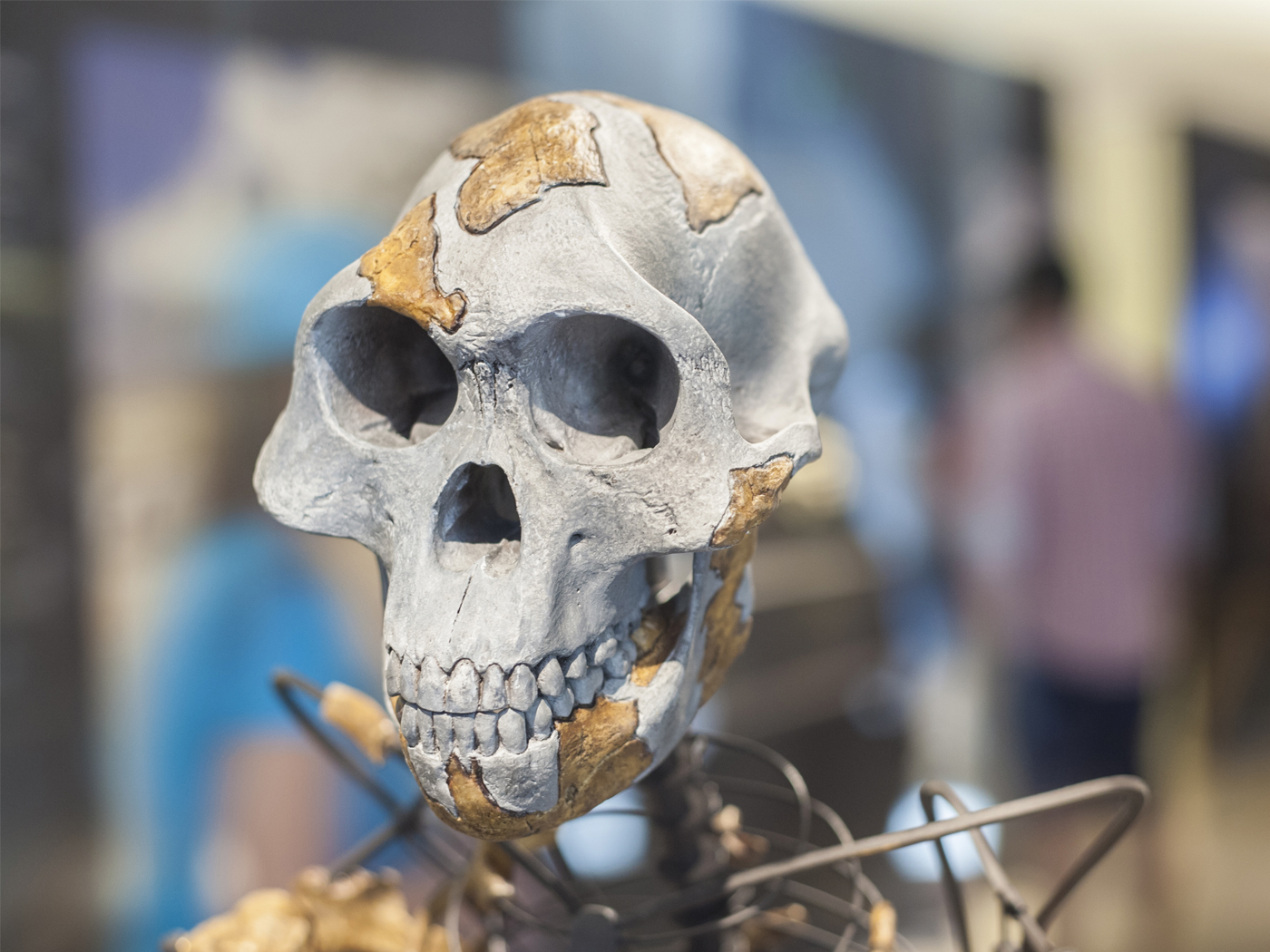
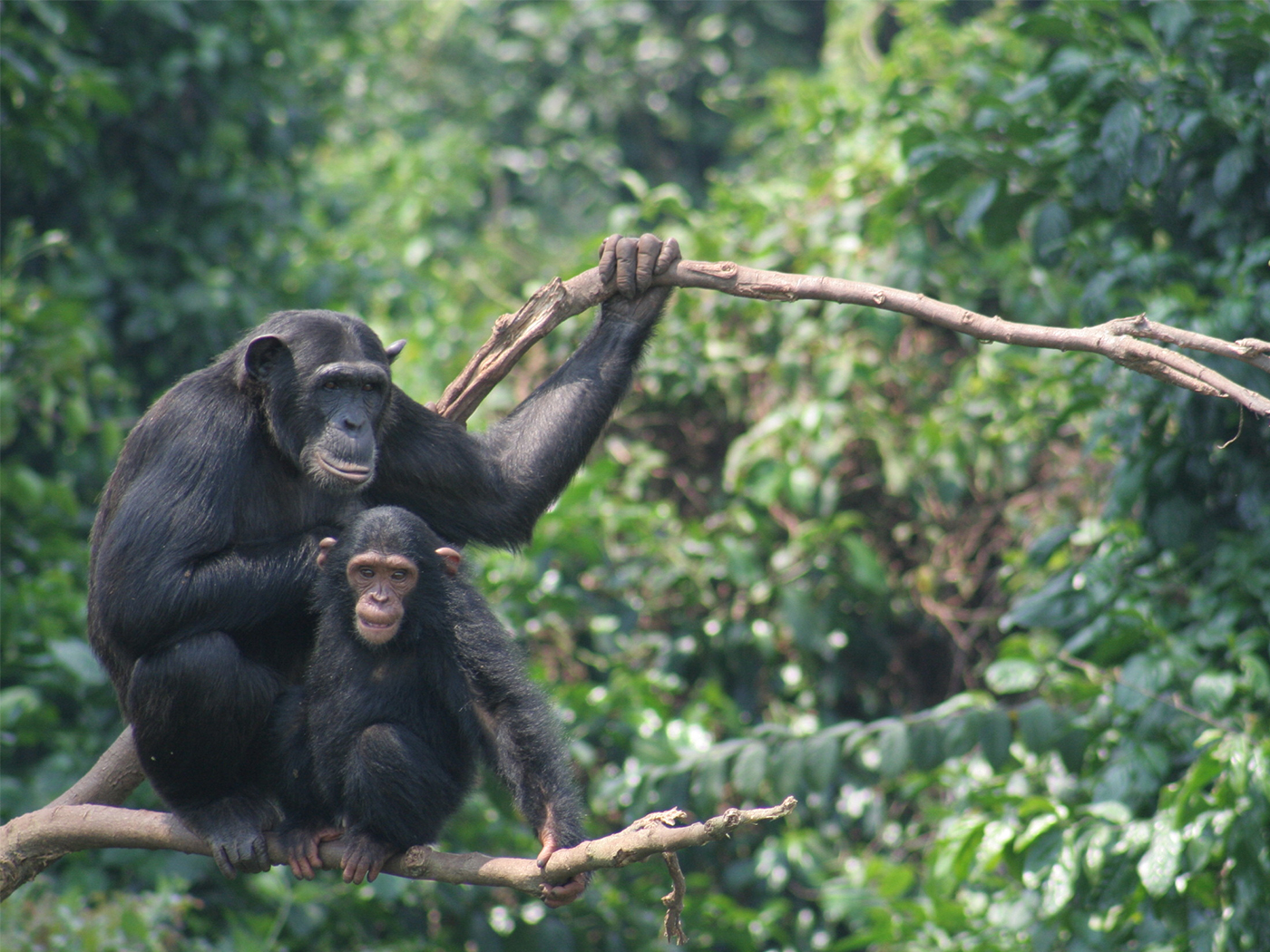
In May 2009, a remarkably well-preserved extinct primate, nicknamed "Ida," was hailed as one of the most important fossil finds ever. It had features that some interpreted as a link between two primate body forms. At the time, ICR News suggested that its evolutionary significance was far overblown, predicting that the scientific consensus would offer retractions. Those retractions came three months later, confirming that the fossil―called Darwinius―was really just an extinct lemur variety.1
In October, Ardipithecus, another extinct primate, was given wide coverage. Represented by a reconstructed female fossil dubbed "Ardi," it was described in the journal Science as a four-foot-tall, upright-walking ape that was significant to human evolution.2 Some experts not only doubted that the evidence pointed to upright walking, but they also saw strong evidence that it was, in fact, not a walker at all.3
Predictably, the claims that Ardipithecus walked upright are now under increased scrutiny. Scientific American stated that in contrast to promoters of Ardi’s upright walking ability, "many others in the field propose that some of these statements may be overblown. In fact, [William] Jungers [of Stony Brook University Medical Center] says, ’I think some of the things they said might have been for effect.’"4
In November, ICR reported that the key to Ardi’s significance to human evolution was her status as an upright walker, and that hinged on the angle of her hips.5 But given the poor condition of her meager hip bone fragments, as well as the amount of interpretation that the original authors admitted they used in the hip reconstruction (along with any interpretive license that they did not admit to), there is plenty of room for doubt that her hips were reconstructed accurately in their depiction of an upright-walking configuration. Confirming this, Jungers told Scientific American that this effort "requires a lot of guesswork."4
After having had time to review the evidence, Jungers said, "[Ardi] really doesn’t show any adaptations for bipedalism at all."4 And without bipedalism, or an upright walking structure, Ardi, along with the previously proclaimed "missing link" fossils Lucy and Ida, belongs exactly where a straightforward reading of Genesis would suggest―in the ranks of non-human animals that were each uniquely created within their own kinds.
References
- Specifically, "Ida is following the same well-worn chain of events. She has been promoted as a ’missing link’ with widespread media hype. After further study, however, this claim will be quietly rescinded." From Thomas, B. New Fossil Hype Fits Old Pattern. ICR News. Posted on icr.org May 27, 2009, accessed November 30, 2009.
- For example, "Ar. ramidus was already well-adapted to bipedality." See Lovejoy, C. O. 2009. Reexamining Human Origins in Light of Ardipithecus ramidus. Science. 326(5949): 74e1.
- Shreeve, J. Oldest Skeleton of Human Ancestor Found. National Geographic News. Posted on nationalgeographic.com October 1, 2009, accessed November 30, 2009.
- Harmon, K. How Humanlike was "Ardi"? Scientific American. Posted on scientificamerican.com November 19, 2009, accessed November 25, 2009.
- Thomas, B. Did Humans Evolve From ’Ardi’? Acts & Facts. 38 (11): 8-9.
Ardi image adapted from White, T. D. 2009. Ardipithecus ramidus and the Paleobiology of Early Hominids. Science. 326 (5949) 64, 75-86. (This image is used for non-profit educational presentation purposes only.)
* Mr. Thomas is Science Writer at the Institute for Creation Research.
Article posted on December 4, 2009.