Bumblebees got rhythm!
Rhythm is the “movement, fluctuation, or variation marked by the regular recurrence or natural flow of related elements.”1 People have the ability to dance and sing. Since grade school, we have been taught to recognize rhythm that underpins dance, speech, and music.
But zoologists have found that some birds and mammals can also perceive abstract rhythm (such as the ultrasonic clicks of bats). Scientists have further identified dances in fruit flies and honeybees, rhythmic flashes of lightning bugs, and many other examples.
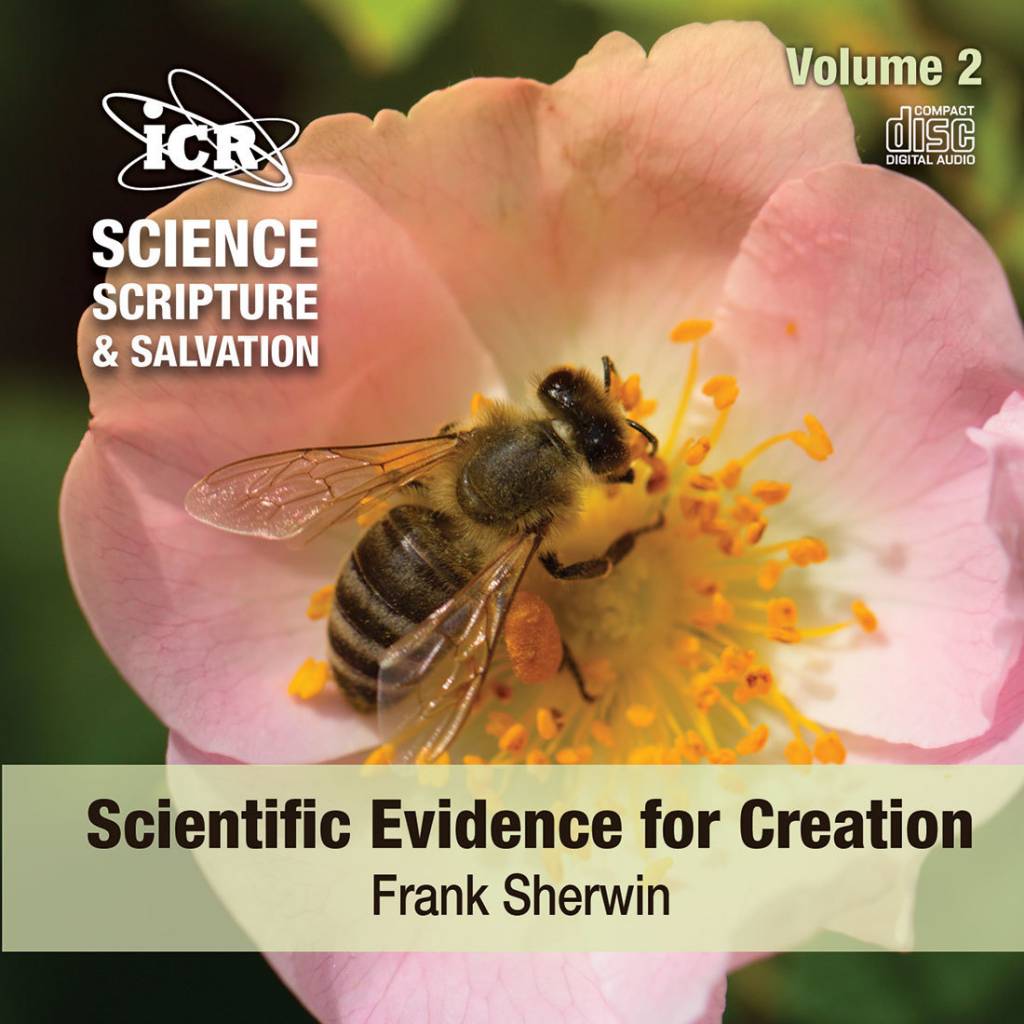
Now, it turns out that bumblebees also have this amazing ability. In the last few decades, these little insects have amazed entomologists with their incredible capacities, so this latest find is hardly surprising.2–4
Scientists from Macquarie University and Southern Medical University worked with labeled bumblebees to see if they could recognize rhythm. The researchers set up artificial flowers embedded with LEDs. Bees could find a sweet reward to eat from the flowers equipped with one certain flashing light pattern, while the other flowers with a different flashing pattern had something less tasty. Lead author Andrew Barron elaborated, “The only way bees could distinguish the patterns was by their rhythmic structure. In this way, we could train the bees to prefer one rhythmic pattern of flashes over another—for example, dot-dash-dot-dash (repeating) versus dot-dot-dash-dash (repeating).”5 The bees could even keep track of the beat of the flashes as they sped up and down.6
How did the bees learn such abstract rhythm awareness, considering this skill comes from a brain no larger than a sesame seed?5 Scientists suggest it’s not the number of nerve cells that give a creature its cognitive abilities, but instead how the neural circuits are wired together, and their modularity. These circuits must be arranged and connected in a very comprehensive and integrated manner in order to give the insect optimal function. This research once again contests the long-held idea that such capability—in this case, rhythm discernment—requires large brains.
Writing in Science, the scientists said the “findings suggest that an insect brain can encode and generalize arbitrary complex temporal patterns.”6 This sophistication belies the tired conventional explanation of chance, deep time, and naturalistic processes such as mutations.7 Nevertheless, they tried to save this explanation by appealing to “deep evolutionary roots.”6
But citing deep evolutionary roots is hardly a scientific explanation. Such complexity in bumblebees instead points back to God’s original creation in the beginning.
References
- Rhythm. Merriam-Webster. Posted on merriam-webster.com August 11, 2026.
- Sherwin, F. Bees Are Actually Really, Really Smart. Creation Science Update. Posted on ICR.org July 19, 2018.
- Thomas, B. Bees Solve Math Problems Faster Than Computers. Creation Science Update. Posted on ICR.org November 2, 2010.
- Sherwin, F. How Honeybees Make Accurate, Fast Decisions. Creation Science Update. Posted on ICR.org August 3, 2023.
- Barron, A. Bumblebees Can Perceive Rhythm, Despite Their Brains Being the Size of a Sesame Seed. Phys.org. Posted on phys.org April 3, 2026.
- Zeng, Z. et al. 2026. Flexible, Abstract Rhythm Perception in Bumble Bees. Science. 392 (6793): 93–95.
- Tomkins, J. P. Random Mutations Debunked by Secular Scientists. Creation Science Update. Posted on ICR.org February 3, 2022.
* Dr. Sherwin is a science news writer at the Institute for Creation Research. He earned an M.A. in invertebrate zoology from the University of Northern Colorado and received an honorary doctorate of science from Pensacola Christian College.