Wild imagination abounds in the new Jurassic World: Dominion movie. Even a fully-feathered dinosaur is shown swimming below the ice at one point. But this is similar to the outlandish ideas published in the world’s best paleontology journals. The movie portrays these fanciful ideas on the big screen. What you see is the prevailing view of dinosaurs in the conventional paleontological community.
The latest installment in the six-movie Jurassic Park/World series contains a lot of references to earlier movies. Many star characters from the first three movies play major roles, including Drs. Grant, Sattler, and Malcolm. And lots of new types of extinct animals are shown for the first time. Others are brought back for a final appearance, like Dilophosaurus from the first movie in the series.
Some of the new dinosaurs in the movie include Giganotosaurus and Therizinosaurus. Giganotosaurus fossils have been found in Argentina. They looked very similar to T. rex, only some were slightly larger and had three upper-arm claws and thinner, blade-like teeth.1 Therizinosaurus was an odd-looking two-legged dinosaur with large scissor-like claws, each up to 20 inches long, on its upper arms. Most paleontologists think these long-clawed dinosaurs were plant eaters. But of course, the movie portrays them as predators chasing humans around.
Many extinct non-dinosaurs also make an appearance in the film, most notably Dimetrodon, Mosasaurus, and Lystrosaurus. Dimetrodon and Lystrosaurus had sprawling legs like modern reptiles and are found in Flood rocks below the dinosaur layers. These two critters were likely buried shortly after Day 40 of the Flood in the Absaroka Megasequence.2 Mosasaurus, a swimming reptile, also makes an appearance.
Velociraptors are shown too large in all six of the movies—they were only about half the size. Also, it’s extremely doubtful that they could run as fast as a motor vehicle. But Hollywood movie magic runs wild on this one. Director Colin Trevorrow shows several velociraptors running as fast or faster than a truck. Other velociraptors are shown running as fast as a speeding motorcycle. In reality, it’s unlikely these dinosaurs could run even 25-30 mph. But that never stops the imagination of the movie business. Trevorrow even portrays a flying reptile (Quetzalcoatlus) catching up to and attacking an airplane.
The evolutionary agenda is not subtle in this film. A blatant mention of millions of years is included toward the end. And the idea that dinosaurs were warm-blooded, feathered, and related to birds is unashamedly portrayed throughout the film. One actor said, “Technically, birds are dinosaurs, genetically speaking.”
Befitting the bizarre beliefs of modern paleontology, the movie portrays dinosaurs in extremely cold climates. Many are shown trotting through snow. One dinosaur jumps into a frozen body of water and begins swimming beneath the ice—and this dinosaur was fully-feathered!3 This pushes an imaginary agenda that dinosaurs were warm-blooded,4 when the matter is not settled. On the contrary, compelling data from the skulls of several dinosaurs (including tyrannosaurs) suggest that dinosaurs were more likely cold-blooded, like reptiles living today.5,6 Their nasal passages were too narrow (matching crocodiles) to be warm-blooded, and they lack turbinates that 99% of warm-blooded animals possess.5,6 Cold-blooded land animals cannot thrive or remain active in cold temperatures because their body temperature would drop too low. Dinosaurs living in snow and cold is just fiction!
A second issue is the portrayal of feathers or proto-feathers (sometimes called “dino fuzz”) on several of the dinosaurs in the movie. This is a first for the series. Previously, the cost of computer animating feathers was too high. Then, the producers didn’t want to change the “look” of the dinosaurs from the first movie. But this time, they let their imaginations run wild. They show many dinosaurs with feathers, or feather-like structures, even Therizinosaurus. Even a large raptor is shown fully feathered. (They called this large raptor Pyroraptor, but it was far too big.) And what was even more unbelievable was that this was the feathered dinosaur that jumped into the icy cold water!
Conventional studies have been published that push back against feathered dinosaurs but are largely ignored by mainstream paleontologists.7-10 Alan Feduccia, a bird paleontologist, published several papers and books that show dinosaurs didn’t have dino fuzz or even feathers for that matter. He showed in a 2005 study that so-called “dino-fuzz” was merely the remains of thin collagen fibers leftover from partly decomposed skin. The research compared decomposing collagen skin fibers in modern reptiles, sharks, and dolphins with those of several dinosaurs.7
Furthermore, Feduccia debunked most of the supposed dinosaurs with feathers as merely boney-tailed birds with feathers, like Archaeopteryx, one of the earliest birds found Flood rocks.7-10 In fact, Archaeopteryx is found in Flood rocks well below the claimed “bird-like” dinosaurs. How can the descendants appear in the rock record before the claimed ancestors? Again, unchecked imagination is the key here. Mainstream paleontologists merely claim there was an “unknown ancestor” in rocks below both Archaeopteryx and the bird-like dinosaurs. The call these “ghost lineages.” The problem here is that these ghost fossils do not exist. It’s all in their imagination! The rocks tell us that true birds were buried in Flood rocks lower than the velociraptors. There was never any evolution from dinosaurs to birds!
Before we start wildly putting feathers on dinosaurs, we have to ask how could they preen their feathers?11 Birds spend a lot of time fixing their feathers, so they are functional—penguins included. Without a bird’s beak, how could the dinosaurs maintain them? Instead, modern paleontologists are so convinced that birds are dinosaurs and vice versa that they don’t even consider this problem. It’s like they haven’t thought it through.12-14
Because of their blind acceptance that dinosaurs are birds, it is no surprise how brainy the dinosaurs are portrayed in all six of the Jurassic Park/World movies. Here again, the imaginations of the paleontologists run wild and unchecked, portraying theropod dinosaurs (predators) as smart or smarter than dogs and maybe as smart as humans! But what do the facts show? Dinosaur brains were the shape of alligator or crocodile brains and about the size equivalent of scaled-up modern reptiles.1 They did not have the shape of bird brains, nor the relative brain volume. Admittedly, the velociraptor-style theropods had bigger brains than most dinosaurs, but not large enough to be a bird.
The overly enthusiastic imagination of conventional paleontology reigns supreme in Jurassic World: Dominion. These uninhibited and unchecked beliefs have failed the paleontological community in the past, however. Take the case of Archaeoraptor.15 Some prominent names in paleontology were fooled by this specimen. It was claimed to be a transitional fossil, half bird and half dinosaur. However, after publishing these claims in National Geographic, it had to be retracted as a fake.15 It was a bird and dinosaur glued together, and maybe even a third specimen too.
And more recently, in March 2020, Nature published an article claiming that they had found a tiny humming-bird-size dinosaur.16 But the “smallest dinosaur in history” turned out to be another big mistake. One month later, in April 2020, it was shown to be simply a lizard. The March cover story of Nature had to be retracted. It was neither a bird nor a dinosaur after all.17
How could such learned and respected paleontologists make these mistakes? When paleontologists let their imaginations run wild, it becomes fiction just like the movies. Sadly, that is what we see too often in today’s well-respected paleontological journals.
Our Lord Jesus Christ made birds on Day 5 of Creation Week and dinosaurs on Day 6. And they only reproduced after their kind. Dinosaurs didn’t evolve into birds. Birds have always been birds. And dinosaurs were always just dinosaurs.
References
1. Clarey, T. 2015. Dinosaurs: Marvels of God’s Design. Green Forest, AR: Master Books.
2. Clarey, T, 2020. Carved in Stone: Geological Evidence of the Worldwide Flood. Dallas, TX: Institute for Creation Research.
3. See the above still image from Jurassic World: Dominion that shows the Pyroraptor with feathers about to dive beneath the freezing ice to attack two movie characters (shown on the right of the image).
4. Warm-blooded is what most mammals and birds are today. They internally self-regulate their body temperature and generally have a high metabolism. Cold-blooded animals, like today’s reptiles use the external environment to raise and lower their body temperature. Lying in the sun to warm up for example. They generally have a low metabolism and require a lot less food compared to warm-blooded animals.
5. Clarey, T. 2015. Dinosaurs Designed Cold-Blooded. Acts & Facts. 45(1).
6. Tomkins, J.P. and T. Clarey. 2019. Dinosaurs Had Reptilian Metabolic Adaptation. Acts & Facts. 48 (12).
7. Feduccia, A., T. Lingham-Soliar, and J. R. Hinchliffe. 2005. Do Feathered Dinosaurs Exist? Testing the Hypothesis on Neontological and Paleontological Evidence. Journal of Morphology. 266 (2): 125-166.
8. Czerkas, S. A. and A. Feduccia. 2014. Jurassic archosaur is a non-dinosaurian bird. Journal of Ornithology. 155 (4): 841-851.
9. Feduccia, A. Romancing the Birds and Dinosaurs: Forays in Postmodern Paleontology. Irvine, CA: Brown Walker Press.
10. Feduccia, A. Riddle of the Feathered Dragons: Hidden Birds of China. New Haven, CT: Yale University Press.
11. Sherwin, F. Another Feathered Dinosaur Tale. Creation Science Update. Posted on ICR.org December 10, 2016, accessed June 13, 2022.
12. Clarey, T. 2016. Dinosaurs Designed Without Feathers. Acts & Facts. 45(3).
13. Thomas, B. 2017. New Doubts about Dinosaur Feathers. Creation Science Update. Posted on ICR.org June 15, 2017, accessed June 10, 2022.
14. Thomas, B. 2009. Fossil Fibers Befuddle Dinosaur Evolution. Creation Science Update. Posted on ICR.org March 312, 2009, accessed June 10, 2022.
15. Austin, S.A. 2000. Archaeoraptor: Feathered Dinosaur from National Geographic Doesn't Fly. Acts & Facts. 29(3).
16. Xing, L., O’Connor, J.K., Schmitz, L. et al. 2020. Hummingbird-sized dinosaur from the Cretaceous period of Myanmar. Nature. 579: 245–249.
17. Xing, L., O’Connor, J.K., Schmitz, L. et al. 2020. Retraction Note: Hummingbird-sized dinosaur from the Cretaceous period of Myanmar. Nature. 584: 652.
Stage Image: Footage still from Jurassic World: Dominion
Stage Image credit: Copyright © Universal Studios and Amblin Entertainment. 2022. Used in accordance with federal copyright (fair use doctrine) law. Usage by ICR does not imply endorsement of copyright holder.
*Dr. Clarey is Research Associate at the Institute for Creation Research and earned his Ph.D. in geology from Western Michigan University.
Imaginary Dinosaur Science Runs Wild in Jurassic World: Dominion
More Men and Dinosaurs Coexisted
Desperate Dinosaurs Cannibalized During Global Flood
Scientists recently discovered evidence that large theropods were possibly guilty of cannibalism.1
The new study, published in PLOS ONE,...
Possible Human Artifact Found in Coal
A resident of Vladivostok, which is sandwiched between China, North Korea, and the Sea of Japan, was adding ordinary coal to a fire when he noticed...
A Real Jurassic World?
The Jurassic World movie, though thrilling to watch, comes packed with fictional ideas like de-extinction, designer creatures, and iron somehow preserving...
More Creation Science Update

The Lord Jesus: The Gift of Christmas
“Therefore God also has highly exalted Him and given Him the name which is above every name, that at the name of Jesus every knee should bow,...
Tiny Worms with an Ability to Suspend Life
God has designed some creatures with an amazing ability to stop or slow down their metabolism (life processes) when encountering challenging conditions.
This...
CET or Evolutionary Trick?
Did you know that about 50% of the oxygen in the air you breathe comes from plankton in our oceans? Specifically, microplankton is made up of tiny organisms...
The Latest
Brainy Bees Solve Pollen Problem
The uncanny abilities of the honeybee cause entomologists to shake their heads in wonder.1,2
Scientists have long known that honeybees...

October Wallpaper
"Be anxious for nothing, but in everything by prayer and supplication, with thanksgiving, let your requests be made known to God; and the peace...
Possible Ark Site Has Mainstream Media Hopping
An organization named Noah’s Ark Scans is investigating a site called Durupinar, almost 20 miles from Mount Ararat in Turkey. Could it contain...
ANNOUNCEMENTS
Heroes of Creation Science: Henry M. Morris
“The creation/evolution issue is, in a very real sense, the most fundamental issue of all.” —Henry M. Morris
Many people believe the...

Creation Kids: Fungi
Hi, kids! We created a special Acts & Facts page just for you! Have fun doing the activities while learning about the wonderful world...
APOLOGETICS
What is True and False?
by Patrick C . Marks, D. Min., and Brian Thomas, Ph.D.*
In the first article of this series, we explained that truth—that which matches reality—is...
The Cambrian Layer: Explosion or Burial?
The lowest sedimentary layer, rich in hard-shelled fossils, is known as the Cambrian record. Beneath it is the Precambrian, which contains far fewer...
My Sheep Hear My Voice
Young people today can access more information in a matter of days than many people could acquire in an entire lifetime just a century ago. Smartphones,...
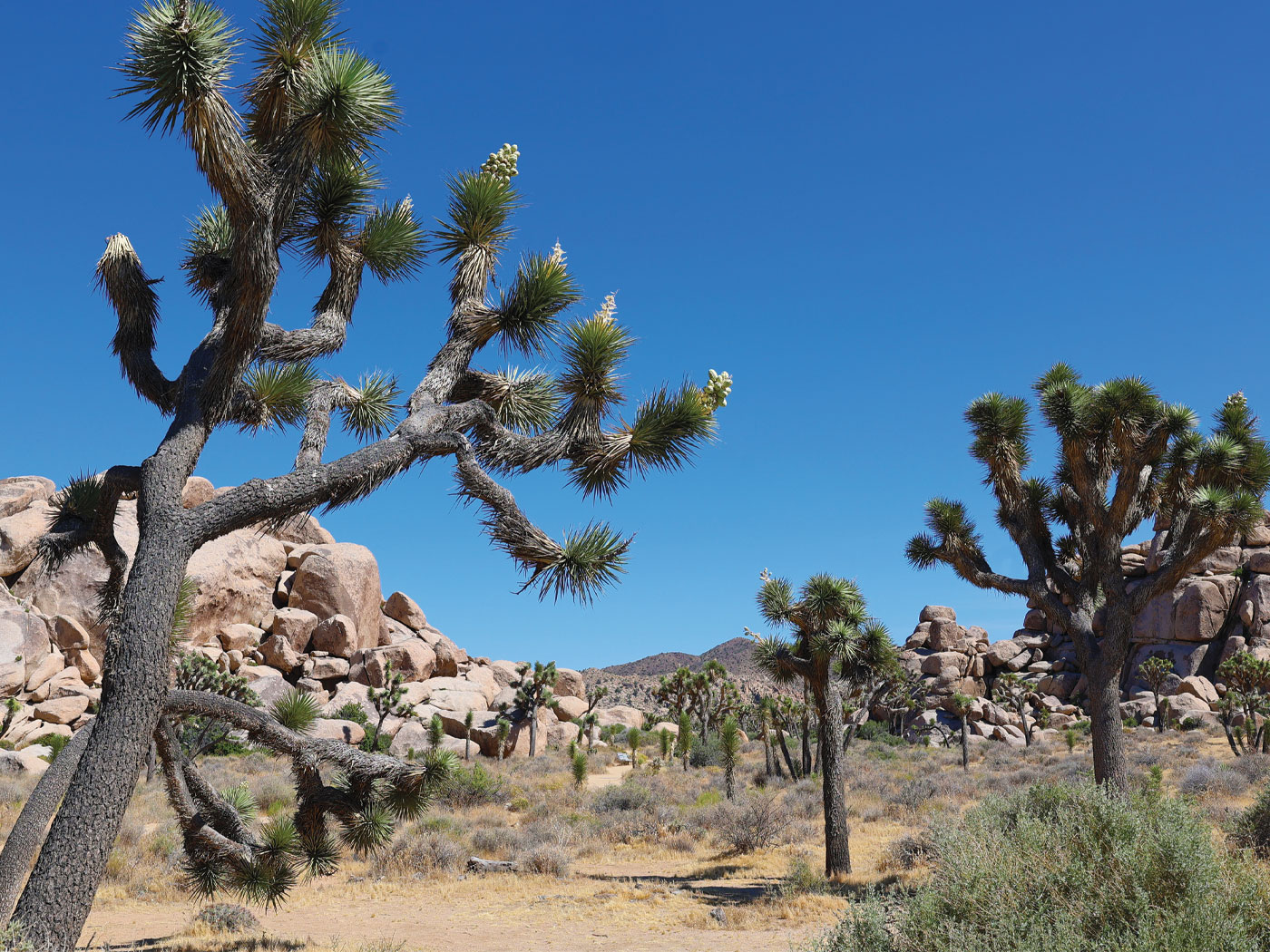
The Land of Truffula Trees
Deserts are often viewed as barren wastelands, yet they boast some of the most captivating organisms on Earth. You have to be unusual to live in a desert,...
ANNOUNCEMENTS
New Novel: The Third Heaven
A visionary plays God by offering mankind the final step in human evolution: the creation of perfectly fabricated transhuman minds and bodies designed...
Shop Related Products