“And not only so, but we also joy in God through our Lord Jesus Christ, by whom we have now received the atonement.” (Romans 5:11)
The Greek word for “atonement” in this verse is kátallage, which everywhere else (some 10 times, either this word or its related forms) is translated “reconciliation” (or “reconciled” or “reconciling”). The connotation is that of full restoration to full fellowship after long enmity and alienation.
The Hebrew word for “atonement” (kaphar, “covering”) occurs some 80 times in the Old Testament, over half of them in Leviticus. It normally referred to the “covering” of one’s sins by the shed blood of an innocent (and blemish-free) animal sacrifice.
Although this could provide some comfort to the sinner, there was little to be joyful about, since the covering was only temporary and the sins were still there. When Christ came, however, He became “the Lamb of God, which taketh away the sin of the world” (John 1:29). He “put away sin by the sacrifice of himself” (Hebrews 9:26).
Consequently, “atonement” (in the sense of a temporary covering) is never mentioned at all in the New Testament. Instead, we have been fully “reconciled to God by the death of his Son” (Romans 5:10). Thus, our text is really saying that we have real joy in God through Christ, “by whom we have now received the reconciliation!”
Our fellowship with our heavenly Father has been fully restored by the wonderful gift of eternal salvation through the work of Christ, “who was delivered for our offences, and was raised again for our justification” (Romans 4:25). And as we rejoice in the Lord, we must remember, too, that He “hath given to us the ministry of reconciliation,” so that we are “ambassadors for Christ,” beseeching others also to “be ye reconciled to God” (2 Corinthians 5:18, 20). HMM
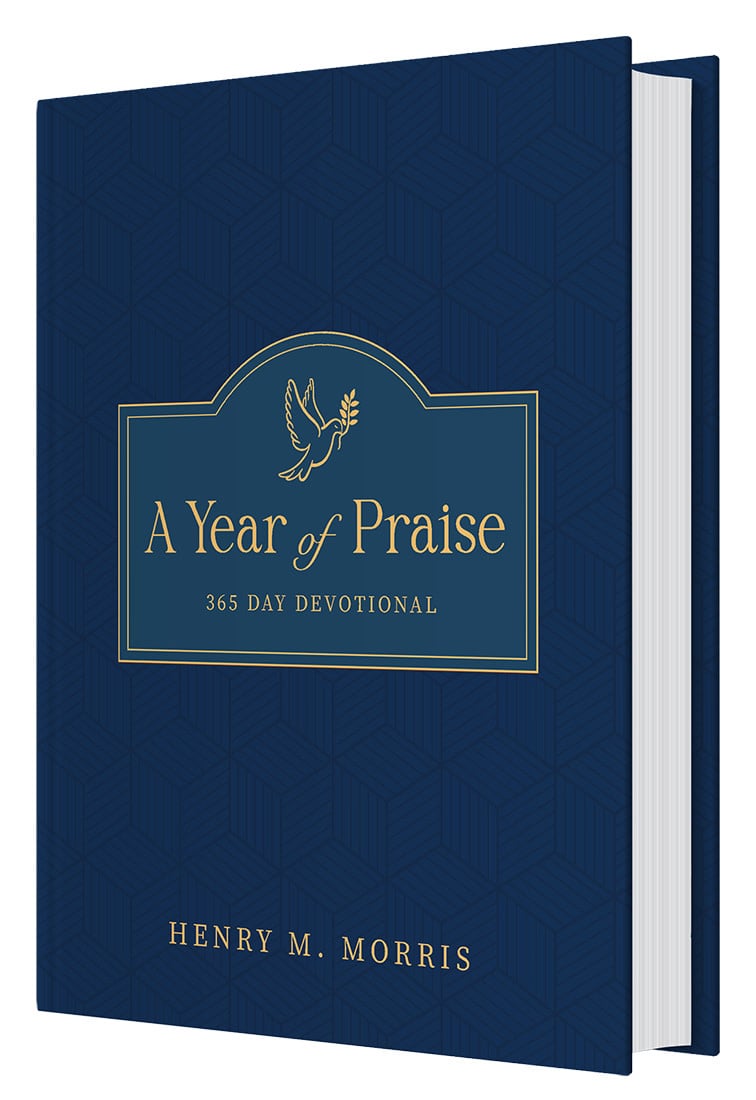
 Days of Praise Podcast is a podcast based on the Institute for Creation Research quarterly print devotional, Days of Praise. Start your day with devotional readings written by Dr. Henry Morris, Dr. Henry Morris III, Dr. John Morris, and others to strengthen and encourage you in your Christian faith.