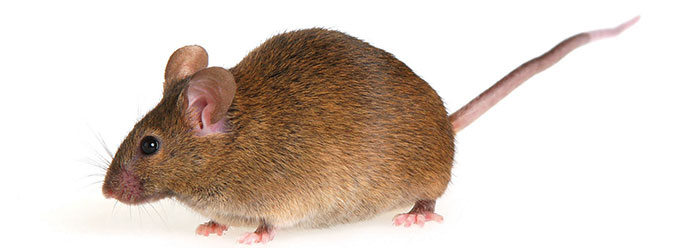
Evolutionists claim rodents evolved from an unknown ancestor 60 million years ago. But when fossils are found of these placental mammals, they are always 100% rodents.1 They never show a transition from non-rodents. The evidence evolutionists use to support their contention is flimsy at best, and even they acknowledge the significant challenges in tracing the rodent family tree.
It is so uncertain where they came from that experts still dispute whether the South American rodents are more closely related to African or North American species.2
If rodents evolved from evolutionary ancestors, clear evolutionary (phylogenetic) relationships should exist between rodent groups. But secular scientists’ findings are inconclusive.
Although intensively studied, the phylogenetic relationships between the different groups of rodents have been a matter of debate for over 150 years.3
The key morphological feature evolutionists use to recognize and group rodents with other creatures is their teeth (dentition). But there are serious problems with this approach.
There is clearly no one-to-one relationship between individual cusps or other features on a tooth crown and genes….Dental features may be highly correlated, and homoplasy [similar structures] is likely to be rampant.4
In other words, tooth structure doesn’t necessarily reflect genetic history. Ungar believes rodents could have individually evolved similar traits in their teeth, an idea known as convergence. If this were true, it would make tracing their family tree even more difficult because similar dentition wouldn’t indicate an evolutionary relationship.
When it comes to the evolution of African murid rodents, the confusion continues.
The high level of morphological convergence is confirmed here and a new morphological phylogenetic analysis based upon tooth cusp characters provides an extremely unresolved phylogeny.5
Evolutionists use the molecular clock hypothesis to determine the rodent tree of life. They compare DNA sequences from two living species, determine the differences, and then calibrate the whole dataset with hypothetical deep evolutionary time. The degree of molecular difference between the two species supposedly gives an estimated time of divergence, the point at which the two creatures split off from the same branch of the evolutionary tree. But for all animal groups—including rodents—the molecular clock6 and fossil evidence (paleontology) do not agree.
“Paleontology and molecular clocks have a long, uneasy relationship,” said Peter Wilf, a paleobotanist and professor of geoscience, Penn State.7
The virtual absence of Miocene sigmodontines [the world’s second-most varied subfamily of rodents] in the South American fossil record contradicts molecular dating results.8
And what about everyone’s favorite rodents, the Old World rats and mice (subfamily Murinae)? What was their origin? In the past, evolutionists suggested a creature called Progonomys was the ancestor of mice, but
Currently, there is no evidence that supports Progonomys as the most recent common ancestral stock of extant Murinae (Phloeomyini included).9
Evolutionists thought a creature called Karnimata was an ancestor of rats, but secular zoologists suggest that “Karnimata includes specimens from different species or genera.”10
When it comes to rodents, evolutionists conclude that “reconstruction of phylogenetic trees is limited by the phenomenon of convergence.”11 They believe that creatures from different branches of the evolutionary tree evolved similar traits independently, making it hard to determine which creatures are directly related and which just happen to share similar traits. Creationists don’t have to confront the entanglement and confusion of evolutionary trees when they believe Genesis as it is written: God made land animals according to their kind on the sixth day of the creation week.
Two evolutionary rodent authorities recently exclaimed, “Indeed, from a quick look at the fossil record, it is easy to get the impression that rodents have always been rodents.”12 Whether it’s a quick look or an in-depth examination, creationists heartily agree.
References
- Sherwin, F. 2012. Big or Small—Rodents Have Always Been Rodents. Acts & Facts. 41 (7): 17.
- Ridley, M. 2004. Evolution, 3rd ed. Malden, MA: Blackwell Publishing, 513.
- Hautier, L., P. G. Cox, and R. Lebrun. 2015. Grades and clades among the rodents: the promise of geometric morphometrics. In Evolution of the Rodents. P. G. Cox and L. Hautier, eds. Cambridge, UK: Cambridge University Press, 277.
- Ungar, P. S. 2010. Mammal Teeth: Origin, Evolution, and Diversity. Baltimore, MD: Johns Hopkins University Press, 69.
- Denys, C. and A. Winkler, Advances in integrative taxonomy and evolution of African murid rodents: how morphological trees hide the molecular forest, Evolution of the Rodents, 210.
- Douzery, E. J. et al. 2003. Local molecular clocks in three nuclear genes: divergence times for rodents and other mammals and incompatibility among fossil calibrations. Journal of Molecular Evolution. 57: S201.
- Messer, A. E. Turn back the molecular clock, say Argentina’s plant fossils. Penn State News. Posted on news.psu.edu December 2, 2014, accessed February 2, 2016.
- Fabre, P.H., L. Hautier, and E. J. P. Douzery, A synopsis of rodent molecular phylogenetics, systematics and biogeography, Evolution of the Rodents, 55.
- Ibid, 51.
- Denys and Winkler, Evolution of the Rodents, 197.
- Hautier, Cox, and Lebrun, Evolution of the Rodents, 293.
- Hautier, L. and P. G. Cox, Rodentia: a model order?, Evolution of the Rodents, 4.
* Mr. Sherwin is Research Associate, Senior Lecturer, and Science Writer at the Institute for Creation Research.