This will be written for the generation to come, That a people yet to be created may praise the LORD. (Psalm 102:18)
Shakespeare’s Hamlet considered the grave question of whether to end his earthly existence with the famous words “to be, or not to be.” More basic is the issue of God’s sovereign choice to create us “to be” in the first place.
If God had not chosen to make us as His creatures, we couldn’t think, reflect, or ask any questions. Thankfully God chose otherwise and uniquely created each of us.1 Yet how much do we really enjoy knowing and appreciating God as our personal Creator?
Origins matter.1 Over 150 years ago Darwin’s “natural selection” theory usurped Genesis truth, and the ubiquitous influences of evolutionary mythology have since distracted many from valuing God as their magnificent and multi-generational Creator.2
Does Genesis guide your thinking about your personal origins, including your own family history? How was God working prior to and when He biogenetically knit you together using nuclear DNA and mitochondrial DNA blueprints? Indubitably God deserves praise for His authorship of our vast genealogical heritages (Psalm 139).
In so many details, beyond the in-the-womb procreation of our physical bodies, we owe gratitude to God for our lives (Romans 8:28). Historical events and geographical realities are ingredients that God carefully and continuously blends to make us exactly who we are.1,2
God providentially plans and engineers the details of life that lead to genealogical relationships. God twice used agricultural conditions to graft Moab’s Ruth into the Jewish family of Naomi, so that Ruth ultimately met and married Naomi’s kinsman Boaz, who became Ruth’s kinsman-redeemer (Ruth 1:1, 6). And God has used family history to fulfill biblical prophecy.3
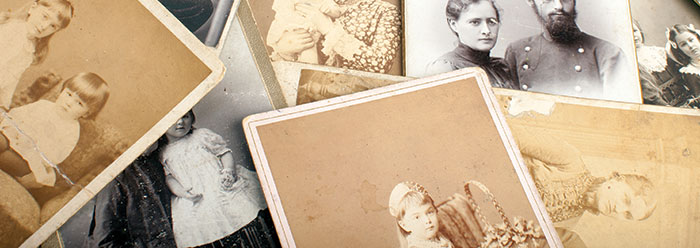
The value of family history, if appreciated from a Genesis perspective, is truly priceless. It should be learned, treasured, and transferred as a testimony to future generations (Psalm 102:18; Proverbs 13:22a; Daniel 5:20-23).
Since the creation revival began more than 50 years ago, the creation science community has rightly emphasized origins science in general.1 Tragically, however—for at least 200 years and due largely to secularized origins science—many creation scientists have virtually ignored forensic science-qualified study of biogenetic family history, a specialized origins science applying forensic science methodology principles.2,3
Anti-Genesis attitudes have sabotaged appreciation for God’s providential workings in our multi-generational family histories. Lamentably, God’s role as our Creator—at the personal level—has often been denied, dismissed, and/or discounted by the many voices of evolutionary thinking.1,2 No wonder today’s Christians, generally speaking, live at a “poverty level” when it comes to knowing and valuing their own family histories.
Some think Mormons have a monopoly on appreciating family history. Others, ignoring forensic science’s role in clarifying biogenetic family history, think that family history is irrelevant to origins science.2,3 Both assumptions miss the mark.
It is each Christian’s duty to appreciate God’s creatorship at a personal level. Doing so includes learning and valuing personal family history because God’s creative and praiseworthy providences determine whom each one of us is “to be, or not to be.”
References
- See Johnson, J. J. S. 2013. Only Biblical Creation Proves God Loves You Personally. In Creation Basics & Beyond: An In-depth Look at Science, Origins, and Evolution. Dallas, TX: Institute for Creation Research, 97-102.
- Biogenetic family history can and should be a subject of scientific investigation and analysis, assuming proper assessment of biogenetic data by forensic evidence standards, within a biblical framework of Genesis-informed family history. For analysis, see James J. S. Johnson’s Biogenetic Family History, an Under-Appreciated Creation Science, presented at the Creation Research Society Conference, Petersburg, Kentucky, August 9, 2014; 41 pages. This is likewise true for Genesis-based family history education (Joshua 4:6).
- See Genesis 49:1-4, 19, analyzed in Johnson, J. J. S. 2014. How the Moabite Stone Corroborates a Prophecy in Genesis 49. Bible and Spade. 27 (3): 68-74. Biblical archaeology, like family history, is a forensic science by which God deserves to be honored.
* Dr. Johnson is Associate Professor of Apologetics and Chief Academic Officer at the Institute for Creation Research.