Evolutionists believe that the ancient ancestor of modern humans arose over 450 million years ago from sharks that had a cartilaginous skeletal system (a class called Chondrichthyes, or cartilaginous fishes).
Over long periods of time, sharks supposedly evolved into fish that had a bony skeleton (a group called Osteichthyes, or bony fish). As the mythical story continues, fish evolved into vertebrate land animals, ultimately resulting in various types of mammals, including humans.1 The key problem with this whole fanciful tale is that discoveries in modern genomics completely contradict it. In fact, several recent research reports show that alleged ancient shark genes and genomic features are more similar to mammals than they are to bony fish.
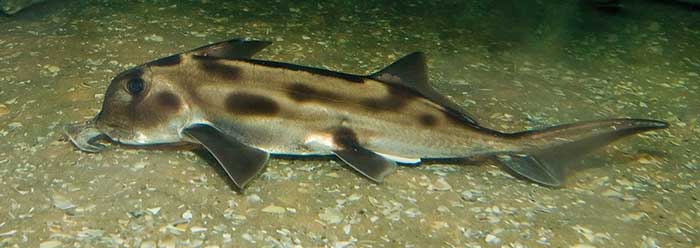
The first big shock came this year when a detailed report on the elephant shark genome was published in Nature.2 This particular shark was targeted for full-scale DNA sequencing because it was thought to represent one of the most ancient creatures (like some kind of living fossil) that existed at the beginning of jawed-vertebrate evolution that supposedly led to the evolution of bony fishes. However, much to the surprise of the researchers, hundreds of protein-coding genes that are found in both the elephant shark and vertebrate land animals were completely missing in fish. Did evolution stick all these genes in its back pocket for millions of years only to pull them out again later right when they were needed?
Not only was this evolution-destroying anomaly observed for protein-coding genes, but also for hundreds of microRNA genes that encode small RNA molecules that regulate gene expression. These same trends were also observed for hundreds of regulatory sequences in the genome that also control the expression of genes. In addition, many of these genes and genome features not only went missing in bony fish and then reappeared later in vertebrate land animals, but they appeared suddenly in sharks with no previous evolutionary history in creatures that were supposedly the precursors to sharks.
The next big surprise came when a research group specifically focused on a family of protein-coding sequences in elephant sharks called Runx genes that are key regulators of skeletal and neural development.3 If evolution were true, wouldn’t these important genes align with the mythical paradigm? Once again, the data utterly conflicted with the standard evolutionary story. In fact, much to the chagrin of the investigators, the Runx genes of the elephant shark were more similar in their structure to that of humans than of bony fish. Compared to fish, the structure of the Runx genes were totally rearranged. In addition, the synteny (or “gene neighborhoods”) surrounding the Runx genes in elephant sharks were more similar to humans and other land animals than to bony fishes. Did evolution mix up these Runx genes in fish and the other genes that surround them and then put everything back together in humans (similar to the sharks’ genes) millions of years later?
Another interesting aspect of these studies is that the researchers also found genomic features and genes that are unique to elephant sharks. They were not found in any other creature and appear suddenly and fully functional in the elephant shark.
So what sort of scientific model better predicts these types of research discoveries? Scientific observations reveal the genome to be a mosaic of incredible complexity, with certain design themes repeated at varying levels while other themes are unique. Clearly the data being uncovered in the genomes of Earth’s diverse creatures exhibit the uniqueness of special creation and utterly defy the predicted patterns of naturalistic evolution. Again and again nature points to the Creator.
References
- Benton, M. J. and P. C. Donoghue. 2007. Paleontological Evidence to Date the Tree of Life. Molecular Biology and Evolution. 24 (1): 26-53.
- Venkatesh, B. et al. 2014. Elephant shark genome provides unique insights into gnathostome evolution. Nature. 505 (7482): 174-179.
- Nah, G. S. S. et al. 2014. Runx Family Genes in a Cartilaginous Fish, the Elephant Shark (Callorhinchus milii). PLoS One. 9 (4): e93816.
* Dr. Tomkins is Research Associate at the Institute for Creation Research and received his Ph.D. in genetics from Clemson University.