


Sorting fact from fiction when it comes to outer space can be tricky, especially when scientists assert that certain stellar features are real when they are not. Why should school textbook authors, or the students and teachers that rely on them to deliver accurate information, trust these scientists' more speculative assertions when they routinely name structures that don't exist?
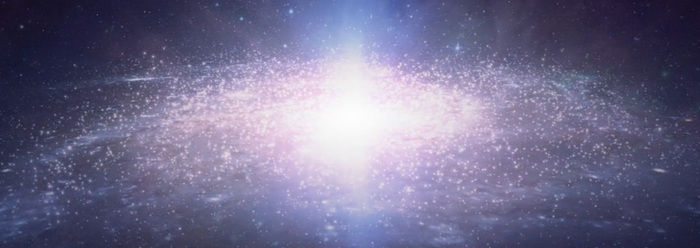
Recently, the European Space Agency reported about a distant, dust-shrouded star that some astronomers believe looks like what our solar system might have looked like before it supposedly formed itself. An ESA press release said that "sites of active star formation" are called "pre-stellar cores."1 But in reality, although scientists have witnessed star deaths, no modern astronomer has recorded a single star's birth.
Assuming that stars form naturally ignores the scientific evidence of their recent, supernatural creation.2 That assumption follows logically from the given premise of naturalism, but it does not reflect the science.
An online video posted on LiveScience featured a variety of space scientists, including NASA's Donald Yeomans. He confidently referred to "the Kuiper Belt" and the "so-called Oort cloud, which is a spherical distribution of comets surrounding the sun," as though they were real, observable entities.3 An artist's illustration accompanied his description. However, just as astronomers have never seen a star form, they've never seen the Oort cloud.
In response to these assertions, ICR astrophysicist Jason Lisle said, "Some other star systems have evidence of disks of material, which astronomers are calling Kuiper belts. But these are disk-shaped, whereas an Oort cloud is supposed to be spherical. There is still no observational evidence of an Oort cloud."
These scientists fail to make basic observations. What about their more esoteric ideas?
Princeton University reported on an imaginative scenario whereby life may have arrived on earth through unseen past "planetary fragments cast forth by disruptions such as volcanic eruptions and collisions with other matter." And just like "pre-stellar cores" and the "Oort Cloud," secular scientists solidified their unscientific idea by providing it a fancy name—lithopanspermia.4
If outer space investigators assert celestial entities that actual science has either failed to confirm or has virtually disproven, then should the public honestly be expected to buy into their wild fancies about living cells surviving volcanic ejections from imaginary proto-planets or violent outer space collisions of imaginary meteorite-like space rocks?
References
- Large water reservoirs at the dawn of stellar birth. ESA News. Posted on esa.int October 9, 2012, accessed October 9, 2012.
- Lisle, J. 2012. Blue Stars Confirm Recent Creation. Acts & Facts. 41 (9): 16.
- Choi, C. Q. Alien Comet Cloud Spotted Around Faraway Star. LiveScience. Posted on livescience.com October 4, 2012, accessed October 9, 2012.
- Kelly, M. Slow-moving rocks better odds that life crashed to Earth from space. News at Princeton. Posted on princeton.edu September 24, 2012, accessed October 10, 2012.
Image credit: NASA/JPL-Caltech
* Mr. Thomas is Science Writer at the Institute for Creation Research.
Article posted on October 17, 2012.