


by Brian Thomas, Ph.D., and Tim Clarey, Ph.D.*
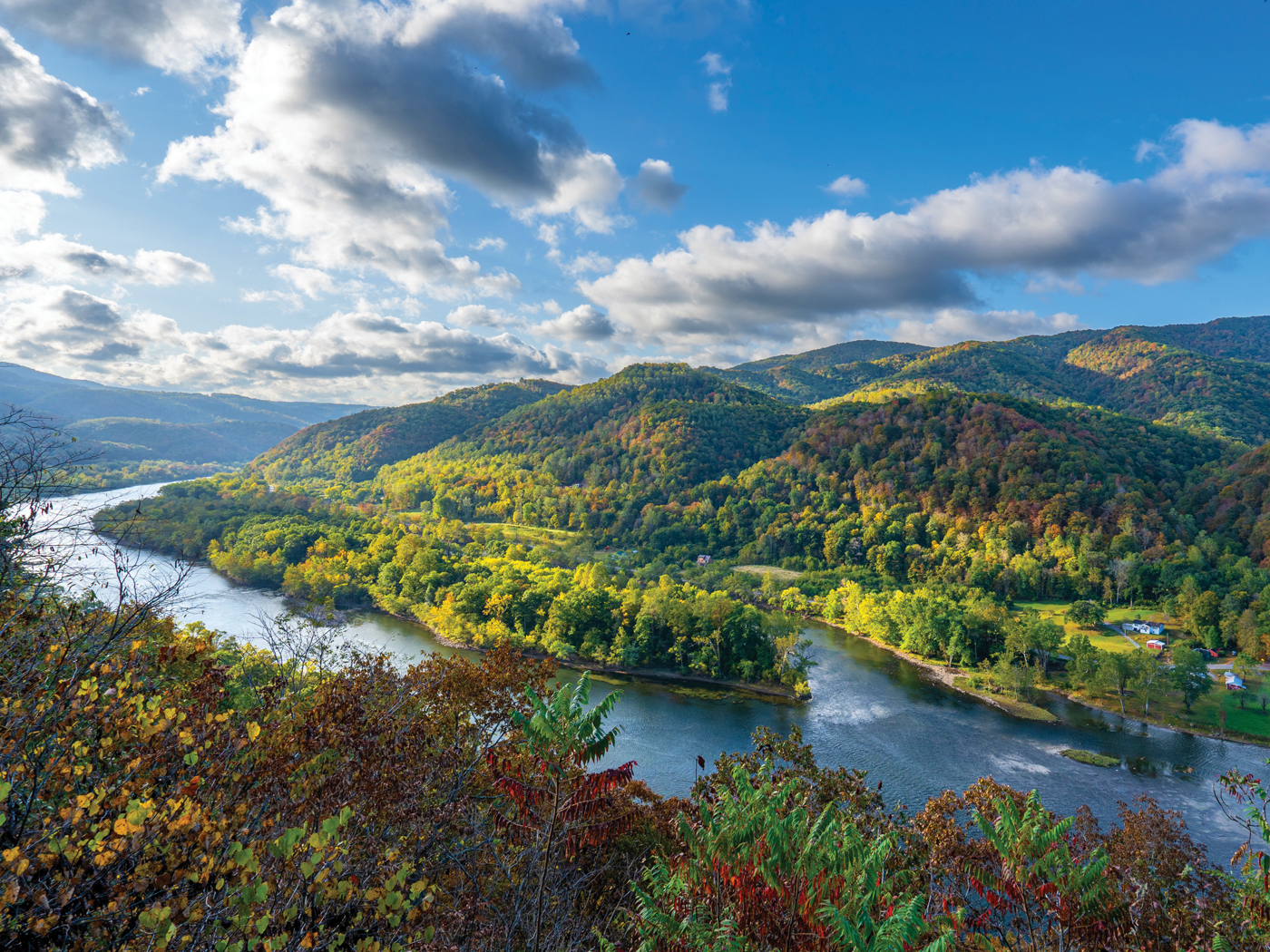
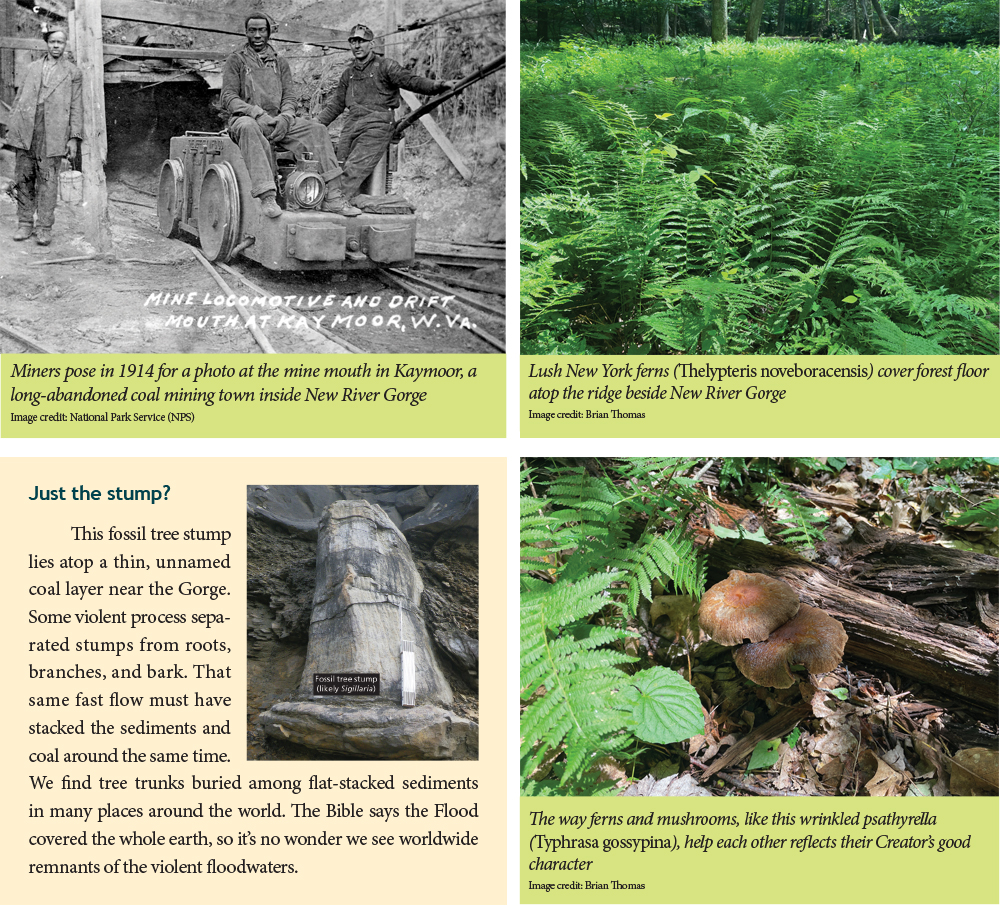
 The New River flows 230 miles across southern West Virginia—the only state in the Union whose borders are entirely within the Appalachian Mountains. Visitors to New River Gorge National Park and Preserve can taste the dizzying depths that eastern North America offers. Just as “a threefold cord [of a braided rope] is not quickly broken” (Ecclesiastes 4:12), three aspects of the New River Gorge together form a strong line back to Genesis.
Quality Coal
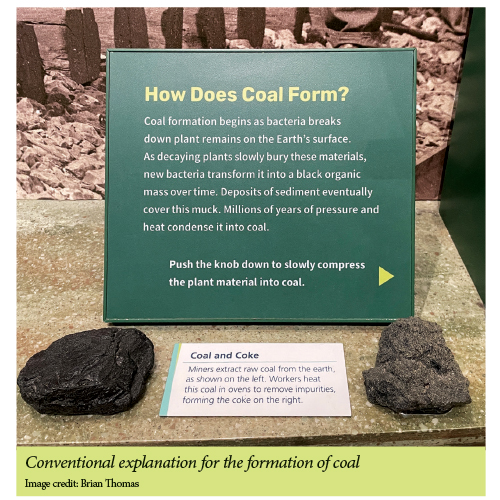 The first cord concerns geology. The New River Gorge National Park and Preserve Visitor Center says this about how coal supposedly forms: “As decaying plants slowly bury [plant remains], new bacteria transform [them] into a black organic mass over time. Deposits of sediment eventually cover this muck. Millions of years of pressure and heat condense it to coal.”
But where does this happen today? Nowhere on Earth.
The visitor center’s explanation repeats the theme of deep time. Time, however, is the enemy of the coalification process. The more time in today’s regular conditions, the more thoroughly plants decay, leaving them unavailable to turn into coal. In contrast, if this park’s coal seams formed during the Genesis Flood, rapid sediment flows would have buried plant matter well before it could completely rot.
Experiments have shown that geological processes activated by the Flood could have realistically formed coal. Scientists at Argonne National Laboratory transformed softwood lignin (a substance similar to glue) into lignite (low-grade coal) by heating the material to 150–200°C.1 It took only a few months. Likewise, the Flood rapidly transformed soft plant materials into hard coal via geologically generated heat. Thus, the too-often-repeated idea that coalification takes millions of years clashes with empirical evidence.
Band of Biodiversity
The second cord of our three-strand rope pertains to biology. New River Gorge boasts a high level of biodiversity, or variety of different creatures in a given environment. Plants and animals from regions that mountains otherwise keep separate mingle throughout the Gorge. The “Preserve” part of the park’s name reflects the intention to ensure that future generations can marvel at all the lovely living things that grow, creep, wade, climb, and fly there.
Why should we care about biodiversity? Christians have a unique reason. Our Creator’s character lingers in His handiwork. The more different kinds of creations we see and study, the more reasons we have to marvel at who He is.
As one example of the marvels of biodiversity, consider how ferns and mushrooms help each other. When fern fronds fade, they fall to the forest floor. Intermingled fungi break them down, adding vital nitrogen to the soil.2 In return, healthy ferns offer mushrooms shady nurseries. What, then, can we infer about their Maker? He cared enough to orchestrate that organisms would automatically care for one another. This reminds us of what we are to do as believers with our Creator, Jesus: “[cast] all your care upon Him, for He cares for you” (1 Peter 5:7).
The Carving Power of Water
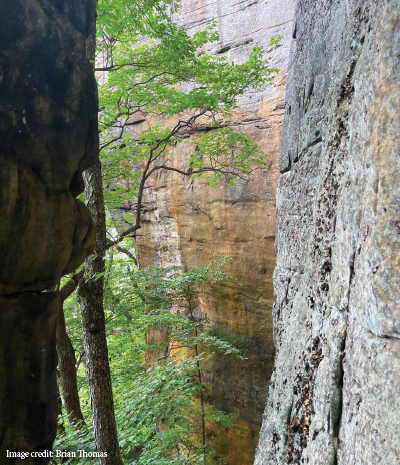 The third and final cord of our rope has to do with topography. The New River flows right through the ridge and valley province of the Appalachian Mountains.3 Most rivers drain away from or skirt around this mountain range. What unique history explains the New River’s rare course?
According to the National Park Service, “Because the New River existed before the Appalachian Mountains, it was able to cut into them as fast as they were uplifted and this very old river maintained its ancient course.”3 This might sound reasonable, but it rests on improbable assumptions.
Conventional geologists assert that the Appalachian mountain range took over 100 million years to rise to today’s heights.4 What are the odds that this river’s erosion rate kept perfect pace with these mountains’ uplift rate for one million years, let alone 100 million? More twists to that tale make it even less believable.
The Appalachians supposedly rose in fits and starts, with long lapses between times of uplift. Did the river ramp up its erosional power in perfect coordination with tectonic growth spurts? What a whale of a fluke. We need a better model. Why not start with what God’s Word says about a global flood?
The Appalachian Mountains are made mostly of early flood strata and formed earlier than most mountain ranges around the world.5 Floodwaters would have piled sediments into layers for weeks. Soon, immense forces cracked, faulted, and folded those still-pliable sediments. Water then covered the Appalachian Mountains during the peak of the Flood.6 As the muddy waters returned to the ocean, their levels lowered. Enough remained to rip through a crack and widen it to create the valley through which today’s New River flows.
From the Gorge to God
Here again are our three cords. First, wood can coalify in mere months, much before it would have the chance to rot. Such a short time suggests just the kind of rapid catastrophe that the Genesis Flood offers. Second, the way ferns and fungi help each other points to our Creator’s care for all He has made. Last, the Flood’s lowering waters offer a more reasonable explanation for the formation of New River Gorge’s unique path across a mountain range. Together, these lend credibility to the Genesis Flood and increase our understanding of the trustworthy character of the God who inspired every word of the biblical account.7
References
- Haggin, J. 1983. Argonne Scientists Make Artificial Coal. Chemical & Engineering News Archive. 61 (47): 42–43.
- Lu, Y. et al. 2023. Understory Ferns Promote the Restoration of Soil Microbial Diversity and Function in Previously Degraded Lands. Science of the Total Environment. 870, article 161934.
- National Park Service. Geologic Formations. Posted on nps.gov January 22, 2020, accessed July 1, 2026.
- National Park Service. Convergent Plate Boundaries—Collisional Mountain Ranges. Posted on nps.gov February 11, 2020, accessed July 1, 2026.
- Clarey, T. 2020. Carved in Stone: Geological Evidence of the Worldwide Flood. Dallas, TX: Institute for Creation Research.
- Genesis 7:19.
- That is, every original word, of course.
* Dr. Thomas is a research scientist at the Institute for Creation Research and earned his Ph.D. in paleobiochemistry from the University of Liverpool. Dr. Clarey is the director of research at the Institute for Creation Research and earned his Ph.D. in geology from Western Michigan University.