Conventional thinking relegates creationists—folks who believe that God created the world only thousands of years ago—to quack science. After all, are they not brimming with irrational bias? If that’s true, then how did I, a creationist, help get another journal article through the strict peer review process? I did science.
My area of expertise is fossil proteins. It fascinates me because of how strongly it confirms Noah’s Flood as the recent cause of fossils and their rock layers. Why recent? Because even the most resistant proteins completely decay in fewer than a million years, assuming reasonable temperatures.1 Our new report, published in Analytical Chemistry, shows clear evidence that proteins are still present.2
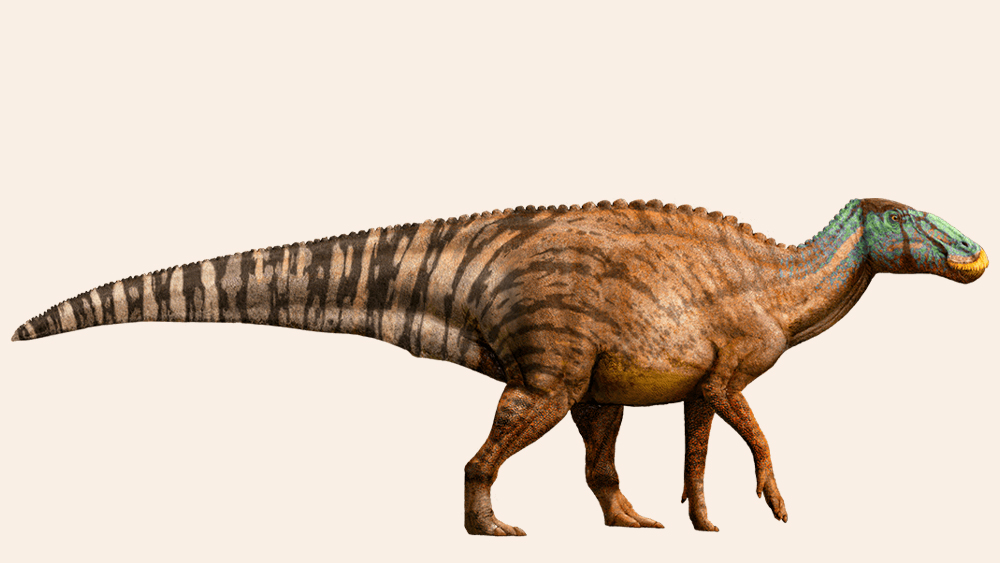
Various experts applied their particular skills to investigate possible proteins in an Edmontosaurus dinosaur bone housed at the University of Liverpool. We found multiple, independent lines of evidence for bone collagen within the fossil. If this was deposited tens of millions of years ago as virtually everyone repeats, then not a scrap of protein should exist—least of all the proteins that only vertebrates have, like collagen.
Our team sequenced collagen from the Edmontosaurus. Sequencing is like reading the amino acids that remain bonded, together called a peptide. We then compared the sequences from the sample to sequences in a database. Our Table 1 shows six peptides, or protein fragments. Each one matches the mass of a known segment of collagen. We compared our sequences with collagen sequences from a T. rex and a B. canadensis. Our sequence matches the B. canadensis better than any other option in the database—most of which are modern animals. This makes sense, since both our E. annectens and the B. canadensis are hadrosaurs.
The mass spectrometry group at the University of Liverpool, where I most recently studied, led the research effort. We met other collaborators at a mass spectrometry conference several years ago. They said they knew how to quantify individual amino acids in modern samples and were happy to modify their protocol for fossil bone. Now, for the first time, we know how much of the amino acid hydroxyproline is inside a dinosaur fossil. The university press release says that hydroxyproline “is specific to collagen when found in bone, thus confirming the presence of decayed collagen.” 3
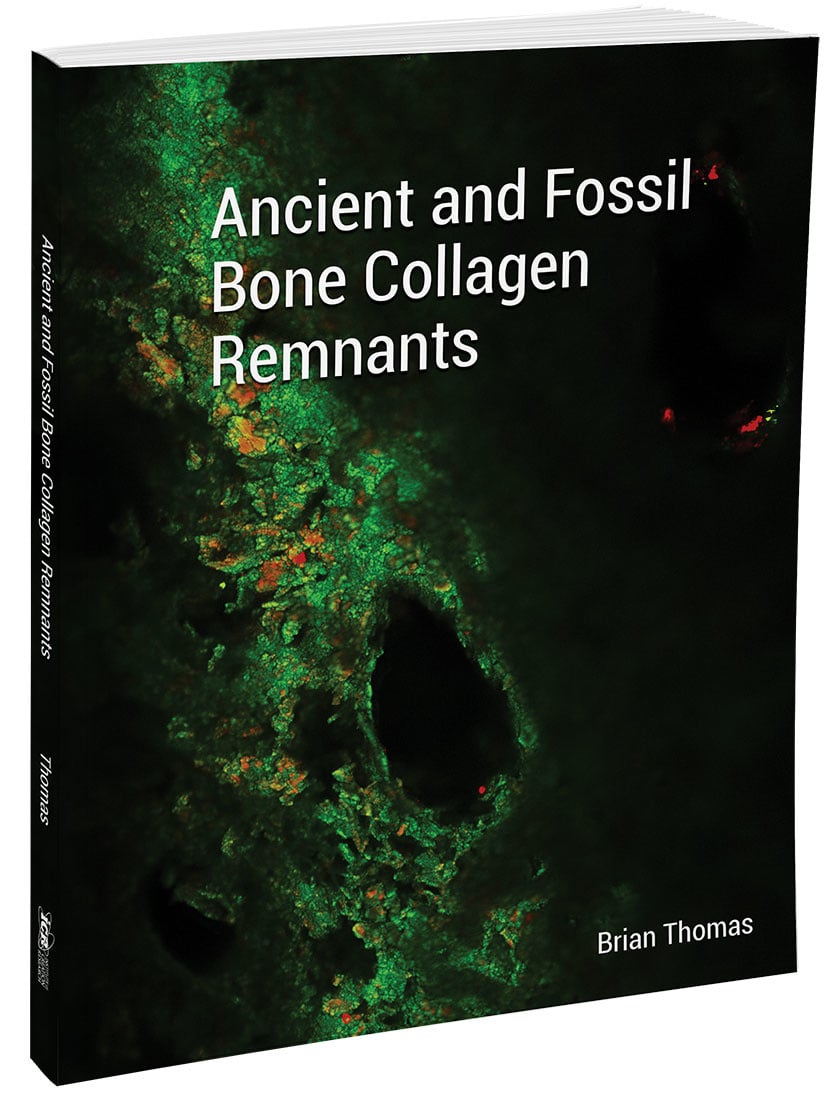
We also included some chemistry-hinting results from spectroscopy and microscopy. All these techniques pointed to the presence of original protein parts.
This result adds the 124th item to our curated list of conventional technical reports that describe biochemistry in fossils.4 It’s like dropping the 124th ounce upon what one might label the “protein” side of a proverbial balance. The other tray would read “contamination,” and it holds a few dog hairs. In other words, the scientific evidence in favor of biomaterials in fossils is incredibly lopsided.
Of course, we said nothing about Noah’s Flood in our paper. That would never pass science peer review, which has its pluses and minuses. On the plus side, it helps ensure that results actually support stated conclusions. On the minus side, it can also enforce conformity to an ideology, e.g., by refusing to allow authors to discuss how their results agree with the Bible.
However, readers remain free to make up their own minds about how or why biomaterials like proteins persist in fossils.5 The Flood’s timing, happening only thousands of years ago, fits what decay experiments show—that collagen can last that long but not as long as evolution demands. This big, old dinosaur bone looks much younger than I was taught, and I’m honored to have played a part in doing the science that shows it.
References
- Thomas, B. 2019. Collagen Decays Too Fast for Evolutionary Time. Acts & Facts. 48 (8): 9.
- Tuinstra, L. et al. Evidence for Endogenous Collagen in Edmontosaurus Fossil Bone. Analytical Chemistry. Published online before print. Accessed January 31, 2025.
- Discovery of Collagen in Fossil Bone Could Unlock New Insights into Dinosaurs. University of Liverpool News. Posted on news.liverpool.ac.uk January 31, 2025, accessed January 31, 2025.
- Thomas, B. and J. Tay. List of Biomaterial Fossil Papers. Google doc. Posted on docs.google.com, accessed January 31, 2025.
- Creation supporters other than ICR added critical resources to this project, but sadly we must protect their names. The Lord will surely reward them. Meanwhile, I have personally thanked each of them.
* Dr. Brian Thomas is a research scientist at the Institute for Creation Research and earned his Ph.D. in paleobiochemistry from the University of Liverpool.